


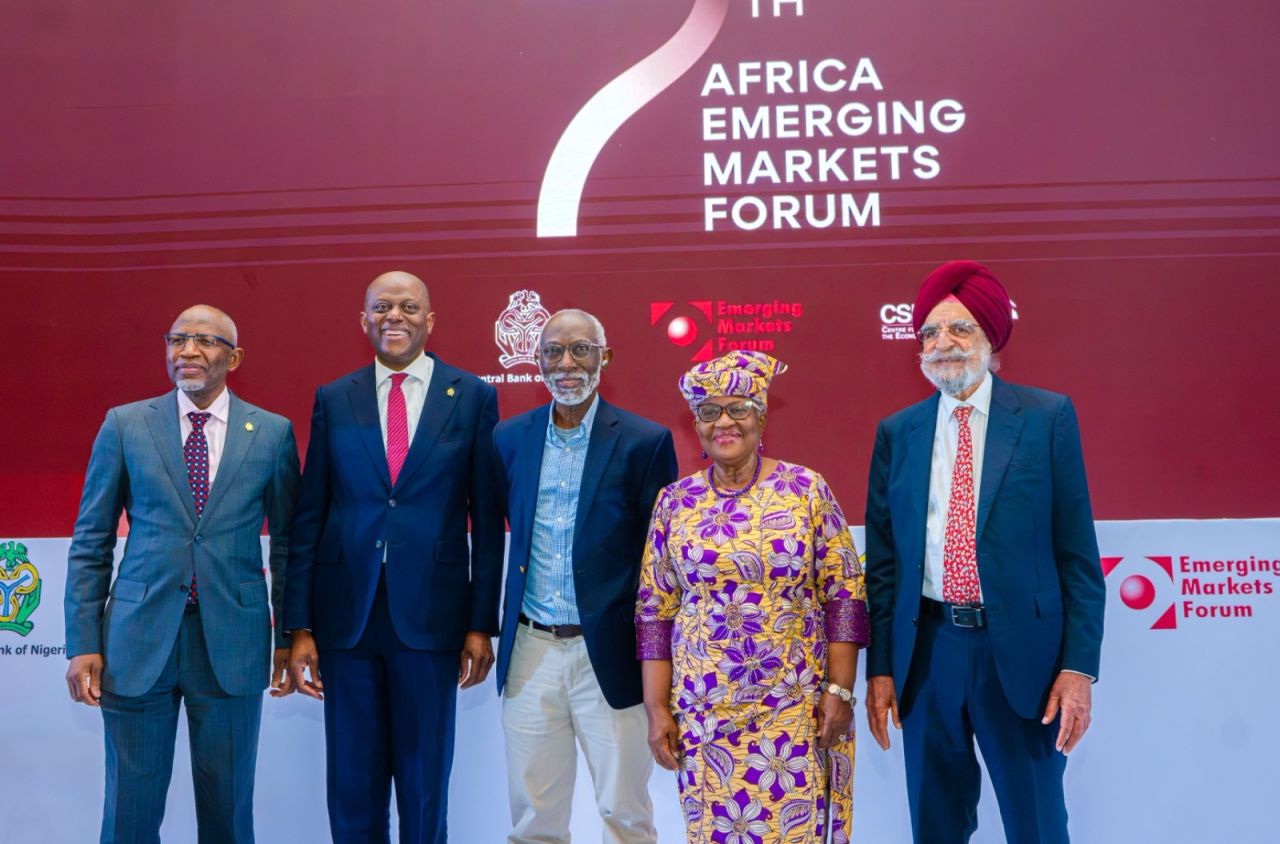



Abuja, Nigeria – Governor of the Central Bank of Nigeria (CBN), Olayemi Cardoso, has reaffirmed that Nigeria’s return to orthodox central banking practices is playing a pivotal role in stabilising the nation’s banking sector, foreign exchange market and broader economy.
Cardoso made the remarks during the 7th Africa Emerging Markets Forum (AEMF 2026) held in Abuja, where he participated in a high-level policy dialogue with Director-General of the World Trade Organization, Ngozi Okonjo-Iweala.
Speaking at the forum, the CBN Governor said Africa must shift from being largely consumers of technology to becoming creators of home-grown innovations capable of addressing the continent’s unique challenges.
He stressed that achieving this vision would require sustained investment in reliable electricity, affordable internet connectivity, digital infrastructure and the development of a new generation of artificial intelligence (AI)-ready young Africans equipped to compete globally.
Cardoso also underscored the importance of promoting greater economic inclusion for women, noting that Africa cannot achieve its full economic potential without harnessing the contributions of its female population.
During the fireside discussion, the CBN Governor expressed optimism that Nigeria’s ongoing economic reforms would gradually moderate interest rates, improve access to finance for small and medium-sized enterprises (SMEs), and strengthen support for the productive sectors of the economy.
He highlighted recent improvements in transparency and liquidity within Nigeria’s foreign exchange market, adding that policy consistency, fiscal discipline and effective implementation remain essential for sustaining investor confidence and long-term economic stability.
Cardoso further advocated stronger collaboration among African economies, saying deeper regional integration, increased intra-African trade and enhanced policy coordination are critical to unlocking sustainable economic growth and maximising the opportunities presented by the African Continental Free Trade Area (AfCFTA).
In her remarks, WTO Director-General Ngozi Okonjo-Iweala urged African leaders to place national and continental interests above narrow considerations by prioritising job creation, economic growth and effective policy implementation.
She expressed confidence in Africa’s long-term prospects but stressed that stronger leadership, regional integration and increased domestic investment are essential for sustainable development. According to her, attracting greater local investment is the foundation for building international investor confidence.
Okonjo-Iweala also encouraged African nations to leverage opportunities arising from global economic uncertainty by developing regional value chains around critical minerals and implementing reforms that improve governance, infrastructure and the overall investment climate.
The policy dialogue formed part of discussions at AEMF 2026 aimed at strengthening Africa’s economic resilience, promoting regional cooperation and accelerating inclusive and sustainable development across the continent.