


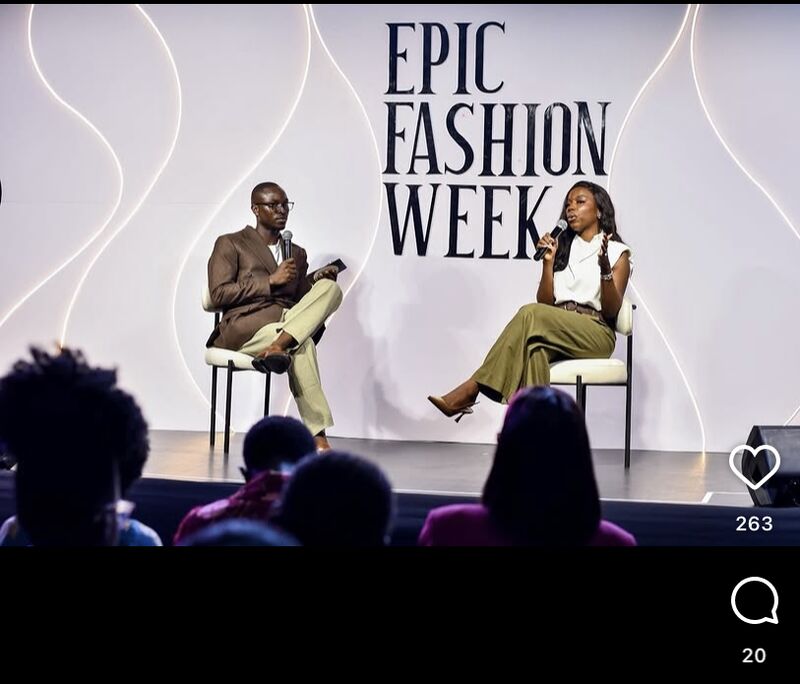






Conversations around scaling African fashion globally are often dominated by familiar themes—logistics, distribution networks, trade policy, and market access. But according to cultural and creative industry advocate Rhoda Aguonigho, another factor is quietly proving just as important: desirability.
Aguonigho, founder of Lhaude Africa, says a recurring insight has emerged from recent industry conversations across different platforms, including discussions at Epic Fashion Week and internal strategy sessions focused on upcoming activations in Dakar, New York, and Washington, D.C.
The central question, she notes, is not just how African brands enter new markets—but why consumers choose them once they arrive.
“People often assume it’s logistics, distribution, or market access alone,” she observed. “Those things matter. But increasingly, one of the most underrated factors is desirability.”
Across her work in trade activations, retail partnerships, and market expansion initiatives, Aguonigho has seen a consistent pattern: brands that already generate strong emotional and cultural appeal tend to transition more easily across borders. Products that are widely shared, saved, and discussed online often maintain that momentum when they become physically available in new markets.
However, she is careful to stress that desirability is not a substitute for fundamentals. Product quality, operational strength, and customer experience remain essential. Instead, she describes desirability as an accelerator—one that can shape how quickly and effectively a brand is embraced in unfamiliar markets.
As African fashion continues to gain international attention, Aguonigho argues that the industry must broaden its focus beyond infrastructure and trade systems to include intentional brand-building strategies.
“The conversation can’t only be about how products move,” she suggests. “It also has to be about how desire is created before the product even arrives.”
Her reflections highlight a growing shift in how cultural industries think about global expansion—one where perception, storytelling, and digital visibility increasingly sit alongside logistics and market entry strategy.
As African designers and brands continue to expand their reach from Lagos to Dakar, and onward to global fashion capitals, Aguonigho believes the future of growth will depend on a balance between systems that move products and narratives that make people want them in the first place.