


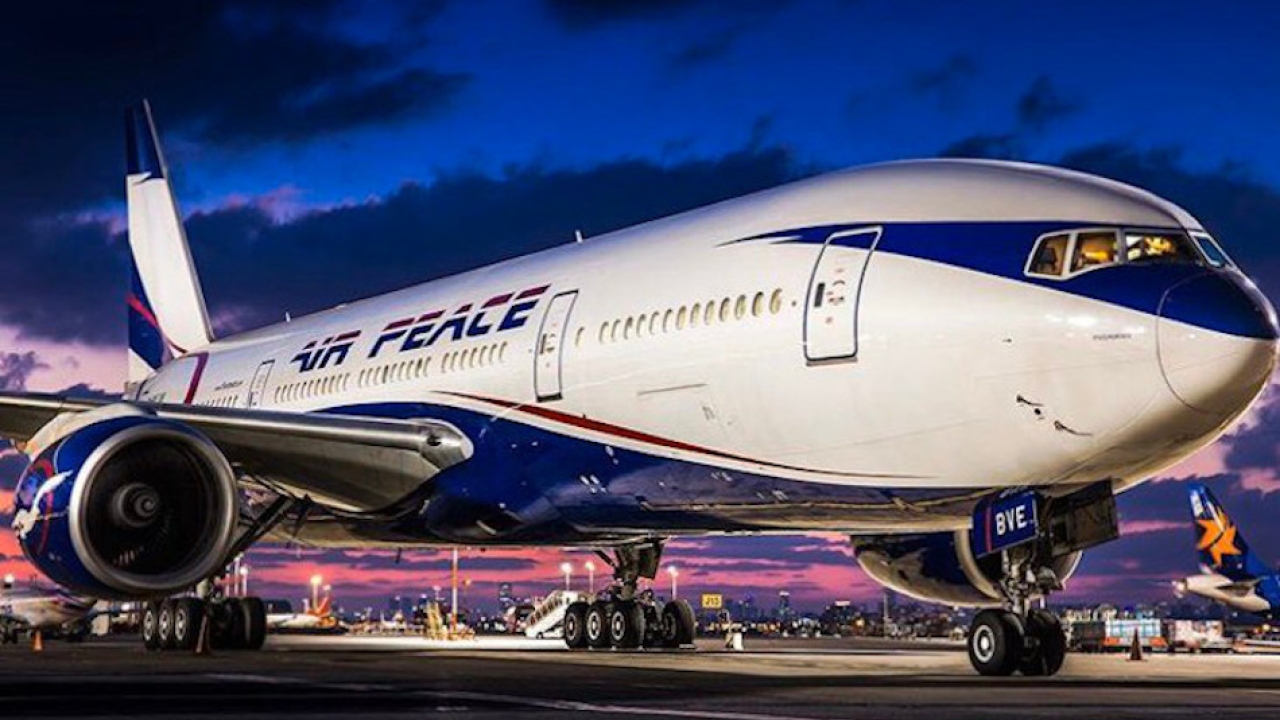






Nigeria’s aviation industry needs strong indigenous airlines, stable industrial relations and an environment where serious Nigerian investors can build companies capable of competing internationally.
Against this background, the persistent confrontation between aviation unions and Air Peace, founded and led by Allen Onyema, deserves a more balanced national conversation.
This is not an argument that Air Peace should be above the law. It is not an argument that workers should surrender their rights or that legitimate grievances should be ignored.
Rather, it is a call for perspective.
Nigeria must not destroy what it has spent decades asking for: a strong indigenous airline capable of competing beyond Nigeria’s borders.
Air Peace has become one of the most visible examples of Nigerian private-sector participation in aviation. Under Allen Onyema’s leadership, the airline has grown from a domestic carrier into a significant player with regional and international ambitions.
That achievement deserves recognition.
Air Peace Has Changed the Nigerian Aviation Conversation
For years, Nigerians complained that the country depended too heavily on foreign airlines for international travel.
Nigeria has a huge population, a large business community, millions of travellers and extensive connections with Africa, Europe and the Middle East. Yet foreign carriers have traditionally dominated many important international routes.
Air Peace changed part of that narrative.
Its expansion into international operations demonstrated that a Nigerian-owned airline could take on routes where passengers had historically depended heavily on foreign carriers.
The launch of the Lagos-London route was particularly significant.
London is one of Nigeria’s most important international travel destinations because of the enormous educational, business, professional, family and cultural connections between Nigeria and the United Kingdom.
Air Peace’s entry into that market gave Nigerian travellers another option and introduced an indigenous Nigerian carrier into direct competition with established international airlines.
That was not merely a commercial decision.
It was a statement about Nigeria’s capacity.
It told the world that Nigerian businesses can compete internationally.
Allen Onyema Has Invested in an Indigenous Aviation Vision
Whatever disagreements may exist between Air Peace and organised labour, it is difficult to ignore the scale of the aviation vision that Allen Onyema has pursued.
Building and sustaining an airline in Nigeria is not a small undertaking.
It requires aircraft, pilots, engineers, cabin crew, maintenance systems, technology, airport operations, safety management, customer service, regulatory compliance and enormous financial commitment.
Air Peace has continued to expand its operations and fleet, creating opportunities for Nigerian aviation professionals along the way.
The airline’s careers programme lists opportunities across areas including pilots, engineering, ground operations and other support functions. Air Peace Careers
That is important because Nigeria needs institutions capable of developing indigenous aviation expertise.
Thousands of Jobs and Opportunities
An airline is not simply a company that employs pilots.
Every aircraft movement supports an extensive chain of economic activity.
There are pilots and cabin crew.
There are aircraft engineers and technicians.
There are flight dispatchers and operations personnel.
There are customer-service officers.
There are airport and ground-handling personnel.
There are security workers.
There are cleaners and catering personnel.
There are travel agents.
There are logistics companies.
There are hotels and transportation providers.
There are technology companies supporting airline operations.
There are businesses that supply equipment, food, fuel and other services.
This means the economic footprint of an airline goes considerably beyond the number of people on its payroll.
Air Peace has also demonstrated a willingness to recruit and train young Nigerians. In 2025, the airline announced a 1,000-person graduate trainee recruitment programme, creating an important pathway for young graduates seeking professional experience and careers in aviation.
That is the kind of private-sector investment Nigeria should be encouraging.
Air Peace Has Increased Competition
Competition is one of the greatest benefits Air Peace has brought to the Nigerian aviation market.
When Nigerian travellers have more choices, airlines have stronger incentives to improve their services and compete for passengers.
The Lagos-London operation is an example.
Air Peace entered a market where international carriers had long enjoyed enormous influence.
Its presence created another option for Nigerians travelling between Nigeria and the United Kingdom.
That is good for consumers.
It is also good for Nigeria.
A country of Nigeria’s size should not depend almost entirely on foreign airlines to connect its citizens to the rest of the world.
Keeping More Aviation Value in Nigeria
There is another important economic consideration.
When a Nigerian passenger chooses an indigenous airline for an international journey, part of the economic value associated with that journey remains within the Nigerian business ecosystem.
The airline employs Nigerians.
It pays Nigerian suppliers.
It uses Nigerian airport infrastructure.
It generates business for travel agencies and other service providers.
Its employees spend their incomes within the Nigerian economy.
Its operations generate taxes, fees and other economic activity.
This is why indigenous airlines matter.
The objective should not simply be to have aircraft flying Nigerian passengers.
The objective should be to build an aviation ecosystem in which Nigerians own companies, Nigerians operate aircraft, Nigerians develop aviation expertise and Nigerian businesses capture more value from the country’s huge travel market.
Air Peace Has Strengthened Nigeria’s International Aviation Profile
Every time a Nigerian-owned airline establishes an international route, it adds another layer to Nigeria’s international presence.
Air Peace’s international expansion has included routes within West Africa and beyond, strengthening Nigeria’s connectivity with other markets.
The airline’s expansion has helped demonstrate that Nigeria has companies capable of thinking beyond the domestic market.
That matters at a time when Nigeria is trying to position itself as a major economic and aviation hub in Africa.
If Nigeria wants Lagos to become a major aviation hub, it needs strong domestic airlines capable of feeding passengers into international networks and competing for international traffic.
Air Peace is part of that equation.
Why Should Aviation Unions “Leave Air Peace Alone”?
The phrase “leave Air Peace alone” should not mean “do not regulate Air Peace.”
It should mean:
Do not unnecessarily cripple an indigenous airline that is contributing to Nigeria’s aviation development.
Aviation unions have an important role to play.
They must defend workers.
They must promote safe working conditions.
They must ensure that legitimate labour rights are respected.
They must engage management where disputes arise.
But industrial action should ideally be the last option after negotiation, mediation and other dispute-resolution mechanisms have been exhausted.
The travelling public should not become the victim of disputes between employers and unions.
Neither should an industrial disagreement be allowed to threaten an airline’s survival.
Workers Need Air Peace as Much as Air Peace Needs Workers
This point deserves serious consideration.
Air Peace needs its employees.
But employees also need viable aviation companies.
If an airline is weakened to the point where it cannot expand, invest or recruit, workers ultimately suffer.
Pilots need aircraft to fly.
Engineers need aircraft to maintain.
Cabin crew need flights to operate.
Ground staff need passengers.
Travel agents need tickets to sell.
Hotels need travellers.
Airport businesses need flight operations.
Therefore, there is a shared interest between management and labour:
A successful airline creates opportunities for everyone.
The proper objective should therefore be to resolve disputes in a manner that makes Air Peace stronger and its workers better protected.
The Unions Must Also Think About Nigeria
Nigeria has lost many indigenous airlines over the decades.
Some collapsed because of poor management.
Others faced financial difficulties.
Some were overwhelmed by operational challenges.
Others simply could not survive the difficult economics of aviation.
The consequence has been increased dependence on foreign carriers.
Nigeria should not repeat that cycle.
Instead, the country should be building airlines capable of competing with the strongest carriers on the continent and globally.
That requires stability.
It requires investment.
It requires competent professionals.
It requires supportive infrastructure.
And it requires responsible labour relations.
Do Not Punish Success
There is sometimes a troubling Nigerian tendency to become uncomfortable when a private company grows.
We complain that Nigerians do not build globally competitive businesses.
When one begins to expand, we start looking for reasons to bring it down.
We complain about unemployment.
Then we weaken companies employing thousands of people directly and indirectly.
We complain about foreign dominance.
Then we create conditions that make it harder for indigenous companies to compete.
This contradiction must end.
Nigeria should scrutinise its companies without destroying them.

Air Peace Is Not Above Accountability
To be clear, supporting Air Peace does not mean giving the company a blank cheque.
If there are genuine regulatory issues, they should be addressed.
If there are legitimate labour grievances, management should listen.
If employees have statutory rights, those rights must be respected.
If the airline has financial or regulatory obligations, it should meet them.
The same standards should apply to Air Peace as they apply to every other airline operating in Nigeria.
But accountability should be based on evidence, law and due process—not hostility.
And What About Allen Onyema?
Allen Onyema should equally be judged by the totality of his contribution to Nigerian aviation.
He has demonstrated a willingness to invest significant private capital in an industry that is notoriously difficult.
He has built an airline that employs Nigerians.
He has supported the development of indigenous aviation professionals.
He has expanded Nigerian aviation connectivity.
He has challenged foreign dominance on important international routes.
He has helped demonstrate that a Nigerian airline can compete for international passengers.
These are contributions that deserve recognition even when questions are raised about the company’s operations.
A person or company can be scrutinised and still have its positive contributions acknowledged.
Those positions are not contradictory.
Nigeria Needs More Indigenous Airlines, Not Fewer
The real conversation should therefore not be about how to bring Air Peace down.
It should be about how Nigeria can create an environment where Air Peace, and several other indigenous airlines, can grow into world-class carriers.
Nigeria should want:
- More Nigerian-owned airlines.
- More Nigerian pilots.
- More Nigerian aircraft engineers.
- More aviation training opportunities.
- More international routes operated by Nigerian carriers.
- More competition.
- More employment.
- More aviation investment.
- More foreign exchange retained within Nigeria.
- More Nigerian aviation companies competing across Africa and beyond.
That is the bigger national objective.
Let Labour and Management Find Peace
The aviation unions and Air Peace management should therefore find a way back to constructive engagement.
If there are disputes, let them be documented.
If there are financial claims, let them be independently verified.
If there are labour grievances, let them be investigated.
If there are violations, let the appropriate authorities act.
But let negotiation, mediation and lawful dispute resolution take precedence over prolonged confrontation.
The unions should not be interested in destroying Air Peace.
Air Peace should not be interested in undermining workers.
Both sides need each other.
And, ultimately, Nigeria needs both sides.
The Bigger Picture
Air Peace represents something larger than a single airline.
It represents the possibility that Nigerian entrepreneurs can build companies capable of competing internationally.
It represents Nigerian employment.
It represents indigenous investment.
It represents competition.
It represents international connectivity.
It represents an opportunity to retain more economic value within Nigeria.
And it represents a Nigerian company attempting to establish itself in one of the most difficult industries in the world.
That achievement should not make Air Peace immune from accountability.
But it should make Nigerians think carefully before supporting actions that could weaken the airline.
The aviation unions should defend workers. The regulators should enforce the law. Air Peace should meet its obligations. And Allen Onyema should continue to be held to appropriate standards.
But none of these objectives requires destroying the airline.
Nigeria does not need to lose Air Peace. Nigeria needs to build more Air Peaces.
If Air Peace has shortcomings, let us correct them.
If there are labour disputes, let us resolve them.
If there are regulatory issues, let the regulators act.
But let us not destroy a Nigerian aviation company simply because it has become large enough to attract intense scrutiny.
Build it. Regulate it. Improve it. Hold it accountable. But let it fly.
Because when a Nigerian-owned airline successfully flies Nigerians across Africa and around the world, it is not just Air Peace that is on the journey.
Nigeria is flying with it.
ANTHONY EMEKA NWOSU