



Anthony Emeka Nwosu
– The successful completion of leadership tenures by two accomplished Nigerian professionals has reinforced the growing impact of educating the girl child and empowering women to take on strategic leadership roles across key sectors of the economy.
Former Chairman of the Institute of Chartered Secretaries and Administrators of Nigeria (ICSAN), Abuja Chapter, Dr. Chioma Angela Okeke (PhD), has celebrated her immediate elder sister following the completion of her one-year tenure as Chairperson of the Society of Petroleum Engineers (SPE), Lagos Chapter.
The moment was more than a family celebration. It served as a reminder of what can be achieved when girls are given access to quality education, mentorship, and equal opportunities to develop their talents and leadership potential.
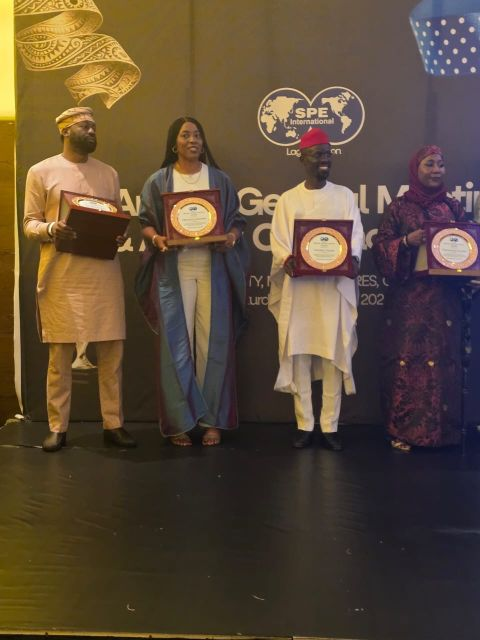
Dr. Okeke, who herself completed a successful two-year tenure as Chairman of the ICSAN Abuja Chapter in April 2026, reflected on the shared experience of both sisters handing over leadership responsibilities after impactful periods of service in two respected professional institutions.
“My dear sister has also passed the baton after an impactful one-year tenure as Chairperson of the Society of Petroleum Engineers (SPE), Lagos Chapter. Now, we’re both available for our next appointments—this time, hopefully with a remuneration package attached,” she said in a light-hearted message that underscored both achievement and optimism for the future.
She also congratulated her sister on receiving an Award for Excellence and Leadership Service, describing it as a fitting recognition of her dedication, exemplary leadership, and unwavering commitment to advancing her profession.
Beyond the individual achievements, the story reflects the broader value of investing in the education of girls. When girls have access to quality education, they are more likely to become professionals, innovators, entrepreneurs, and leaders who contribute meaningfully to national development. Educated women strengthen institutions, improve governance, enhance economic productivity, and serve as mentors for younger generations.
Across Nigeria, more women are taking on leadership positions in law, engineering, governance, finance, technology, healthcare, academia, and public service. Their success demonstrates that educational opportunities for girls can translate into stronger organizations, more inclusive decision-making, and sustainable economic growth.
Leadership transitions such as those witnessed at the ICSAN Abuja Chapter and the Society of Petroleum Engineers Lagos Chapter also highlight the importance of mentorship and succession planning. By creating pathways for emerging leaders, professional bodies ensure continuity, preserve institutional knowledge, and encourage the next generation of women to aspire to positions of influence.
Advocates for girl-child education note that every investment in a girl’s education has multiplier effects. Educated women are more likely to participate in the workforce, support their families, invest in the education of their own children, and contribute to healthier and more prosperous communities. They also help challenge stereotypes and inspire young girls to pursue careers in fields where women have traditionally been underrepresented.
As Dr. Okeke and her sister embark on new professional journeys, their accomplishments stand as an inspiring example of what is possible when talent is nurtured through education, hard work, integrity, and a commitment to service.
Their story is a testament to the transformative power of educating the girl child and empowering women to lead. It sends a powerful message to families, educators, policymakers, and society at large that investing in girls today is an investment in stronger institutions, resilient communities, and a more prosperous Nigeria tomorrow.