


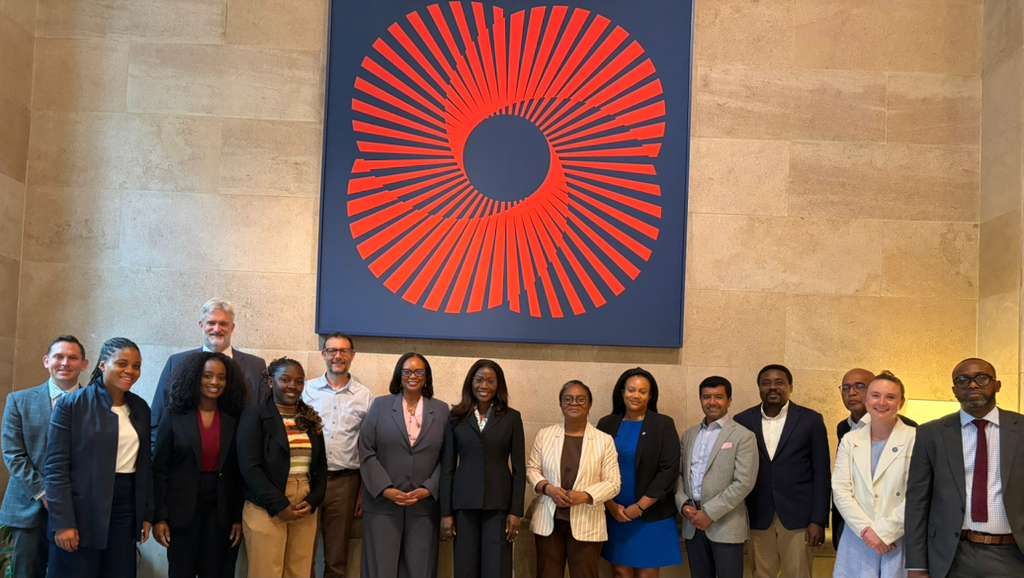




Nigeria has renewed its push for stronger strategic cooperation with the United States across energy, infrastructure, and critical minerals, following a series of high-level engagements in Washington this week led by the Special Adviser to the President on Energy, Olu Arowolo Verheijen.
The discussions brought together U.S. government officials and business leaders to explore expanding collaboration in oil and gas, liquefied natural gas (LNG), power generation, grid modernization, clean cooking initiatives, and industrial development linked to critical minerals.
According to Verheijen, the talks were anchored on Nigeria’s ongoing reform agenda and its efforts to position itself as a more competitive and investable destination for global energy capital.
She noted that Nigeria is seeking partnerships that go beyond traditional resource extraction and instead focus on long-term value creation, industrial growth, and shared economic prosperity between both countries.
“Our message was clear: Nigeria is looking for competitive, mutually beneficial partnerships that leverage our resource base, our growing market, and our strategic position in global supply chains,” Verheijen said following the engagements.
She added that energy reform remains central to Nigeria’s broader economic transformation strategy, describing it as a foundation for industrial growth, job creation, and long-term economic stability.
“Energy reform is economic reform,” she noted. “Nigeria is focused on building a more competitive, investable, and resilient economy that can support sustainable growth.”
The Washington engagements also highlighted increasing alignment between Nigerian policymakers and U.S. stakeholders on energy transition priorities, particularly in areas such as grid modernization, cleaner cooking solutions, and improved investment frameworks for upstream and downstream oil and gas projects.
The discussions were held in collaboration with the American Business Council Nigeria and the U.S.-Africa Business Center of the U.S. Chamber of Commerce, which convened a U.S.–Nigeria Energy Strategic Dialogue at the Chamber’s headquarters in Washington, D.C.
The dialogue followed earlier engagements at a West African Roundtable hosted in Houston by the Council and the American Chamber of Commerce Ghana, reflecting growing regional coordination on energy investment opportunities across West Africa.
During the Washington session, U.S. business leaders were briefed on Nigeria’s ongoing policy reforms, including updates to the regulatory and fiscal environment governing the energy sector. Stakeholders noted that recent reforms, including provisions under the Petroleum Industry Act (PIA), are gradually improving investor confidence and enhancing Nigeria’s competitiveness as an energy investment destination.
Kendra Gaither, President of the U.S.-Africa Business Center, welcomed the Nigerian delegation and emphasized the importance of the U.S.–Nigeria trade relationship, noting that Nigeria remains one of the United States’ most significant trading partners in Africa.
Margaret Olele, Chief Executive Officer of the American Business Council Nigeria, highlighted that energy and critical minerals are central pillars of the U.S.–Nigeria Business Initiative, a platform designed to align policy reforms with private sector investment opportunities.
She added that recent engagements with U.S. companies operating in Nigeria suggest improving investor sentiment, driven by ongoing fiscal and monetary reforms as well as a more structured incentive environment in the energy sector.
Despite acknowledging implementation challenges in parts of the regulatory framework, stakeholders noted that Nigeria is becoming increasingly competitive in attracting global energy investment.
Verheijen said the Nigerian government is actively working to build momentum through targeted presidential directives and direct engagement with industry players who had previously exited the market.
She emphasized that Nigeria is focused on attracting credible partners capable of co-developing and financing large-scale projects that combine capital investment with technical expertise.
“The government is looking for partners who can bring both expertise and capital to help scale the sector and deliver tangible projects,” she said.
The engagements underscore Nigeria’s continued effort to reposition itself as a key player in global energy markets while deepening its economic ties with the United States across strategic sectors.