

The Nigeria Data Protection Commission (NDPC) has raised fresh concerns over the growing misuse of personal data and digital platforms, warning that unchecked disinformation and unlawful data exploitation could undermine Nigeria’s democratic process ahead of the 2027 general elections.
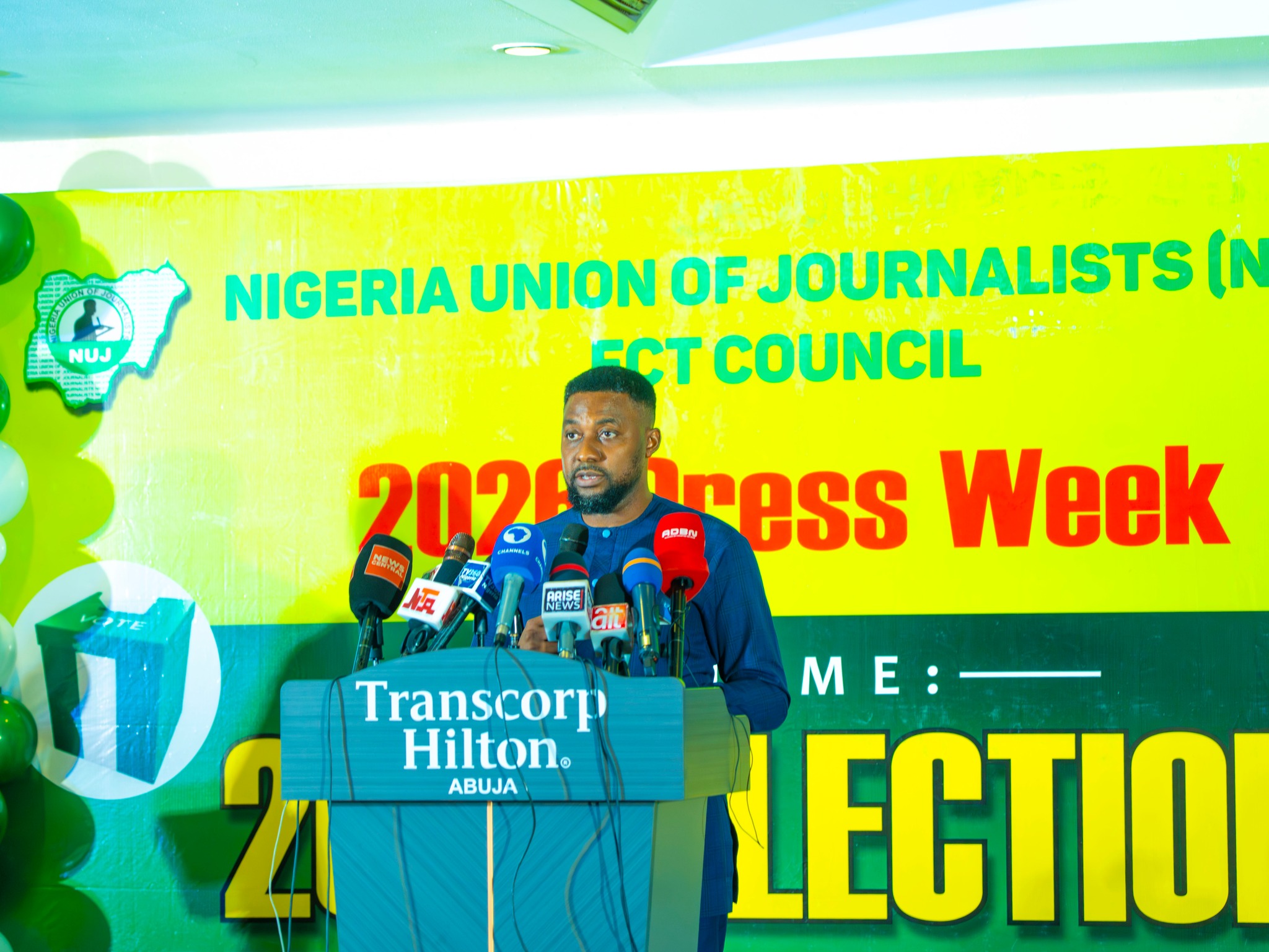
The warning was delivered during the 2026 Press Week organised by the FCT Council of the Nigeria Union of Journalists (NUJ), where the National Commissioner and Chief Executive Officer of the NDPC, Dr. Vincent Olatunji, was represented by the Head of Media Unit at the Commission, Mr. Itunu Dosekun.
Addressing journalists, media professionals, civil society actors, and stakeholders at the event themed, “2027 Election: Defending Democracy in the Era of Disinformation,” Dosekun stressed that the battle for credible elections is no longer fought only at polling units, but increasingly within the digital information ecosystem where citizens are exposed daily to manipulated narratives, fake news, targeted propaganda, and AI-generated misinformation.
He noted that the rapid expansion of social media platforms, messaging applications, and data-driven political campaigns has created new vulnerabilities capable of influencing voter perception, deepening social divisions, and weakening public trust in democratic institutions.
According to him, the abuse of personal data for political profiling and psychological targeting has become one of the most dangerous threats facing modern democracies globally, with Nigeria not exempted from the risks.
Dosekun explained that beyond political consequences, the misuse of citizens’ personal information also carries serious social implications, especially for vulnerable populations who are often exposed to digital manipulation without adequate awareness of how their data is harvested, processed, and weaponised online.
He stated that false narratives and coordinated disinformation campaigns have the potential to inflame ethnic tensions, spread fear, distort public understanding, and discourage civic participation, particularly among young Nigerians who form a major part of the country’s digital population.
The NDPC representative further highlighted the importance of the Nigeria Data Protection Act, 2023 (NDP Act), describing it as a critical legal framework designed to protect Nigerians against unlawful data processing, digital exploitation, and privacy violations.
He maintained that the law empowers citizens to retain control over their personal information while placing responsibilities on organisations, institutions, and political actors to ensure ethical and lawful handling of data.
Dosekun also used the occasion to call for stronger collaboration among political parties, media organisations, technology companies, civil society groups, and citizens in promoting responsible digital behaviour ahead of the elections.
He emphasised the vital role of journalists and media practitioners in combating fake news, fact-checking information, and protecting the integrity of public discourse in an era where misinformation can spread rapidly across multiple digital platforms.
According to him, safeguarding personal data should not be treated merely as a privacy concern, but as a broader democratic and social responsibility essential for preserving public confidence, national stability, and electoral credibility.
Observers at the event noted that as Nigeria approaches another election cycle, conversations around digital ethics, data protection, and online accountability are becoming increasingly important in ensuring peaceful, transparent, and inclusive democratic participation.
The engagement further reinforced growing calls for stronger digital literacy among citizens and increased awareness on how personal data can be manipulated to influence political behaviour and public opinion.
Stakeholders believe that protecting democratic integrity in the digital age will require sustained collaboration, stronger regulation, public education, and responsible technology governance to prevent the abuse of digital platforms during future elections.