


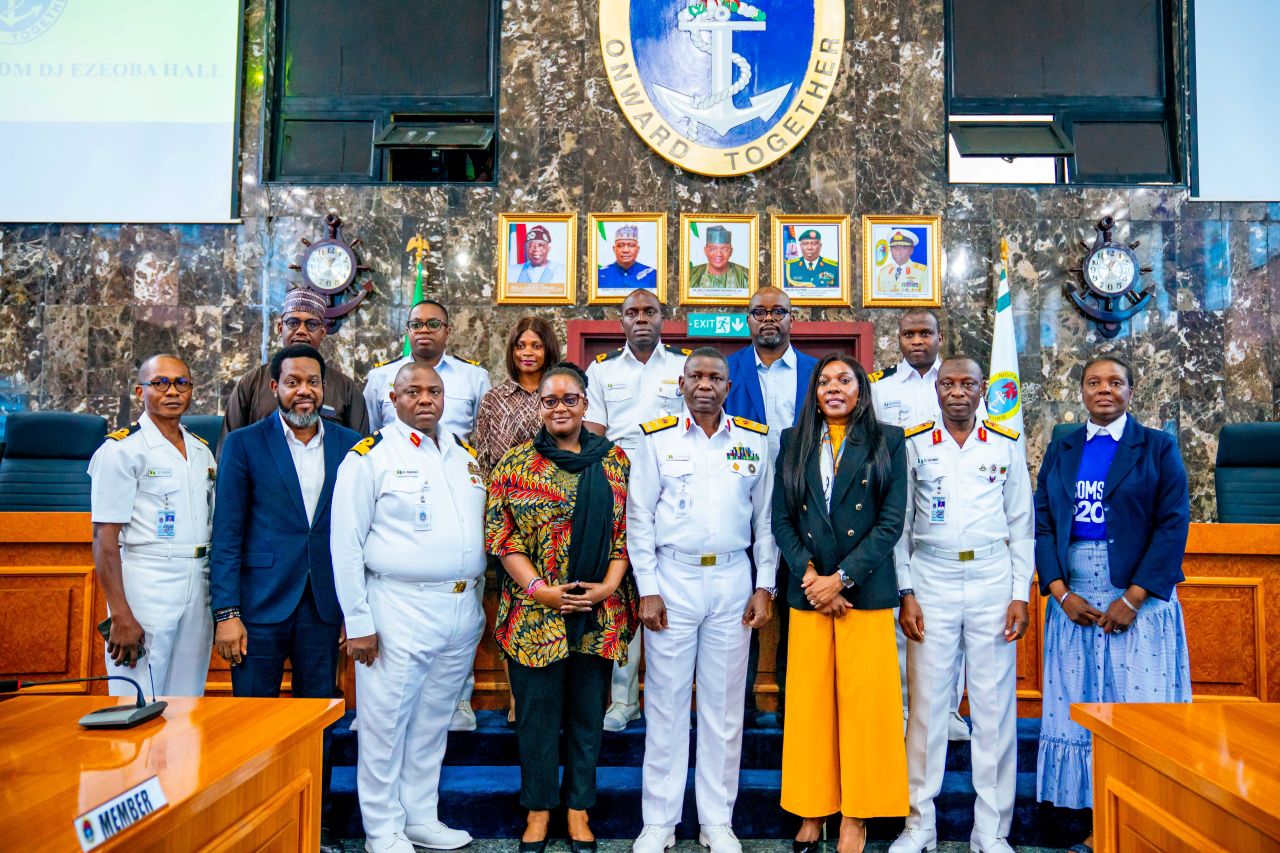
The Nigerian Communications Satellite Limited (NIGCOMSAT) and the Nigerian Navy have reaffirmed their commitment to strengthening Nigeria’s national security architecture through enhanced collaboration in satellite communications, digital infrastructure, and information technology.
The renewed partnership followed a series of high-level strategic engagements between NIGCOMSAT officials and the leadership of the Nigerian Navy, aimed at expanding the deployment of satellite-enabled technologies to improve secure communications, operational efficiency, and technological innovation across the country’s maritime security ecosystem.
As part of the engagements, the NIGCOMSAT management team paid a courtesy visit to the Chief of Communications and Information Technology (CCIT) of the Nigerian Navy, Rear Admiral Adepegba, marking their first formal meeting since his assumption of office in April 2026.
The meeting provided an opportunity for both institutions to review ongoing collaborative projects, evaluate progress made on existing initiatives, and identify new areas where satellite technology can be deployed to enhance Nigeria’s strategic communications capabilities.
According to NIGCOMSAT, discussions focused on strengthening secure and resilient communication systems that will support mission-critical naval operations while advancing national sovereignty through indigenous technological solutions.

The delegation also met with the Chief of Operations (COPS) of the Nigerian Navy and immediate past Chief of Communications and Information Technology, Rear Admiral Effah, where deliberations centred on expanding the application of NIGCOMSAT’s satellite-enabled services to improve operational effectiveness, maritime domain awareness, intelligence sharing, and command-and-control capabilities.
Industry experts have long maintained that modern security operations increasingly depend on reliable communications infrastructure. Satellite technology enables armed forces to maintain uninterrupted communications across land, sea, and remote operational environments, particularly where conventional terrestrial networks are unavailable or vulnerable to disruption.
Beyond its military applications, investments in satellite communications contribute significantly to national development by supporting broadband connectivity, disaster response, emergency communications, environmental monitoring, education, healthcare delivery, agriculture, maritime safety, and digital inclusion.
Analysts note that stronger collaboration between NIGCOMSAT and the Nigerian Navy represents an important step toward building a resilient national digital infrastructure capable of supporting both defence operations and civilian development. Such partnerships also promote indigenous technological capacity, reduce dependence on foreign communication systems, and encourage local innovation in the space and telecommunications sectors.
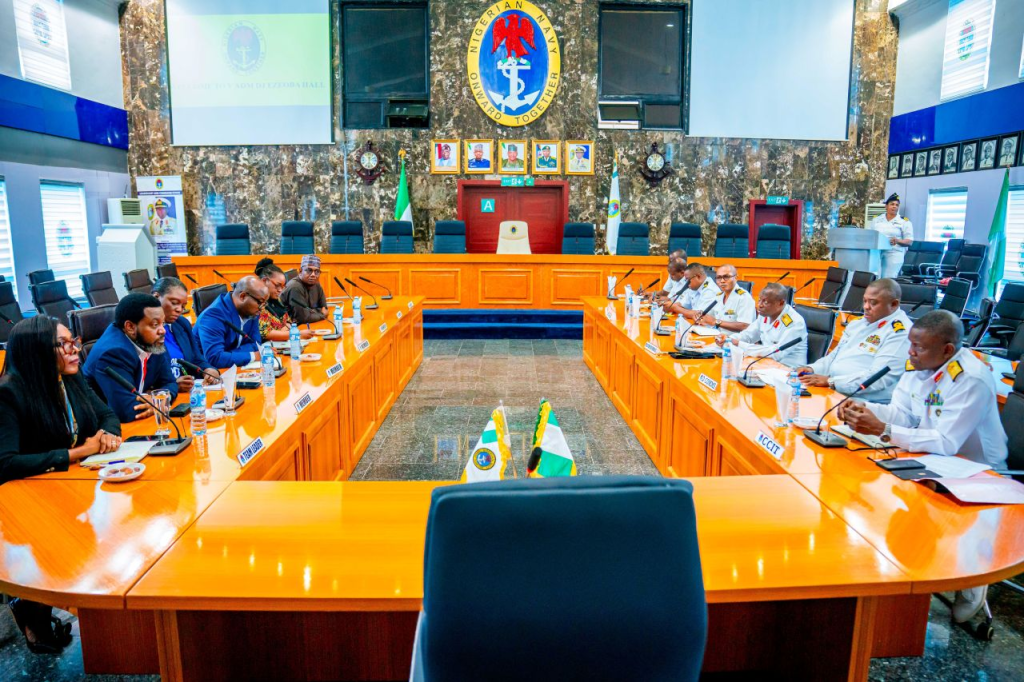
The partnership aligns with Nigeria’s broader vision of leveraging technology to safeguard national assets, strengthen cybersecurity, improve maritime security, and protect critical infrastructure in an increasingly digital world.
NIGCOMSAT emphasized that national security is no longer driven solely by military capabilities but also by strategic investments in communications technology, innovation, and institutional collaboration.
“The future of national security is built on more than technology; it is shaped by strategic partnerships that transform vision into capability and collaboration into lasting impact,” the organisation stated.
The agency added that by combining innovation, technical expertise, and a shared commitment to national development, both institutions are laying the foundation for a more secure, digitally connected, and resilient Nigeria.
As Nigeria continues to modernise its defence and communications infrastructure, collaborations between institutions such as NIGCOMSAT and the Nigerian Navy are expected to play an increasingly vital role in enhancing national resilience, supporting economic growth, protecting maritime assets, and ensuring the country remains prepared to address emerging security and technological challenges.