


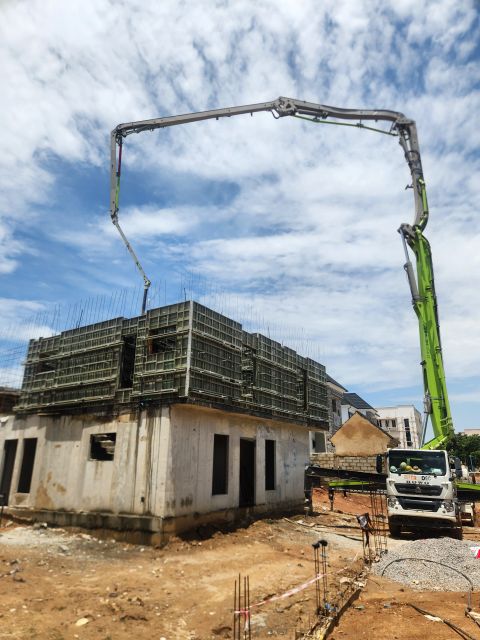






Lagos, Nigeria — Innovator and entrepreneur Kolade Ajani has outlined how the EasyForm building system could significantly reduce construction costs and delivery timelines in Nigeria’s real estate sector.
In a recent commentary, Ajani explained that the EasyForm system is an advanced aluminum formwork technology that enables walls, columns, beams, and slabs to be cast in a single monolithic process using reinforced concrete. This approach contrasts with the conventional blockwork method, which typically involves multiple stages including masonry, plastering, and heavy reliance on skilled labor.
According to Ajani, the system streamlines construction activities by simplifying workflows and reducing the number of workers required on-site. He noted that dependence on scarce skilled artisans is also significantly reduced, making the process more standardized and efficient.
He further emphasized that construction speed is a critical cost driver in the industry, where delays often translate into increased expenses such as site supervision, security, equipment rentals, accommodation, financing costs, and inflation-related price increases.
Ajani stated that the EasyForm system can support rapid construction cycles, with reports from Sourcebridge suggesting floor cycles as low as 4 to 11 days, enabling entire residential units to be completed in weeks rather than months.
The system’s precision-engineered aluminum panels, he added, help reduce material wastage while ensuring accurate dimensions and improved control over concrete usage. These efficiencies, according to his assessment, contribute to lower overall construction costs and better budget predictability.
Ajani also highlighted that the system produces smooth concrete finishes that require minimal plastering and finishing work, leading to additional savings in cement and sand consumption.
Structurally, the EasyForm approach creates a monolithic building framework in which walls and slabs are cast together. This, he said, improves structural integrity while reducing long-term maintenance costs for property owners and investors.
Beyond construction efficiency, Ajani noted that faster project delivery allows developers to complete housing projects ahead of potential cost escalations, improving profitability and financial stability.
He further argued that the system holds strong potential for addressing Nigeria’s housing deficit, particularly in large-scale developments such as affordable housing estates, government housing schemes, multi-storey residential apartments, and student accommodation projects.
Ajani concluded that the repeatable and standardized nature of aluminum formwork systems makes them particularly suited for mass housing delivery, offering a faster, more predictable, and more cost-effective alternative to traditional building methods.