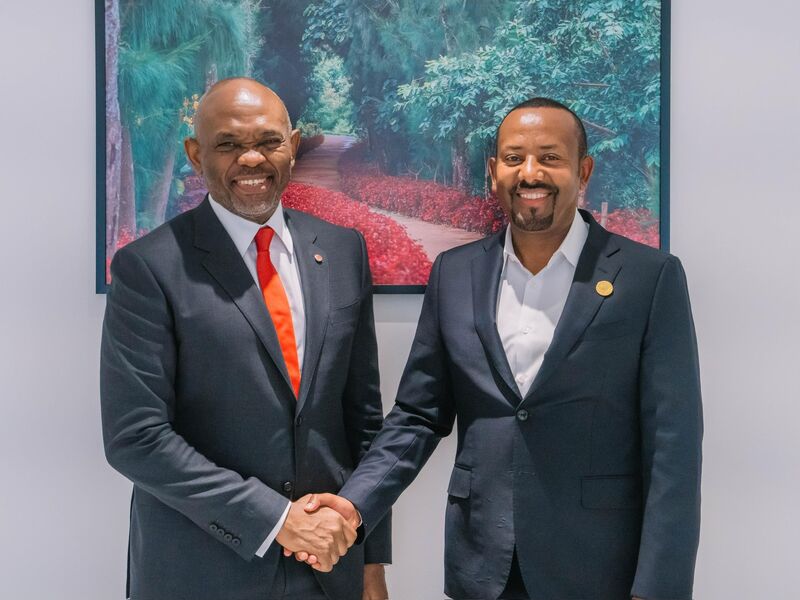
United Capital Plc has achieved a major regulatory milestone, becoming the first foreign investment bank to obtain an operating licence in Ethiopia, while also securing approval to expand operations into Rwanda. The development marks a significant step in the ongoing integration and evolution of Africa’s financial markets.
The announcement was highlighted by Tony O. Elumelu, Chairman of Heirs Holdings, who described the expansion as a practical demonstration of “Africapitalism” in action — a philosophy that emphasizes long-term private sector investment as a driver of African development.
Opening of Ethiopia’s Financial Sector
The entry of United Capital into Ethiopia is especially notable given the country’s recent reforms to open its financial sector to foreign participation. Ethiopia has historically maintained strict controls on banking and investment services, making this approval a landmark shift in policy direction.
Industry observers say the move signals growing confidence in Africa’s domestic financial institutions, which are increasingly expanding beyond their home markets to compete regionally.
Rwanda Approval Strengthens Regional Expansion
Alongside Ethiopia, United Capital’s approval to operate in Rwanda further strengthens its East African footprint. Rwanda has positioned itself as one of the continent’s most reform-driven financial hubs, with policies aimed at attracting investment, deepening capital markets, and improving cross-border financial integration.
The dual approvals are seen as part of a broader trend of intra-African capital mobility, where African firms are increasingly participating in markets traditionally dominated by global financial institutions.
Africapitalism in Practice
Elumelu framed the development as evidence of Africapitalism — a concept that advocates for African-led private sector investment as the key engine for economic transformation.
For decades, African economies have been characterized by high levels of foreign capital inflows, with limited retention of value within the continent. The emergence of African financial institutions expanding across borders is being interpreted as a shift in that long-standing pattern.
According to this perspective, institutions like United Capital are not only exporting financial services but also helping to retain value within Africa while financing infrastructure, entrepreneurship, and development projects.
Growing Role of African Financial Institutions
The expansion of United Capital reflects a wider trend in which African-owned financial institutions are scaling regionally and competing more actively in liberalizing markets. This shift is contributing to deeper capital market integration across the continent, as well as increased collaboration between governments, regulators, and private sector players.
Supporters of the model argue that this evolution represents a “new phase” of Africa’s economic renaissance, where local institutions play a central role in shaping investment flows and development priorities.
Continental Implications
As more African countries open up their financial sectors, the entry of firms like United Capital into new markets is expected to accelerate competition, innovation, and cross-border investment.
The development is being positioned as part of a broader transformation of Africa’s financial architecture — one increasingly defined by indigenous capital, regional integration, and private-sector-led growth.