


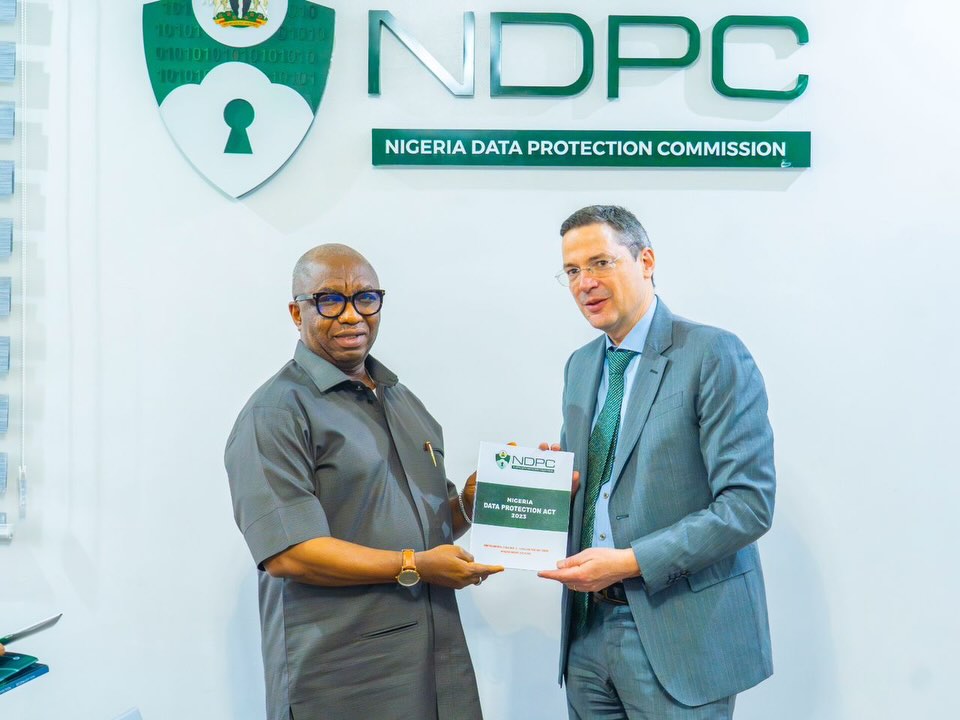






Concerns over the protection of sensitive personal data collected in counter-terrorism and defection programmes took centre stage as the Nigeria Data Protection Commission (NDPC) engaged the United Nations Office on Drugs and Crime (UNODC) on regulatory compliance and accountability.
The discussion came up during a courtesy visit to the Commission by a UNODC delegation led by Ulrich Garms, Programme Officer on Terrorism Prevention. The delegation highlighted UNODC’s ongoing work across international conventions on drugs, terrorism, organised crime, and cybercrime, with particular emphasis on programmes that encourage terrorists to defect, surrender, and disengage from violence.

Mr Garms noted that such initiatives necessarily involve the collection and processing of personal data, often belonging to vulnerable individuals. He stated that UNODC is committed to handling this data in line with the Nigeria Data Protection Act, 2023 and explained that the visit was aimed at seeking regulatory guidance from the NDPC while exploring areas for institutional collaboration.
Receiving the delegation, the National Commissioner and Chief Executive Officer of the NDPC, Vincent Olatunji, acknowledged UNODC’s role in addressing terrorism-related crimes and violence in Nigeria. He stressed that even in security-sensitive contexts, data controllers and processors have a clear duty of care, underscoring that accountability remains a core obligation under Nigeria’s data protection framework.
Dr Olatunji further pointed out that while individuals involved in defection and rehabilitation programmes may be considered vulnerable data subjects, their rights to privacy and lawful data processing must still be fully respected. He outlined key compliance requirements under the Act and reaffirmed the Commission’s readiness to support UNODC, particularly through capacity building and advisory engagements.
The meeting reflects growing attention to balancing national and international security efforts with the protection of personal data, as Nigeria strengthens enforcement of its data protection regime across public and international organisations operating within its jurisdiction.