



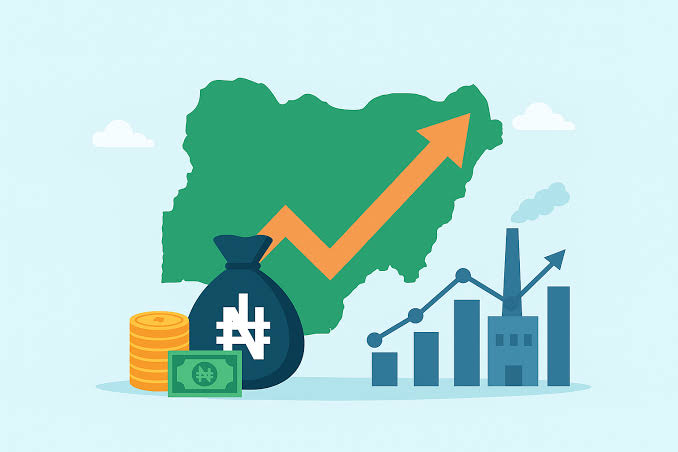
Nigeria’s economy in the first quarter of 2026 was driven largely by trade, agriculture, telecommunications and real estate, highlighting the country’s growing shift away from heavy dependence on crude oil.
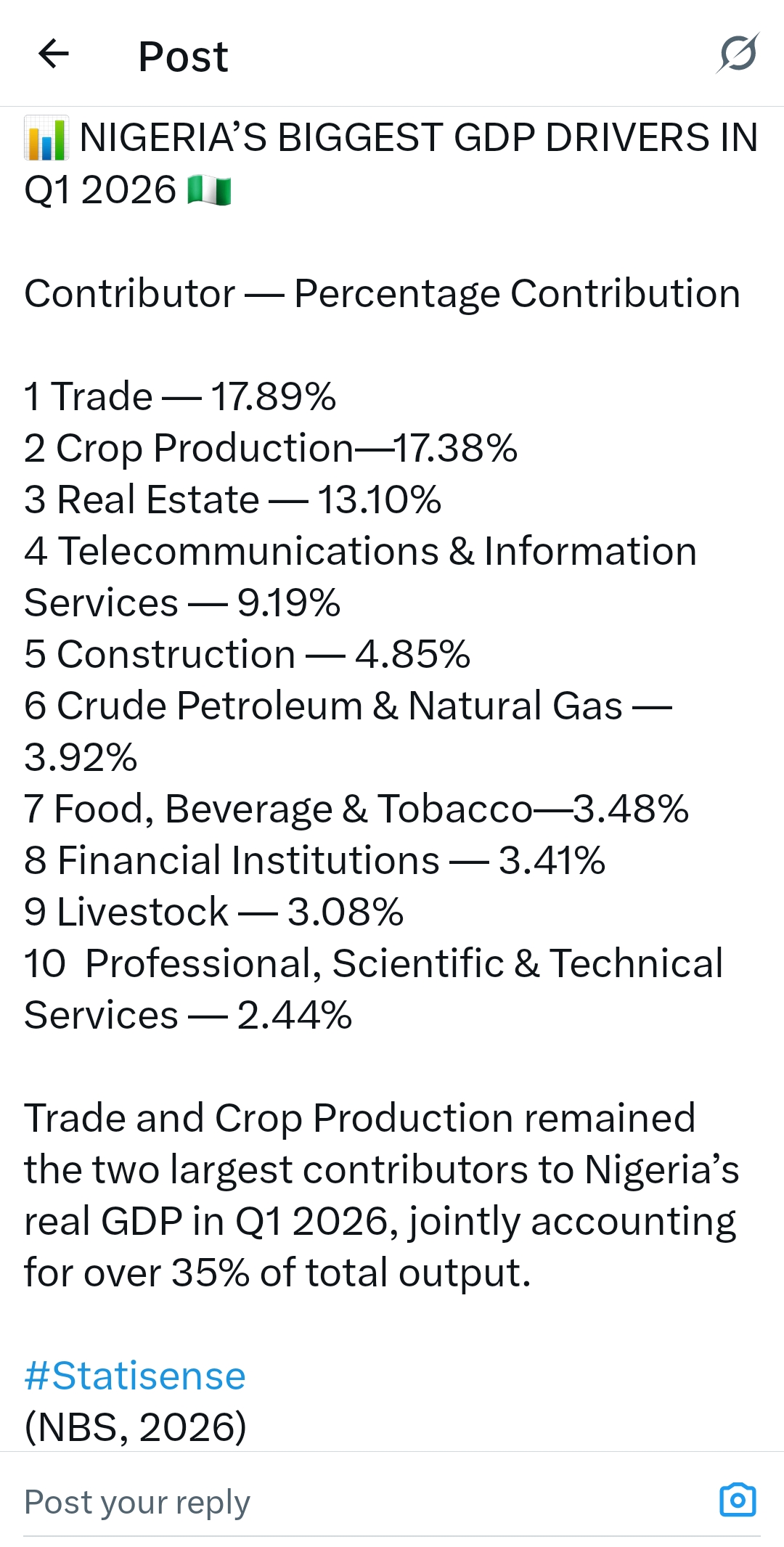
According to data released by the and published by , trade emerged as the largest contributor to Nigeria’s real Gross Domestic Product (GDP) in Q1 2026 with a 17.89 percent share, closely followed by crop production at 17.38 percent.
Real estate ranked third with a contribution of 13.10 percent, while telecommunications and information services accounted for 9.19 percent of total economic output, reinforcing the growing importance of digital infrastructure and urban development in Africa’s largest economy.
Together, trade, crop production, real estate and telecommunications contributed more than 57 percent of Nigeria’s GDP during the quarter, indicating that commerce, technology and property-related activities are now central pillars of national economic growth.
Analysts say the dominance of trade reflects the scale of commercial activities across Nigeria’s formal and informal sectors, including wholesale distribution, retail markets, logistics, e-commerce and import businesses. Trade continues to serve as a key link between producers and consumers, supporting millions of jobs and stimulating transportation, banking and warehousing activities nationwide.
The strong performance of the telecommunications sector also underscores the rapid expansion of Nigeria’s digital economy. Mobile banking, internet services, fintech platforms, online marketplaces and digital communication tools have become essential to everyday business operations, making telecom infrastructure a critical foundation for economic activity.
Real estate’s double-digit contribution points to accelerating urban expansion in cities such as , and , where rising population growth and housing demand continue to fuel property development and construction projects. Economic experts also note that many Nigerians increasingly view land and housing as safer stores of wealth amid inflation and currency pressures.
Meanwhile, construction contributed 4.85 percent to GDP, while crude petroleum and natural gas accounted for just 3.92 percent, a figure many economists describe as historically significant for an economy long associated with oil dependence.
The latest figures suggest that Nigeria’s economic structure is gradually evolving into a more diversified, service-oriented and digitally connected system driven by commerce, communication and domestic consumption rather than oil alone.
Other major contributors to GDP in the quarter included food, beverage and tobacco at 3.48 percent, financial institutions at 3.41 percent, livestock at 3.08 percent and professional, scientific and technical services at 2.44 percent.
Despite the strong performance of non-oil sectors, analysts warn that challenges such as inflation, infrastructure gaps, high construction costs, exchange rate instability and rising data expenses could continue to affect long-term growth if not adequately addressed.