









The future of healthcare innovation may no longer be dominated by traditional technology centres such as Silicon Valley, as Africa and other emerging markets increasingly position themselves as key drivers of solutions designed to address some of the world’s most pressing healthcare challenges.
This was one of the central themes discussed during a high-level panel at the recent re:publica conference, where experts argued that the next generation of health technology breakthroughs is likely to emerge from regions where healthcare systems face the greatest strain, rather than from markets with the most established infrastructure.
Speaking during the session titled “The Next Health Tech Giants Won’t Come from Silicon Valley,” Anna Sophie Herken said growing populations, limited medical infrastructure, shortages of healthcare professionals and unequal access to care are increasingly pushing innovation in Africa toward practical, scalable and affordable solutions.
Herken noted that some of the world’s most impactful health technologies are being developed in environments where healthcare access remains a daily challenge for millions of people. In such settings, innovation is often driven not by convenience but by necessity.
Her remarks come amid projections showing significant expansion in global digital healthcare adoption. More than 2.9 billion people worldwide are expected to use digital health services by 2027, while the global telemedicine market is forecast to grow from $87 billion in 2023 to more than $285 billion by 2030. Connected healthcare wearables are also expected to become increasingly common, with an estimated 614 million users globally by 2026.
For Africa, however, these figures represent more than market growth; they point to the possibility of narrowing long-standing healthcare inequalities.
The continent’s digital health market is projected to reach approximately $16.6 billion by 2030, expanding at an annual growth rate exceeding 23 percent. Analysts say this growth reflects rising investments in telemedicine, mobile health platforms, remote diagnostics and digital systems capable of delivering healthcare services to populations previously excluded by distance, cost or inadequate infrastructure.
Across many African countries, communities continue to experience limited access to doctors, overcrowded hospitals, high out-of-pocket medical costs and shortages of healthcare workers. For rural populations especially, digital health solutions are increasingly becoming lifelines rather than optional conveniences.
The expansion of mobile-based healthcare platforms means patients in remote locations can now access consultations, prescriptions and medical advice without travelling long distances. Wearable health technologies are also creating new possibilities for preventive care by allowing earlier detection and monitoring of chronic conditions.
Participants at the re:publica discussion argued that these realities are reshaping the definition of innovation itself.
Rather than focusing solely on sophisticated technologies, healthcare innovation is increasingly being measured by its ability to solve real problems for large populations. Solutions designed around affordability, accessibility and speed are emerging as critical indicators of impact.
Herken emphasised that future breakthroughs in healthcare are likely to result from stronger international collaboration rather than isolated innovation hubs.
According to her, Europe contributes significant strengths in medical research, financing capacity and regulatory expertise, while African ecosystems bring adaptability, mobile-first thinking and experience developing solutions under resource constraints.
The intersection of these strengths, experts say, could create more inclusive global healthcare systems capable of addressing disparities in access and outcomes.
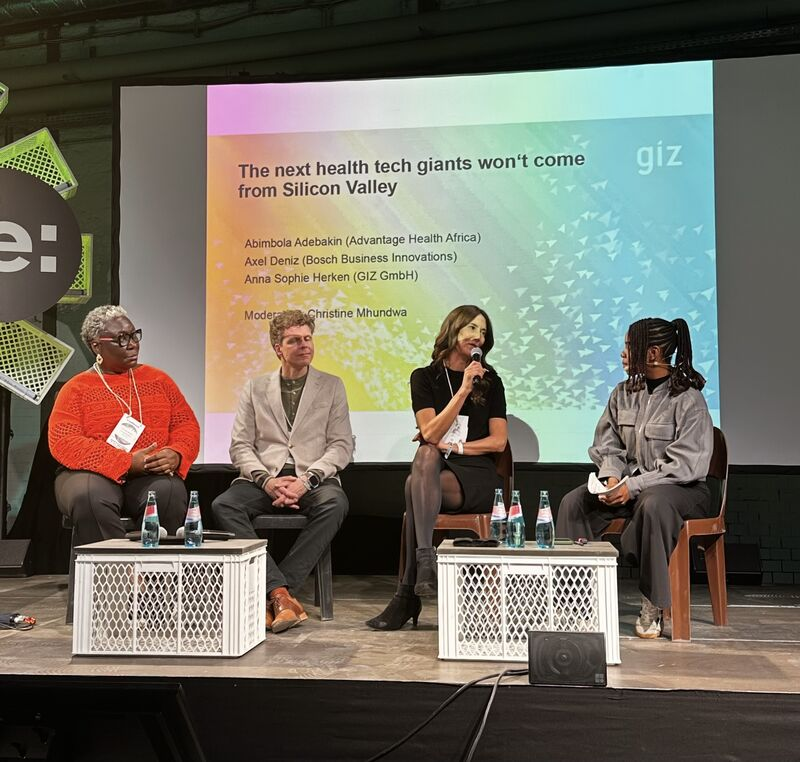
“The future of health tech will not be built in one place alone — and it will not only come from Silicon Valley,” Herken stated.
She further noted that global health innovation is becoming increasingly distributed and interconnected.
“The next generation of global health innovation will be far more distributed, connected and international than many still assume,” she added.
The panel, which also featured Axel Deniz and Abimbola Adebakin, moderated by Christine Mhundwa, highlighted the importance of building shared health innovation ecosystems rather than focusing solely on startup investments.
Beyond economic potential, speakers stressed the broader social implications of digital health expansion. Improved healthcare access has direct effects on life expectancy, productivity, maternal health, disease prevention and overall quality of life.
As Africa’s population continues to grow rapidly, healthcare experts argue that investments in digital solutions may increasingly determine whether millions gain access to timely, affordable and effective care.
The evolving health tech landscape suggests that Africa’s contribution to global healthcare may move beyond adoption of innovation toward becoming a major source of innovation itself—transforming not only healthcare delivery on the continent, but potentially shaping how healthcare systems function worldwide.