


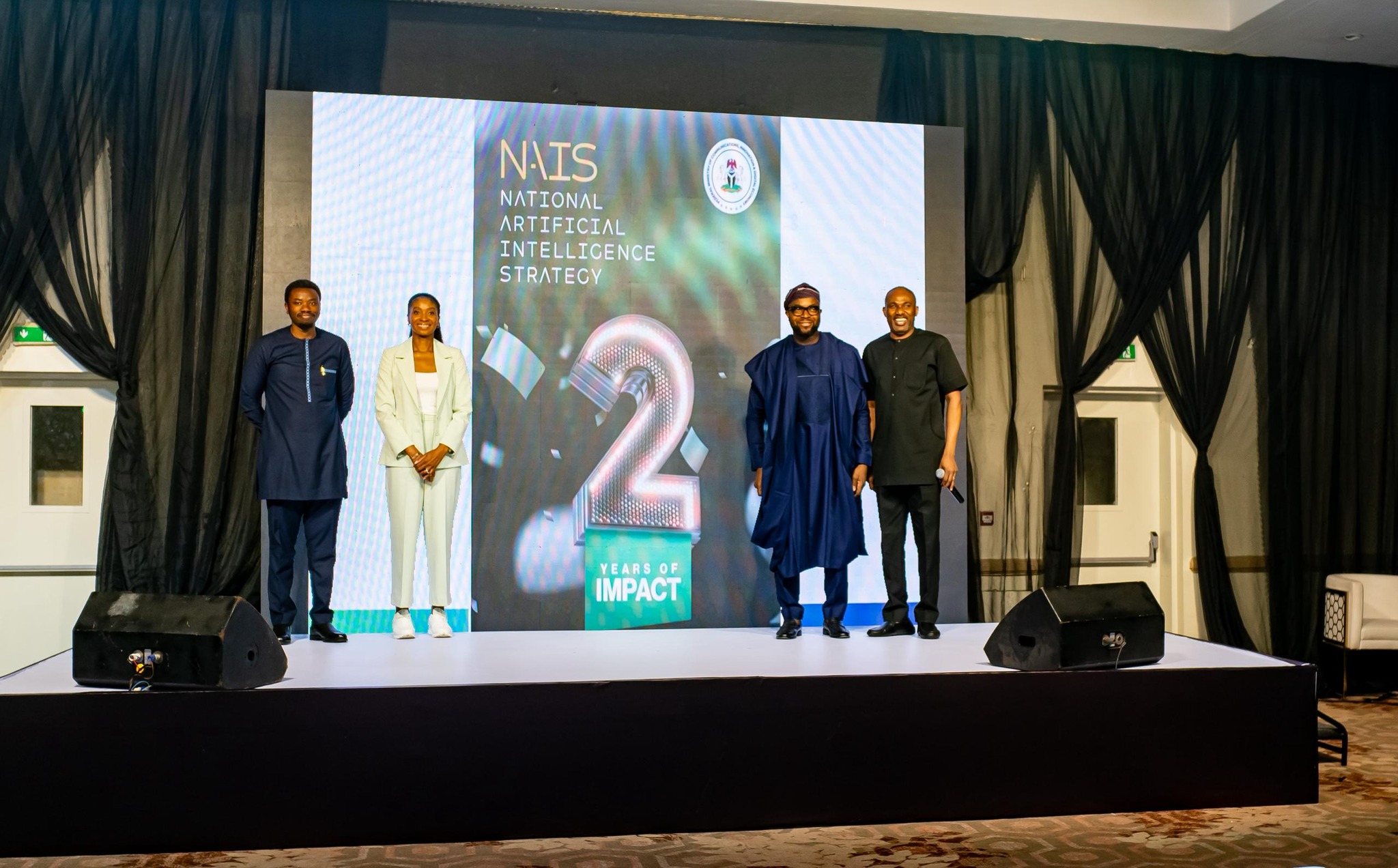






The Nigeria Data Protection Commission has reaffirmed its commitment to advancing responsible artificial intelligence and data protection practices following its participation in the Microsoft AI Skills Week 2026.
The high-level leadership gathering, hosted by Bosun Tijani, marked the second anniversary of Nigeria’s National AI Strategy and brought together stakeholders across government, technology, and policy circles to assess the country’s progress in artificial intelligence adoption and innovation.

Representing the Commission at the event was Mrs. Adaobi Nwankwo, Head of the Innovation Unit, alongside beneficiary staff and top-performing participants from the Microsoft-supported Capacity Building Programme implemented in collaboration with Data Science Nigeria.
One of the major highlights of the event was the recognition of the top five participants for their exceptional performance during the programme, underscoring the growing importance of digital capacity development within Nigeria’s regulatory ecosystem.
The NDPC’s participation reflects a broader reality shaping governance and business globally: artificial intelligence is no longer optional. Governments, regulators, and institutions are increasingly under pressure to understand emerging technologies, strengthen digital skills, and establish ethical frameworks that protect citizens while encouraging innovation.
The benefits of initiatives like the Microsoft AI Skills Week are significant. For regulatory agencies such as the NDPC, AI training improves operational efficiency, strengthens policy formulation, enhances risk assessment capabilities, and supports smarter enforcement mechanisms in data governance. AI-powered tools can also help institutions detect privacy breaches, monitor compliance, and improve public service delivery.
Equally important is the role of continuous learning. As AI systems become more sophisticated, regulators must evolve at the same pace to prevent gaps in oversight. Capacity-building programmes equip officials with the technical knowledge needed to navigate emerging concerns around privacy, cybersecurity, algorithmic bias, and digital rights.
However, the rapid rise of AI also comes with serious concerns.
Without strong governance structures, artificial intelligence can pose risks ranging from misuse of personal data and surveillance abuse to discriminatory algorithms and cyber threats. Experts have repeatedly warned that weak regulatory frameworks could expose citizens to privacy violations and unethical AI deployment.
This is why institutions like the NDPC are increasingly positioning themselves at the centre of Nigeria’s digital transformation journey. The need for robust data protection regulations, ethical AI standards, and continuous workforce training has become critical as Nigeria accelerates its adoption of emerging technologies.
The Commission’s engagement at the Microsoft AI Skills Week 2026 signals more than participation in a training event; it reflects Nigeria’s growing recognition that the future of governance, business, and national development will be deeply tied to artificial intelligence and responsible data management.
As AI continues to reshape industries worldwide, the ability of regulators to balance innovation with accountability may ultimately determine how safely and successfully Nigeria navigates the digital age.