


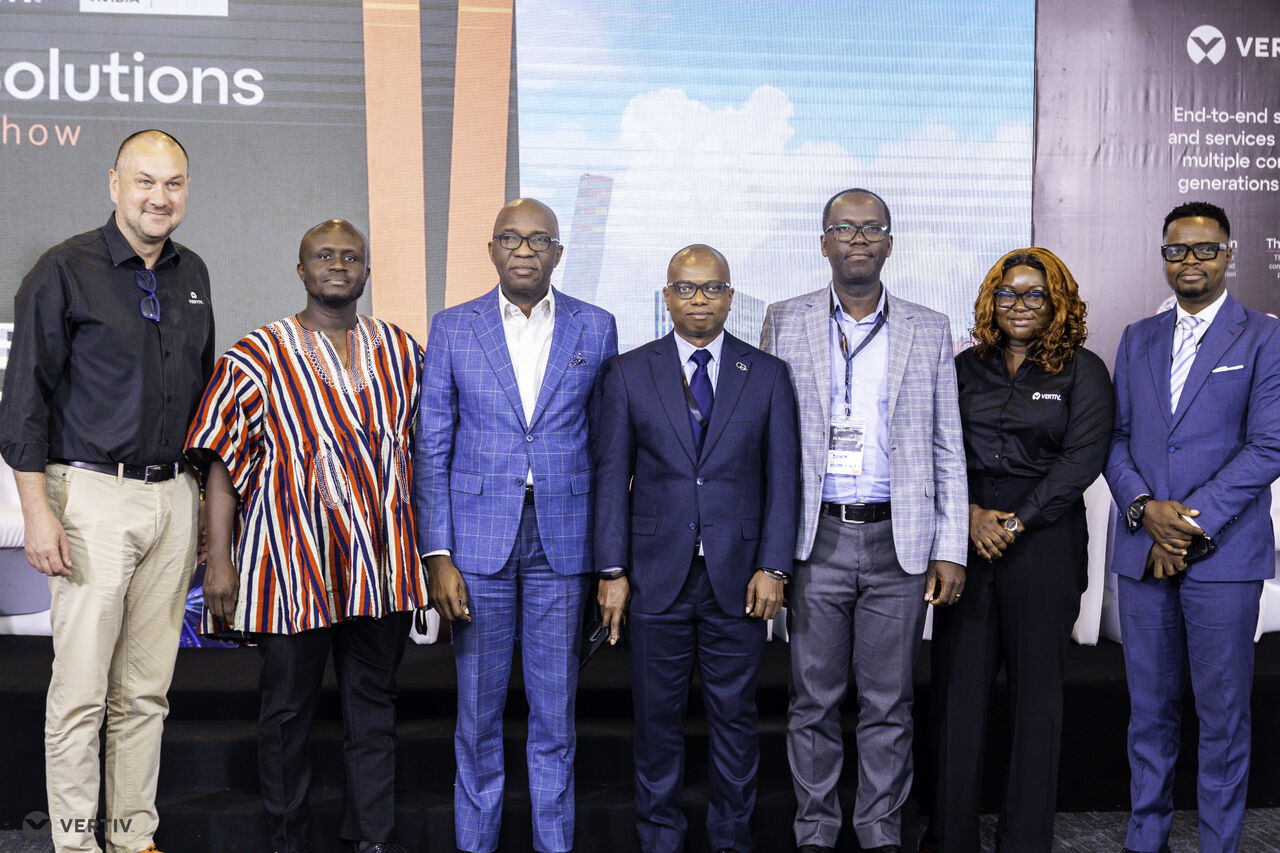






Africa’s ambition to become a major player in the global digital economy took centre stage recently as policymakers, regulators, and technology leaders gathered in Ghana to discuss the future of AI-ready infrastructure across the continent.
The high-level dialogue, convened in partnership with Vertiv, focused on the theme: “AI-Ready Infrastructure: Powering the Future of Enterprise Innovation.” The event explored a pressing question increasingly confronting African economies: can the continent truly support artificial intelligence at enterprise scale?
According to Temitope Osunrinde, the discussions examined the complete infrastructure ecosystem required to support AI growth — including computing power, energy supply, cooling systems, cloud infrastructure, connectivity, and regulatory coordination.
The event attracted participation from key government officials and industry stakeholders, including representatives of Ghana’s Ministry of Communication, Digital Technology and Innovations, the National Insurance Commission, and major digital infrastructure operators across Africa.
One of the strongest messages emerging from the discussions was that Africa’s digital transformation can no longer rely on fragmented systems or isolated investments. Instead, experts argued that the continent’s next phase of economic growth will depend on stronger collaboration between governments, regulators, cloud providers, energy companies, fintech operators, and enterprise technology players.
The benefits of AI-ready infrastructure are enormous. Artificial intelligence has the potential to improve productivity, drive financial inclusion, strengthen healthcare systems, enhance education, modernize agriculture, and accelerate innovation across industries. Countries capable of building strong digital ecosystems could attract foreign investment, support local startups, create jobs, and position themselves as regional technology hubs.
However, the discussions also highlighted major challenges confronting Africa’s AI ambitions.
One of the biggest barriers remains power infrastructure. AI systems require enormous computing capacity and stable electricity — something many African countries still struggle to provide consistently. Poor connectivity, limited data centres, high infrastructure costs, and fragmented regulatory frameworks also continue to slow digital transformation efforts across the continent.
There are equally growing concerns around data sovereignty, cybersecurity, and digital dependence. Without local cloud infrastructure and clear regulatory frameworks, African countries risk becoming overly dependent on foreign technology providers, potentially exposing sensitive data and weakening digital control.
Industry leaders at the summit stressed the importance of long-term planning and coordinated policies to ensure that AI growth benefits African economies sustainably and securely.
The conversations also reinforced a broader reality shaping global economies today: artificial intelligence is rapidly becoming the backbone of modern enterprise innovation. Nations that fail to invest in digital infrastructure risk being left behind in the next wave of industrial and economic transformation.
Ghana’s growing urgency and commitment to digital innovation stood out strongly during the discussions, with participants describing the country as increasingly positioning itself as a strategic technology hub within West Africa.
Ultimately, the message from the summit was clear — Africa’s AI future will not be built by single companies or governments acting alone. It will depend on connected ecosystems, regional cooperation, reliable infrastructure, smart regulation, and sustained investment in digital capacity.
As global competition around artificial intelligence intensifies, Africa faces a defining moment: build the infrastructure needed for the future now, or risk missing the next technological revolution altogether.