


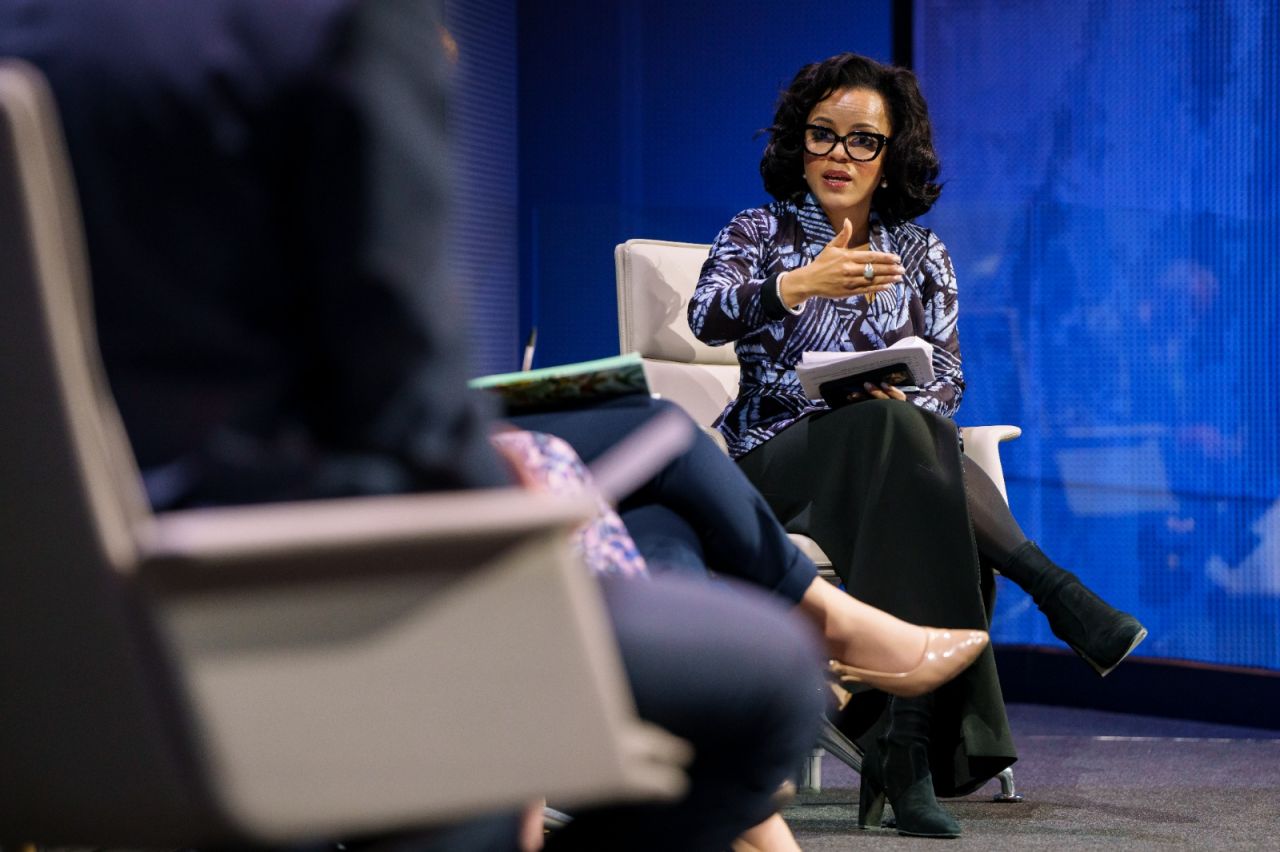






Paris (April 2026) — Global momentum toward financing the green transition in developing economies has reached a critical turning point, according to Tariye Gbadegesin, Chief Executive Officer of the Climate Investment Funds (CIF).
Speaking after participating in the recent Pathway to Paris forum, Gbadegesin reflected on how dramatically the conversation around climate finance has evolved over the past two decades. She noted that nearly eighteen years ago, discussions about green transitions in developing countries were far less prominent among global financial leaders. Today, however, such conversations are not only mainstream but are being driven with urgency and strong investor interest.
The event, hosted by the European Bank for Reconstruction and Development (EBRD), brought together policymakers, financiers, and industry leaders to explore pathways for accelerating climate investments across emerging markets. Gbadegesin commended the institution for its long-standing leadership in advancing climate-focused financing and fostering partnerships that have matured over nearly two decades.
A key takeaway from the forum, she noted, was the surge in enthusiasm and engagement from stakeholders across sectors, signaling what many experts now consider a “tipping point” in global climate action. The transition to greener economies is no longer framed solely as an environmental necessity but increasingly as a compelling economic opportunity.
Discussions at the event spanned a wide range of sectors, including industry decarbonization, coal transition strategies, nature-based solutions, and climate resilience. Across these areas, a unifying theme emerged: investments in green technologies and sustainable systems are becoming financially viable and strategically essential.
The growing alignment between environmental goals and economic incentives marks a significant shift in how climate action is perceived. For developing countries in particular, this presents an opportunity to leapfrog traditional, carbon-intensive development pathways and adopt cleaner, more sustainable models of growth.
The social implications of this shift are profound. Increased investment in green sectors has the potential to drive job creation, improve energy access, and enhance resilience to climate-related shocks—especially in vulnerable regions. It also opens the door for greater inclusion, as climate finance initiatives increasingly incorporate considerations around equity and community impact.
Gbadegesin also acknowledged the contributions of fellow panelists, including Nicola Ranger, Lisa Sachs, and David Blood, as well as facilitator Gianpiero Nacci, whose insights helped shape a dynamic and forward-looking discussion.
As global climate challenges intensify, forums like Pathway to Paris are increasingly seen as critical platforms for aligning capital, policy, and innovation. The message emerging from this year’s gathering is clear: the green transition is no longer a distant ambition—it is rapidly becoming a central pillar of global economic strategy.