

A wave of political, economic and security-related developments is drawing global attention to Nigeria and the wider West African region, as leaders, investors and policy experts debate the direction of growth and stability ahead of a major diplomatic engagement.
Anticipation has been building around the planned state visit of Nigeria’s president, Bola Ahmed Tinubu, to the United Kingdom — the first such visit in nearly four decades. Business and policy circles in London have reportedly been abuzz with receptions, strategy meetings and informal networking sessions, reflecting renewed international interest in Nigeria’s economic outlook and reform agenda .
Finance leadership shift raises expectations
Closer to home, Nigeria’s Senate confirmation of Taiwo Oyedele as Minister of State for Finance has sparked optimism among business stakeholders. Observers say the appointment signals an intention to strengthen fiscal management and restore confidence in public-finance reforms at a time when investors are closely watching policy direction.
Analysts argue that effective revenue mobilisation and disciplined spending could prove decisive in shaping Nigeria’s ability to attract capital and deliver growth in a competitive global environment 📈.
Regional security tensions take centre stage
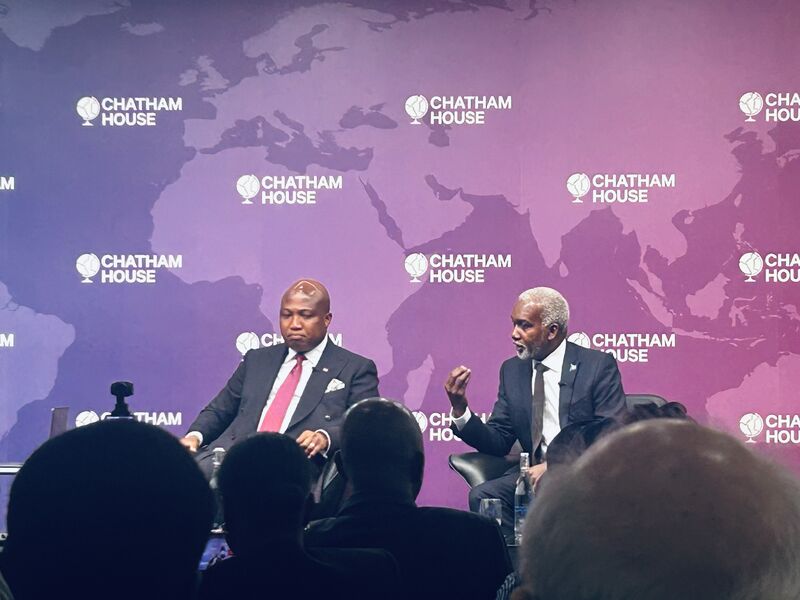
Meanwhile, broader concerns about security cooperation and foreign military involvement in West Africa have intensified following high-level discussions hosted by Chatham House. At the forum, Nigeria’s Foreign Affairs Minister, Yusuf Tuggar, and Ghana’s Foreign Minister, Samuel Okudzeto Ablakwa, examined options for strengthening regional security coordination.
Speakers stressed the importance of African-led solutions, with calls for international partners to play supportive rather than dominant roles. The debate gained urgency amid reports that Israel may be exploring plans linked to a potential military presence in northern Somalia — a development that has drawn strong reactions from Somali authorities and raised fears of heightened instability across the Horn of Africa.
Security analysts warn that the establishment of foreign bases in politically sensitive territories could reshape regional alliances and trigger new geopolitical rivalries ⚠️.
Investment dialogue intensifies at global forums
Economic opportunities across Africa were also the focus of discussions at the Africa Business Forum hosted by Saïd Business School. Executives, policymakers and development experts examined how trade, leadership and policy reforms can unlock sustainable growth and job creation.
Keynote sessions featured insights from leaders associated with the International Finance Corporation, highlighting the need for stronger private-sector participation and long-term financing strategies. Participants emphasised that Africa’s growth trajectory will depend on translating investment commitments into tangible employment and innovation outcomes
Energy policy debates also surfaced during the forum, with advocates promoting bold approaches to climate action — including proposals linked to global fossil-fuel reduction initiatives. Observers noted that such discussions reflect increasing pressure on governments and corporations to balance economic expansion with environmental responsibility.
A region at a crossroads
Taken together, recent developments point to a pivotal moment for Nigeria and West Africa. From leadership transitions and diplomatic engagement to security anxieties and investment ambitions, stakeholders say the region is navigating complex choices that could shape its future for decades.
As one participant at the forum remarked, moments of transition are rarely comfortable — but they often determine whether nations can convert challenges into lasting progress 🚀.