


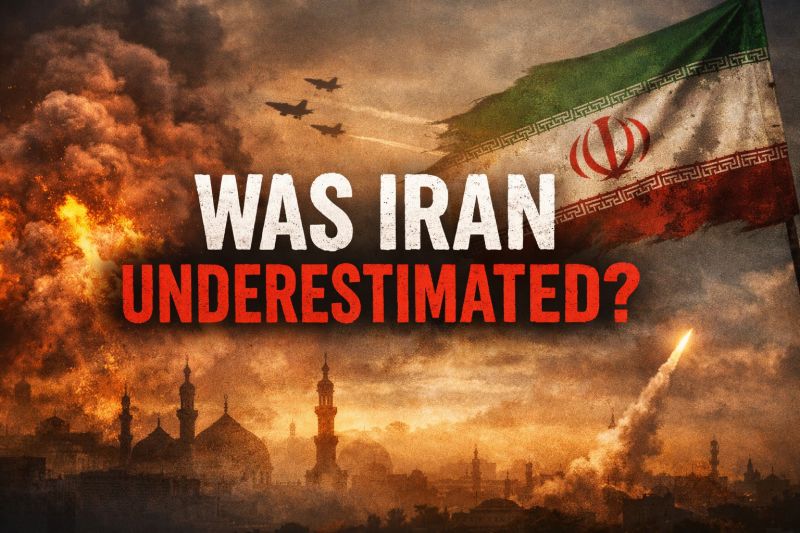
In war, the most expensive mistake is rarely about weapons. It is about misjudging an opponent’s endurance — their capacity to absorb pressure, adapt, and retaliate in ways that transform the battlefield itself.
That mistake appears to be unfolding in the current tensions involving the United States, Israel, and Iran. For years, Western strategic thinking treated Iran as a contained threat — dangerous, certainly, but manageable. Its missile arsenal, proxy forces, and regional alliances were well known and deeply studied.
Yet the real misreading was not about whether Iran possessed weapons or allies.
It was about how much disruption Iran could still generate after absorbing an attack — and how quickly a supposedly limited conflict could metastasize into a regional and economic crisis.
What many strategists assumed would remain a controlled confrontation has instead become a complex chain reaction stretching across the Middle East, global energy markets, military alliances, and the broader geopolitical rivalry between the world’s great powers.
The Illusion of a Limited War
Modern military planning in the West tends to evaluate threats through technical measurements.
Missile ranges.
Payload capacities.
Air defense networks.
Radar coverage.
Electronic warfare capabilities.
These factors create the impression that conflict can be managed like a technological equation: detect the threat, intercept the missile, neutralize the target, and contain the damage.
But states that have lived under decades of sanctions, isolation, and pressure rarely fight wars that remain confined to conventional military channels. Their strategy often centers on expanding the battlefield beyond the military domain and into economic, political, and infrastructural systems.
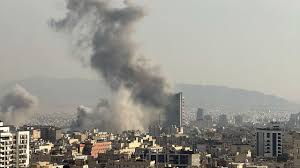
Iran appears to be operating precisely within that doctrine.
Instead of responding solely through conventional military confrontation, Tehran’s strategy has leaned heavily on asymmetrical responses — drones, proxy networks, cyber capabilities, and targeted strikes that threaten critical infrastructure and regional stability.
The destruction of highly sophisticated radar installations in Bahrain — systems that were meant to form part of the West’s defensive architecture in the Gulf — has served as a stark signal. These installations represent some of the most advanced surveillance capabilities deployed in the region, yet they have proven vulnerable in a rapidly evolving conflict environment.
For Gulf states that depend heavily on American security guarantees, the implications are deeply unsettling.
Growing Anxiety Across West Asia
Across the Gulf, governments that have long relied on Washington’s military umbrella are beginning to question the reliability of that protection in a conflict that is no longer confined to traditional battlefields.
Missiles, drones, and proxy attacks have begun to target the wider ecosystem that sustains the region’s prosperity — ports, shipping lanes, airports, oil infrastructure, and commercial centers.
This has forced many Middle Eastern states into a difficult position. On one hand, they remain security partners of the United States. On the other, they now face the reality that any confrontation involving Iran could directly destabilize their economies and national security.
The result has been a quiet but growing sense of disappointment in Washington’s ability to fully shield the region from escalation. The expectation that American military power could instantly neutralize threats is increasingly being tested by a form of warfare designed to bypass conventional defenses.
Russia’s Strategic Revenge
Behind the immediate conflict lies a deeper geopolitical layer.
Russia, still locked in confrontation with the West following the war in Ukraine, has strong strategic incentives to see the United States stretched across multiple theaters of tension.
While Moscow avoids direct military involvement, analysts believe it has been quietly assisting Tehran through intelligence cooperation, satellite reconnaissance, and technological collaboration that strengthens Iran’s ability to operate in contested environments.
Satellite coordinates, electronic warfare insights, and technical transfers could significantly enhance Iran’s targeting capabilities, allowing strikes to bypass certain Western defensive systems.
For Russia, such cooperation carries enormous strategic value.
The war in Ukraine saw the United States and its NATO allies pour billions of dollars in weapons, financial aid, and intelligence support into Kyiv. Moscow now has an opportunity to impose strategic costs on Washington without firing a shot directly at American forces.
In essence, the Middle East confrontation allows Russia to extract geopolitical revenge — forcing the United States to expend resources and attention in another volatile theater while the Ukraine conflict continues to drain Western military stockpiles.
China’s Quiet but Strategic Role
China’s involvement is more subtle but equally important.
Beijing maintains deep economic ties with Iran and has steadily expanded its strategic cooperation with countries seeking alternatives to Western influence. Through infrastructure investment, technological collaboration, and energy partnerships, China has positioned itself as a long-term economic partner to Tehran.
While Beijing avoids overt military involvement, the transfer of technology, communication systems, and industrial capabilities can indirectly strengthen Iran’s resilience against Western pressure.
China’s interest is clear: a prolonged crisis that weakens Western influence in the Middle East aligns with Beijing’s broader ambition to reshape global power balances without direct confrontation.
Europe’s Strategic Vulnerability
The conflict also exposes deeper structural weaknesses within Europe.
Since the start of the war in Ukraine, many European nations have transferred significant quantities of military equipment — artillery, armored vehicles, missile systems, and ammunition — to support Kyiv.
While politically significant, this massive transfer has also depleted parts of Europe’s own defense stockpiles. Several European militaries are now confronting the reality that their ability to sustain prolonged high-intensity conflict has been reduced.
At the same time, the continent remains heavily dependent on the security architecture of the North Atlantic alliance.
The principle of collective defense under NATO — commonly referred to as Article 5 — states that an attack on one member should be treated as an attack on all.
Yet modern conflict increasingly unfolds in ways that do not clearly trigger such provisions. Drone attacks on overseas facilities, cyber operations, proxy warfare, and regional escalation fall into gray zones that challenge traditional alliance responses.
The result is growing debate about whether NATO’s deterrence guarantees remain fully credible in an era of hybrid warfare.
The Astronomical Cost of the Conflict
Perhaps the most immediate impact of the crisis is financial.
Maintaining American military operations across the Middle East is extraordinarily expensive. Carrier strike groups, missile defense systems, reconnaissance aircraft, and naval patrols require enormous logistical and financial resources.
Defense analysts estimate that the United States may be spending close to one billion dollars per day sustaining its military posture across the region.
This includes:
- Deployment of advanced missile defense systems
- Continuous aerial patrols and intelligence missions
- Naval operations in the Persian Gulf and surrounding waters
- Emergency security reinforcements for regional bases and allies
Over months, these costs quickly escalate into tens of billions of dollars — funds that place additional pressure on an already strained defense budget.
The Economic Shock to the Global System
But the financial burden does not stop with military spending.
The broader global economy is also beginning to feel the impact.
The Middle East sits at the center of the world’s energy system, and any instability in the region immediately reverberates through global markets.
The Strait of Hormuz remains one of the most critical shipping corridors on the planet. Roughly 20 percent of global oil and liquefied natural gas supply passes through this narrow passage.
Even the perception of danger in this corridor triggers cascading economic effects:
Insurance premiums for oil tankers surge.
Shipping companies reroute vessels.
Energy markets react with price volatility.
Supply chains begin adjusting for potential disruptions.
Air travel across parts of the Middle East has also been affected as airlines reconsider flight routes through increasingly unstable airspace. Cargo shipments slow, insurance markets tighten, and energy-importing countries begin recalculating strategic reserves.
All of this contributes to rising global inflation pressures, particularly in energy-dependent economies.
The Real Battlefield: Consequences
The core miscalculation, therefore, was not believing that Iran could defeat the United States or Israel in conventional combat.
No serious strategist ever believed that.
The real misreading was failing to recognize how effectively Iran could spread the consequences of conflict beyond the battlefield.
Rather than confronting Western military superiority directly, Tehran’s strategy appears focused on making the cost of escalation unbearable — economically, politically, and strategically.
By targeting infrastructure, shipping routes, and economic arteries, the conflict has migrated into the everyday mechanics of global commerce.
Once war begins to affect energy markets, trade routes, insurance systems, and financial stability, it ceases to be a regional confrontation.
It becomes a global economic event.
A War Without Clear Boundaries
In the modern world, wars rarely remain where they begin.
They move through alliances, markets, technologies, and rivalries between great powers.
In this confrontation, Iran’s resilience intersects with Russia’s geopolitical calculations, China’s strategic patience, and the West’s economic vulnerabilities.
What began as a regional security challenge is rapidly evolving into a broader contest over influence, endurance, and the future balance of global power.
And in that unfolding contest, the greatest mistake may not have been underestimating Iran’s weapons.
It may have been underestimating how far the consequences of striking Iran could travel.