


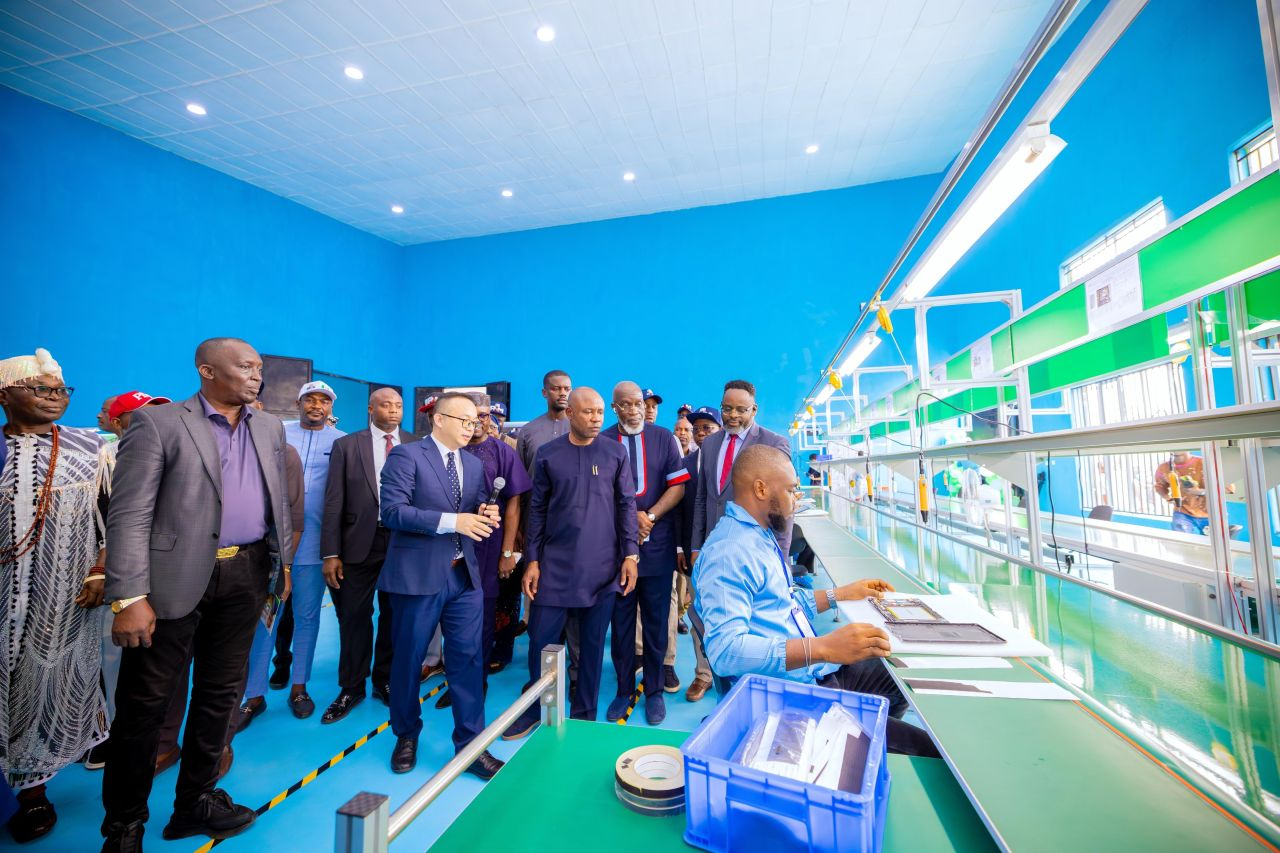
The inauguration of the Enugu Haier Factory marks a significant inflection point in Nigeria’s industrial and technology landscape, with implications that extend far beyond the walls of a single manufacturing facility. Framed as a $20 million Foreign Direct Investment, the project is increasingly being viewed by analysts as a systemic intervention capable of reshaping technology production, labour dynamics, education outcomes, and investor confidence—particularly at the subnational level.
Commissioned under the leadership of Peter Ndubuisi Mbah, the factory—delivered in partnership with Haier Global Business—signals Enugu State’s deliberate transition from a consumption-driven economy to one anchored on industrial productivity and knowledge-based growth.
From Import Dependence to Local Tech Manufacturing
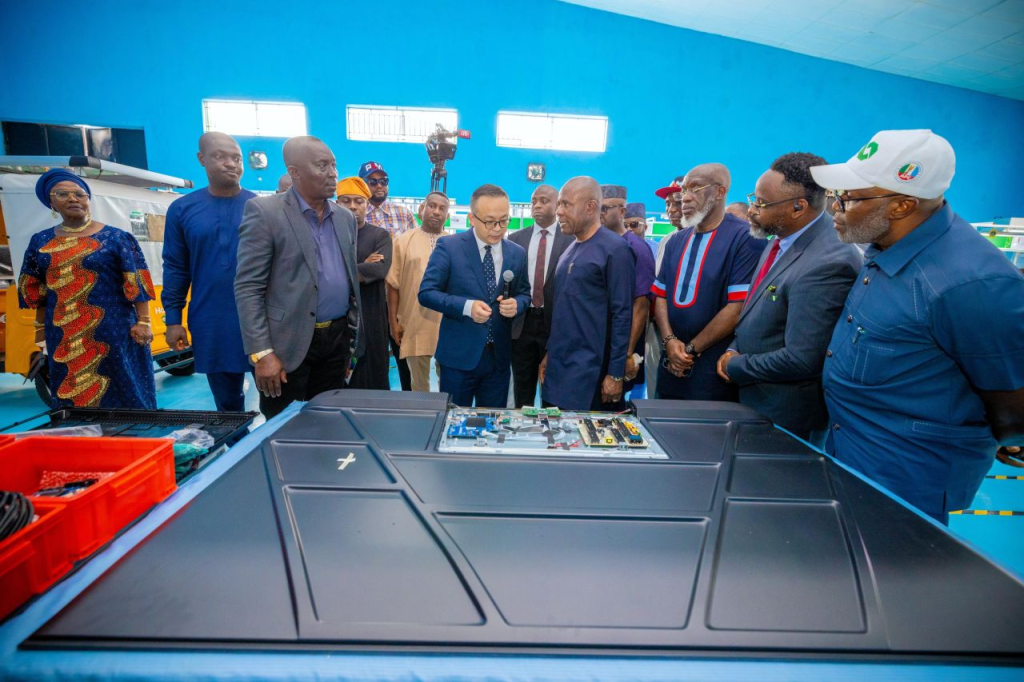
For decades, Nigeria’s technology sector has been heavily import-dependent, with devices assembled and shipped from Asia and Europe. The Enugu Haier Factory disrupts this pattern by introducing localised production of ICT hardware, including smartphones, tablets, computers, smart boards, renewable energy systems, and health technology devices.
With a projected capacity of 200,000 ICT devices annually, the facility is expected to ease pressure on foreign exchange, shorten supply chains, and improve price competitiveness for locally assembled devices. More importantly, it lays the groundwork for a Made-in-Enugu technology identity, capable of competing regionally within West Africa.
Technology experts note that manufacturing plants of this scale often act as magnets for ancillary industries—component suppliers, firmware developers, device testing labs, logistics companies, and after-sales service providers—creating an industrial cluster effect around Enugu.
Labour Market Shock: Jobs Beyond the Factory Floor
While job creation is often measured in direct employment numbers, the labour impact of the Haier Factory is expected to be multi-layered and structural.
Directly, the plant will absorb technicians, engineers, production managers, and quality-control specialists. Indirectly, it will stimulate demand for:
- Electrical and mechanical engineers
- ICT maintenance professionals
- Supply-chain and procurement specialists
- Transport and logistics operators
- Facility management and industrial safety experts
This represents a shift from informal and low-skill employment to semi-skilled and high-skilled industrial labour, a transition many Nigerian states have struggled to achieve.
Labour analysts argue that this could help reposition Enugu as a skills-exporting state, where trained professionals not only serve local industries but also become competitive in national and regional labour markets.
Education–Industry Linkage: Closing the Skills Gap
One of the most strategic aspects of the project is its integration with Enugu’s Smart Green Schools initiative. By producing the very devices that power classrooms within the state, the factory creates a closed-loop ecosystem—education feeding industry, and industry reinforcing education.
Students and young graduates gain access to:
- Hands-on industrial training
- Exposure to modern manufacturing processes
- Practical understanding of hardware production and maintenance
This model directly addresses Nigeria’s long-standing skills mismatch problem, where graduates lack industry-relevant experience. Over time, it is expected to reduce youth unemployment and improve workforce productivity.
Technology as an Economic Multiplier
Beyond jobs and education, the factory’s presence elevates Enugu’s position in the digital economy. Locally produced devices can accelerate:
- E-learning adoption
- Digital health deployment
- Renewable energy integration in public infrastructure
- SME digitalisation across the Southeast
As device availability improves and costs decline, technology penetration is likely to deepen, creating new markets for software developers, data service providers, and digital entrepreneurs.
Investor Signal and Policy Alignment
The Haier investment is also being interpreted as a confidence signal to global investors. Subnational governments in Nigeria have often struggled to attract long-term, capital-intensive projects due to infrastructure gaps and policy uncertainty. Enugu’s success suggests a shift.
Governor Mbah has linked the investment climate to broader national reforms, aligning the project with the Federal Government’s macroeconomic direction under Bola Ahmed Tinubu. Analysts say this alignment reduces policy friction and reassures foreign investors of regulatory continuity.
Haier’s planned $30 million expansion into agriculture, mining, and transportation further reinforces the idea that the Enugu factory is not a standalone project but the first node in a broader industrial network.
The Domino Effect in Motion
Economists describe the development as a classic domino effect:
- Manufacturing reduces imports and builds local capacity
- Technology adoption accelerates across education, health, and energy
- Labour shifts towards skilled and semi-skilled employment
- Education becomes more practical and industry-facing
- Investment confidence rises, attracting complementary industries
If sustained, this model could redefine how Nigerian states pursue development—moving away from dependency on federal allocations toward self-sustaining industrial ecosystems.
A Test Case for Subnational Economic Transformation
Ultimately, the Enugu Haier Factory stands as a test case: proof that clear vision, policy coherence, and credible partnerships can translate ambition into measurable economic impact.
As Enugu positions itself as a hub for industry, innovation, and knowledge-driven growth, the real measure of success will lie in how effectively this single investment catalyses a chain reaction across technology, labour, and capital—not just within the state, but across Nigeria’s emerging industrial map.
In Enugu, tomorrow is no longer a slogan—it is being assembled, device by device, skill by skill, job by job.