


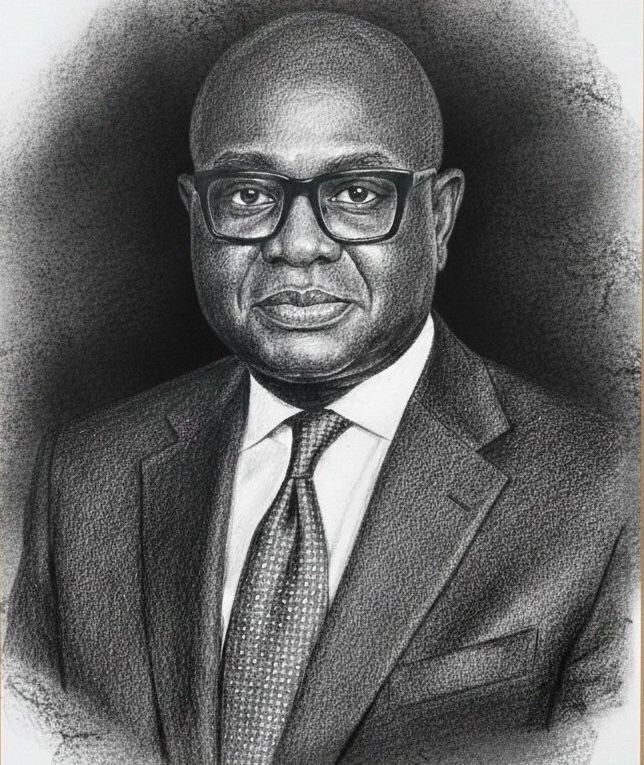



Former presidential candidate and founder of the Institute for Governance and Economic Transformation (IGET Academy), Prof. Kingsley Moghalu, has described a recent address by U.S. Secretary of State Marco Rubio at the Munich Security Conference as a significant marker in the evolving foundations of global order.
In his analysis, Moghalu said Rubio’s speech was conciliatory in tone but firm in substance, aimed at reaffirming the United States–Europe “special relationship.” However, he argued that beneath the rhetoric of transatlantic unity lies a deeper ideological shift — away from traditional globalist assumptions toward what he termed a “rebuilding” of Western civilisation grounded in strategic national interest.
A Historic Realignment in International Relations
According to Moghalu, the recalibration of U.S. foreign policy under President Donald Trump represents the most consequential transformation in international relations since the collapse of communism in the late 1980s.
He contended that the emerging posture of the United States signals a reconstruction of the pre-existing liberal international order, with greater emphasis on sovereignty, strategic autonomy, and power politics. In his view, this development revalidates the rationalist-realist “English School” theory of international relations, which posits that the world functions as an “anarchical society” of states — cooperating where interests align and competing where they diverge.
Questioning the Globalist Assumption
Moghalu further argued that the globalist premise — that national interests could be subordinated to an altruistic “international community” — was inherently flawed. He suggested that the expectation of selfless multilateralism overlooked the enduring primacy of state interests in global affairs.
The remarks come amid ongoing debates about the durability of the post-Cold War international system and the resurgence of geopolitical rivalry among major powers.
Africa’s Strategic Imperative
Turning to Africa, Moghalu asserted that the continent must reposition itself as an independent pole within the emerging multipolar order. Drawing parallels with Asia’s economic and strategic rise, he argued that African nations should focus on rebuilding and strengthening their own civilisational and economic foundations without waiting for external validation.
“Asia did not seek anyone’s permission to do so,” he noted, adding that Africa has both the agency and the strategic imperative to shape its own destiny within a rapidly evolving global system.
Analysts say such perspectives reflect a broader shift in discourse across the Global South, where questions of sovereignty, self-determination, and regional power consolidation are increasingly central to foreign policy debates.