

Anthony EMEKA Nwosu
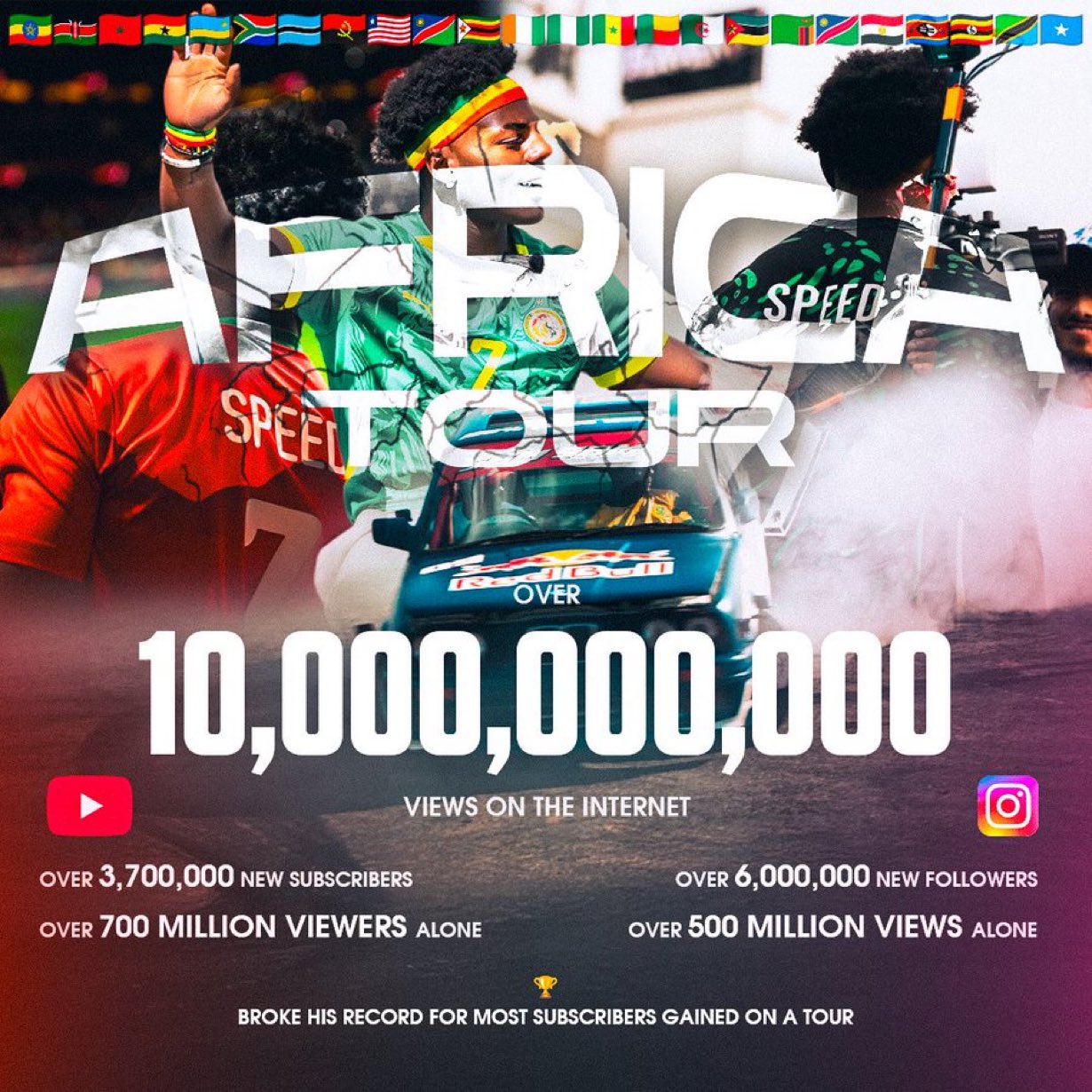
IShowSpeed’s Africa tour has quietly become one of the most consequential public-relations moments for the continent in recent years. Beyond the staggering digital metrics—billions of views, millions of new followers—the real impact lies in perception. For a global audience, especially in the West, this exposure directly challenged a long-standing narrative that has portrayed Africa as backward, broken, or perpetually behind the rest of the world.
For decades, Africa’s image has been shaped by selective storytelling. News headlines, charity campaigns, and Hollywood tropes often reduced a vast and diverse continent to images of crisis and dependency. Modern cities, innovation, nightlife, infrastructure, and thriving youth culture were rarely part of the frame. What this tour did—almost accidentally—was break that frame wide open.
Across X (Twitter), YouTube comments, TikTok, and Instagram, a recurring theme emerged: surprise.
Comments like “Why didn’t anyone tell us Africa has cities like this?” or “These places look more alive than most cities I’ve visited” flooded timelines. Others wrote, “I grew up thinking Africa was just villages and safaris—this completely changed my mindset,” while some openly questioned the narratives they had been taught: “We were lied to about Africa, and social media is exposing it.”
These reactions are important because they reveal something deeper than admiration—they expose how incomplete global knowledge of Africa has been. Viewers saw skylines, packed streets, creative hubs, fashion, humor, music, and confident young people who looked unmistakably global. They also saw ecosystems—coastlines, greenery, urban parks, and natural beauty integrated into city life—elements rarely associated with Africa in Western imagination.
One viral post summed it up bluntly: “Africa isn’t underdeveloped, it’s underrepresented.”
This is why the moment matters. Traditional PR campaigns struggle to undo decades of bias, but raw, unscripted digital content travels faster and feels more trustworthy. When millions watch a global creator navigate African cities in real time—laughing, interacting, being overwhelmed by energy and warmth—it humanizes the continent in a way policy papers and glossy brochures never could.
This is soft power at its most effective. No official slogans. No staged messaging. Just lived experience broadcast globally.
The implications for tourism are enormous. Many commenters didn’t just express shock—they expressed intent. “Africa just moved to the top of my travel list,” “I need to visit Lagos/Accra/Nairobi after this,” and “Why aren’t more people vacationing here?” were common refrains. Exposure has already done the hardest part: sparking curiosity and desire.
Now comes the opportunity for African nations to act. Governments and tourism boards can capitalize on this shift by aligning their messaging with what people already responded to—vibrant cities, culture, nightlife, food, creativity, and nature. Simplifying visa processes, improving digital tourism information, promoting city experiences, and partnering with global creators can convert online fascination into real-world visits.
More broadly, this moment represents a reclaiming of narrative. Africa does not need to be “reintroduced” to the world—it needs to be seen accurately. What viral culture has done is puncture a myth that survived largely because it went unchallenged.
As one widely shared comment put it: “The saddest part is realizing how much beauty we were never shown.”
That realization is powerful. It signals the slow collapse of propaganda and the rise of direct, people-to-people storytelling. The world is no longer relying solely on secondhand descriptions of Africa—it is watching, listening, and reassessing in real time.
And once a perception shifts at that scale, it rarely shifts back. 🌍