


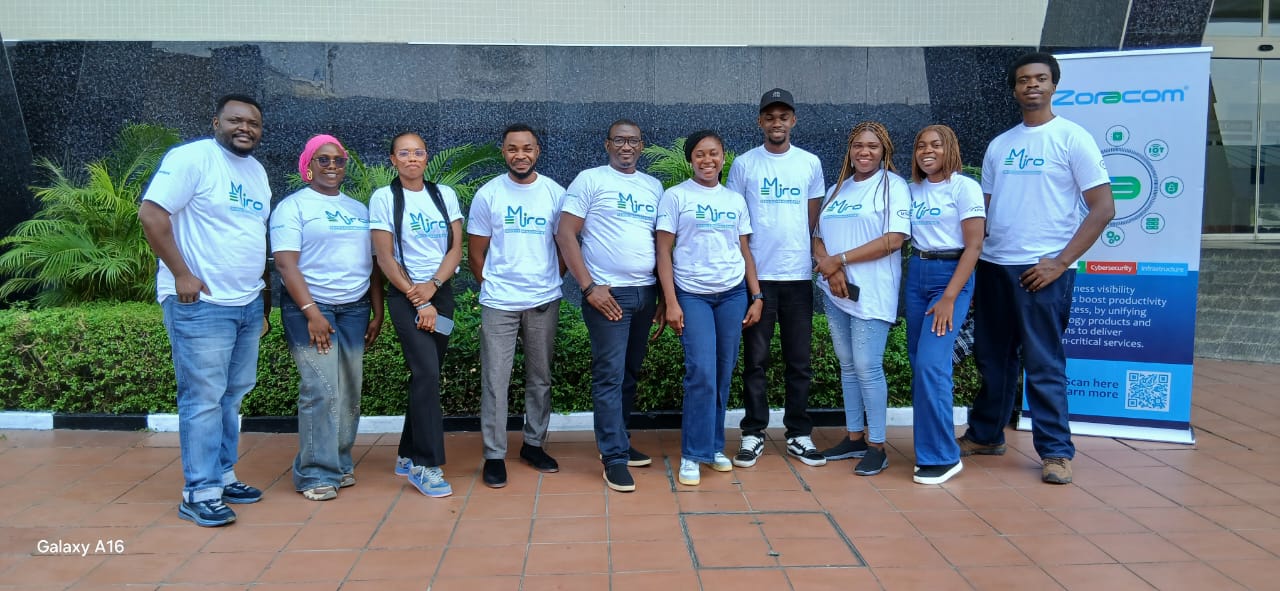






The recently concluded Day One of the DCEx Workshop, hosted by Zoracom in collaboration with MTN, went beyond a routine industry engagement, placing critical issues around data centre resilience, scalability, and collaboration firmly in focus as organisations prepare for the demands of 2026 and beyond.
At the heart of the workshop was the growing need for robust DCEx (Data Centre Exchange) solutions in an environment where network complexity, cyber risk, and service availability are under increasing pressure. Participants examined how evolving traffic patterns, cloud adoption, and digital services growth are stretching existing infrastructure and why data centres must move from reactive operations to proactive, insight-driven management.
Speaking on the significance of the session, Mr. John Nwachukwu, a business leader and expert in operational resilience and cybersecurity risk management, said the discussions were shaped by real operational challenges faced by large-scale network operators.
“The workshop created a valuable platform to collaborate, exchange insights, and gather meaningful feedback while exploring upcoming developments and opportunities around DCEx solutions,” Nwachukwu said. “These conversations are important because they address how operators can strengthen resilience, improve observability, and reduce risk in increasingly complex environments.”
One of the key issues raised was operational resilience. With service downtime carrying high financial and reputational costs, participants discussed the need for better visibility across networks and data centres, automated observability, and faster fault isolation. DCEx solutions were positioned as a critical enabler for improving performance monitoring, interconnection efficiency, and service continuity.
Another major focus was cybersecurity and risk management. As data centres become more interconnected, the attack surface continues to expand. The workshop explored how integrated DCEx architectures can support stronger security controls, improved traffic governance, and better coordination between network, security, and operations teams.
The session also highlighted the importance of vendor and ecosystem collaboration. Rather than operating in silos, stakeholders emphasised the need for shared standards, interoperability, and early engagement between customers and vendors. This approach, participants noted, helps reduce deployment risks, shortens implementation timelines, and ensures solutions are aligned with real business and technical needs.
Zoracom noted that the workshop was designed not just to showcase solutions, but to gather practical feedback that will shape future product development and deployment strategies. Discussions are expected to continue into the next phase of the workshop, with deeper engagement involving MTN’s key vendors.
As Nigeria’s digital infrastructure expands and demand for reliable, secure connectivity accelerates, the issues raised during the DCEx Workshop underscore a broader industry shift: from isolated infrastructure upgrades to integrated, resilience-driven data centre ecosystems built through sustained collaboration.