


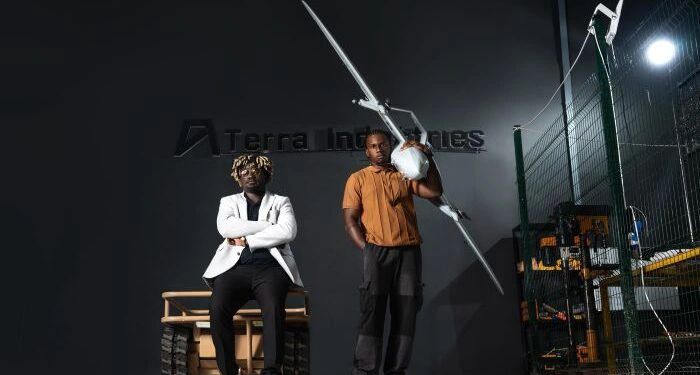






A recent $11.75 million private investment into Nigerian defence technology startup Terra Industries is highlighting a shift in how Africa may fund and develop its security infrastructure — moving away from heavy government dependence toward private, locally driven innovation.
Unlike traditional defence funding, which often comes from state budgets or foreign military partnerships, Terra’s funding came entirely from international venture capital firms, including 8VC (founded by Palantir co-founder Joe Lonsdale), Lux Capital, Valor Equity Partners, and SV Angel.
Founded in 2024 by Nathan Nwachuku and Maxwell Maduka, Terra Industries designs and manufactures drones, autonomous sentry towers, unmanned ground vehicles, and surveillance systems built specifically for African terrain and security needs. The company operates a manufacturing base in Abuja, with engineering teams expanding globally.
Reducing Africa’s Dependence on Imported Defence Systems
Africa currently spends billions of dollars each year importing defence and security equipment from outside the continent. These systems are often expensive, difficult to maintain locally, and not always adapted to African environments.
African development writer Olarewadjou Olouyomi says Terra’s strategy reflects a push for local manufacturing and technological independence.
“Africa spends billions importing defence and security systems every year. Terra is betting that local manufacturing, autonomous systems, and commercial customers is a viable alternative,” Olouyomi said.
The shift raises broader questions about industrial policy, economic sovereignty, and whether African nations can build sustainable, home-grown defence industries rather than relying on foreign suppliers.
Private Capital Filling the Security Funding Gap
With many African governments facing budget constraints and competing priorities such as healthcare, education, and infrastructure, public investment in advanced defence technology has remained limited.
Terra’s business model targets commercial and critical infrastructure clients — including power plants and mining companies — rather than relying solely on military contracts.
The company says its systems already protect infrastructure worth approximately $11 billion and has generated over $2.5 million in commercial revenue.
According to Olouyomi, this approach could change how defence technology is funded on the continent.
“Private capital is increasingly stepping in where government budgets fall short, especially for infrastructure protection and advanced security systems,” he said.
Ethical and Regulatory Concerns
The growth of autonomous defence technologies also raises ethical and regulatory issues, including privacy, data protection, and accountability.
Experts warn that without clear policies, surveillance and security systems could be misused by private actors or operate without sufficient oversight.
Olouyomi notes that regulation must evolve alongside technology.
“As defence technology becomes more autonomous and commercially deployed, African governments will need stronger regulatory frameworks to protect civil liberties and ensure responsible use,” he said.
Industrial Development and Job Creation
Supporters argue that local defence manufacturing could strengthen Africa’s industrial base, create skilled jobs, and reduce long-term reliance on foreign suppliers.
With production based in Abuja and global engineering expansion, Terra represents a growing model of African-led industrial innovation.
“Local manufacturing combined with advanced technology can strengthen Africa’s industrial base while reducing dependence on foreign suppliers,” Olouyomi said.
A Turning Point for African Defence Strategy
The $11.75 million investment in Terra Industries signals a possible shift in Africa’s defence strategy — from importing equipment to building solutions locally, and from government-led funding to private-sector innovation.
Whether this model can scale across the continent will depend on policy, regulation, ethical safeguards, and continued investment.
For now, Terra Industries serves as a test case for whether African-built defence technology can compete globally and reshape how the continent protects its infrastructure and people.