


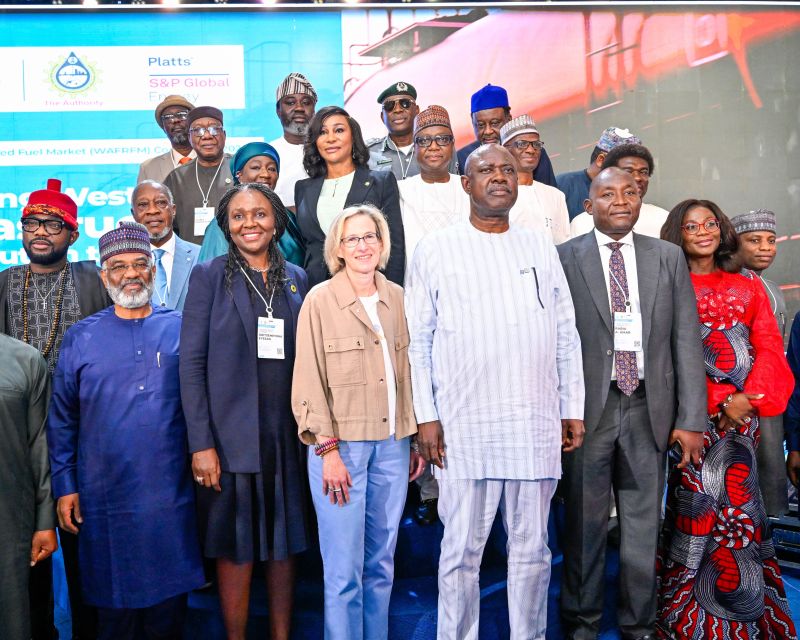




The Nigerian Upstream Petroleum Regulatory Commission (NUPRC) has participated in the 2026 West Africa Refined Fuel Market Conference, a high-level industry gathering focused on strengthening regional cooperation, improving petroleum market transparency and developing a more integrated refined fuel market across West Africa.
The conference, which brought together regulators, policymakers, industry stakeholders, investors and energy-market experts, was jointly hosted by the Nigerian Midstream and Downstream Petroleum Regulatory Authority (NMDPRA), S&P Global Commodity Insights and the West Africa Regulators Forum (WARF).
The event, held in Abuja, comes at a critical period for West Africa’s petroleum industry as the region experiences significant changes in refining capacity, fuel supply chains, market structures and petroleum-product trading.
According to the West Africa Regulators Forum, the 2026 conference focused on creating a transparent market for regional refined-fuel price benchmarks, with particular attention to infrastructure financing, market transparency, regional cooperation and the development of efficient distribution networks.
NUPRC’s engagement at the conference further underscored the importance of collaboration among Nigeria’s upstream, midstream and downstream institutions as the country and the wider region seek to build a more resilient petroleum value chain.
A major issue at the conference was the need for West Africa to develop petroleum-product price benchmarks that better reflect the region’s own market realities rather than relying excessively on international reference markets outside Africa.
For years, petroleum products traded in West Africa have been influenced by global benchmarks, including those linked to markets in Europe, Singapore and the United States. Industry stakeholders have argued that the emergence of additional refining capacity within the region creates an opportunity to develop a more representative regional pricing mechanism.
S&P Global Commodity Insights has been working with NMDPRA on the development of a West African refined-fuels reference market. The initiative began with the inaugural Abuja West Africa Refined Product and Markets Conference in 2025, which produced a roadmap centred on transparent pricing, refinery and supply capacity, logistics efficiency and regulatory alignment.
The 2026 conference builds on that foundation as regulators and market participants seek to move from policy discussions towards practical implementation.
The development of a regional benchmark could have far-reaching implications for fuel trading, investment and supply security. A transparent benchmark based on local supply, demand and logistics conditions could provide market participants with a clearer basis for pricing petroleum products and making investment decisions.
The initiative is also taking place against the backdrop of rising refining capacity in Nigeria. The Dangote refinery, in particular, has significantly changed the dynamics of the West African refined-products market and has increased the possibility of Nigeria becoming a major regional supplier of refined petroleum products. S&P Global noted that increased regional production and reduced dependence on imports are creating conditions for a more active West African spot market.
The conference also highlighted the importance of infrastructure. Regulators and industry stakeholders have stressed that establishing an effective regional fuel market will require substantial investment in storage facilities, pipelines, terminals, transportation networks, ports and other critical petroleum infrastructure.
Beyond infrastructure, regulatory harmonisation remains central to the regional agenda. Differences in petroleum regulations, product specifications and market procedures across West African countries can create barriers to cross-border trade and limit the efficiency of regional supply chains.
The West Africa Regulators Forum was established to provide a platform for petroleum regulators across the region to share knowledge, strengthen cooperation and improve regulatory practices. Its 2026 agenda includes greater harmonisation across upstream, midstream and downstream regulation as well as improved regional market transparency.
For Nigeria, participation in the initiative is strategically significant. As the region’s largest petroleum market and an increasingly important refining centre, developments in Nigeria’s petroleum industry have implications far beyond its borders.
The country’s ongoing energy-sector reforms, expanding domestic refining capacity and efforts to deepen market-based petroleum pricing are gradually reshaping the structure of the downstream sector. At the same time, increased regional cooperation could create new opportunities for Nigerian refiners, traders, logistics companies and infrastructure investors.
The conference therefore represents more than a technical industry gathering. It forms part of a broader effort to establish West Africa as a more integrated petroleum market capable of supporting regional energy security, attracting investment and improving the efficiency of petroleum-product distribution.
The participation of NUPRC also highlights the need for Nigeria’s petroleum institutions to maintain coordinated engagement as the country works with regional regulators and international market institutions to develop a more transparent and competitive energy market.
With the West African petroleum market undergoing rapid transformation, stakeholders believe that stronger regulatory cooperation, increased refining capacity, improved infrastructure and credible regional price benchmarks will be essential to creating a sustainable and competitive refined-fuel market.
The 2026 conference consequently marks another step in West Africa’s push to develop a petroleum market that is increasingly shaped by the region’s own production, consumption, logistics and supply-demand fundamentals.
#EnergyReforms #NUPRC #NMDPRA #WestAfrica #RefinedFuelMarket #EnergySecurity #OilAndGas