


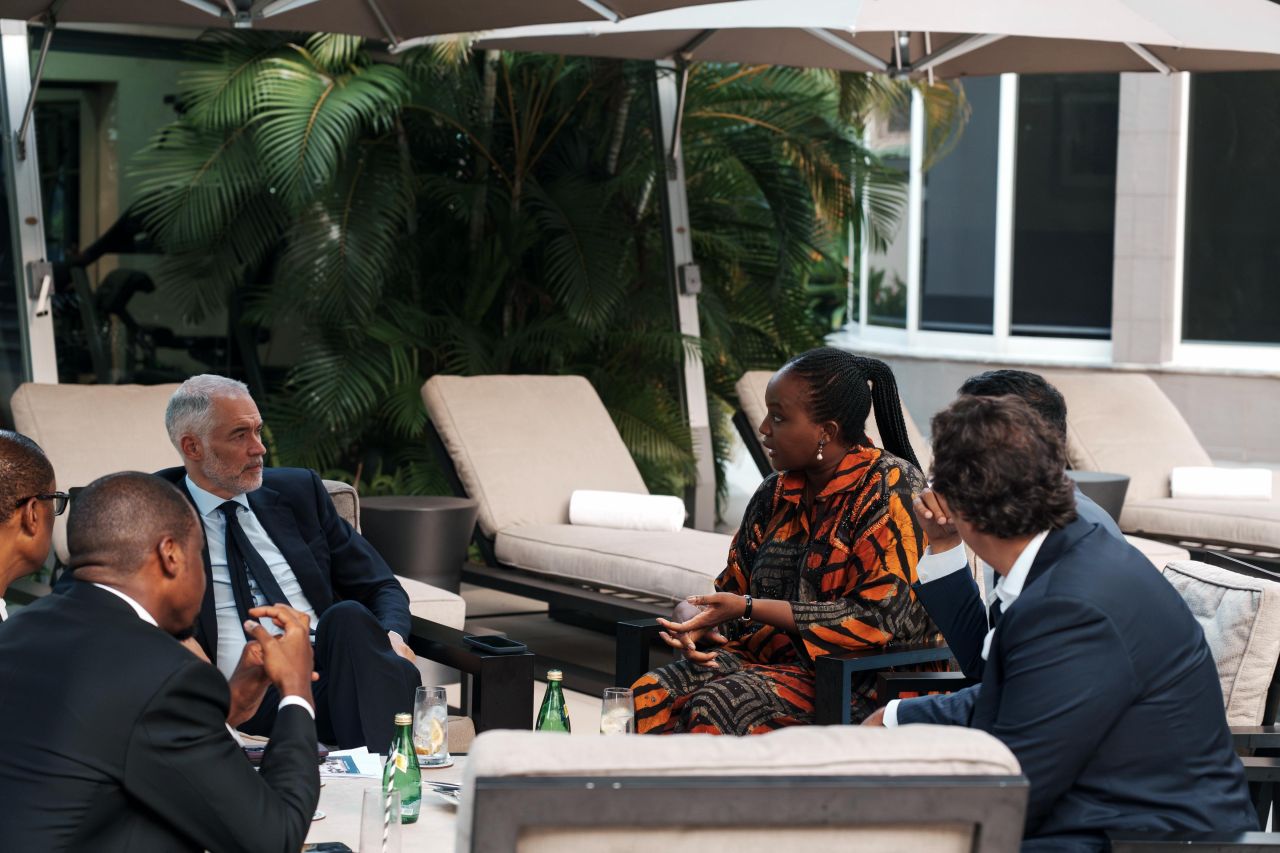
LAGOS — Nigeria’s investment potential, the country’s evolving macroeconomic environment and opportunities within the underserved small and medium-sized enterprise (SME) segment were at the centre of discussions during a high-level engagement involving global investment banking giant Goldman Sachs and leading Nigerian business and investment professionals in Lagos.
The engagement brought together Adesuwa Okunbo Rhodes, Managing Partner and Co-founder of Aruwa Capital Management, former Minister of Industry, Trade and Investment Dr. Okechukwu Enelamah, and economist Bismarck Rewane, who hosted Anthony Gutman, Co-CEO of Goldman Sachs International and Global Co-Head of Global Investment Banking, during his visit to Nigeria.
The meeting provided an opportunity to examine Nigeria’s investment landscape and discuss the economic reforms and market conditions that could drive increased investment into the country over the next five years.
According to Okunbo Rhodes, the discussions focused on the opportunities emerging from Nigeria’s changing macroeconomic environment and the potential for businesses being built during the current reform cycle to become significant contributors to the country’s economic growth over the next decade.
She noted that although economic reforms often take time to translate into improvements across the broader economy, the direction of the Nigerian market presented significant opportunities for investors willing to take a long-term view.
Aruwa Capital Highlights Nigeria’s Underserved Investment Market
A major component of the engagement was the introduction of Goldman Sachs to Aruwa Capital Management, a Nigerian-focused investment firm that provides growth capital to businesses operating within what Okunbo Rhodes described as the country’s “missing middle.”
The segment comprises businesses that have grown beyond the scale traditionally served by microfinance institutions but remain too small to attract conventional private equity investment.
According to Okunbo Rhodes, many of these businesses operate in essential and non-cyclical sectors and include enterprises that are women-led or women-focused.
Despite their economic potential, she said, such businesses remain significantly underserved in terms of access to growth capital.
The engagement provided an opportunity for Aruwa Capital to demonstrate how its investment approach has supported companies in this segment to achieve growth and scale.
Okunbo Rhodes said that after seven years and two investment funds, the firm was able to present Goldman Sachs with tangible examples of businesses within its portfolio that have achieved measurable growth and social and economic impact.
She emphasised that these were not merely investment propositions or theoretical investment theses, but companies that had continued to grow and compound value despite operating through one of Nigeria’s most challenging recent macroeconomic periods.
Positioning Nigerian Businesses for the Next Decade
The Aruwa Capital Managing Partner said businesses being established and expanded during the current economic cycle could play an important role in defining Nigeria’s economic landscape over the next decade.
She argued that long-term investors have an opportunity to identify businesses capable of surviving difficult economic conditions while continuing to create employment, expand access to essential products and services and contribute to economic development.
The engagement with Goldman Sachs was therefore seen as an opportunity to showcase a segment of Nigeria’s private sector that is often overlooked by major global institutional investors.
Okunbo Rhodes expressed optimism about deepening collaboration with Goldman Sachs as Aruwa Capital and its portfolio companies continue to grow.
She also expressed the hope that global financial institutions such as Goldman Sachs would increasingly establish a stronger physical presence in Nigeria and participate more directly in the country’s investment opportunities.
From SEO Programme to Global Investment Conversations
Beyond the investment discussions, Okunbo Rhodes highlighted a personal connection with Jimi Adesanya, who was also involved in the engagement.
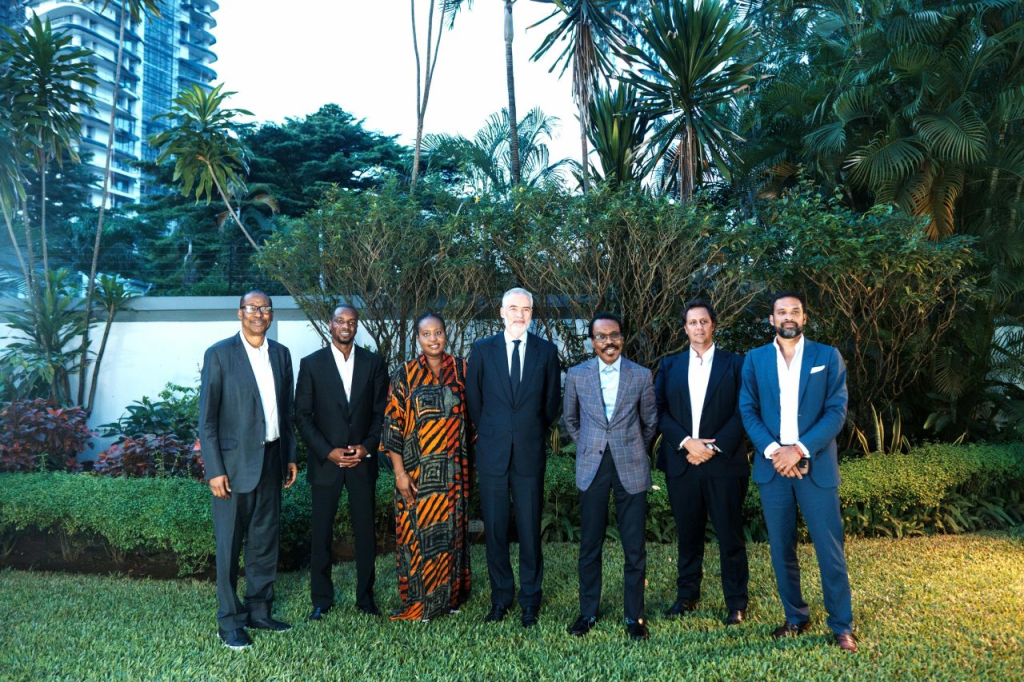
She revealed that she and Adesanya participated in the Sponsors for Educational Opportunity (SEO) programme 16 years ago, at a time when both were young professionals seeking opportunities in investment banking.
She described the period as one in which they had significant ambition but limited access to opportunities, adding that the SEO programme helped open doors for them.
According to her, one of the most important lessons from the programme was the responsibility of successful professionals to create opportunities for others after gaining access to influential spaces.
She said the principle of “widening the table” had remained relevant throughout her career, particularly through efforts to connect global capital with African businesses.
For Okunbo Rhodes, bringing international investment capital into Nigeria represents one of the most powerful ways of creating opportunities for local businesses and entrepreneurs.
She commended Adesanya for his leadership and for maintaining a strong connection to Nigeria despite his international professional exposure.
Global Capital and Nigeria’s Growth Potential
The engagement comes at a time when Nigeria continues to seek greater foreign and domestic investment to support economic growth, infrastructure development, business expansion and job creation.
The participation of senior representatives of global investment institutions in discussions about Nigeria’s market reflects continuing interest in the country’s long-term economic potential.
For investment managers such as Aruwa Capital, the opportunity lies not only in attracting capital but also in directing it towards businesses that are capable of generating sustainable financial returns while delivering broader economic and social impact.
Okunbo Rhodes’ engagement with Goldman Sachs therefore underscores the growing effort to place Nigeria’s underserved businesses and entrepreneurs within the sight of global institutional investors.
As Nigeria navigates its current reform cycle, the conversation is increasingly shifting from short-term economic challenges to identifying businesses and sectors capable of driving sustainable growth.
For Aruwa Capital, the focus remains on investing in the “missing middle” and demonstrating that businesses often overlooked by traditional global capital can become significant engines of growth, employment and impact when provided with the right financial and strategic support.
The message from the engagement was clear: Nigeria’s next phase of economic growth will depend not only on attracting global capital, but on ensuring that capital reaches the businesses and entrepreneurs capable of transforming that investment into sustainable growth.