


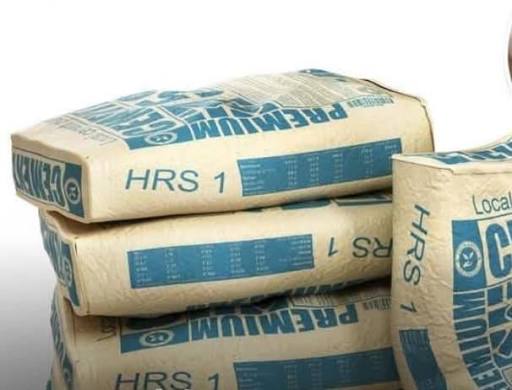
Nigeria’s cement industry may be entering its most competitive phase in decades, and that could have far-reaching benefits for the economy.
Huaxin Cement has received Senate approval to complete its $1 billion acquisition of an 83.81% stake in Lafarge Africa from Holcim. With the transaction now effectively cleared, one of the world’s largest cement manufacturers has secured a significant foothold in Africa’s biggest economy.
The numbers tell an important story. Dangote Cement controls roughly 50% of Nigeria’s cement market, BUA Cement accounts for about 32%, while Lafarge Africa holds approximately 18%. Until now, the market has largely been shaped by three dominant producers, with Dangote and BUA exerting considerable influence over pricing and supply dynamics.
From an economic standpoint, the significance of Huaxin’s entry goes beyond a change in ownership. It represents the arrival of a global industrial player with substantial financial resources, advanced manufacturing expertise, and every incentive to expand its market share.
In competitive markets, firms entering through major acquisitions rarely invest billions of dollars simply to maintain existing market conditions. Their objective is to grow volumes, improve operational efficiency, strengthen distribution networks, and attract customers. One of the fastest ways to achieve those goals is through more competitive pricing and greater value for consumers.
This is why economists generally welcome increased competition. When more firms actively compete for market share, pricing power shifts away from producers and toward consumers. Companies become more efficient, reduce waste, invest in innovation, improve logistics, and look for ways to lower production costs in order to remain competitive.
For Nigeria, the implications extend well beyond the cement industry.
Cement is one of the most important inputs in construction. Every increase in cement prices raises the cost of building homes, schools, hospitals, factories, roads, bridges, and commercial infrastructure. Conversely, lower cement prices reduce construction costs across virtually every sector of the economy.
The housing sector stands to benefit significantly. Nigeria faces an estimated housing deficit running into millions of units. High construction costs have made home ownership increasingly difficult for many families. If stronger competition contributes to lower cement prices, developers could complete projects at lower costs, making housing relatively more affordable and encouraging greater private-sector investment in residential construction.
Infrastructure development could also become more cost-effective. Both federal and state governments allocate substantial resources to roads, public buildings, and other capital projects. Lower material costs would enable public funds to stretch further, allowing governments to build more infrastructure with the same budget or reduce the overall cost of planned projects.
The multiplier effects could be substantial. Increased construction activity stimulates demand for labour, transportation, steel, paints, electrical materials, plumbing supplies, and a wide range of professional services. Every new housing estate or infrastructure project creates jobs directly and indirectly throughout the economy.
There is also the question of market structure.
Markets with a small number of dominant firms often exhibit significant pricing power because competitors have limited incentives to aggressively undercut one another. However, the entry of a new, well-capitalized global competitor can fundamentally alter those dynamics. Firms become more responsive to consumer demand, invest more heavily in productivity improvements, and compete more intensely on price, quality, and service.
Huaxin’s acquisition does not automatically guarantee lower cement prices. Energy costs, exchange rate movements, transportation expenses, inflation, and broader macroeconomic conditions will continue to influence production costs. Nevertheless, increased competition generally places downward pressure on prices over time by reducing the ability of any single firm or small group of firms to dominate the market.
For Nigerian consumers, this is perhaps the most encouraging aspect of the transaction.
A more competitive cement industry has the potential to reduce one of the country’s most important construction costs, improve housing affordability, support infrastructure development, stimulate investment, create employment, and ultimately contribute to stronger economic growth.
In the long run, the biggest winners from greater competition are rarely the producers—they are the consumers and the broader economy. As Nigeria welcomes another major player into its cement industry, the real opportunity lies not in which company gains or loses market share, but in whether increased competition delivers lower prices, greater efficiency, and more value for millions of Nigerians building homes, businesses, and the nation’s future.