






Nigeria has made significant progress in reducing the burden of malaria, but the country’s top malaria official says the next phase of the fight will depend on something more than medicines and mosquito nets. It will require smarter technology, better data and a fundamental shift in public behaviour.
At a strategic workshop on Artificial Intelligence and malaria elimination in Lagos, public health experts, technology innovators and government officials explored how AI can improve disease surveillance, strengthen community awareness and support faster public health responses.
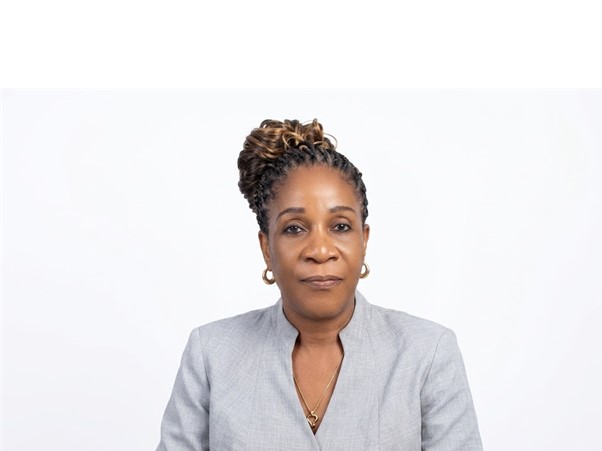
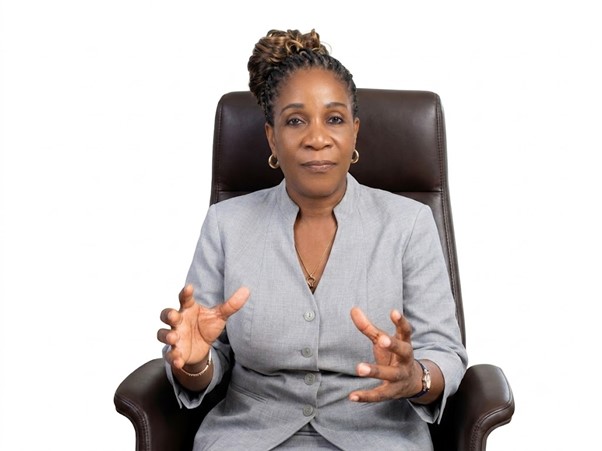
In this exclusive interview, Dr. Nnenna Chizaram Ogbulafor, National Coordinator of the National Malaria Elimination Programme (NMEP) under Nigeria’s Federal Ministry of Health and Social Welfare, explains why artificial intelligence is becoming an important tool in malaria control, why many Nigerians still mistake every fever for malaria, and how partnerships with companies like Sproxil could help transform health communication across the country.
Q: What would you consider the biggest takeaway from this engagement on Artificial Intelligence and malaria control?
Dr. Nnenna Ogbulafor: For me, the biggest takeaway is progress.
Globally, malaria elimination depends on continuously developing and adopting better tools—from research and innovation to new technologies that improve programme implementation.
Artificial Intelligence represents one of those important innovations.
Over the past two days, we have had meaningful discussions on how AI can strengthen malaria surveillance, improve data collection, enhance programme implementation and support better decision-making. Technology allows us to work faster, analyse information more efficiently and ultimately deliver better health outcomes.

As National Coordinator of the National Malaria Elimination Programme, I see this as a major step forward for Nigeria.
Q: Many Nigerians know about malaria, yet misconceptions remain. Is public awareness still one of your biggest challenges?
Dr. Nnenna Ogbulafor: Absolutely—but perhaps not in the way many people think.
The challenge is not that Nigerians have never heard of malaria. In fact, many people are so familiar with the disease that they assume almost every fever is malaria.
That perception has become one of our biggest obstacles.
Nigeria has made remarkable progress over the years. According to the 2025 Malaria Indicator Survey, national malaria prevalence has declined to about 15 percent, representing a significant reduction in disease burden.
Unfortunately, that progress is not always reflected in public understanding, particularly in rural communities.
Many people still believe that fever, headache or body pain automatically means malaria. We are working hard to change that narrative because not every fever is caused by malaria.
Our message is simple: test before you treat.
Only a proper diagnostic test can confirm whether malaria is actually the cause of the illness.
Q: Why is accurate diagnosis so important in Nigeria’s malaria elimination strategy?
Dr. Nnenna Ogbulafor: Accurate diagnosis is essential because many illnesses present with symptoms similar to malaria.
Healthcare workers must be able to distinguish malaria from bacterial infections and other diseases.
That is why laboratory capacity remains so important.
As we continue training laboratory professionals, many of them tell us they now recognise mistakes they unknowingly made before receiving specialised malaria microscopy training.
Improving diagnostic quality means patients receive the right treatment, unnecessary use of antimalarial medicines is reduced and surveillance data becomes much more reliable.
Technology allows us to communicate with millions of people quickly while ensuring that the information remains accurate and consistent.
Q: How can Artificial Intelligence help improve malaria awareness and behaviour change?
Dr. Nnenna Ogbulafor: Technology allows us to reach people in ways that traditional communication often cannot.
One of the advantages of digital platforms is consistency.
When health messages are delivered through technology, everyone receives the same scientifically accurate information at the same time.
That reduces the risk of misinformation or messages being altered as they pass from one person to another.
Our partnership with Sproxil provides an opportunity to deliver trusted malaria education directly to people through technology while also collecting valuable information that helps us understand public behaviour.
Ultimately, behavioural change is one of the most important pillars of malaria elimination, and technology can significantly strengthen that effort.
Q: Many people believe mosquitoes automatically mean malaria. How do you respond to that perception?
Dr. Nnenna Ogbulafor: That is another misconception we are trying to address.
Take Lagos as an example.
People often say there are mosquitoes everywhere, so every mosquito bite must lead to malaria.
But that is not necessarily true.
Current state data show that only a small proportion of fever cases in Lagos are actually caused by malaria, while many others result from bacterial infections and other illnesses.
A mosquito can only transmit malaria if it is carrying the malaria parasite.
Simply seeing mosquitoes does not automatically mean malaria transmission is taking place.
Understanding that distinction is important because it encourages people to seek proper diagnosis instead of making assumptions.
Q: The National Malaria Elimination Programme is working with Sproxil. What value does that partnership bring?
Dr. Nnenna Ogbulafor: We see it as an important innovation.
Technology allows us to communicate with millions of people quickly while ensuring that the information remains accurate and consistent.
Traditional methods of community mobilisation remain valuable, but they can sometimes lead to variations in how messages are interpreted and delivered.
Digital platforms reduce that risk.
Working with Sproxil enables us to harness technology to support behaviour change, strengthen public awareness and improve malaria programming across the country.
That kind of collaboration between government and the private sector is exactly what we need if we are to accelerate malaria elimination.
Q: Improving laboratory diagnosis requires continuous training. How is the programme addressing that challenge?
Dr. Nnenna Ogbulafor: Capacity building remains one of our priorities.
We continue to organise specialised malaria microscopy training for laboratory scientists based on World Health Organization standards.
These programmes help healthcare professionals improve their ability to accurately identify malaria parasites and distinguish them from other conditions.
The challenge, however, is scale.
Nigeria’s population is over 200 million people, making nationwide training programmes both logistically demanding and financially expensive.
Lagos State alone has a population larger than several African countries.
So while we are making progress, funding remains one of our biggest constraints.
We are committed to expanding training opportunities, but achieving nationwide coverage requires sustained investment and strong partnerships.
Q: Looking ahead, what gives you confidence that Nigeria can continue reducing the burden of malaria?
Dr. Nnenna Ogbulafor: What gives me confidence is that we are embracing innovation.
We have already demonstrated that progress is possible.
Now we must build on that progress by combining stronger surveillance, better diagnostics, smarter technology and continuous public education.
Artificial Intelligence is not replacing our existing interventions—it is strengthening them.
When government, researchers, technology companies and communities work together, we create a much stronger foundation for eliminating malaria.
That is the future we are working towards.
Our partnership with Sproxil provides an opportunity to deliver trusted malaria education directly to people through technology while also collecting valuable information that helps us understand public behaviour.