


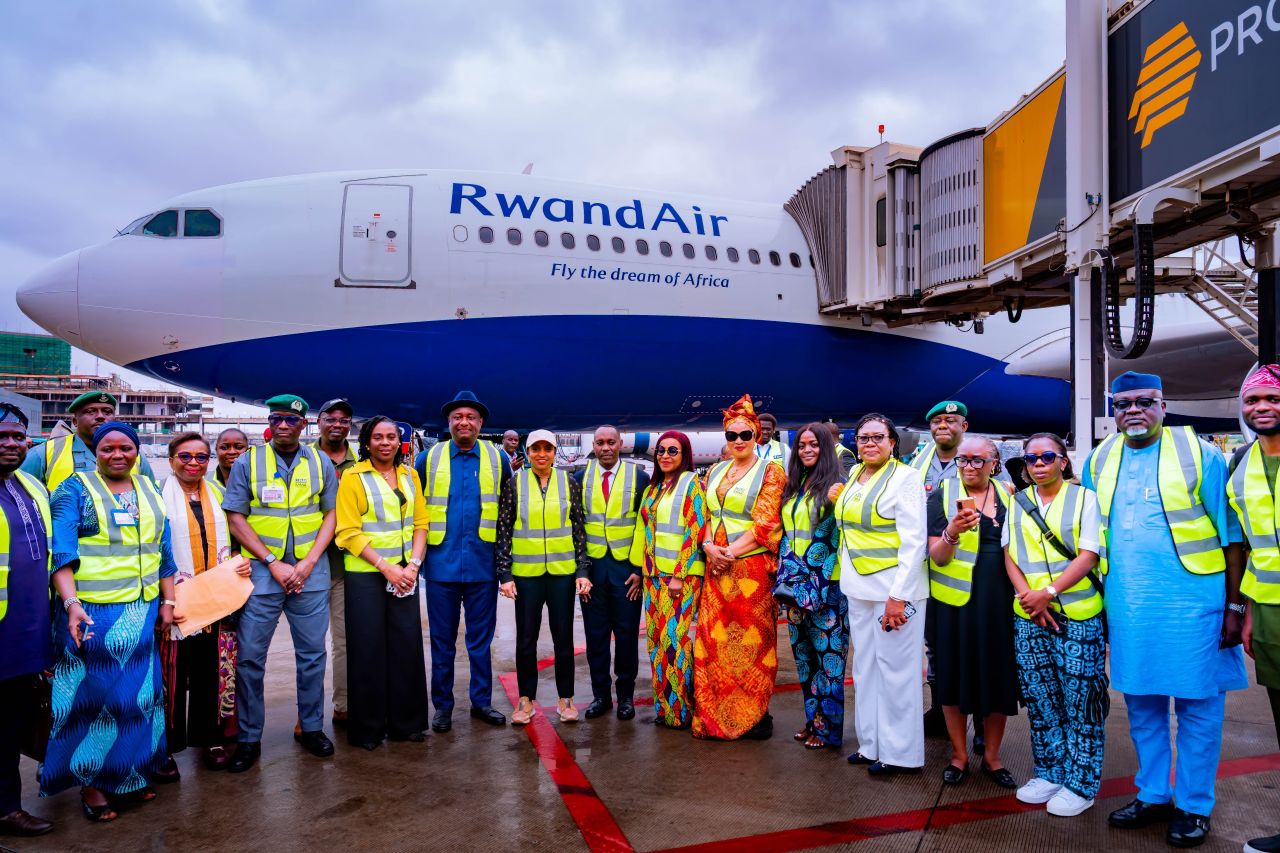






LAGOS, NIGERIA — In a major logistical breakthrough for the Nigerian manufacturing and export sectors, the Federal Government, in partnership with RwandAir, has officially flagged off an expanded Nigeria–East and Southern Africa Air Cargo Corridor.
The initiative, launched on June 20, 2026, by the Minister of Industry, Trade and Investment, Dr. Jumoke Oduwole, alongside the Minister of Aviation and Aerospace Development, Festus Keyamo (SAN), represents a pivotal shift in the nation’s strategy to leverage the African Continental Free Trade Area (AfCFTA) framework. By significantly reducing freight costs and streamlining logistics, the government is effectively “opening the skies” for Nigerian-made goods to penetrate regional markets that were previously cost-prohibitive.
The Logistics Shift: From Costly Barriers to Competitive Advantage
Historically, Nigerian exporters have faced steep logistical hurdles when attempting to ship goods into East and Southern Africa, with freight rates ranging from $3 to as high as $10 per kilogram. These exorbitant costs effectively priced “Made-in-Nigeria” products out of the regional market, forcing businesses to rely on expensive, indirect shipping routes.
The new corridor changes this dynamic entirely:
- Drastic Rate Reduction: Under the new RwandAir partnership, cargo rates are locked at below $2 per kilogram across key destinations.
- Expanded Network: The corridor now offers direct, reliable export pathways to Kigali (Rwanda), Lusaka (Zambia), and Harare (Zimbabwe), while simultaneously providing an additional carrier option for existing routes to Nairobi (Kenya) and Johannesburg (South Africa).
- Inclusive Access: These preferential rates are available to all Nigerian exporters holding an AfCFTA Certificate of Origin issued by the Nigeria Customs Service, directly incentivizing formal trade and certification among local SMEs.
Why This Matters: Economic Implications for the ‘Renewed Hope’ Agenda
The expansion of this corridor is not merely an aviation milestone; it is a structural economic intervention. As part of the government’s broader Renewed Hope Agenda, the initiative seeks to solve the “last mile” problem that has long stifled Nigeria’s non-oil export potential.
1. Boosting Non-Oil Export Revenues
Nigeria has seen a steady rise in non-oil exports to African markets, growing from $150 million in 2024 to $207 million in 2025. This cargo corridor is designed to sustain that momentum. By lowering the barrier to entry, the government expects a surge in volume for high-growth sectors such as agribusiness, fashion, textiles, processed foods, and cosmetics.
2. Scaling MSMEs and Women-Led Enterprises
Micro, Small, and Medium Enterprises (MSMEs) form the backbone of the Nigerian economy, powering roughly 80% of retail transactions. By providing affordable, predictable logistics, this initiative empowers small-scale manufacturers to scale their operations beyond domestic borders, creating jobs and fostering industrialization at the grassroots level.
3. Real-World AfCFTA Implementation
While the AfCFTA is often discussed in policy circles, this corridor serves as a “living proof” of its benefits. Minister Oduwole emphasized that the government’s goal is to move beyond mere policy rhetoric to “real businesses, real exports, and real market access,” proving that regional integration can deliver tangible commercial outcomes.
A Strategic Vision for Connectivity
The initiative also aligns with the Single African Air Transport Market (SAATM), a flagship project of the African Union aimed at liberalizing civil aviation. By harmonizing trade and aviation policies, Nigeria is positioning itself as a central hub for continental commerce.
As the corridor continues to evolve—building on the foundation laid during its 2025 launch with Uganda Airlines—Nigerian exporters are being urged to work closely with freight forwarders and the RwandAir cargo desk at the Murtala Muhammed International Airport to integrate their supply chains into this new, high-speed trade network.
Dr. Jumoke Oduwole’s address on trade competitiveness
This video features a special address by the Minister of Industry, Trade and Investment, Dr. Jumoke Oduwole, regarding her strategic vision for positioning Nigeria as Africa’s most competitive business destination and creating the blueprint for a thriving trade environment.