


Nigeria is taking a bold step toward ensuring that artificial intelligence (AI) serves the interests of its people, not just technology companies and innovators.
Following the Federal Executive Council’s approval of a National AI Trust, the Federal Government has begun laying the foundation for what could become one of the country’s most important institutions in the digital age. The initiative aims to ensure that AI development in Nigeria creates real economic and social value for citizens while addressing concerns around ethics, transparency, security, and inclusion.
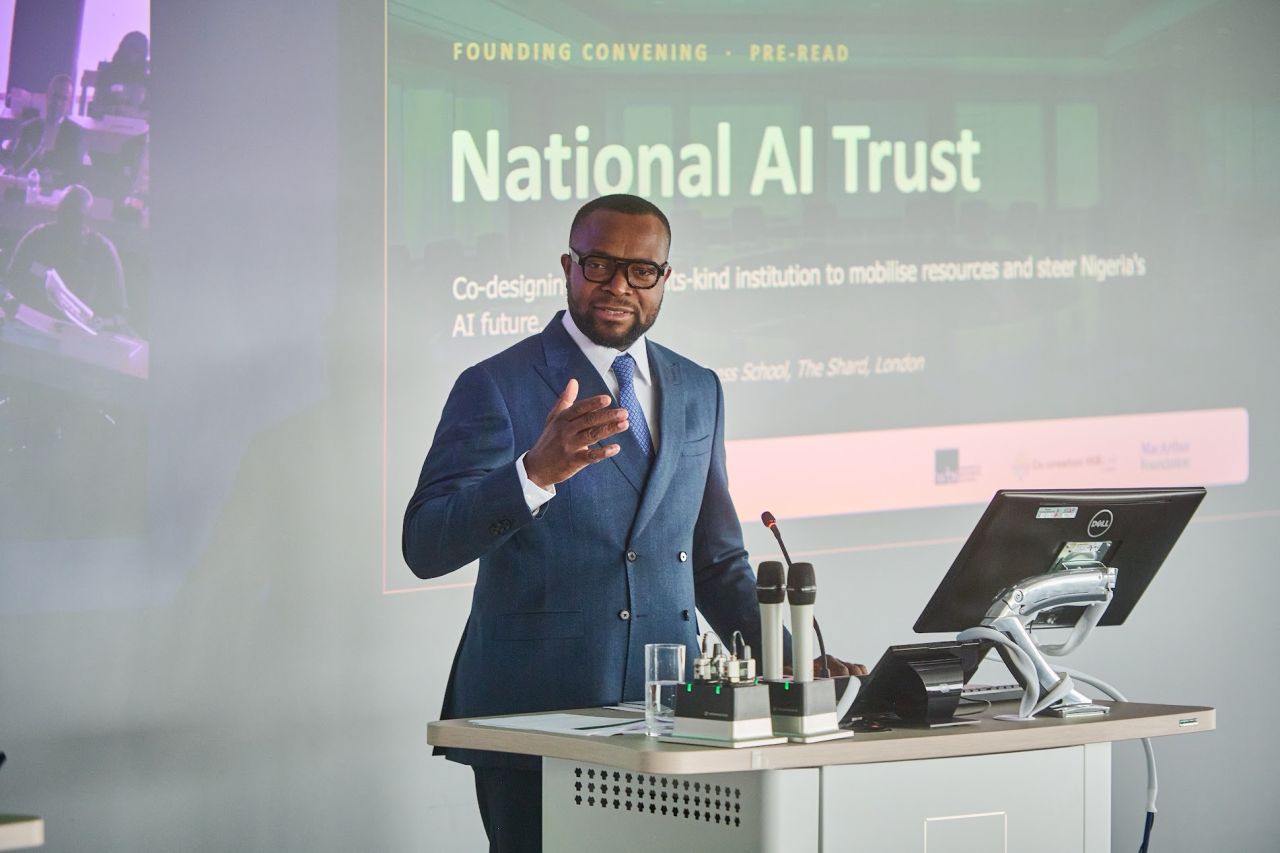
Minister of Communications, Innovation and Digital Economy, Bosun Tijani, revealed that government officials, researchers, academics, industry experts, philanthropies, and public-interest organisations recently gathered in London for a co-creation workshop to begin shaping the structure and vision of the proposed National AI Trust.
While discussions around artificial intelligence are often associated with futuristic technologies, the implications for ordinary Nigerians are immediate and far-reaching.
From helping farmers improve crop yields and enabling faster medical diagnoses to supporting small businesses, improving public services, and expanding educational opportunities, AI is increasingly becoming a tool that can transform lives. However, experts warn that without proper governance, the same technology could deepen inequality, threaten privacy, spread misinformation, and expose citizens to new forms of cyber risks.
This is where the National AI Trust comes in.
The proposed institution is expected to act as a long-term steward of Nigeria’s AI ecosystem, helping to ensure that the technology is developed and deployed responsibly while protecting the interests of citizens. More importantly, it seeks to answer a critical question facing many developing countries: how can AI be used to create opportunities for everyone rather than benefits for only a few?
For a country with one of Africa’s youngest populations, the stakes are particularly high. Millions of young Nigerians are preparing to enter a job market that is already being reshaped by automation and emerging technologies. The decisions made today about AI governance could influence the future of work, digital skills development, entrepreneurship, and economic inclusion for decades to come.
The initiative also reflects a growing recognition that technological progress alone is not enough. Strong institutions are needed to guide innovation, build public trust, and ensure that new technologies contribute meaningfully to national development.
Speaking during his visit to the United Kingdom, Tijani emphasized the importance of building not just technological infrastructure but also the institutions required to help Nigeria compete in an increasingly AI-driven global economy.
As part of the engagement, he delivered a keynote address at Warwick Business School, where he outlined Nigeria’s vision for developing the talent, infrastructure, and governance systems needed to thrive in the digital era.
The establishment of a National AI Trust could ultimately become one of Nigeria’s most significant digital policy initiatives. Beyond regulating technology, it represents an effort to ensure that innovation translates into better livelihoods, improved public services, greater economic opportunities, and a more inclusive digital future.
At a time when artificial intelligence is rapidly changing how societies function, Nigeria’s approach signals an important shift—from simply adopting technology to actively shaping how that technology serves people.
If successful, the National AI Trust could help ensure that the benefits of AI reach classrooms, hospitals, farms, businesses, and communities across the country, making technological advancement a tool for national development rather than a source of new inequalities.