


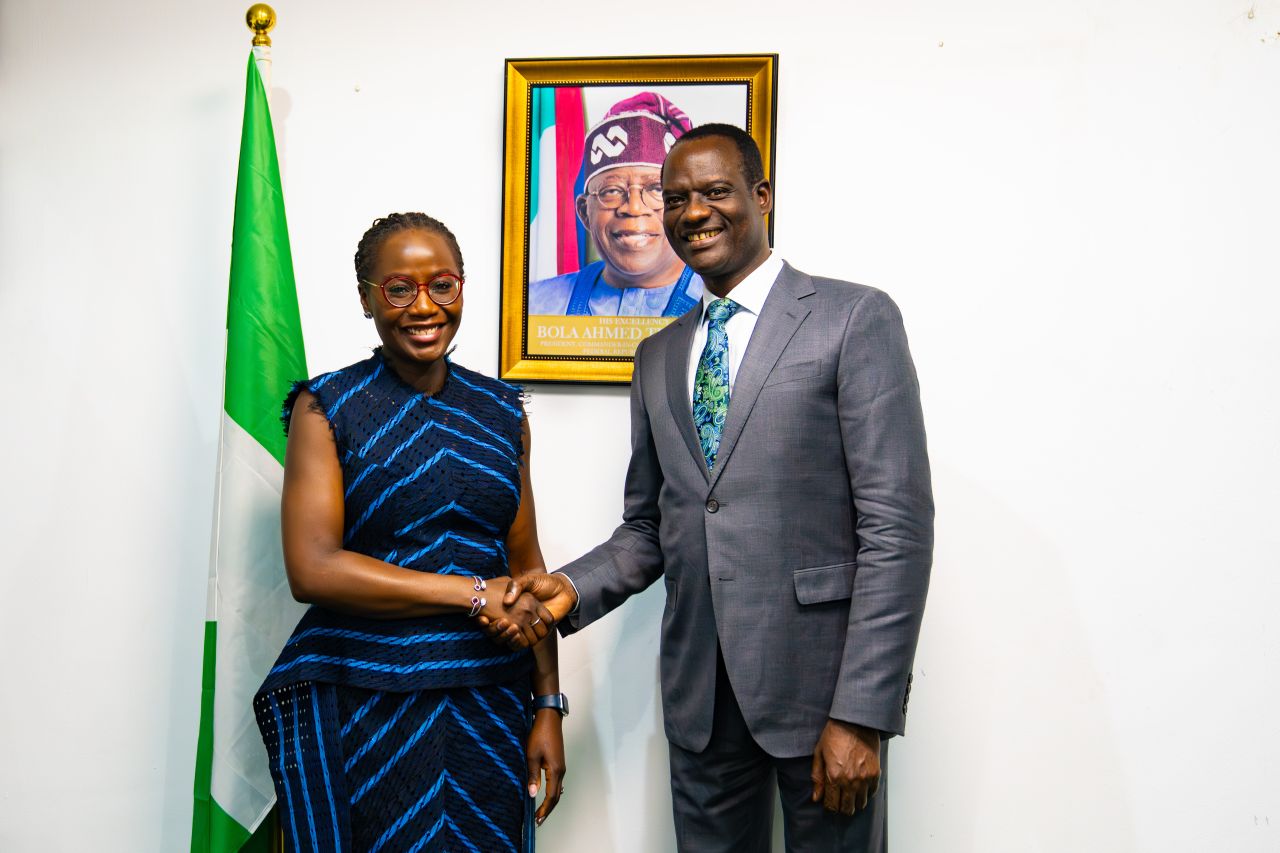






Special Adviser to the President on Energy, Olu Arowolo Verheijen, has reaffirmed the Federal Government’s commitment to deepening reforms in Nigeria’s energy and electricity sectors following high-level discussions with the Minister of Finance and Coordinating Minister of the Economy, Taiwo Oyedele.
The meeting, held at the Minister’s office in Abuja, focused on aligning fiscal policies with ongoing energy sector reforms, with the aim of unlocking new sources of investment and improving overall sector performance.
According to Verheijen, a key priority of the discussions was the need to strengthen coordination between fiscal authorities and energy sector institutions. This alignment, she explained, is considered critical to mobilising the significant capital required to achieve the Federal Government’s production target of 3 million barrels of crude oil per day. Officials noted that achieving this goal would depend not only on production capacity but also on creating a stable financial and regulatory environment capable of attracting long-term investment.

The discussions also addressed structural challenges affecting the electricity market. Both parties examined potential reforms aimed at improving the functionality of the power sector, including measures to enhance efficiency, reduce operational bottlenecks, and ensure more predictable market conditions for investors.
Investor confidence emerged as a central theme of the engagement, with emphasis placed on the need to rebuild trust in the electricity market through transparent regulation, improved governance frameworks, and sustainable pricing mechanisms. Officials agreed that a more stable power sector would play a critical role in supporting industrial growth, job creation, and broader economic development.
Verheijen noted that ongoing reform efforts are designed to reposition Nigeria’s energy landscape for long-term sustainability, ensuring that both the oil and power sectors can better support national economic objectives. She added that coordinated policy execution across relevant ministries and agencies remains essential to achieving these goals.
The engagement forms part of a broader government strategy to strengthen Nigeria’s energy architecture, attract private capital, and improve energy security while supporting the country’s wider economic transformation agenda.