








By Technology Correspondent
Africa’s path to industrialization must be deliberately designed rather than externally sourced, according to Hanson Johnson, Founder and CEO of Start Innovation Hub.
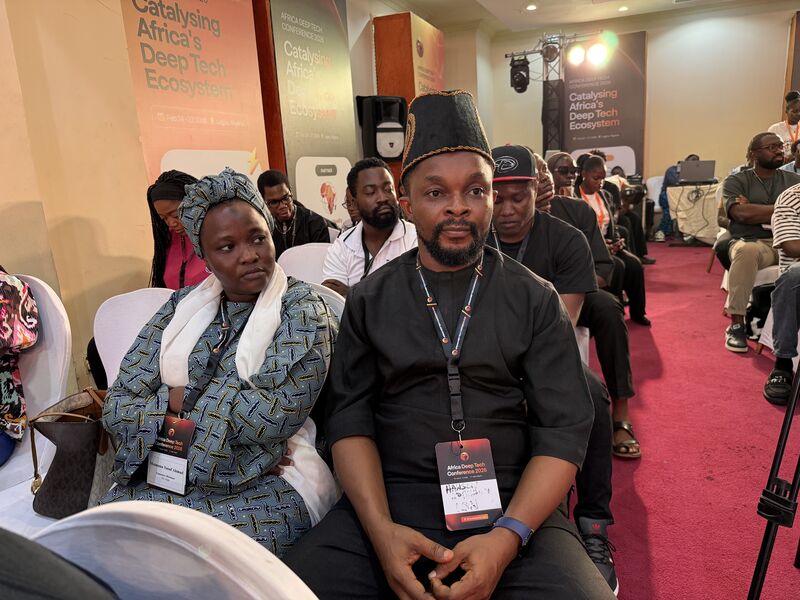
Johnson made the remarks during the Africa Deep Tech Conference 2026, held in Lagos, where innovators, investors, policymakers, and ecosystem leaders convened under the theme “Deep Minds. Deep Problems. Real Solutions.” Representing the Innovation Support Network (ISN) Hubs, Johnson described the discussions as both revealing and urgent — a candid assessment of structural constraints limiting Africa’s deep technology sector.
Confronting Structural Barriers
According to participants, the conference did not avoid difficult conversations. Instead, it focused squarely on the foundational gaps slowing the continent’s industrial and technological advancement.
Among the critical challenges identified:
- Engineering Deficit: Limited access to advanced laboratory equipment and a shortage of practical, high-level engineering capacity were cited as significant obstacles to scaling hardware-intensive innovation.
- Fragile Supply Chains: Weak local supply-demand integration and reliance on foreign industrial inputs continue to constrain the development of resilient domestic partnerships.
- Policy Bottlenecks: Deep tech ventures often face infrastructure-heavy requirements in environments lacking coordinated government backing or long-term industrial policy alignment.
- Capital Constraints: The scarcity of patient capital suited to long gestation cycles remains a persistent hurdle. Unlike consumer-tech startups, deep tech enterprises typically require extended research, testing, and prototyping phases before profitability.
Industry observers note that while Africa’s technology narrative has largely centered on fintech and digital applications, deep tech — encompassing advanced engineering, hardware systems, artificial intelligence, and industrial solutions — demands more robust structural support.
From Borrowed Innovation to Industrial Sovereignty
Johnson proposed what he termed a new framework for ecosystem transformation, aimed at moving Africa from “borrowed innovation” toward “industrial sovereignty.”
Central to this approach is the need to reduce the cost of failure for founders. He advocated for shared laboratories, affordable access to specialized equipment, and collaborative infrastructure that allows innovators to iterate without prohibitive financial risk.
He further emphasized that aggressive infrastructure investment is non-negotiable. “We cannot build 21st-century solutions on 20th-century foundations,” he noted, stressing that infrastructure is a prerequisite rather than a luxury for deep tech growth.
Another key pillar involves localizing the deep tech narrative — simplifying complex technologies to align with local markets and cultural contexts in order to build public understanding and institutional support.
Finally, Johnson called for intentional ecosystem design, prioritizing engineering depth and problem-solving capacity over the proliferation of consumer-facing applications.
Aligning Policy, Infrastructure, and Capital
Participants at the conference agreed that deep tech startups across Africa are already innovating, often despite systemic limitations. However, sustainable acceleration, they argued, will require alignment among policymakers, infrastructure developers, and long-term investors.
As conversations around Africa’s industrial future gain momentum, stakeholders at the Lagos gathering stressed that the continent’s development trajectory will depend less on imported solutions and more on coordinated, locally engineered systems.
“The future of African industrialization,” Johnson concluded, “will be built through intentional collaboration, not accidental discovery.”
With momentum building around deep technology and industrial capacity, ecosystem leaders say the next phase will hinge on execution — translating dialogue into durable systems capable of scaling impact across the continent.