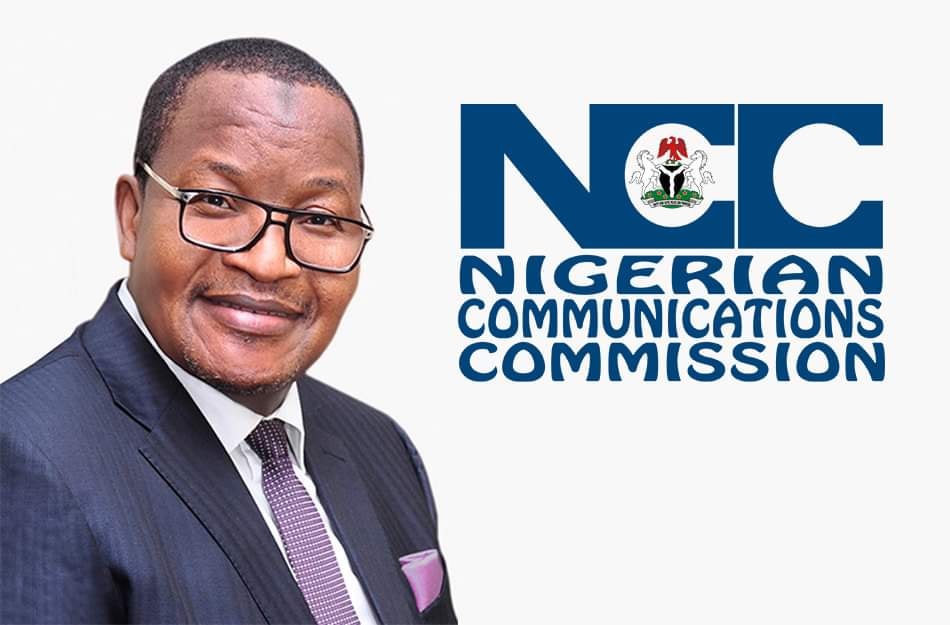
The Executive Vice Chairman and Chief Executive Officer of the Nigerian Communications Commission (NCC), Prof. Umar Danbatta, will chair a public lecture to mark the 2022 International Women Day (IWD) in Kano State, in recognition of his tremendous contribution and support towards promoting the course of women development.

The lecture with the theme: ‘Break the Bias’, slated for March 10, 2022 at the Sa’adu Zungar Auditorium Complex, Mambayya House, Gwammaja, Kano by 10.00 a.m. prompt, is being organised by The Kano Civil Society Forum (KCSF).

KCSF is the umbrella body of over 200 Civil Society Organisations (CSO) in the state, working on human right protection, good governance, gender equality, peace building and sustainable development.

Other collaborating partners of KCSF in hosting the programme include the Aminu Kano Centre for Democratic Studies, Bayero University, Kano, Women and Orphans Development Network (WORDNET), International Federation of Women Lawyers (FIDA) and Positive Pathway Initiative (PPI).

“In recognition of your tremendous contribution and support towards promoting the course of women development in the State, we write, most respectfully, on behalf of the collaborating partners, to invite you to serve as the Chairman of the occasion,” KCSF said in a letter addressed to the EVC.

Over 500 participants, mainly women, drawn from different women groups, children rights promotion and protection focused groups, women entrepreneurs, women academics, professional career women in both formal and informal sector, as well as CSOs are expected to participate in the event.

Activities lined up at the event to be chaired by Danbatta aside the public lecture on promoting women equality and suggesting ways to break the bias of discrimination against women, include presentations of awards to recognise some women who have supported immensely towards protection of women and children, and also contributed to socio-economic and political development of the society.

The EVC is the founder of Danbatta Charity Foundation (DCF), which has sponsored many girls’ scholarship since its inception.

The United Nations earmarked every March 8 to celebrate IWD, which is one of the most important days specially dedicated to celebrate the socio-economic, cultural, political and professional career achievements of women as well as a call for accelerating gender parity around the globe.


A house member in Anambra that is constantly changing the political narrative known as Emeka Azubogu, he has shown that being a house member can be very beneficial to his people… Different from what is obtainable in Nigeria, Emeka has shown love by engaging and building many projects in Nnewi And Ekwusigo constituency.

Tagged as Mr. Project, Emeka has shown that he can do better. In short Emeka has performed better than his federal counterpart and also many Eastern governors. Building roads, youth centres and other urban renewal projects, Emeka has shown that with little funds and personal funds at his disposal that his people will be getting the best part of him.

He recently commissioned a critical road project in Nnewi City, a city known for their industrial development and prowess. In his Facebook page he opined that “Another new project… Yesterday, I was on a project inspection. This is the access road to one of the Industrial clusters in Nnewi. It is the road that leads to Chikason group and Tummy Tummy (Kotec) group.”

On his contribution to the reduction of operational expenditures and creating an enabling environment, the honorable member said” This is part of our deliberate effort to support the manufacturing sector to crash the cost of manufacturing in our locality so that they can compete especially with the coming of the African Continental Free Trade Area (AfCFTA). “

Taking about the importance of the road, he added that” Chikason group has over 7000 workers, while Kotec group has over 2000 workers. With integrated support, they will sustain and expand their contributions to the economy and create more jobs for our youths.”

Emeka has shown that democracy and having him representing the people of Nnewi North/South and Ekwusigo constituency is a Partnership That Works. He has made tremendous strides in virtually all the towns and villages such as Utuh, Ukpor, Amichi etc. He also promised to look into the other roads that are bad within his area so as to ensure that development gets to the grassroots. His politics is basically known as #PoliticsOfDevelopment. Engr Chris Emeka Azubogu is a politician cum philanthropist.

Anthony Emeka Nwosu

Digital Marketing Skill Institute (DMSI) a global digital marketing edutech company that uses digital technologies to accelerate the development of digital marketing talents while matching them with organizations globally either as employees or entrepreneurs (freelancer or agency) has partnered with the Challenge Fund For Youth Employment (CFYE) which is funded by the Netherlands Ministry of Foreign Affairs to launch “Digital Marketing Women Employability and Entrepreneurship Programme (DM-WEEP)”, a programme designed to train, match and create digital marketing jobs for 4,500 women.

The programme which is co-funded by Dutch Government aims to empower young women in Nigeria within the ages of 20-35 is set to boost the employability of these women with digital marketing and they will pay nothing upfront for the training until they are employed and earning a decent income.

Speaking on this development, Founder of Digital Marketing Skill Institute, Tobi Asehinde revealed that the initiative is in line with the organization’s mission to help and empower 1 million people by 2030 to start, grow and scale wildly profitable businesses and careers using digital marketing.

He further reviewed that the global market for Digital Marketing is estimated at US$350 Billion and male dominated however, with this programme we are giving women a voice and share in digital marketing industry that is male dominated.

“Digital marketing is one of the most desired industries where many women are interested in building a career but then, some of them are held back by the financial cost that is required to learn the skill. Digital Marketing Women Employability and Entrepreneurship Programme will be bridging that gap and empower many Nigerian women to pursue their dreams and build a global digital marketing career,” he stated.

Global figures show a startling economic disparity with women losing jobs at almost twice the rate of men and leaving over 47 million more women below the poverty line. And of course, due to the responsibilities that come with being pregnant or a nursing mother, some young women have had to lose their job or drop their career pursuit for the sake of being available to attend to taking care of their home. With a career in digital marketing, they won’t have to drop their ambitions because they are pregnant or nursing a baby, as it allows for flexible working conditions.

According to a research released at the beginning of the year by the National Bureau of Statistics (NBS), about 35.2% of women in the country are unemployed. The research also revealed that women account for only 43.3% of the working population in Nigeria.

At the same time, businesses have been forced to adopt digital technologies and channels to promote and operate their businesses as a result of the COVID-19 pandemic. This has resulted in an accelerated growth in demand for people with digital skills. There is an opportunity to match and create jobs here by training young people in digital marketing to assist these businesses to grow and thrive in a digital economy.

Mr. Asehinde said we have built an education technology solution to accelerate learning of digital skills and built 2 tech platforms called Accredital and Wizlancer to match learners to employment and self-employment opportunities from businesses around the world. We are really focused on not just training young people but connecting them to opportunities to earn a decent income.

Speaking on the initiative, the project manager Christiana Olawumi expressed her gratitude to Digital Marketing Skill Institute and Challenge Fund For Youth Employment for collaborating to help young women like herself meet their personal and career aspirations in the new digital economy. In her words, “when we reduce the rate of unemployment in the country, there will be a reduction in community vices and our society will be a safe place to live”.

She went further to show her enthusiasm as she spoke about how much effort the project team has put in place to make sure that the programme is a success.

To ensure that the project has maximum impact and reaches women interested in digital marketing, Digital Marketing Skill Institute collaborated with Challenge Fund For Youth Employment, which is funded by the Netherlands Ministry of Foreign Affairs and seeks to create a prosperous future for young women across Nigeria.

Mr. Asehinde emphasized that such collaborations with CFYE are critical to the success of tackling unemployment in Nigeria which is currently at 33%, and re-emphasized DMSI commitment to partner with more governmental bodies, public/private companies, Foundations, Non Government Organizations (NGO’s) to achieve its goal of empowering and securing a better future for Young Women in the Digital Economy. “Digital Marketing Women Employability and Entrepreneurship Programme” is one of the many strategies we are using to achieve our mission.

Useful Link:

● CFYE – https://fundforyouthemployment.nl/nigeria-selection-digitalmarketingskill/
● Digital Marketing Women Employability and Entrepreneurship Programme – https://womenfordigital.com/
● Digital Marketing Skill Institute – https://digitalmarketingskill.com/
● Accredital – https://accredital.com/
● Wizlancer – https://wizlancer.com/

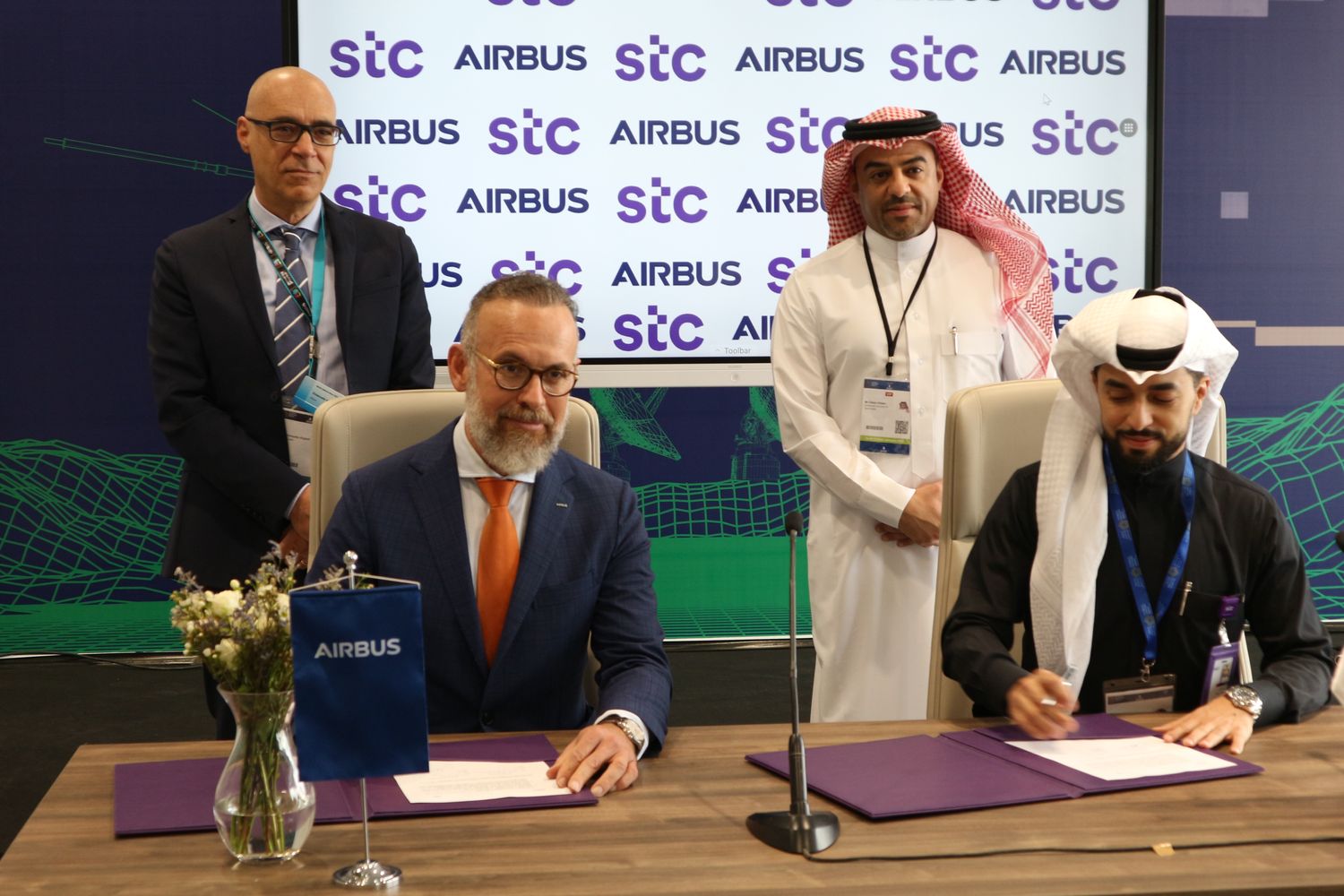
Airbus and stc signed an agreement on the sidelines of the World Defense Show in Riyadh to explore key areas of cooperation focusing on mission-critical communication solutions.

The Memorandum of Understanding (MoU) was inked by Adel Fekih, CEO of Airbus Saudi Limited, and Badr Alghamdi, stc’s General Manager of Strategic and Government Partnerships who oversees the company’s B2B strategic partnerships and government programs.

Fekih said: “The partnership between Airbus and stc is another milestone in our efforts to strengthen our foothold in the Saudi market and the rest of the region. The MoU will pave the way for the two sides to work closely together to offer mission- and business-critical communication solutions with innovative features. We are looking forward to fruitful cooperation with the stc team, as we join its initiatives to boost the Kingdom’s transition to a digital world.”

Sultan bin Saeed B2B strategy and performance VP said: “stc’s MoU with Airbus reflects its continued commitment to offer next- generation information and communications technology solutions to our customers. We aim to deliver technologies that can better serve our society and accelerate Saudi Arabia’s digital transformation. A pioneering digital champion, we are delighted that Airbus shares our commitment in this regard– thus resulting in us forging this strategic alliance. We express our confidence in Airbus’ expertise and range of collaboration and communication solutions. Additionally, our agreement will allow us to increase our contributions to the Saudi Government’s bid to shift to a digital economy.”

Both sides agreed to identify and evaluate efforts that will see the rollout of Airbus’ solutions in the Kingdom using stc’s infrastructure. The MoU covers Airbus’ portable LTE tactical bubble Everus Manpack, cybersecurity managed services, satellite communications, and the secure collaboration platform Tactilon Agnet.

The Transmission Company of Nigeria wishes to notify consumers of electricity that the current load shedding being experienced nationwide is as a result of very low power generation by the Generation Companies (GENCOs) for TCN to wheel through the transmission grid to distribution companies nationwide.

The media has been awash with reports that TCN has reduced the load allocation to distribution companies. That information is incorrect. The correct position is that TCN can only transmit the quantum of power generated by GenCos through the national grid to distribution load centres nationwide.

For clarity, TCN does not generate electricity and therefore can only transport cumulative generation from all the generation companies nationwide to distribution load centres. The distribution companies are responsible for end-users consumption. TCN allocates power to distribution companies based on approved percentage (formula approved by NERC), of the total generation available per hour or on day-ahead nomination.

Presently, the cumulative generation nationwide is low and generation companies have attributed this to several factors including poor gas supply, fault in generating units of generating companies, scheduled and unscheduled maintenance, all of which have caused most power generating companies to limit their generation, and sometimes not generate at all.

A summary of the power generating profiles in the last two months, for instance, clearly shows that fourteen (14) gas powered generating stations were either not generating at all or had limited generation at various times within the period, further depleting the quantum of power generation available for transmission into the grid on a daily basis. Power generating stations in this category include; Omotosho units 5 & 6, Olorunsogo units 3, 4 & 6, Omoku units 3 & 6, Omotosho NIPP units 3 & 4, Delta units 15, 17, and 18, Afam VI units 11 & 12, Olorunsogo NIPP unit 3, Ihovbor NIPP unit 2, Sapele Steam unit 3, Sapele NIPP unit 1, Odukpani NIPP units 1 & 3, and Okpai units 11, 12 & 18.

Also, within the same period, Jebba Hydro and Shiroro Power Generating Stations were either out or had limited generation, causing additional loss of 232MW from the grid, while other power generating plants such as Omotosho units 3&4, Olorunsogo units 1, Delta units 10 &20, Afam VI unit 13, Ihovbor NIPP units 4, Geregu NIPP units 22&23 and Odukpani NIPP units 2, 4 & 5, have also been out either on fault or for scheduled maintenance, causing a further loss of about 3,180MW from the grid.

A combination of the above scenarios have persisted and the total effect on the grid is persistent low generation, which TCN Operators have had to strive to dispatch in a way that will not jeopardize the stability of the grid.

More recently, from the 1st to 4th of March, 2022, there was generation shortfall due to water management in Shiroro and Jebba hydro with the loss of 307MW and 125MW respectively from both stations. Within the same period, there were fault and technical problems in Egbin, causing 514MW shortfall and in Geregu causing 230MW shortfall, while reported fault at Alaoji NIPP reduced generation from the substation by 263MW.

Gas constraint alone in Olorunsogo gas generating plant reduced generation from the station by 104MW, in the same vein, Omotosho gas lost 102MW and Sapele NIPP lost 263MW. In Omotosho NIPP, there was generation shortfall of 233MW and in Omoku a shortfall of 112MW. Two units in Okpai have limited generation due to technical problems causing a 204MW drop in generation and in Afam VI 511MW drop in generation.

Gas constraint and fault in Olorunsogo NIPP reduced generation by 240MW, Geregu NIPP by 435MW, and Ihovbor by 142MW. Also, due to gas pipeline pigging, Odukpani NIPP was SHUT DOWN which caused a reduction of generation by 575MW.

TCN further reiterates that a combination of issues ranging from gas constraints, fault, and technical problems within generating plants caused persistent low generation and consequently low load allocation to Distribution Companies nationwide. This is based on the fact that TCN can only transmit what is being generated by GenCos and presently they are all generating below capacity.

It is important to note that except cumulative power generation increases considerably for TCN to transmit to distribution companies nationwide, TCN will be left with no choice than to continue to load shed. We will however continue to work hard to ensure the efficient allocation of the total load generated by power generating stations into the grid, bearing in mind the need to ensure that the national grid is stable in spite of the challenges posed by insufficient load on the transmission grid.

Ndidi Mbah

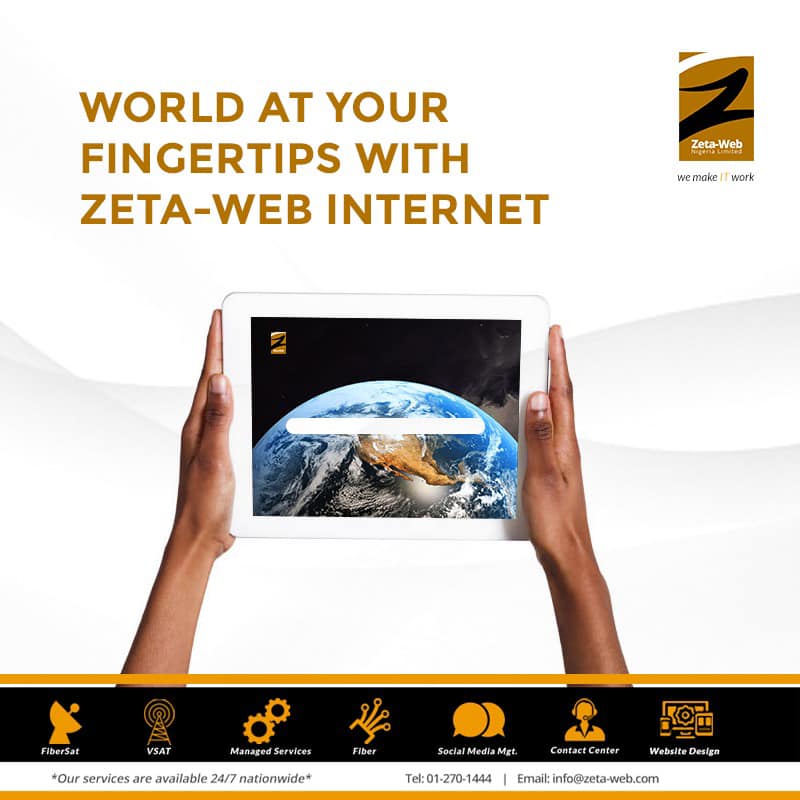
Zeta Web Nigeria Limited, an indigenous information and communication technology (ICT) with emphasis in broadband and internet solution, call center solution and a host of other innovative ICT solution. ZetaWeb has been described as a company set-up to bridge the gap between Quality Solutions and Services as well as Business Success. the company has been described by industry watchers and stakeholders as one of the innovative indigenous ICT firms in the country offering world-class solutions.

Zeta-Web Nigeria Limited (ZNL) is an ICT company with significant expertise focused on value creation for all our customers through the provision of world class, full-service resource system with expanded technological capabilities – to meet our clients’ total communication requirements.

May be an image of text

Speaking to the media on one of the flagship solutions known as Z Force, Chris Obasi, Managing Director, Zeta–Web Nigeria Limited, concisely outlined the importance of Z-Force to the current workplace. “Our Z-Force service is unique in its design as it came out at a point when users are seeking internet services with both speed and data that they can use while working remotely, void of the frequent intermittencies and the high-cost associated with such requests, ¨ he stated.

With bouquet of solution in their kitty, ZetaWeb Limited as evolved to a complete ICT firm where the organization has made itself a one stop area for all ICT needs for corporate and individual clients. The ZetaWeb has a team of Web Experts that do undertake all online and offline services that ensure clients benefit from having an online presence. The ZETA-WEB CONTACT CENTER deploy sustainable and unmatched Contact Centre Solution at clients’ business facilities to provide them with the right technical support. While the ZETA BUSINESS SOLUTIONS is meant to Design, implement and operate high-end enterprise networks, data centre technologies and applications for various tier of customers.

The company’s INTERNET SERVICES are based on various technologies such as VSAT (Ka, Ku, C band) services, Wireless Technology, Fibre, FiberSat and Corporate Networks. While their ICT CONSULTING AND OUTSOURCING includes Business Automation, Service Level Agreements, Project Management, Mobile Application Development.  They also offer IT SECURITY solutions and these are E-Council Cyber crime Security Solutions & Training, SOC, End-point protection, DAM, Next-Gen Firewall, Data Loss Prevention, Network Access Control, Web Application Firewall, Mobile Device Management.

No photo description available.

The ZetaWeb SOFTWARE DESIGN AND IMPLEMENTATION is al about Bespoke Software & Digital Business Solutions – Document Management with workflow process solutions, Process Mining, Travel Management Solutions, Sales Automation Process Solutions.

Zeta-Web Nigeria Ltd (ZNL) is an ICT firm with vast experience in innovating, designing and deploying IT technology solutions in Nigeria and across Africa.  According to Muyiwa Esomojumi – Manager Marketing and Corporate Communications of Zeta-Web Ltd, she said “We are well positioned to significantly contribute to the realization of Nigeria’s vision of becoming a regional ICT hub.”

“On our platform clients are assured that slow browsing, intermittency, service degration are eliminated because all our internet services come with a redundant link that allows us to switch clients seamlessly. We lead the market from our customers’ perspective, by providing a balance between Reliable, Fast & Efficient Internet connections with Value-added services on a cost effective platform.”

ANTHONY NWOSU

With bouquet of solution in their kitty, ZetaWeb Limited as evolved to a complete ICT firm where the organization has made itself a one stop area for all ICT needs for corporate and individual clients. The ZetaWeb has a team of Web Experts that do undertake all online and offline services that ensure clients benefit from having an online presence. The ZETA-WEB CONTACT CENTER deploy sustainable and unmatched Contact Centre Solution at clients’ business facilities to provide them with the right technical support. While the ZETA BUSINESS SOLUTIONS is meant to Design, implement and operate high-end enterprise networks, data centre technologies and applications for various tier of customers.

MarketForce (MarketForce360.com), the Nairobi-headquartered B2B platform for retail distribution of consumer goods and digital financial services in Africa, announces the closing of a $40 million Series A round, the largest Series A round of it’s kind in East and Central Africa. The raise comes 7 months after concluding a pre-Series A round.

The round was led by V8 Capital Partners – a London and Lagos based African-focused investment vehicle – with participation from Ten13 VC, SOSV Select Fund, Vu Ventures, Vastly Valuable Ventures and Uncovered Fund, along a number of existing investors; Reflect Ventures, Greenhouse Capital, Century Oak Capital and Remapped Ventures. Ken Njoroge, Cofounder and former CEO of Cellulant also participated in the round and joins the board as Chairman. The oversubscribed round was made up of equity and debt.

In sub-Saharan Africa, approximately 90% of household retail transactions are in cash, and delivered through a network of about 100 million MSMEs. Retail payments on the continent are expected to top $2.1 trillion by 2025 (mck.co/3I9wKRt), and MarketForce aims to digitize a large portion of these offline transactions.

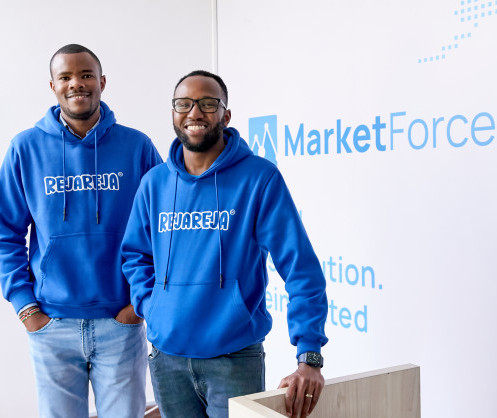
Co-founded in 2018 by Tesh Mbaabu (bit.ly/3sQjU40) and Mesongo Sibuti (bit.ly/3Id02OV), MarketForce is a leading B2B Commerce and Fintech marketplace that empowers informal merchants in Africa to order, pay and receive inventory digitally and conveniently, access financing, collect digital payments and make extra money by reselling digital financial services such as airtime, electricity tokens and bill payments.

We are proud to partner and build the future of retail in Africa by helping to optimize supply chains and catalyze the digitization of the African retail ecosystem

MarketForce runs an asset-light operating model and is currently operational in 5 markets (Kenya, Nigeria, Uganda, Tanzania and Rwanda) with the merchant super app, RejaReja – which offers informal merchants next-day delivery for hundreds of SKUs from the leading FMCG brands. One year ago, MarketForce served about 5,000 customers: now, that figure has grown more than twenty-fold to 100,000 merchants, with the average transaction size tripling and revenue growing 27x over the same period.

On the supplier side, MarketForce monetizes through availing real-time market intelligence dashboards to FMCGs. MarketForce counts top consumer brands and financial service providers such as Nestle, Pepsi, Flour Mills of Nigeria, Bidco Africa, Chandaria Industries, Kapa Oil, Safaricom, Cellulant, Lami and Pezesha, to mention a few, as its partners.

With this round of funding, MarketForce plans to scale merchant inventory financing through a BNPL offering, grow deeper in existing markets and avail more digital financial and banking services through its extensive merchant network. MarketForce has a team of 400 and intends to double the team before the end of the year.

Building the “Operating System” for retail distribution in Africa

“Our goal is to be the ultimate partner for informal merchants, empowering them to maximize their profits and grow in a digital age by getting better service, assortment, and access to new revenue opportunities, outfitting them with the technology and support they need to transform themselves from simple FMCG outlets to comprehensive financial service hubs for the continent’s last-mile communities,” said Tesh Mbaabu, Cofounder and CEO of MarketForce. “We are targeting to serve over 1 million active merchants on our platform in Sub-Saharan Africa by 2025.”

 “The MarketForce team has demonstrated their ability to build a differentiated, powerful and all-inclusive digital commerce platform for merchants in Africa. We are proud to partner and build the future of retail in Africa by helping to optimize supply chains and catalyze the digitization of the African retail ecosystem, which holds a lot of untapped potential to improve incomes and enable millions of African merchants to grow their businesses,” said Tobi Oke, General Partner at V8 Capital and member of the MarketForce board. 

Phase3 Telecom (www.Phase3Telecom.com), Africa’s leading independent aerial fibre optic network infrastructure and telecommunications services provider, has called for enhanced partnership of stakeholders in Information Communication Technology for infrastructural growth. This, the company believes, will accelerate development on the Continent. This call was made recently at the Nigeria Information Technology Reporters Association (NITRA) “ICT Growth Conference” in Lagos.

The call for partnership follows the company’s reiteration of its commitment to support efforts targeted at stimulating ICT infrastructure development across the country. This was also at the heels of the company’s pledge to reinforce connectivity demand and rapid expansion for a flourishing digital economy that assures technological advancement.

Phase3 is committed and will continue to support credible initiatives that foster meaningful connectivity and innovative technological advancements for a fully digitized society

In his remarks, the company’s regional head – south, Mr. Olalekan Babalola, emphasised that NITRA is integral to bringing the industry together to channel innovative and collaborative ways in which the federal government, regulators, providers, and stakeholders can partner on ICT growth as well as address policy impediments to its acceleration and infrastructure demands.

According to latest research, this has become crucial. A recent data survey indicated that 58% of Nigerians are still unconnected, causing a loss of unquantifiable revenue that can be derived from the ICT sector alone and utilized as an enabler to all sectors of the economy. Therefore, platforms such as NITRA should remain steadfast in advocating industry cooperation towards optimizing connectivity capabilities with scalable solutions.

In a statement, Phase 3 Telecom’s spokesperson, Mrs Morayo Nwabufo, said: “Phase3 is committed and will continue to support credible initiatives that foster meaningful connectivity and innovative technological advancements for a fully digitized society that promises access to everyone, everywhere in the Country and indeed on the African Continent”.

She charged NITRA and its members with amplifying ICT reportage in creative ways that will continue to move ICT investment up the government’s priority ladder – to bridge the current gap in digital literacy and public awareness; to build IT-based partnerships that ensure higher flexibility and reliability of multiple connections as well as champion socio-economic empowerment for the general public.

She encouraged the association to continue in its insistent mandate of harnessing the collective intelligence of private and public sector stakeholders through constructive conversation and actionable goals to mitigate the challenges posed to critical infrastructure that serves as the bedrock for a sustainable digital economy.

Nigeria represents one of Africa’s heavyweights when it comes to hydrocarbon exploration and production. With over 36 billion barrels of oil (bbl) and 200 trillion cubic feet of natural gas, the country has managed to position itself as both an attractive upstream market and competitive producer. In its Q1 2022 outlook, The State of African Energy, the African Energy Chamber (AEC) (EnergyChamber.org) contends that Nigeria will maintain its position as one of Africa’s leading crude oil producers as well as one of the continent’s top three gas suppliers between 2022 and 2025, providing an opportunity for the west African country to leverage its energy resources for economic growth while addressing global energy demand.

According to the outlook, Nigeria will produce 1.46 million barrels per day (bpd) of crude oil out of the 6.35 million bpd that Africa as a whole will produce during the year, reaffirming the country’s position as a continental energy hub as production in the west African state peaks in 2023. Production declines in mature oilfields coupled with the country’s reliance on offshore basins – approximately 65% of the crude oil Nigeria currently produces sourced from offshore projects – has highlighted the need for Nigeria to increase oil exploration and production to maintain a secure supply as legacy projects diminish and thereby shrink the country’s production capacity from 2023 onwards. Out of the 36 bbl of oil reserves Nigeria holds, just over 25% is currently produced from deep water projects, underlining a huge opportunity for Nigeria to expand partnerships and investment to ramp up production and increase its role in both the continental and global energy landscape.

“The recent $1.2 billion deal between Nigeria’s Seplat Energy and American energy firm ExxonMobil, in which the multinational will continue with its deep-water projects whilst handing over onshore projects, is an indication of the huge potential the country’s offshore projects have in the near future in addressing energy needs as energy consumption increases. By increasing focus on these projects, accelerating exploration and production in key basins, Nigeria has the ability to unleash its full energy potential,” stated NJ Ayuk, Executive Chairman of the AEC.

By increasing focus on these projects, accelerating exploration and production in key basins, Nigeria has the ability to unleash its full energy potential

In order to consolidate its position as a global producer, the Nigerian government needs to fast-forward the approval process for deep-water projects and put in place policies that reduce taxes for operators, the majority of which are international majors that have partnered with national oil companies, to ensure more projects come online through 2025 for a continued stable supply of crude oil.

More investments are also required within the country’s downstream sector with inadequate infrastructure slowing down oil production and increasing Nigeria’s reliance on fuel imports. Nigeria imports up to 1.25 million metric tons per month of gasoline due to inadequate domestic refining capacity. Accordingly, the $12 billion Dangote refinery project in Lagos, slated to kickstart operations during Q4 of 2022 with a processing capacity of 540,000 barrels per day and partly owned by state-company the Nigerian National Petroleum Corporation, is an example of the willingness of Nigeria to set itself as an oil heavyweight while expanding its oil and gas capabilities to meet domestic, regional and global energy needs.

Meanwhile on the gas front, the AEC outlook shows that Nigeria has also retained its spot amongst Africa’s main gas producers in 2022. An annual production capacity of 1,450 billion cubic feet is expected as the country recovers from 2020 low production levels. Existing gas producing fields, as well as those currently under development, are expected to sustain the country’s gas production through to 2025. Despite factors such as vandalism of infrastructure which are restraining optimal gas and oil exportation, as well as the high costs and emission rates associated with deep-water projects driving majors to diversify their portfolios, greenfield investments in Nigeria and its African counterparts will increase capital expenditure across the continent to $30 billion in 2022, providing an opportunity for new projects to come online and for leading hydrocarbon producers such as Nigeria to modernize and build new infrastructure as well as expand exploration and production.

Nigeria is positioned to lead African investment with proven oil and gas reserves as well as a reformed regulatory landscape making the sector increasingly attractive for foreign capital. The implementation of the Petroleum Industry Bill (PIB) in 2021 by the Nigerian government, for example, provides regulatory clarity on royalties and other issues that have previously made it difficult for oil and gas E&P companies and downstream market players to expand investments within the country’s market. Now, with the implementation of the PIB, Nigeria is better positioned, now more than ever, to attract investments and accelerate development in 2022 and beyond.

The AEC’s annual conference, African Energy Week (AEW), taking place from October 18-21, 2022, in Cape Town, will not only highlight post-PIB opportunities in Nigeria, but will make a strong case for the role the country plays in both the African and global energy landscape. Through a range of investor-specific forums, market-driven panel discussions, and ministerial summits, AEW 2022 will discuss exploration, production and regulation, with dialogue centered around how Africa’s oil and gas sector can make energy poverty history by 2030.

Match between Scotland and Ukraine to be rescheduled for June; Poland given bye to Path B final, where they will play either Sweden or Czech Republic; Decisions taken after consultation with UEFA and participating FIFA (www.FIFA.com) member associations

Today, the Bureau of the FIFA Organising Committee took key decisions in relation to the European play-off matches for the FIFA World Cup Qatar 2022™, following consultation with UEFA and the participating FIFA member associations.

i)                 Postponement of Scotland v. Ukraine in Path A

The match between Scotland and Ukraine, initially scheduled for 24 March 2022, will now be postponed to the existing June window

On 3 March 2022, the Ukrainian Association of Football wrote to FIFA requesting that its qualification match(es) be rescheduled owing to the impossibility of organising both the travel and training of a team under the current circumstances.    

Following consultation with UEFA and the four participating member associations in Path A of the European qualifying play-offs, it was unanimously agreed in the spirit of solidarity to accept this request. The match between Scotland and Ukraine, initially scheduled for 24 March 2022, will now be postponed to the existing June window, and consequently, the match between the winners of Scotland v. Ukraine and Wales v. Austria will also be postponed to the same window. 

It was further agreed that the match between Wales and Austria will remain as scheduled on 24 March 2022, owing to the need to limit the disruption to the competitive matches already scheduled for the June window in what is an already congested calendar.

Alternative fixtures for affected teams in the March window are being explored by the relevant parties. Similarly, the details of the rescheduled fixtures will be announced in due course and the international match calendar window of June will be adapted as necessary for the teams concerned once these details have been finalised.

ii)                Poland bye to the final in Path B

In addition, subsequent to the decision of 28 February 2022 taken jointly with the UEFA Executive Committee to suspend all Russian teams from participation in both FIFA and UEFA competitions until further notice, the Bureau of the FIFA Organising Committee decided that Poland will receive a bye to the final of Path B due to take place on 29 March 2022, in which they will face the winners of the match between Sweden and the Czech Republic.