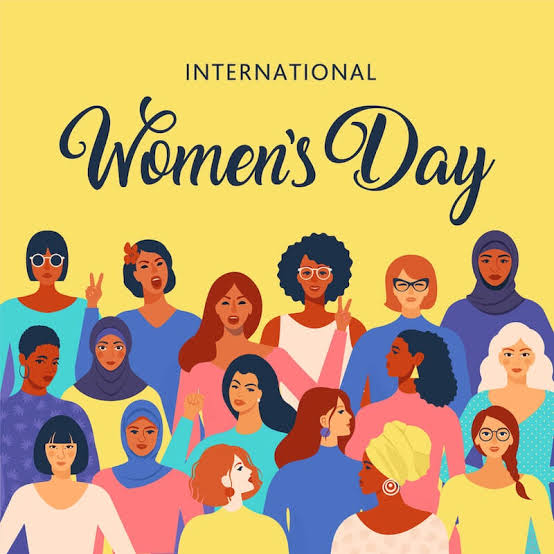
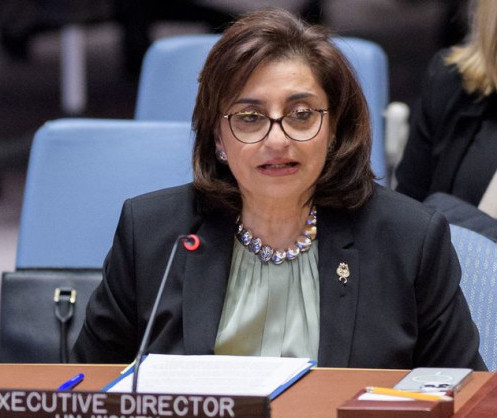
Investing in women’s economic empowerment yields enormous dividends for peace and prosperity, the head of UN Women told the Security Council on Tuesday, stressing that countries where women are economically marginalized and shut out of the workforce are much more likely to go to war.

“We have an opportunity to do things differently in 2022”, declared Executive Director Sima Bahous, who – addressing the Council on International Women’s Day – recalled the uptick in military spending, military coups, seizures of power by force that followed the onset of the COVID-19 pandemic, erasing gender equality gains that took decades to achieve.  “It is clear to me, more than ever, that we need another model of leadership.”

Describing women’s inclusion in economic recovery as “an essential element” in the pursuit of peace, she said women are more likely to spend their incomes on family needs and make a larger contribution to recovery.  Yet, post-conflict reconstruction and investment are still dominated by – and overwhelmingly benefit – men.

The UN Women chief explained that patterns of exclusion, discrimination and antiquated gender norms keep women away from employment, land, property, inheritance, credit and technology – a script that plays out across all situations on the Council’s agenda.

‘Gender apartheid’

She expressed particular concern about the impact of a new “gender apartheid” in Afghanistan, where women’s employment has plummeted sharply since the Taliban takeover – while in Yemen, the world’s largest humanitarian emergency, closing gender gaps in women’s participation in the workforce, would have increased the country’s gross domestic product (GDP) by 27 per cent.

Stressing that more than half of the World Bank’s fragile and conflict-affected countries are in sub-Saharan Africa, where economic losses due to gender inequality stand at $2.5 trillion, she went on to note that women’s land ownership in conflict-affected countries remains dangerously low.  In Mali, it is just three per cent.

Part of the problem …or the solution?

She explained that private actors are often part of the problem – not simply in extractive and agribusinesses, but increasingly, in telecommunications platforms that have a major role to play in facilitating inclusion and preventing hate speech and targeted reprisals.

“We need more engagement, greater accountability and shared responsibility”, she said.

She pressed the Council to use resolutions on the Central African Republic and the Democratic Republic of the Congo, for example, to call for women’s meaningful inclusion not only in peacebuilding, conflict prevention and recovery, but also in decision-making, gender analysis and spending trackers.

Better for business

In turn, she invited the private sector to play a larger role in the Women’s Peace and Humanitarian Fund, which has supported more than 500 women’s organizations in 26 countries since 2016.  “There is much more that can be done to multiply by five the financing for women’s organizations in crisis settings by 2030, as requested by the Secretary-General,” she assured.

The Compact on Women, Peace and Security and Humanitarian Action – which aims to move the needle on these issues over the next five years – could use more engagement by multilateral development banks and the private sector, to help strengthen social protection mechanisms, promote women-owned social enterprises and address discriminatory legislation.

“We have the blueprint and the business case to support women’s economic inclusion,” she said.  “What we need is political will to pursue it.”

Years of progress, erased

Kristalina Georgieva, Managing Director of the International Monetary Fund (IMF), said the war in Ukraine stands as a clear reminder that fragility and conflict impose a terrible cost on human life.  Speaking directly to the women of Ukraine, she said: “We admire your courage.  We share your pain.  We stand with you.  We support you.” The Fund is moving quickly to do what it can to support the Ukrainian people.

We need more engagement, greater accountability and shared responsibility

Stressing that crises – whether spurred by conflict, pandemics or economic and trade emergencies – threaten to set back years of progress on gender equality, she said that twice as many women as men, lost their jobs during the COVID-19 crisis due to low social protection, among other factors.

Women are also 20 per cent below men in labour market participation.

The world has also seen tremendous learning losses:  Over the lifetime of generations affected by the pandemic, $17 trillion will be lost because of the lack of educational attainment.

Perhaps more dramatically, 20 million girls in developing countries may never return to school, she said, adding that gender-based violence has reared its ugly head, leading to serious economic consequences.

As dramatic as these effects are, she said overcoming them can provide a “massive injection” of prosperity, stressing that if sub-Saharan countries reduced gender-based violence closer to the world average, they could see long-term GDP gains of 30 per cent.

Driving change

She said gender equality is critical for growth, resilience and socioeconomic stability, stressing that “it matters tremendously when women and girls can reach their full potential.”  Improving gender equality can raise economic growth, strengthen family and community resilience, and enhance financial stability.  

“We know societies with more gender equality tend to be more resistant to violence and conflict,” she said.  Yet too often, women remain excluded from decision making.

She urged international organizations, Governments and the private sector, to work together to close gender gaps and improve development prospects.

For its part, IMF is “relentlessly” focused on helping its members design and implement economic policies that ensure greater resilience and growth, she said.  It is particularly targeting social spending in efforts to improve education, health care and social protection, and as a result, create stronger societies.  A country-tailored approach is vital.

“Women and girls are themselves powerful agents of change”, she said, pointing to examples in Northern Ireland, Colombia and in Liberia, where the women’s movement helped to bring about an end to the civil war.  To all women and girls, she offered support: “Believe in yourselves.  Dare to reach your full potential.”

Moussokoro Coulibaly, President of the Network of Women Economic Operators in the Ségou region of Mali, said her organization supports women’s economic recovery and the engagement of women in peace and social cohesion efforts.  It brings together 7,847 women and works with 120 local women’s organizations and women’s groups.

“Investing in women’s economic empowerment generates short and long-term social dividends and enhances women’s participation in decision-making and conflict resolution,” she explained.

Voices stifled

During and after conflict, there is a sharp rise in the number of female-headed households.  “It is thanks to their efforts that our communities and families have remained resilient.”

Noting that social and cultural norms are used to justify harmful practices against women’s rights, and that financial resources are often not adapted to the activities that women economic actors lead, she said all these factors hinder women’s participation in public decision-making.

In Mali, a demand for inclusion

Undaunted, she emphasized that women are the pillars of their families and communities.  “We play a role in building peace.”  Wherever women are active, they commit to social cohesion within their communities, in local conflict resolution initiatives, in welcoming internally displaced people and survivors of gender-based violence, in educating children and in raising awareness of non-violence and peace.

It is imperative that women’s empowerment is at the core of resolutions, peace treaties, and programs for sustainable peace.  She pressed the United Nations to facilitate women’s access to sustainable and flexible funding, and to support Governments in the establishment and implementation of policies that promote women’s economic empowerment.

“Help women participate in economic recovery,” she stressed.
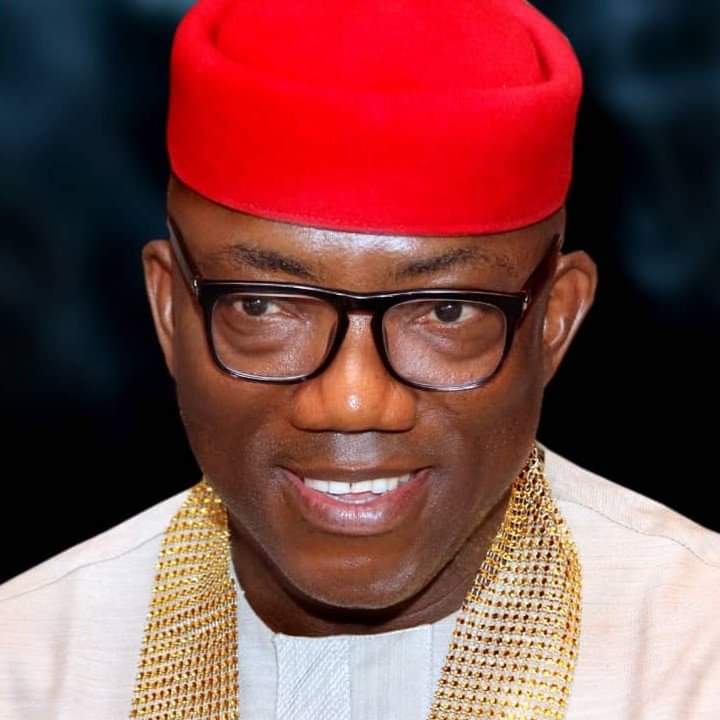
Until the whiteman came to Nnewi and entire Igbo land, our people believed that there was a Supreme God known as Chukwu Okike Abiama who was the numero uno, primus interpares or simply “the first amongst all gods”. This was the god that could hold other gods to account. Besides this Supreme Deity are other gods with powers to create human beings. The above belief is derived from the Igbo saying that: “Ofu nne na-amụ mana ọ bụghị ofu chi na-eke”, meaning that “Even though children are born of the same mother, they are created by different Makers or Gods.” This belief is rooted in what Igbos say, and the name they bear/bore. It is common to hear an Igbo person at the height of grief shout: “Chi m egbuna m ooo”, meaning: “My God has killed me oo.”

Some Igbos name their children at the turn of fortune “Chi m nụọlụ m ọgụ”, meaning “May my God fight this battle for me.” Igbos believe that “Ebe onyedalụada ka chi yakwatuluya”, meaning that “downfall of anyone is as permitted by his god.” A person’s God is responsible for the timing and the exact location of birth.

Igbos believe that the creator of Buhari is different the creator of Ekwueme or Awolowo; that everyone has their own creators; implying that there are many creator gods in the space and time. Like Jesus, Igbos also believe in reincarnation. Just like the Catholics too, Igbos believe in the interactions between our dead relatives and the living, with each intervening in the affairs of the other.

Through colonialism and effective packaging, many Ndigbo and other peoples of the world had accepted the story told by Moses in the Bible about how their God created his race in Garden of Eden which description fits a location in today’s Iraq considering the rivers Tigris and Euphrates mentioned in his creation story.

Clearly Moses’ race has remained pure till date and are quite distinguishable in colour, marked features from Africans, Chinese, Indians, Philippinos, Mongolians etc. Each of these races have their stories that have now become heresy or taboo though Indians and Japanese have refused to be bleached or bamboozled as much as Africans.

The vestiges of Igbo cosmology could be seen in Igbo mothers of yore allotting Gods to their daughters. It used to be the practice until when Igbos became James, Jude and Martha. During my grandmother’s era, it was customary that a woman must allot a personal god to her daughter before leaving for her husband’s house. It was called “ịhanye chi”. The nearest of this kind of god is what the Catholics regard as Guidance Angel.

This was done by the mother cutting out a branch of an Ọha tree in her backyard and giving the same to her daughter after invoking her mothers’ gods to protect her daughter. She would now detail a good god to be her daughter’s God. The daughter would plant and nourish the ọha cutting at her new home. She would pluck ọha leaves from the new ọha chi tree to make ọha soup for her household. It is sort of a passive communion. This special new tree in a bride’s home that grows from a stem of anọha tree from a mother’s ọha tree is called “Ọhachi”.

This concept that people have different gods responsible for their creation has helped the Igbo explain the disparity in wealth, affliction, and life vicissitudes. For instance, it explains why some people fail while others succeed, why some people are beautiful while others are ugly, why some people survive in a plane crash, and others die, etc.

A lucky person claims that “Mụ na chi m dị na mma”, meaning “I am on good terms with my personal god.”

Ikenga Ezenwegbu
5 March 2022

The South Eastern part of the country is witnessing massive urban renewal and the real estate ecosystem in this area is one of the fastest in the continent. With new projects going on, there is always a need to have a professional cleaning service that will look at pre and post industrial cleaning solutions for this region and Niger delta.

Building massive houses and factory is one thing, getting a professional to do the cleaning is something that is lacking in the region. ZILOM CONSULTS is bringing to bare the best practices in cleaning and home management. Focusing on maintainance, industrial and domestic cleaning. The company has a track record that has seen them do jobs for many establishments such as hotel, hospitals, homes and duplexes.

Speaking to the media, the founder and Chief Executive of ZILOM Consults said “When asked, what ZILOM CONSULTS brings to the table, we being excellence”

Amiable lady added that “We are committed to providing you with the best of services when it comes to all type of cleaning, Fumigation, Event planning and management, as well as interior decoration…We simply are the best…”

ZILOM Consults located in the urban settings of Enugu has executed jobs in various Eastern parts of country and beyond. With robust support service and after sales, ZILOM has been described by satisfied customers as” changing the narrative in the way people live and clean their homes. “

Anthony Nwosu

The Executive Vice Chairman and Chief Executive Officer of the Nigerian Communications Commission (NCC), Prof. Umar Danbatta, will chair a public lecture to mark the 2022 International Women Day (IWD) in Kano State, in recognition of his tremendous contribution and support towards promoting the course of women development.

The lecture with the theme: ‘Break the Bias’, slated for March 10, 2022 at the Sa’adu Zungar Auditorium Complex, Mambayya House, Gwammaja, Kano by 10.00 a.m. prompt, is being organised by The Kano Civil Society Forum (KCSF).

KCSF is the umbrella body of over 200 Civil Society Organisations (CSO) in the state, working on human right protection, good governance, gender equality, peace building and sustainable development.
Other collaborating partners of KCSF in hosting the programme include the Aminu Kano Centre for Democratic Studies, Bayero University, Kano, Women and Orphans Development Network (WORDNET), International Federation of Women Lawyers (FIDA) and Positive Pathway Initiative (PPI).

“In recognition of your tremendous contribution and support towards promoting the course of women development in the State, we write, most respectfully, on behalf of the collaborating partners, to invite you to serve as the Chairman of the occasion,” KCSF said in a letter addressed to the EVC.

Over 500 participants, mainly women, drawn from different women groups, children rights promotion and protection focused groups, women entrepreneurs, women academics, professional career women in both formal and informal sector, as well as CSOs are expected to participate in the event.

Activities lined up at the event to be chaired by Danbatta aside the public lecture on promoting women equality and suggesting ways to break the bias of discrimination against women, include presentations of awards to recognise some women who have supported immensely towards protection of women and children, and also contributed to socio-economic and political development of the society.

The EVC is the founder of Danbatta Charity Foundation (DCF), which has sponsored many girls’ scholarship since its inception.
The United Nations earmarked every March 8 to celebrate IWD, which is one of the most important days specially dedicated to celebrate the socio-economic, cultural, political and professional career achievements of women as well as a call for accelerating gender parity around the globe.

Danbatta to Chair International Women’s Day Lecture

The Executive Vice Chairman and Chief Executive Officer of the Nigerian Communications Commission (NCC), Prof. Umar Danbatta, will chair a public lecture to mark the 2022 International Women Day (IWD) in Kano State, in recognition of his tremendous contribution and support towards promoting the course of women development.

The lecture with the theme: ‘Break the Bias’, slated for March 10, 2022 at the Sa’adu Zungar Auditorium Complex, Mambayya House, Gwammaja, Kano by 10.00 a.m. prompt, is being organised by The Kano Civil Society Forum (KCSF).

KCSF is the umbrella body of over 200 Civil Society Organisations (CSO) in the state, working on human right protection, good governance, gender equality, peace building and sustainable development.
Other collaborating partners of KCSF in hosting the programme include the Aminu Kano Centre for Democratic Studies, Bayero University, Kano, Women and Orphans Development Network (WORDNET), International Federation of Women Lawyers (FIDA) and Positive Pathway Initiative (PPI).

“In recognition of your tremendous contribution and support towards promoting the course of women development in the State, we write, most respectfully, on behalf of the collaborating partners, to invite you to serve as the Chairman of the occasion,” KCSF said in a letter addressed to the EVC.

Over 500 participants, mainly women, drawn from different women groups, children rights promotion and protection focused groups, women entrepreneurs, women academics, professional career women in both formal and informal sector, as well as CSOs are expected to participate in the event.

Activities lined up at the event to be chaired by Danbatta aside the public lecture on promoting women equality and suggesting ways to break the bias of discrimination against women, include presentations of awards to recognise some women who have supported immensely towards protection of women and children, and also contributed to socio-economic and political development of the society.

The EVC is the founder of Danbatta Charity Foundation (DCF), which has sponsored many girls’ scholarship since its inception.


The United Nations earmarked every March 8 to celebrate IWD, which is one of the most important days specially dedicated to celebrate the socio-economic, cultural, political and professional career achievements of women as well as a call for accelerating gender parity around the globe.


Father’s name is Idemmili. That’s his first name before he became christened Simon. If my brothers decide to branch off from the larger family and change their surname they would choose Idemmili.

That name incidentally is also where we are from. But this story is about the totem of Idemmili, and my sister.

I grew up knowing that a frightful thing as a snake specie could come into the house, and no one would panic. The python is the totem of Idemmili people, no one kills it intentionally. It enjoys privileges, and boy, those privileges, it sure enjoys!

You could open your drum of water in the morning and find one curled at the bottom. You could reach your hand to pick a pot of soup in your kitchen and find one right behind it. You could reach into your stack of palm fruits and one emerges from underneath. Everywhere! I’ve even heard stories of it curling up and placing itself right under someone’s head as she slept, just like a pillow.

In all these instances, there’s no panic, because the people know that it’s not harmful. The bite is not venomous. In the few instances that it is surprised into biting a person, it usually hisses after the bite and the belief is that the hiss shows remorse and takes away the pain.

I never became used to seeing them around, not that they come that often anyway.

My sister became charismatic and after our parents left, has largely been in charge of things. She knows that for our people, the python is to be protected. She does. But she says that they are children of ndi mmil and they are of no good. So she kills them in a way that I disapprove.

If we find these things in the house, long bamboo poles are used to remove them. But you talk and ask that it curls up on the pole you offer. More often than not, it does. You carry it on the pole and take it to a bush away from the house. That’s the practice I met.

Then some people started using kerosene. A cup of the liquid thrown at it gets it to forget its usual gait and run out of the premises. It is said that they shed skin when kerosene or any other from the hydrocarbon family touches them.

My sister burns it, alive. She would not listen to anything else.

The creature tried to get away. There were tongues of flame on its skin for she kept throwing fuel, kept for that purpose. It’s a miracle that the house didn’t burn down with the creature.

It opened it’s mouth wide as if in a scream as it kept writhing and thrashing about. And every time it opened that mouth wide, my aunt who witnessed it alongside me, gave out a cry calling on nne. It did struggle to overcome the flames and it’s imminent death. It did. I was surprised at the length of time it held out.

And then it stretched and froze.

Ada Obi

‘’Our Vision 2030 focuses on five priority areas, to enhance the ability of the Criminal Justice System to uphold the Rule of Law, Safeguard people, institutions and economy from Corruption and illicit financial flows, Securing the safety of people from terrorism and violent extremism, Protecting people, Economy and the Environment against organised crime, Promoting people’s health through drugs and HIV/AIDS prevention, treatment and care’’.

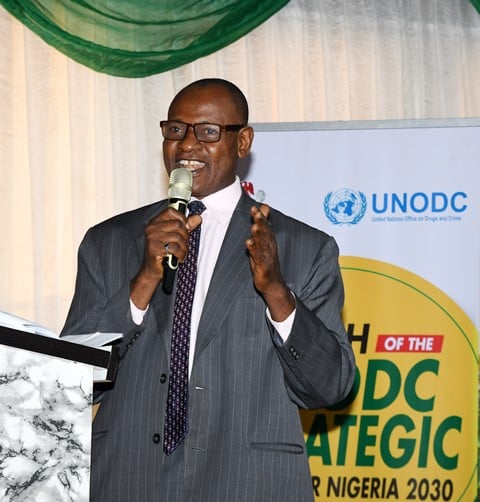
This was revealed by the Nigeria Government at the Launch of the United Nations Office on Drug and Crime (UNODC) strategic Vision for Nigeria 2030, on Friday, 4th March, 2022 at Obasanjo Auditorium in Abuja.

In his Keynote Address, the Honourable Attorney General of Federation and Minister of Justice (HAGF) Abubakar Malami SAN, represented by the Acting Solicitor General of the Federation and Permanent Secretary, Benjamin Okolo Esq. said, the Strategic Vision for Nigeria 2030 will help Nigeria in achieving the Sustainable Development Goals (SDGs) particularly SDG 16 aimed at promoting peaceful inclusive societies for sustainable development and providing access to justice institutions at all levels.

Malami assured the Organisation of the Federal Government’s continuous support and cooperation in the implementation of the Strategic Vision.

Earlier in her welcome address, Head, Asset Recovery and Management Unit, Federal Ministry of Justice Ladidi Bara’atu Mohammed said, last year UNODC launched the Strategic Vision for Africa 2030 but today’s launching of the Strategic Vision for Nigeria is based on the collaborative of what they had and the activities being conducted in Nigeria.

In his remarks, the UNODC Country Representative, Nigeria, Mr. Oliver Stolpe explained that, the Strategic Vision for Nigeria was the latest result of a strong and long-standing partnership with Nigeria since 1990, so it is time to elevate the partnership, to confront growing challenges by building on the positive steps that have been taken.

He added that, Nigeria faces serious, multi-dimensional challenges to security and rule of law, Boko Haram and other Terrorist groups target innocent people in the North- East and across the Sahel, while piracy continue to plague the Gulf of Guinea.


In order to address this situation in a sustainable way, Stolpe explained that it is critical to strengthen the broad framework of responses, including laws, Institutions, capacities and awareness of which Nigeria has already taken significant steps but needs a robust legal frame work to tackle serious and organised crime such as drug trafficking, terrorism, piracy, trafficking in persons, corruption and money laundering.

Enumerating on the achievements of UNODC through the partnership with Nigeria on all these challenges, Mr Stolpe said it is time to give even greater structure, momentum and impact to the Organisation’s efforts. Hence the Launch of the UNODC Strategic Vision for Nigeria 2030

In his goodwill message Chairman, Economic and Financial Crimes Commission (EFCC), Abdulrasheed Bawa said that, as a signatory to the United Nations Convention Against Corruption (UNCAC), the United Nations Convention against Transnational Organized Crime (UNTOC), as well as other related United Nations treaties, Nigeria has always remained committed to eradicating crime and criminality through the support of UNODC programmes, Projects and activities.

‘’Thus, our gathering here today to officially unveil the Strategic Vision for Nigeria 2030 is but a continuation of the existing collaboration in strengthening multilateral relations and enhancing the global fight against all forms of crime, Bawa further said’’.

He noted that the five priority areas identified in the Strategic Vision in consultation with the Nigerian Government and other stakeholders, are aligned to the Sustainable Development Goals and the five EFCC Strategic Objectives outlined in the Commission’s Strategic Plan 2021-2025.

While delivering his goodwill message, Chairman, Independent Corrupt Practices and Other Related Offences Commission (ICPC) Professor Bolaji Owasanoye explained that it has been much on theory than in practice and this is not due to the fault of the developed world alone but also due to developing as well.

Director Public Prosecution of the Federation, Mr. Mohammed Babadoko Abubakar while thanking the UNODC and Development Partners, pointed that the vision would help in attaining the development goals as a nation.

In attendance were representatives of Director-General, National Drug Law Enforcement Agency (NDLEA), FCT High Court Judge, Nigerian Correctional Centre, and Commissioners from ECOWAS, Directors from Ministries, Departments and Agencies, Diplomats and amongst others.
Modupe Ogundoro

…Highlights 5G’s Socio-Economic Benefits

The AfricaNXT Conference 2022, known previously as Lagos Social Media Week, has ended on a historically impressive note for the Nigerian Communications Commission (NCC), having drawn the largest attendance and participation at a single session during the conference, where its team discussed the socio-economic benefits of 5G services.

The conference had scheduled over 200 sessions and about 400 speakers. However, NCC session was oversubscribed as all seats were occupied, while some participants had to stand to listen to the discussion on a topic that patently enthused and electrified the audience, and marked by very rare social networking and participation.

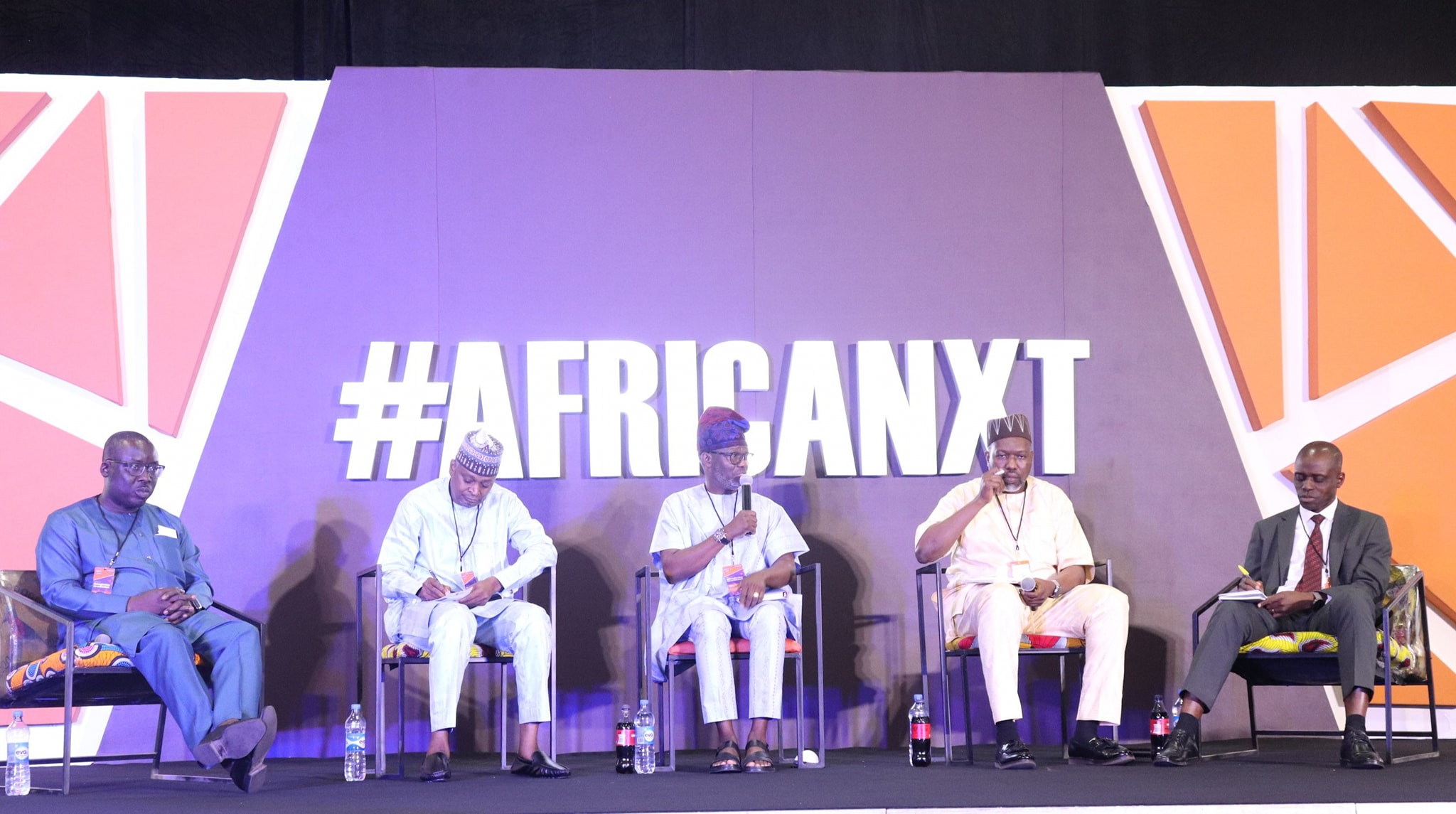
On Thursday, March 3, 2022, the NCC team mounted the FutureNow Stage of the Innovation Pavilion of the Conference to inform, educate and rally further support for the Commission’s strides on the preparedness of Nigeria to deploy the Fifth Generation (5G) network and services. Using simple, fact-based examples, the NCC’s 5-man panel, provided necessary clarifications to the audience on the safety of 5G technology and gave copious examples about how the technology will significantly impact life qualitatively and bring socio-economic benefits to the citizens, businesses, the nation, and the continent of Africa.

The panelists extensively discussed 5G technology, focusing on safety, data privacy, the chronology of programmes, actions and activities of the Commission towards the launch of the services, including the issuance of 3.5 gigahertz (GHz) spectrum and licence for 5G deployment, the rollout plans, use cases as well as citing concrete socio-economic significance of the expected services.

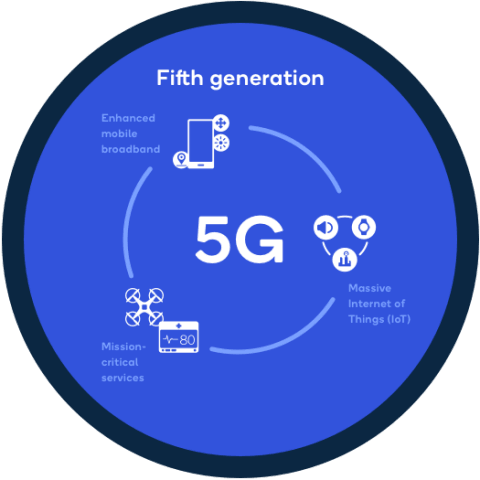
The NCC team explained to the excited audience how 5G will power a plethora of applications, innovation and creativity. These include smart cities, telemedicine, Internet of Things (IoT), smart agriculture, driverless cars, bolstering of the security governance sector, among others. The team asserted that 5G is a network of networks because of its huge capabilities, and its derivable benefits can only be limited if humans limit their own imaginations.

Reckoning that 5G technology is a total shift from the internet connectivity people are used to at the moment, the panel stated that 5G would open doors of new possibilities and socio-economic impacts. “With 5G, there is something for everyone. Nigeria is kick-starting these massive benefits with enhanced broadband. 5G will bridge the fibre connectivity gap and with wireless broadband connectivity, Nigerians will enjoy the enhanced broadband.” A member of the panel stated to emphasize enhanced connectivity that comes with 5G technology.

The discussants also agreed that telecom operators will reap huge benefits from 5G in many ways, through network slicing, new revenue streams from IoT, industrial applications, gaming and entertainment as well as live broadcast features supported by 5G amongst others.

The NCC team comprising specialists in engineering, law and communications, also said that 5G will power more than a billion devices in the next two years, and this means there will be upsurge in the manufacturing of related user equipment which is expected to bring down the prices of associated devices and equipment. The process is also expected to trigger utilisation of raw materials such as rare earth metals that are found in large quantities in Africa, and cities will equally benefit from the 5G enabled infrastructure such as smart street lighting, smart traffic control systems, maintenance services and so on that will deliver huge economic gains.

Explaining NCC’s efforts and plans on consumer safety in the 5G era, discussants recalled that the Commission was already working closely with the Office of the National Security Adviser (ONSA) to develop a Risk Management Frameworks. The framework will grow the need for the ethical hacking skill set and allow the use of ethical hacking as part of risk management towards ensuring the cyber space safety during 5G era.

Additionally, the panel informed the audience that NCC had established a sectoral Computer Security Incidents Response Team (CSIRT) to work with the telecoms operators to reduce risks on the cyber-attacks and data breach. The Centre, inaugurated in 2021, has been collaborating with the national agency, the Nigerian Computer Emergency Response Team (ngCERT), towards enhancing the security of the cyber space and privacy of citizens. These strategic collaboration, for which NCC is noted, will now be boosted by the Nigeria Data Protection Bureau, recently established by the Federal Government.

While explaining the security, safety and speed characteristic of 5G, the panel reasoned that, while 4G has a response time of 10 millisecond, equivalent of the capacity of human brain, 5G network is even faster. Therefore, the high-speed feature of 5G will make it unlock greater opportunities that will enhance human productivity for the development.

“The latency of 5G, which measures its response time, is 1 millisecond, while that of 4G is measured at 10 milliseconds. While 4G can accommodate 100,000 device connections in one square kilometre, 5G can connect a million devices within the same space, and thus, power Internet of Things (IoT). Also, 5G peak data rate is 20 gigabits (GB) per second for download, and 10GB for upload, which is higher than 100 megabytes (MB) per second download and 50MB upload offered by 4G network.”

The panel allayed fears of health concerns, propelled by “misconceptions, disinformation, misinformation and malinformation”. The panel informed the participants that the apprehension was unnecessary. It cited research-based evidence from the World Health Organization (WHO), International Telecommunication Union (ITU), and the International Commission on Non-Ironising Radiation Protection (ICNIRP), to prove the safety of 5G network to human health.

The panel explicated further that Nigeria can indeed begin to create smart cities, an ecosystem powered by 5G applications. The massive speed of 5G, according to the discussants, will also enhance the capacity of start-ups and other tech entrepreneurs to leverage the enabling environment powered by the fast connectivity, to develop unlimited solutions for the benefit of Nigeria and her citizens.

According to the panel, an enhanced broadband that allows low latency and facilitate billion of connections in machine-to-machine communication certainly holds a big promise for socio-economic growth and development.

When asked if the country was ready for 5G, the panel declared that, “Nigeria is ready for 5G because the NCC has been supported by key stakeholders to make Nigeria ready. The Commission has built the regulatory foundation, the deployment plan has been designed and various exercises have been carried out up to the level of handling over 5G Spectrum licences to the operators.”

Meanwhile, the panelists also emphasized the centrality of collaboration among state and non-state actors to drive the ecosystem. They contend that, as with other previous technologies, such as 1G, 2G, 3G and 4G, efforts must be made for all stakeholders to glean and exploit the massive use cases of 5G for socio-economic development.

While rounding off the highly engaging session, the moderator thanked the co-panelists for their diligence and painstaking engagements, and the audience for its interest, enthusiasm and solidarity. He reiterated the unflinching commitment of NCC to doing all within its regulatory powers to ensure data security and data protection. He also underscored the need for sustenance of collaborative efforts among tiers of government and all other stakeholders to ensure effective utilization of 5G services across all sectors.

The well-attended panel discussion, which focused on, “Moving Forward Steadily: Socio-Economic Significance of Development of 5G Services” was moderated by NCC’s Head of Online Media, Dr. Omoniyi Ibietan. Other panelists are: Babagana Digima, Team Lead, Nigeria Office for Developing the Indigenous Telecoms Sector (NODITS); Usman Aliyu, Head, Space Services; Anthony Ikemefuna, Head, Fixed Networks and Converged Services; and a Senior Manager in the Legal and Regulatory Services Department of the Commission, Dr. Mohammed Suleh-Yusuf.

The AfricaNXT Conference is the largest assemblage of innovators from across Africa and Africa’s Diasporan communities. Formerly known as Social Media Week Lagos, the confab and festival, now in its 10th Year, is an annual event that takes place in Lagos, focusing on harnessing Africa’s potentials for her development, using the dual agencies of human creativity and the promises of technology.

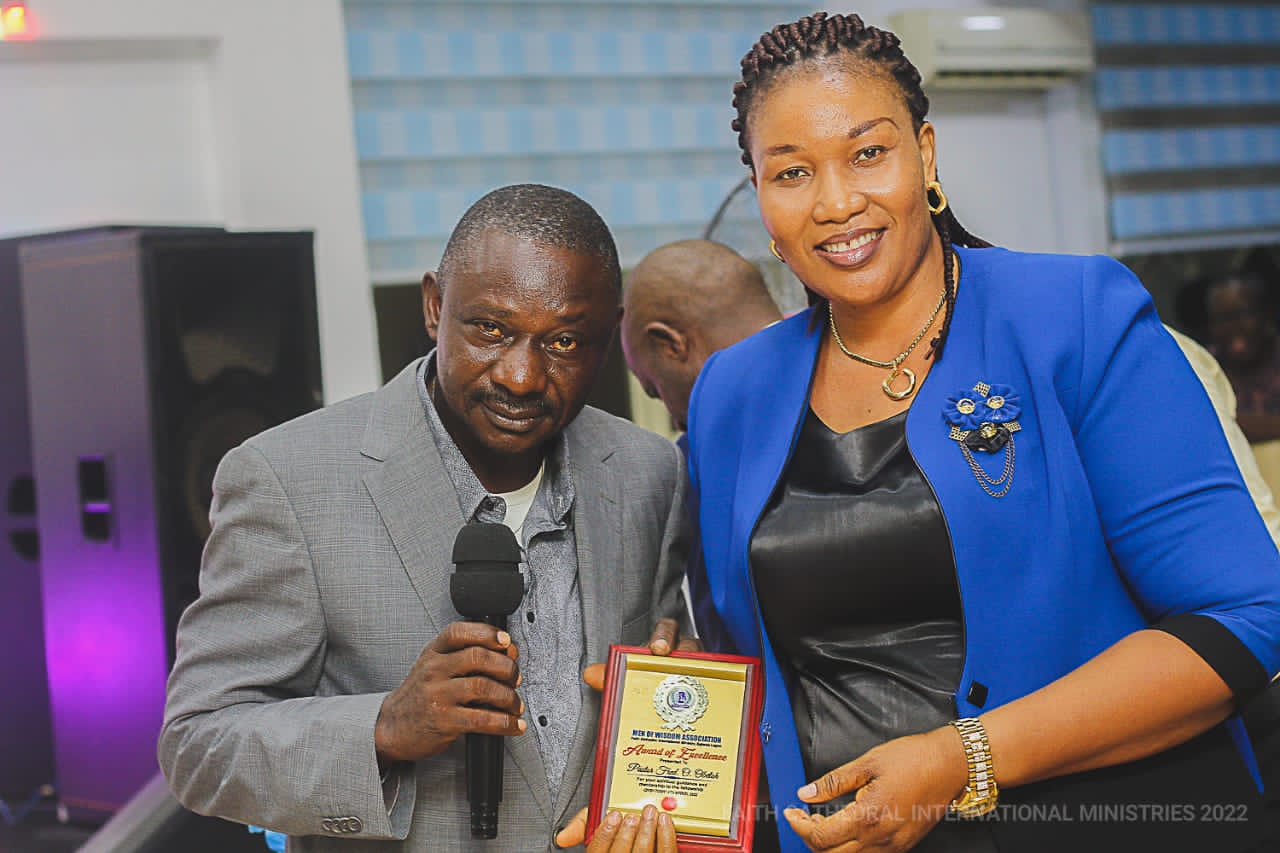
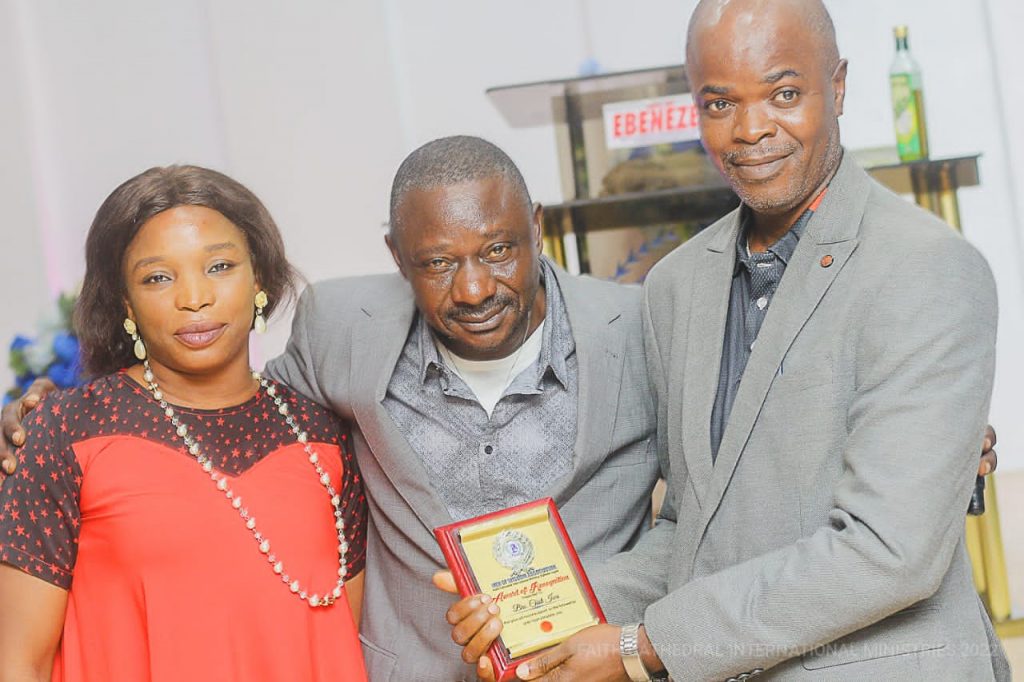
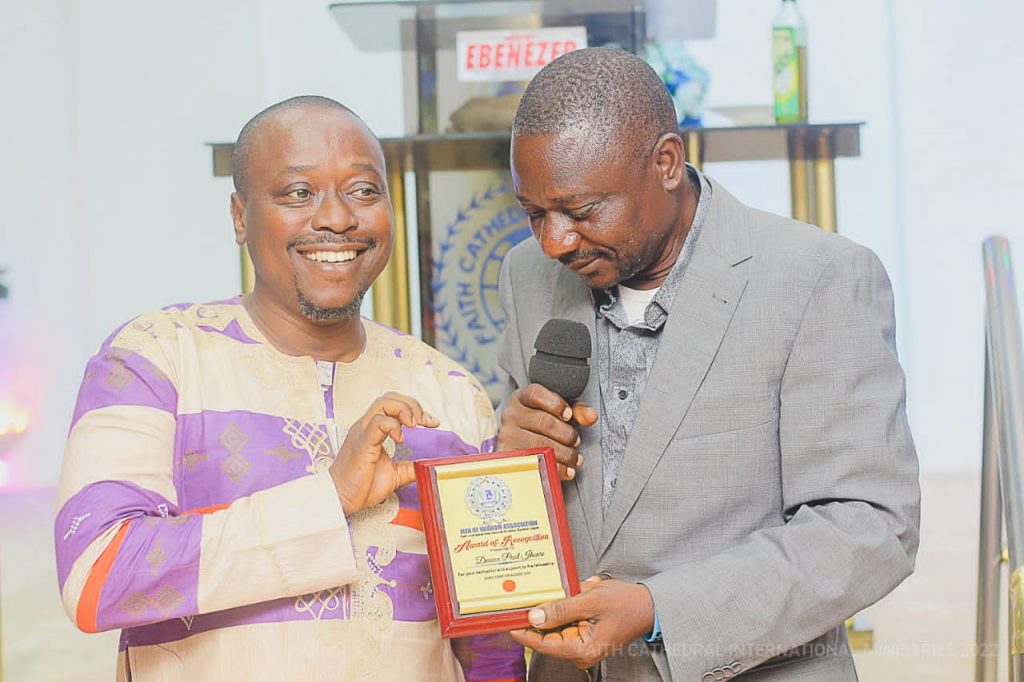
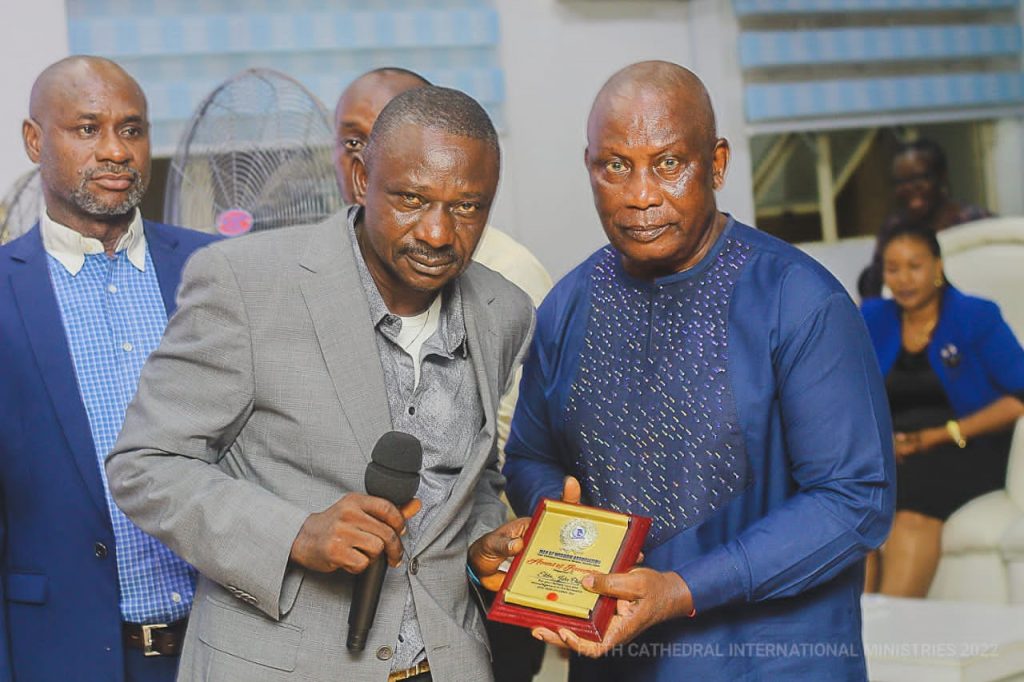
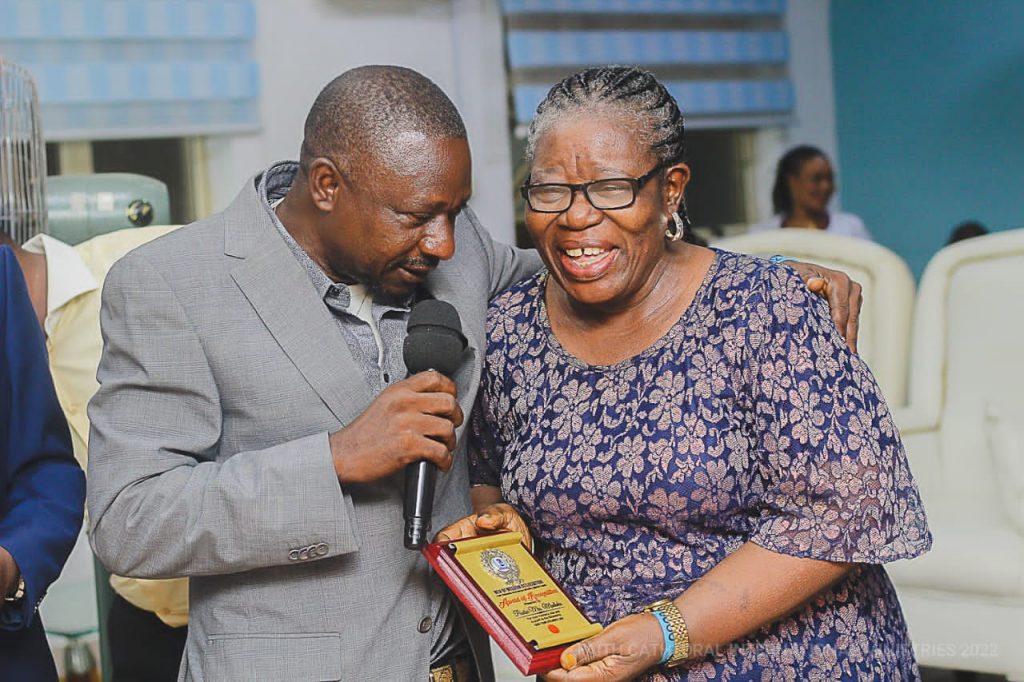
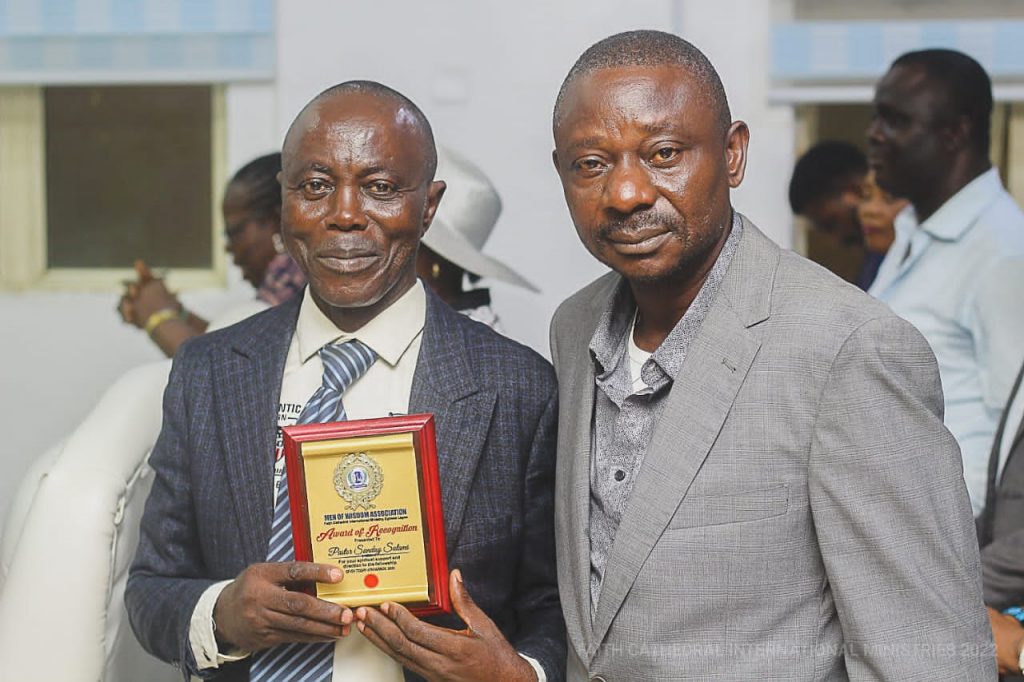
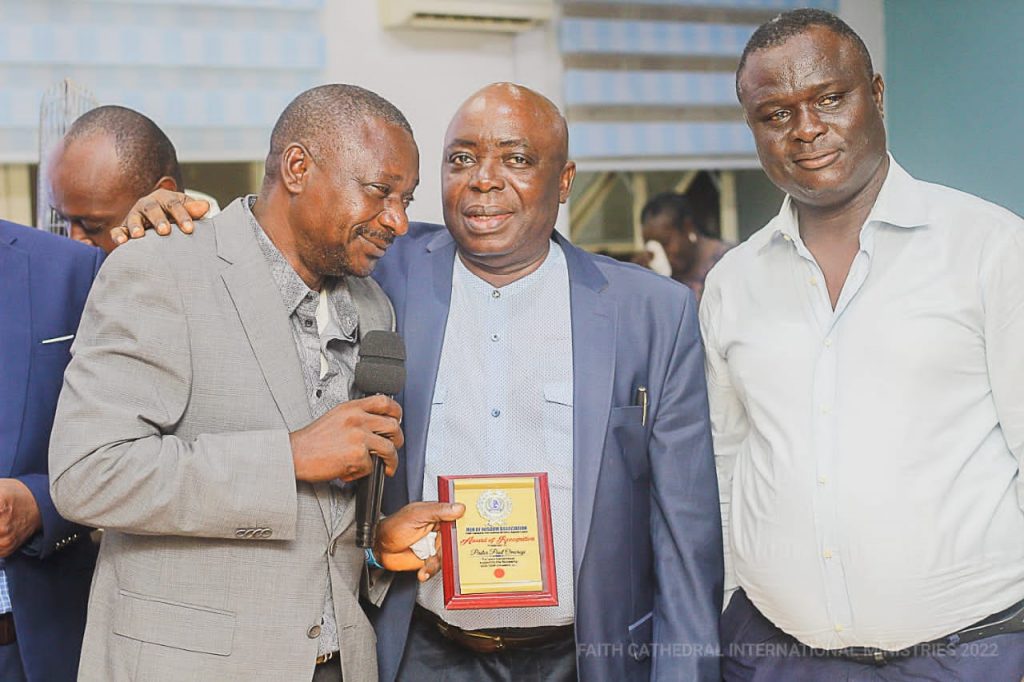
Men of Wisdom Fellowship, a group of dedicated men in the service of God at the Faith Cathedral International Ministry, Egbeda, Lagos recently acknowledged some of their members that have contributed immensely to the development of the organization and also to the propagation of the gospel. This happened at the church’s auditorium at the Lagos Headquarters of the Church.

The fellowship also appreciated the founding pastor and the General Overseer, Pastor Fred Obetoh. In his statement, the Man of God said,” I appreciate this award and I am congratulating those that were recognized also. It shows that people are seeing their good works, but more importantly, we should allow Christ to reflect in our lives and the best type of recognition is when our names have been written in the book of life. I am encouraging everyone to ensure that we live a worthy life so that at the end of our stay in this world, we will get the ultimate award in heaven.”

Speaking on the awards and why there is need to recognize some people, the president of the Fellowship, Elder Tony said, we are using this medium to appreciate all the members of the fellowship, everyone is a recipient, I also congratulate those that have received the awards and encourage them not to rest on their oars.”


In the same line, Elder Greg Ibadin, the Vice President of the fellowship congratulated the awardees and encouraged them to do more. He also used that opportunity to encourage those that have not been putting their best to the upliftment of the fellowship to do so.

Amongst those that received the award apart from the G.O are, Jude Awoko, Joshua Pual, Pastor Paul Omoruyi, Brother Chidi Iwu, Pastor Sunday Salami, Pastor Mrs. Maduka for her motherly role and support to the fellowship. Others are Elder John Osifo, Barrister Deacon Paul Ihonre and pastor Andrew Esekaighbe.

FAITH CATHEDRAL INTERNATIONAL MINISTRY, is a Christian organization (Church) hinged on deliverance and core Christian principles as stipulated in the Bible. Established over 20yrs ago, the church has grown in leaps and bounds from a humble beginning in Ajayi Farm in Ikeja (1990s) to the present location in Egbeda.


With many locations, Faith Cathedral International Ministry has established branches in various places outside Lagos such as Uromi, Edo State, the European branches in Germany has flourished. By the goodness of God, Faith Cathedral International Ministry has a branch in Ikorodu, Lagos.


Blessing Muarice

” I appreciate this award and I am congratulating those that were recognized also. It shows that people are seeing their good works, but more importantly, we should allow Christ to reflect in our lives and the best type of recognition is when our names have been written in the book of life. I am encouraging everyone to ensure that we live a worthy life so that at the end of our stay in this world, we will get the ultimate award in heaven.”

Strong indications have emerged that businesses and corporations in Nigeria are warming up to leverage the high-speed, capacity and low latency features of the forthcoming Fifth Generation (5G) network rollout in Nigeria. The intense anticipation and enthusiasm take life from the desire of digitally-literate Nigerians ready to harness the benefits of the new technology.

This  notion of the bright prospects of 5G reverberated at various panel sessions on Tuesday at the ongoing 2022 edition of AfricaNXT conference co-sponsored by the Nigerian Communications Commission (NCC) and holding at the Landmark Event Centre, Victoria Island, Lagos.

Discussants at panel sessions from different organisations and thematic areas of AfricaNXT, expressed optimism that 5G services will drastically reduce unemployment in Nigeria if stakeholders partner with willing internet-compliant Nigerians on various projects ahead of 5G deployment. The NCC as the regulator of telecom sector in Nigeria is the main facilitator of the launch of 5G network.

At a panel session titled “Built to Last: Hardcoding Resilience into the DNA of your Business, discussants invited revealed that the finance institution, as well as others, have created digital work tools and employment opportunities by partnering with result-oriented individuals on various financially-rewarding tech projects, products and solutions based on 5G.

On the backdrop of numerous opportunities for free global education through the Internet which will be enhanced by 5G, discussants opined that individuals identify themselves as a business, continuously improve their knowledge base in order to partner with numerous corporations in the country that have created work solutions and tools that make work easier than being full-time employees.

Participants reasoned that organisations that wish to retain talents who no longer want to be full-time employees can be engaged to work remotely and deliver results by leveraging the world of possibilities that will be unleashed by next-gen technologies such as 5G.

Objectively, panelists and participants believe that, these smart contracts enabled by robust connectivity that comes with 5G, will reduce unemployment and ensure continuous socio-economic development in Nigeria.

At another panel session on “Disruptive Public Relations in the Imminent Metaverse Era”, discussants agreed that though not completely developed and not yet fully deployed, the Metaverse is expected to allow its users engage together in a shared world of unique experiences. A metaverse is a network of 3D virtual worlds focused on social connection. It is a digital world with its own economy that will connect huge forms of social interactions.

Indeed, the 5G services in Nigeria which will bring about a new generation of internet services through its high speed and ultra low latency capability will provide the resilient technology and platforms to make Nigeria an early adopter of Materverse, which is expected to birth a renaissance in industrial and social relations.

The NCC had recently issued 3.5 spectrum licences to Mafab Communications Limited and MTN Nigeria, and the two companies are scheduled to launch 5G services soon, having emerged winners during the 3.5GHz spectrum auction which took place in Abuja in December 2021.

The Executive Vice Chairman of NCC, Prof. Umar Danbatta, has noted that Nigerians should look forward to amazing opportunities with the deployment of 5G services in Nigeria.

In the weeklong AfricaNXT conference 2022, the NCC will host a panel discourse on the topic, “Moving Forward Steadily: Socio-Economic Significance of Deployment of 5G Services”. The discussion will take place on March 3, 2022 by 2:00pm, at the FutureNow Stage, Innovation Pavilion, Landmark Event Centre, Victoria Island, Lagos.

The discussion will bring together key stakeholders to discuss the significance of deploying 5G services in Nigeria and across Africa, focusing on the derivable benefits of 5G services to individuals, businesses and the national economy.

-   Kickstarts drive to own scheme and provides insurance cover for drivers 

Univasa, an indigenous ride-hailing company in Nigeria, has launched Verify and Pay, an innovative digital payment system to reshape the transport system in Nigeria and ease the payment system. Through verify and pay, passengers hailing a cab can scan the barcode on the taxi to confirm the details of the driver and the vehicle, input their destination to check and negotiate fares, and select preferred payment options such as card payments or USSD. The platform launched on Friday, March 4, 2022 at the Lagos State Taxi Driver & Cab Operators
Association, Oshodi was graced by the President of the association, high ranking members of
LSTDCOA, PEDPPA president Comrade Idris, representative of Universal Insurance plc, Mr. Ayodele Kumolu and Mr. Israel Ifedayo, Mizala tech partner. The Verify and Pay is a new face to transportation in Nigeria, it has currently been launched for the Lagos Yellow Cabs but will also cut across other forms of transport within the state, Abuja, Kano and Port Harcourt before the end of the year.

Speaking at the event, CEO of Univasa, Dr Ben Adeniyi said “The verify and pay platform initiative was born out of the need to be an “Enabler” to service providers and consumers. For us at Univasa, providing innovative services is at the helm of our operations and we continue to hold it as a top priority. As a driver partner with Univasa, you get to enjoy the convenience of receiving your payments instantly with our instant withdrawal feature, so “Cash or Card e no matter” as we like to say and for the riders, we are offering you a chance to own your experience while hailing a ride”. Mr Ayodele Kumolu, the representative of the Universal Insurance plc also spoke in details about their flexible insurance packages where drivers can apply and make payments in installments either a weekly, monthly or yearly package.
Additionally, Univasa rolled out its Drive to Own empowerment program, which allows drivers on the Univasa ride hailing app to pick a Univasa car as their vehicle of choice to work, make daily remittances for a duration of 18-24months, which will be deducted from their earnings from the app, and then the car is the driver’s.

The Univasa team also confirmed that the cars in the drive to own scheme have been insured with Universal Insurance plc and tech partners, Mizala, the insurance covers the car, third party and life. Univasa also has a package for drivers who meet the earning mark of NGN 200,000 in a month will automatically be beneficiaries of free insurance against the next month and others can also easily apply for comprehensive insurance on a flexible payment structure.
The yellow cab drivers expressed their excitement for the new initiatives by Univasa especially verify and pay platform as it will help them track their rides and also help to improve the reputation of the association as their riders will be more assured of their safety.
UNIVASA is a wholly-owned Nigerian Company that provides a one-stop solution to fulfil the daily needs of Africans via cutting-edge digital technology. Univasa launched its ride-hailing application in the later part of 2020 in Lagos with a partnership with the popular Lagos yellow cabs (LSTDCOA) with a campaign called “Baba dey Online” and has since expanded operations to Ibadan, Port Harcourt, Benin City, Akure, Ilorin; Kwara state and Abuja.
The Univasa User and Provider apps are available for download on Google Playstore and the
Apple AppStore.