The African Development Bank (www.AfDB.org) has signed an agreement with First City Monument Bank (FCMB) for a $50 million line of credit to support access to finance for small and medium-sized and women-empowered enterprises.
FCMB will use the line of credit to expand lending activities that will boost the country’s post-pandemic economic recovery and drive more inclusive and climate-resilient growth. It will focus on enterprises in Nigeria’s agribusiness, manufacturing, healthcare and renewable energy sectors.
The African Development Bank is also providing a complementary technical assistance package of $285,000 under its Affirmative Finance Action for Women in Africa (AFAWA) initiative. The grant funding, provided by the Women Entrepreneurship Finance Initiative (We-Fi), will support enhancing financial literacy, business management and entrepreneurial skills for women led businesses as well as strengthening FCMB’s monitoring and reporting functions.
The Bank’s support to FCMB will advance the objectives of the AFAWA initiative, which seeks to improve gender inclusivity by enhancing access to finance for women entrepreneurs
The African Development Bank’s Director General for Nigeria, Lamin Barrow, said, “The Bank’s support to FCMB will advance the objectives of the Affirmative Finance Action for Women in Africa (AFAWA) initiative, which seeks to improve gender inclusivity by enhancing access to finance for women entrepreneurs.
“With at least 30 percent of the funding from the Line of Credit to be channelled to women owned businesses, FCMB will be better positioned to scale up the deployment of its tailored products and services to meet the needs of SMEs and women-owned businesses,” Barrow said.
FCMB’s Managing Director, Yemisi Edun, said, “We are happy to collaborate with the African Development Bank to create expanded opportunities and accelerate post-COVID-19 pandemic business recovery for SMEs and women-owned businesses in Nigeria through funding and technical support. We are intentional about collaboration that upskills entrepreneurs, drives industrialisation, and creates economic value, wealth and employment for Nigerians.”
She said that the agreement affirmed the African Development Bank’s confidence in FCMB’s growth potential and corporate governance structures.
The project is expected to improve access to finance for at least 50 enterprises: 29 in the agribusiness and manufacturing sectors, 9 in renewable energy and 13 in the healthcare industry. It will create a minimum of 1000 jobs and enable roughly 14 female entrepreneurs to gain access to long-term funding.
The African Development Bank anchors its current Nigeria strategy on two pillars: supporting infrastructure development and promoting social inclusion through agribusiness and skills development. Its current Nigeria portfolio comprises 53 operations with a total value of $4.5 billion. Thirty of these operations, with a value of $2.7 billion, are sovereign operations; the 23 non-sovereign operations have a value of $1.8 billion.
Digital transformation is crucial to the survival of any business today. And to truly capitalise on digital investments, organisations need to track the tools they are spending money on and understand how those tools are being used.
This is known as digital supply chain (DSC) management, and it’s become the cornerstone of digital transformation, says Marilyn Moodley, Country Leader for South Africa and WECA (West, East, Central Africa) at digital transformation specialist SoftwareONE. “When done right, it streamlines and integrates systems and activities across the procurement lifecycle of software and cloud services. It means getting the right software at the best price, on an economical contract, as quickly as possible. It gives organisations the ability to track their software spend and understand how those tools are affecting productivity and the bottom line.”
The dangers of poor management
Around 35% of all software is said to be wasted, and a staggering 56% of organisations estimate that between 20 to 40% of their IT funding is spent on shadow IT.
“While inefficiencies like the former unnecessarily increase expenditure, the latter can open an organisation up to security compromises – with dire consequences,” says Moodley.
On top of that, she says poor DSC management can result in:
Outdated or unnecessary systems: Without a company-wide software catalogue, and continuous updates to it, it’s easy to purchase outdated, incorrect, superfluous, or overpriced software.
Poor user experience: Users often wait weeks before receiving necessary software because of inefficient management. This can lead to unauthorised software, exposing the organisation to security risks.
Overspending: Besides software wastage, organisations often don’t have processes in place to check if spare licences are available before purchasing new ones.
Poor understanding of terms: Not carefully abiding by terms such as geographic restrictions or the number of licences you are entitled to use, can lead to non-compliance and large fines.
Entitlement inaccuracy: Without a mechanism to capture and normalise entitlement data, you could be left with missing versions and editions, incorrect licence types, and applications that aren’t properly linked.
Audit exposure: Licencing oversights could open companies up to audit risk.
Poor visibility of renewals: Trying to manually keep track of renewals often leads to late or missed renewals and penalties or limited time to plan and prepare for contract negotiations. This, in turn, can lead to spending more on renewals and miss opportunities for greater efficiency.
The benefits of a comprehensive system
Proper DSC management saves time, money, and resources. Gartner predicts that 40% of enterprises will use software asset management as the primary mechanism for reducing SaaS contract costs with “dominant” vendors in 2024.
But setting up such a system, especially in a large organisation, can be a mammoth task. In the same Gartner report, experts predict that by 2025, 40% of organisations will use continuous software asset management managed services from third parties for at least part of their rapidly expanding and increasingly complex software estate.
Third parties, such as SoftwareONE, can ensure that organisations have a single, accurate catalogue with global capabilities to support any currency to purchase approved software. “Such clear visibility means software can be delivered to end users in a matter of hours, and approvals can be mandated with stringent policies on what software is allowed or not, decreasing the risk of shadow IT,” explains Moodley.
When it comes to licencing and subscriptions, third parties’ automation will allow you to check for unused licenses before spending money or renewing subscriptions, she adds. New software or licence agreements would also be read and vetted for any risks to the organisation, and favourable terms would be negotiated. Then, usage rights and entitlements would be normalised and stored in a sophisticated compliance tool that enables smart business decisions.
And though third-party services cost money, Moodley says the savings they can achieve will be well worth it. “Well-designed systems would allow you to see 100% of your cloud spend and manage it in real-time to curb over-provisioning. A global catalogue with clear purchasing workflows also leads to increased buying power through vendor consolidation, enhanced compliance and reduced audit risk, and further savings on software spend with visibility into software transactions and renewals.”
Whether you decide to use a third party or choose to set up such systems in-house, it’s clear that DSC management is no longer a luxury, but a necessity, says Moodley. “Tomorrow’s successful organisations are creating such systems, road maps for their digital transformation journey, today.”
Consistent with its recognition as an ethically-compliant public institution by the Independent Corrupt Practices and Other Related Offences Commission (ICPC), the Nigerian Communications Commission (NCC) has reaffirmed its commitment to collaborating with other government agencies towards supporting Federal Government’s anti-corruption campaigns.
This was stated by the Director, Human Capital and Administration, Mr. Usman Malah, who represented the Executive Vice Chairman and Chief Executive Officer (EVC/CEO) of NCC, Prof. Umar Danbatta, to host a delegation from the Public Complaints Commission (PCC), which paid a courtesy visit to commend NCC for its role in enabling embrace of digital culture in the country.
According to Malah, the NCC earned a score of 81.15 percent in the year 2020, putting it in the top 10 Ministries, Departments and Agencies (MDAs) of government among 352 MDAs assessed on Ethics Compliance and Integrity Scorecard (ECIS) by the ICPC.
Malah told the PCC delegation that “with this performance, the Commission also emerged as the most ethically compliant government regulatory agency for the year 2020 under the Ministry of Communications and Digital Economy.”
According to Malah, it was natural for NCC to support efforts geared towards tackling corruption in the country. Therefore, he said NCC was willing to collaborate with the PCC to boost anti-corruption campaign of the Federal Government aimed at curbing corruption and negative tendencies among the Nigerian youth.
The Commission acknowledged PCC’s enlightenment programme on anti-corruption targeted at the Nigerian public, the youths and students, who, he said, can be great stakeholders for the sustainability of the anti-corruption campaign, and support for telecom sector initiatives to boost the national economy.
Malah said the “NCC also strongly associates with the central objective of PCC, which is to redress all forms of administrative injustice in Nigeria, and the noble goal of promoting social justice, especially in a world that is increasingly complex and sophisticated for the average individual, given the rapid advancements in technology and diversity of practices.”
Earlier, the PCC Secretary, Philip Enyali, who represented the Chief Commissioner (Ombudsman of the Federal Republic), Abimbola Ayo-Yusuf, commended Danbatta for maintaining zero tolerance for corruption and for the noble achievements of the Commission under his leadership. Ayo-Yusuf said NCC strides have seen the telecommunications sector contributing immensely to the Gross Domestic Product (GDP), and overall economic growth of the nation.
Enyali stated that the PCC’s purpose of visiting the NCC was to intimate the telecom regulator on the scheduled Anti-Corruption Marathon at the Eagle Square, Abuja, as well as the National Youth and Students Summit which will take place later in December 2022.
“We are here to request the support and partnership of the NCC in hosting the two events targeted at curbing anti-corruption tendencies among the Nigerian youth as well as create opportunity to discourage young people from indulging in corrupt practices,” Ayo-Yusuf said.
In this interview, with Engr. Adetola Adebanjo, the Founder and Chief Executive Officer of Morton78; a wholly Nigerian company passionate about Improving the lives of Nigerians by providing Energy access discussed renewable energy solution and how businesses in Nigerian can leverage on it for higher profitability. Anthony Nwosu captured this in an exclusive interview.
As an energy player, what areas of the industry are you playing in?
We are an innovative clean tech company that develops and delivers exceptional solar power engineering services to people and businesses. Energy is more of a need than a want as everyone needs energy to run their daily lives. At Morton78, we are passionate about Improving the lives of Nigerians by providing Energy access to unserved and underserved people of the country has been playing an active role in providing power and creating jobs for people in Nigeria.
What is your take on renewable been expensive?
This is already changing as volatility of diesel pricing has made using generator a more expensive option for energy generation. We at Morton have a plan we call the “Save To Own” plan whereby you pay to own a system over a predetermined timeline. This payment would be lower than what you are currently spending on power. Clean energy is much cheaper in the long run as it is a one-time cost if done properly and with quality equipment. Unlike a generator, you must factor in the cost of diesel which now is N800 per liter and likely to rise. Do you know that every 10kVa of generating set uses 2 liters of diesel every hour? Depending on your generating set, do the math running it for 6hours a day and 20 days a month, you would see the advantage of going renewables cannot be overemphasized. Our save to own plan aims to reduce the operational cost of home and businesses where we spread the payment for people and businesses. What we have done is made clean energy more affordable thereby turning expenses into profits for organization as they spend less on energy. Contrary to beliefs that solar panels do not last, they have a longer shelf life than generators as they still produce up to 80% of their initial capacity after about 20years. Its’ return on investment is also better in comparison to buying and using generators for energy needs. In other to serve our customers we ensure to understand their consumption pattern to adequately design the system that works best for them. A common mistake is sizing inverter right but under sizing the solar panel and battery requirement.
We have a lot of challenges on authenticity and originality. What have you done to address this?
Well, we have a solid service delivery. From experience, what we have seen is that some people that get solar for usage do not get it from competent firms and experienced professionals. They get it from people that will come and count their appliances and tell them their need. Some of these people do not understand the concept of energy audit, at Morton, we have a concise way of doing energy audit where we install smart sensors in your homes or business and this will give us a clear insight of the pattern of energy you consume, we then look at this pattern and give you solution that matches your load profile. So apart from these smart sensors and auditing we ensure that you have a clear view of what you need as you see in real time how you consume energy. We must have a clear insight into your energy consumption before we embark on proffering solutions.
What are the advisory solutions that you have for clients?
We noticed that people have heavy equipment like water heaters, pumping and washing machines etc., these appliances are high energy guzzlers, what we do is migrate these appliances from other times of usage to daytime usage using smart switches. Solar energy is free during the day. Why not ensure these appliances work when we have sunlight. This simple yet effective solution reduces the sizing of battery and generator thereby giving them additional savings. For example, a smart switch can be used for your water heater to come on at 10am in the morning and go off by 3pm in the afternoon.
Tell us about your Energy Solution for Building Development?
At Morton, we offer different products for infrastructural development. Some of which are the Smart bench, this is a solar powered bench with advertisement pane, phone charging capabilities and wifi. Another product we offer is the Smart Solar Streetlight. We see street lighting as more than just lights. Our street lighting is a solution that provides lighting, WIFI distribution and camera monitoring all in one solution.
What kind of support services do you have?
We have a lot; we follow up on clients and advise them on usage and limitations. We trouble shoot if there is anything wrong from our dashboard. We can log into the system from our office and have a clear view of the problem from the back end and either solve remotely or have the solution on hand before visiting system location. We also have a system in place where we tell the client when to clean their panel depending on the location. We can monitor client’s consumption remotely and trace the faults. We have a robust support system for our clients. We work with data. Insight is key.
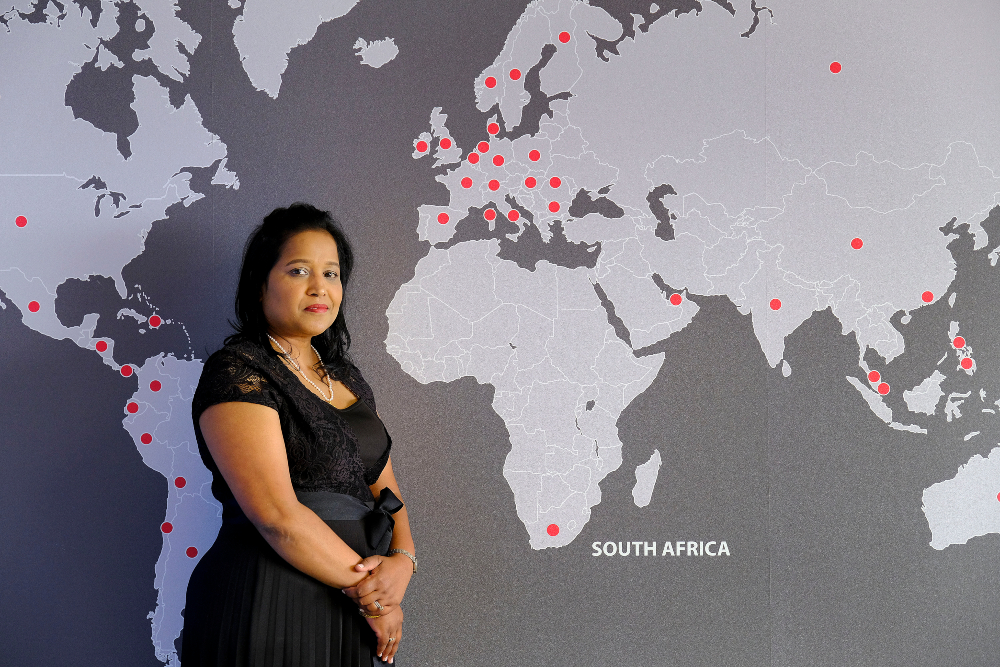
, Engr. Adetola Adebanjo who is the founder and the chief executive officer of Morton 78
What sets you apart from others in the market?
Innovation and a proven financial model. We have speed of attending to customers need. We believe that every Nigerian wants energy, and we ensure they see energy as a supporting their livelihood than a burden. Our energy audit enables our client to view their consumption in real time, this helps them to understand their energy need. It is this level of transparency we have deployed to gain trust from our clients. Our advisory services have made them to appreciate us especially the big organizations like banks.
Can organization like banks and hotels use solar?
Our Alternative Power solution ranges from a 5kwp solution termed as APS5 to 100kwp coined as APS100. These APS are modular and can be scaled up to 1MW. Big organization can deploy solar from banks to churches even cold room facilities. There has been advancement in the battery technology, it has moved from lead acid battery to lithium-ion battery. We know that the major cost of renewable is the battery. There is what is called depth of discharge, you know that lead acid battery should discharge around 50% and if it does more, the battery will not last as much whereas lithium-ion battery can be depleted up to or more than 80%. It also has a faster recharge time with longevity of up to 10 years.
Apart from Lagos, have you deployed in other parts of the country?
We did deploy a 138-kwp projects in Maiduguri for the Northeast Children Trust to assist Internally displaced children. We have also deployed solutions in Abuja, delta and other parts of Nigeria. Presently, we are partnered with Rural Electrification Agency to provide Solar Home Systems to underserved and unserved regions of Nigeria. Morton78 has deployed these systems in the South West states of Ogun, Oyo, Osun, Kwara and Ekiti states. There are a lot of communities in Nigeria that haven’t seen light before in their lives, it was our solar solution that is bringing this much needed change in their lives.
The cost of energy is getting higher in Nigeria. What can SMEs do to reduce their energy cost?
One way to increase your profit is to reduce your expenses. A critical expense for SMEs is their cost of energy. To reduce your energy cost you must have an insight into your energy consumption. Once you gain this insight, you can integrate clean energy system from Morton to assist you in turning these expenses into profits.
Do you think that people are beginning to be opened to alternative energy sources?
Oh yes, they are, businesses are figuring out ways to increase revenue and to reduce expenses and one of the major expenses is power. Power is a major cost of doing business in Nigeria. With our various solutions, we are bringing the cost down for Nigerians. We also have solutions for small households and MSMEs i.e shop owners, barbers, artisans etc where they pay as low as N20,000 to get a solar system with a fan, phone charging capabilities, 4 bulbs and an external inverter to power up to a 32inch TV. It is called the LM 60. Payment would be spread for fifty-two weeks at the rate of N2,950 per week. As they are mostly daily earners it is easier for them to make weekly payments.
Are you looking at rural areas?
Morton78 is one of the companies partnered with Rural Electrification Agency and world bank to close the energy gap in Nigeria by providing Solar Home Systems (SHS) to undeserved and Unserved areas in Nigeria.At present we have deployed over 1,000 SHS and provided over 50 jobs for people in Ogun, Oyo, Ekiti and Kwara State of Nigeria.
What are looking at next year from MORTON 78?
Next year, we are looking at rural electrification and focus on those that do not have power. We have many agents in rural areas and have provided power to over a thousand homes. We plan to provide power to 10,000 homes while creating 200 jobs. Morton would also be focusing on proffering turnkey solutions to SMEs and larger organizations using our designed energy solutions and proven financial models.
“Contrary to beliefs that solar panels do not last, they have a longer shelf life than generators as they still produce up to 80% of their initial capacity after about 20years. Its’ return on investment is also better in comparison to buying and using generators for energy needs. In other to serve our customers we ensure to understand their consumption pattern to adequately design the system that works best for them. A common mistake is sizing inverter right but under sizing the solar panel and battery requirement.”
Morton78; a wholly Nigerian renewable energy company with core focus on Improving the lives of Nigerians by providing Energy access to unserved and underserved people of the country recently made their payment plans known for businesses in Nigeria. According to the organization, the payment plan is designed to address the initial cost problem many small and medium scale (SME) enterprises encounter before they go for solar and other forms or renewable energy.
Speaking to the media, Engr. Adetola Adebanjo who is the founder and the chief executive officer of Morton 78 said, “We at Morton have a plan we call the “Save To Own” plan whereby you pay to own a system over a predetermined timeline. This payment would be lower than what you are currently spending on power. The renewable is not expensive in the long run, apart from the initial capital expenditure. you can see that with generator, you can factor cost of diesel which is N800 per liter and you will do like six hours and you do the math and you will get about 60 liter per day and you have the gen running like 6 hours daily and if you multiply by 20 days per month, you get about 5 million a year only on buying diesel not maintenance and personnel cost. We have what we call save to home, we try to use this to reduce the operational cost of organization and we spread the payment for organizations.”
, Engr. Adetola Adebanjo who is the founder and the chief executive officer of Morton 78
Adetola added that” The initial cost might be higher but the return on investment (ROI) will be there in less than two years. On the contrary solar panels have a longer shelf life than generators. Its’ return on investment is also better in comparison to buying and using generators for energy needs. In other to serve our customers we ensure to understand their consumption pattern to adequately design the system that works best for them. A common mistake is sizing inverter right but under sizing the solar panel and battery requirement.
As one of the companies signed by the Rural Electrification Agency to partner with them in closing the Energy gap by providing Solar Home Systems, Morton 78 came up with an initiative termed “The Reap Empower” where they focused on achieving 4 critical elements such as Providing technical and sales training to women and youths, Promote viability and cost effectiveness of solar energy in the community, Provide a source of empowerment and revenue generation to youths and small businesses and Breeding skill acquisition in communities.
To achieve these, they rolled out their initiatives in the Southwestern States of Lagos, Ogun, Oyo, and Ekiti States. “We understand that most Nigerians are daily earners who tend to be able to afford basic amenities daily. We had to infuse that concept into our thinking of how they currently use and afford power. Most of them tend to either buy petrol, diesel, kerosene or candles daily. Depending on these volatile sources for their electricity is having adverse effect on their spending habit and health in general. Creating ways of maintaining clean energy and daily affordable expense routine was a critical factor in determining affordability of providing them Alternative Sources of Energy”, Adetola opined.
Another critical factor is getting their buy-ins and trust in these Alternative Sources. Morton78 had to partner with people of Good moral standings and character in the community. These people became Advocates or people we call Gate keepers. In tandem with them, they were able to create a process to get people on our program for technical and sales training. In about 6months, Morton78 have been able to give sales and technical training to over 50 Nigerians and provide Alternative Power to over 1,000 Nigerians while impacting the lives of over 5,000 Nigerians. With a goal that in the next one year is to train over 500 Nigerians while providing power to over 10,000 Nigerians. Thus, impacting the lives of over 50,000 Nigerians.
On what sets them apart from the other players in the renewable ecosystem, Adetola made it known that “Innovation and we have a financial model. We have speed of attending to customers need. We believe that every Nigerian wants energy and we try to look at things from a point of view of real time. Our energy audit will enable the client to view things in real time, this helps them to understand their energy need. It is the level of transparency we have deployed to gain trust from our clients. Our advisory services have made them to appreciate us especially the big organizations like banks. Our Alternative Power solution ranges from a 5kwp solution termed as APS5 to 100kwp coined as APS100. These APS are modular and can be scaled up to 1MW. Big organization can deploy solar from banks to churches even cold room facilities. ”
ANTHONY EMEKA NWOSU
The initial cost might be higher but the return on investment (ROI) will be there in less than two years. On the contrary solar panels have a longer shelf life than generators. Its’ return on investment is also better in comparison to buying and using generators for energy needs. In other to serve our customers we ensure to understand their consumption pattern to adequately design the system that works best for them. A common mistake is sizing inverter right but under sizing the solar panel and battery requirement.
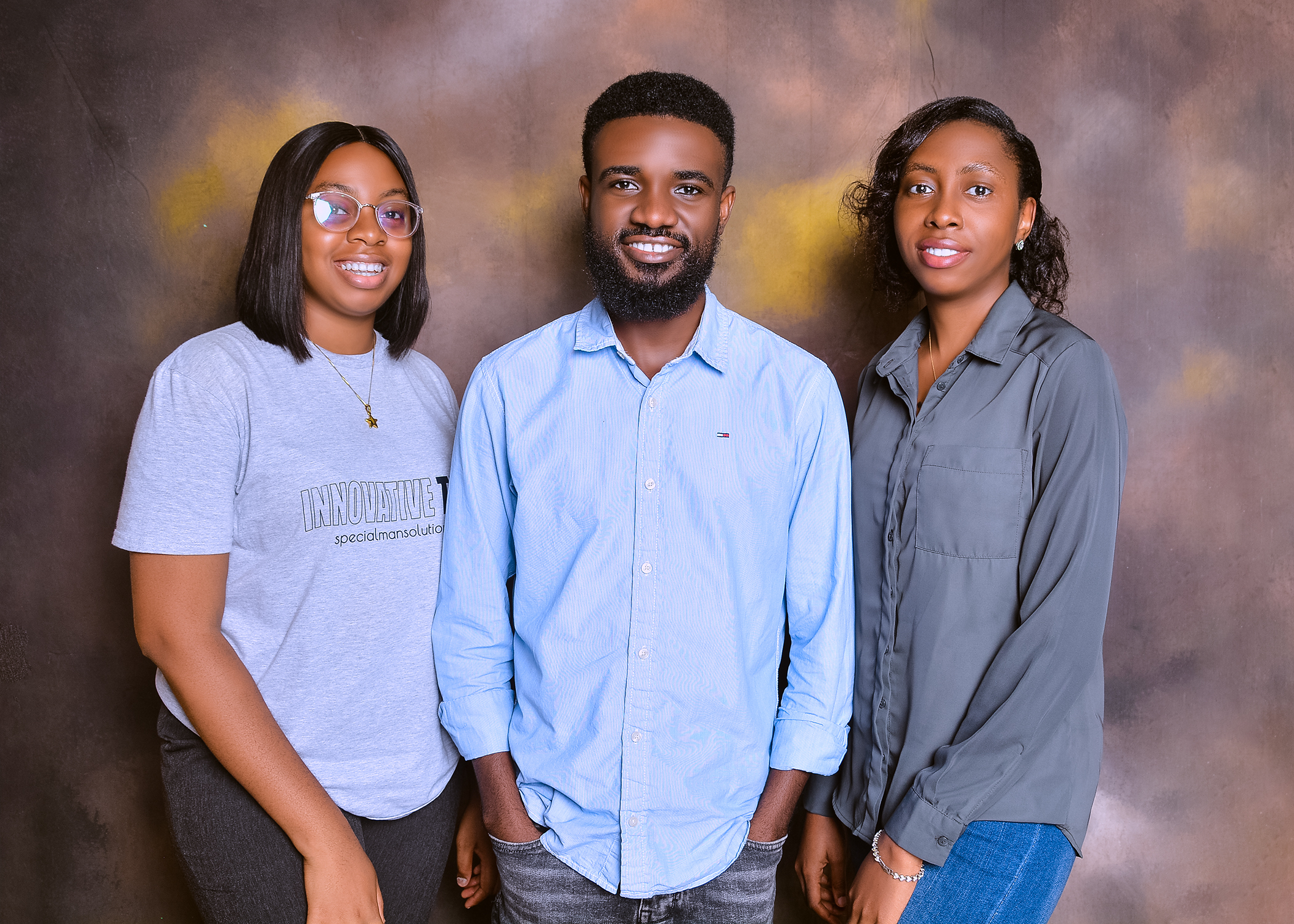
Software and mobile apps have come to be a part of our lives today. In a highly digital world, organisations are deploying software to either aid them to be more productive or make their customers find lives easier, Nigerian firms aren’t left out of this. In line with the trends, many indigenous firms have come out to offer software development solutions to many Nigerians that need it. Ranging from business to social software, one of the Nigerian firms with tremendous strides in the software development ecosystem is Special Man Global Solution Ltd. An indigenous firm located in Ikeja Lagos.
Speaking to the media on the importance of software development processes and client management, Ifeanyi Ezeofor who is the chief technology officer (CTO) of Special Man Global Solution Ltd said “Special Man Global Solution LTD software development process is born out of a desire to see products delivered to the highest possible standard while taking into consideration the affordability of our service.”
He added that “We have built a process for every project we get to work on…“ and this was further reiterated by Onyeka Ubazue, Client services personnel and Operations manager, “We collaborate with our clients to ensure that their projects are successful. From building and fostering communication during development time, our clients are in the front-row seat on their project development.”
As a unit, they mentioned that the focus is to simplify information as much as possible for the client as this process starts even before they become clients. Precious Anigbo, growth and Marketing personnel, stated that “our social media contents and pages are a reflection of information simplification, we like to bring technology to the human point of view by treating topics that we believe the general public should have a better grasp on as well as explaining technical terms and processes in an easy to understand way.”
On their engineering and product development, Ifeanyi made it known that excellence is non-negotiable in their process, “for us there’s no one way to building a product. As a practice, our team is constantly researching and optimizing our product development methods and options so that we can deliver excellent software every time. Excellence is the nature we inherited from God so we must shine that light in every project we undertake”
On their support services and client relations, Onyeka highlighted that from conception to execution and deployment, they have it as a policy to carry clients along during any project. In her words, “We are a very communicative organization, so we take the time out to first establish a communication pattern and channel so that we can be present when we need to be. Also, having a communication pattern allows us to collect feedback when needed so that the project time is not delayed.”
Over the years, the company has developed a strong capacity in Mobile App Development, Web Development, Game Development, Blockchain Project Development, and Fintech Solution Development. They can be reached online at specialmansolution.com and also on their social media pages.
“We have built a process for every project we get to work on…“ and this was further reiterated by Onyeka Ubazue, Client services personnel and Operations manager, “We collaborate with our clients to ensure that their projects are successful. From building and fostering communication during development time, our clients are in the front-row seat on their project development.”
Teraco’s new development brings a highly advanced and sustainably designed data centre to the Isando Campus
Teraco: A Digital Realty Company, Africa’s largest interconnection hub and vendor-neutral data centre provider, announced that construction has commenced on a new hyperscale data centre facility with 30 megawatts (MW) of critical power load at its Isando Campus in Ekurhuleni, east of Johannesburg, South Africa. The facility, known as JB5, is scheduled for completion in 2024 and will incorporate the latest environmentally sustainable cooling and water management designs.
CEO of Teraco, Jan Hnizdo, said that the company continues with solid growth as enterprise and hyperscale requirements continue apace due to sustained demand for hybrid cloud deployments and the adoption of cloud services in Africa. “South Africa is a springboard for cloud provision into Africa and, as a result, has become the technology and data centre hub for sub-Saharan Africa. Massive global investments into undersea cables, like Equiano and 2Africa, further strengthen this position. This will enable global cloud providers to service not only the South African market but also the rest of the sub-Saharan African region.”
“Teraco is committed to growing its capacity footprint across its core hubs. We ensure our clients have the flexibility to scale and take advantage of the digital transformation across sub-Saharan Africa. We continue to invest significantly in the region’s ICT infrastructure and have built Africa’s largest data centre platform. We take pride in enabling open access interconnection and providing world-class data centre infrastructure for all our clients,” concludes Hnizdo.
The JB5 facility is Teraco’s eighth data centre development located in the heart of Ekurhuleni’s Aerotropolis. It is here that Teraco’s data centres already provide access to a wide choice of network service providers, peering at NAPAfrica, regional IXPs, content delivery networks and cloud provider on-ramps. Hnizdo says that this expansion aims to further support sub-Saharan enterprises by advancing their digital transformation strategies and enabling global cloud providers to expand their footprints —spurring innovation.
JB5 has been designed to put sustainability first and minimise its environmental footprint. JB5 will incorporate the latest state-of-the-art cooling designs, a closed-loop chilled water system that incorporates 100% free air cooling. This design will bring about industry-leading PUEs, thereby reducing the energy consumed and limiting water used in the ongoing cooling process to zero.
JB5 is the latest expansion to Teraco’s growing data centre platform and takes critical power load capacity at Teraco facilities to 156MW, which includes the Isando Campus facilities; JB1/JB3/JB5 (70MW), Bredell Campus JB2/JB4 (64MW), Cape Town Campus CT1/CT2 (21MW) and Durban (1MW).
Organisations working to accelerate their digital transformation utilise Teraco to dynamically scale their IT infrastructure, adopt hybrid multi-cloud architectures and interconnect with strategic business partners within the Platform Teraco ecosystem of global and local clients.
Key Facts
JB5 comprises 55,000sqm of building structure serviced by 120MVA of utility power supply.
Strategically located in the Isando Campus alongside JB1 and JB3, Africa’s most highly interconnected facilities with over 14,000 interconnects.
JB5 will be built in a single phase and includes 12x 1,000sqm halls.
JB5 is a significant addition to South and sub-Saharan Africa’s data centre footprint.
The new data centre development is being built in line with global hyperscale requirements.
It will augment the existing portfolio of ISO9001, ISO27001, ISO50001, ISO14001, PCI-DSS and ISAE3402-certified data centre facilities.
JB5 will feature environmentally conscious designs and monitoring technology to reduce water use and improve energy efficiency.
James Agada, the founder of Ixzdore Laboratories Limited, will on Wednesday, November 09 2022 deliver the keynote address at the Africa Tech Alliance Forum 2022 (AfriTECH2.0).
The AfriTECH 2.0 will be held at Oriental Hotel, Lekki Road, Lagos, staring by 9:00am under the theme: ‘Sustainability and The Company of the Future’
Agada Ixzdore Laboratories is an innovation hub and consultancy focused on building smart things and building local capacity for building smart things. Ixzdore Laboratories operates MakerClub makerspaces.
He was previously the CEO of CWG Plc formerly known as Computer Warehouse Group (CWG) Plc.
Prior to his appointment as the CWG Plc’s MD/CEO, James Agada was the Chief Technology Officer of the Company and was also in charge of the Company’s Research and Development unit.
He was also previously the Executive Director overseeing the Company’s former software division, Expert Edge.
James Agada is a well-regarded, innovative and versatile technology expert. He holds a First Class Bachelor’s Degree and a Master’s Degree in Electronic Engineering, with specialization in Digital Systems, from the University of Nigeria, Nsukka.
He also holds an MBA from the International Graduate School of Management (IESE), Navara, Spain.
James has had experience in consulting, software development, implementation and support. He was pro term president, Lagos Chapter of the Nigeria Computer Society, and was conferred with the “Titans of Tech Merit Award” in 2013 by Technology Africa.
He has also won a number of awards and recognitions from reputable bodies like; Success Circle Africa for Entrepreneurial Excellence, Tech TV for Commitment to Development in ICT, AMLE’s 2016 winner of the ICT Personality Leadership Prize to mention a few.
He is a fellow of Nigerian Computer Society, Fellow of the Institute of Directors and Fellow of the Institute of Software Practitioners Of Nigeria (ISPON).
He is an ardent reader of all forms of literature, always seeking for best methods of applying technology and spends a good deal of time writing articles to form help shape the minds of young entrepreneurs, towards thinking of applicable solutions that enable growth rather than wallow in the problems that abound.
The Regenerate Bible Study for Women, a not-for-profit gathering is set to host its 2022 retreat in Lagos this December.
Regenerate as it is often called, poignantly reveals the Word of God to women, inviting them to receive God’s truth for balance, hope, and transformation.
The Retreat is scheduled to hold as follows:
Date: Saturday 3rd, December 2022.
Venue: La Madison Place Oniru, Lagos.
According to the convener, Mrs Eyitayo Iyortim, women from all-walks of life, irrespective of domination, status, or standing in life from across the country come together to have deeper intimacy with God during these retreats.
“We bond, worship, pray, study the word of God together, gain clarity and are refreshed, we just shut out the noise and distractions. Guest ministers and speakers are often invited to minister or speak at the retreat,” she said.
Mrs Iyortim said the theme for this year’s retreat, ‘Be Renewed ’, was culled from Ephesians 4:23 which reads: ‘…and be renewed in the spirit of your mind’.
“The vision, of Regenerate” Mrs Iyortim said is to “guide women into seeking God’s kingdom first and by doing so, fulfil their purposes here on earth”.
“The Regenerate Bible Study for Women is on a mission to see women from everywhere, worship God in spirit and in truth”.
The programme is FREE and occurs both physically and virtually on the group’s social media platforms.
The Retreat holds the first weekend in December every year. All adult women are invited to attend and be blessed.
All enquires regarding participation can be sent to welcome@regeneratewomen.org.
For more information, please contact
Eyitayo Iyortim, Convener +2348037043577 Or Tosin Alalade, Regenerate administrator 08087560008
The Nigerian Communications Commission’s Computer Security Incident Response Team (NCC-CSIRT) has issued an advisory for users to frequently review alerts for Cisco products to assess their exposure and find a comprehensive update solution.
The advisory, which also recommended using the appropriate software updates that are accessible from the vendor website, followed the identification of multiple vulnerabilities in Cisco Products, especially the Cisco AnyConnect Secure Mobility Client for Windows, which enables employees to access company servers from anywhere without compromising security.
The two vulnerabilities made it possible for a remote attacker exploit to trigger remote code execution and data manipulation on the targeted system.
According to the advisory, “The weaknesses in the product include uncontrolled search path and Dynamic Link Library (DLL) hijacking vulnerabilities. The uncontrolled search path vulnerability results from incorrect handling of directory paths. A directory path is a string of characters used to uniquely identify a location in a folder structure.
“This flaw could be exploited by an attacker by generating a malicious file and copying it to a system directory (folder). An exploit could enable the attacker to copy malicious files with system-level privileges to any location. The attacker needs legitimate Windows system credentials to exploit this vulnerability.
“Moreover, to exploit the DLL hijacking vulnerability, the attacker would also need to have valid credentials on the Windows system. The vulnerability was caused by the device’s inadequate run-time resource validation. By sending the AnyConnect process a specially designed IPC message, an attacker might take advantage of this vulnerability.”
The advisory rated the vulnerability high in impact and probability.
The CSIRT is the telecom sector’s cyber security incidence centre set up by the NCC to focus on incidents in the telecom sector and as they may affect telecom consumers and citizens at large.
The CSIRT also works collaboratively with ngCERT, established by the Federal Government to reduce the volume of future computer risk incidents by preparing, protecting, and securing Nigerian cyberspace to forestall attacks, and problems or related events.