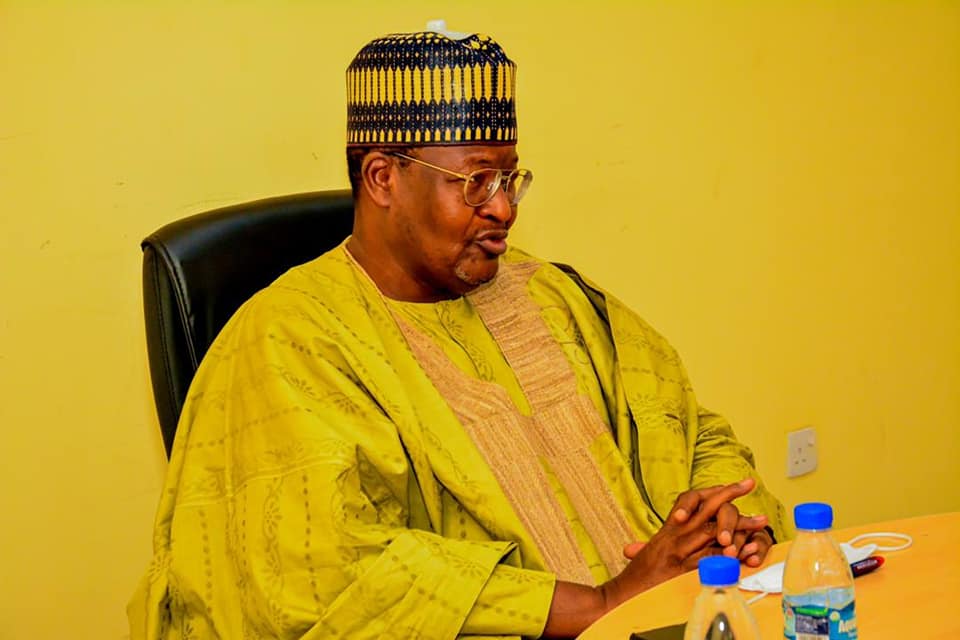
As the campaigns and build-up to the 2023 general elections thicken, the Executive Vice Chairman (EVC) of the Nigerian Communications Commission (NCC), Prof. Umar Danbatta, has said that the media holds the ace in making a difference in promoting credible elections in Nigeria.


Danbatta told the gathering of the cream of Nigerian editors at the 18th All-Nigeria Editors Conference, organised by the Nigerian Guild of Editors (NGE) at the Concord Hotels in Owerri, Imo State, with the Governor of Imo State, Senator Hope Uzodinma in attendance, where he reiterated the importance of the roles of the journalists, before, during and after the 2023 elections.


In Danbatta’s goodwill to the conference, delivered by the Director, Public Affairs of the Commission, Reuben Muoka, he expressed the confidence that the vibrant Nigerian media, credited with its sterling performance from the history of struggle for the country’s political independence, where Nigerian nationalists, who were good journalists made “brilliant and courageous outing”, will work in the interest of the nation.


Speaking to the theme of the conference, “2023: Political Landscape, Credible Elections and the Role of the Editors”, Danbatta declared that good journalism is critical to sustainable democratic culture as political stability is enhanced by conduct of successful elections.


He said he “believes the editors will leave the conference with resolutions setting clear, unambiguous and very robust parameters to guide the role of the media in the forthcoming elections in a fair, objective and balanced manner.”


“Beyond and above the traditional routine role of the media in information-sharing, education and entertainment, the media is a social agency constitutionally charged to watch those of us in public office from derailing from the pursuit of the social contract and the social good. No other agency of the civil society is so positioned to influence social progress,” he declared.


He also informed the gathering that the Commission is dedicated to the implementation of the Nigerian National Broadband Plan (2020-2025), and the National Digital Economy Policy and Strategy (2020-2030), among other regulatory instruments, with a view to enhancing connectivity and social cohesion in the land. Hence, he said befitting infrastructure, including the upcoming 5G spectrum auction, are all aimed at improving availability and accessibility and affordability. He said there is no doubt that the availability of telecommunications infrastructure will enhance credibility of elections.


Danbatta specifically expressed gratitude to the Nigeria media for trusting the NCC and supporting its efforts to fulfil its mandate right from the beginning of the transition from “state-dominated telecommunication operations to a deregulated, more liberalised market.”


The EVC recalled that NCC’s friendship and partnership with the media have been very mutually-fruitful, as the Commission has leveraged on the media for increased awareness by the public of NCC’s activities, programmes and achievements.


Danbatta also commended the journalists covering the telecom sector as well as other communication professionals for supporting the Commission all the way by giving adequate and prominent coverage to its successes in consumer protection, improvement in infrastructure, adoption of new technologies, most recently, the launch of the Fifth Generation (5G) networks, and reportage of challenges facing the telecom industry.
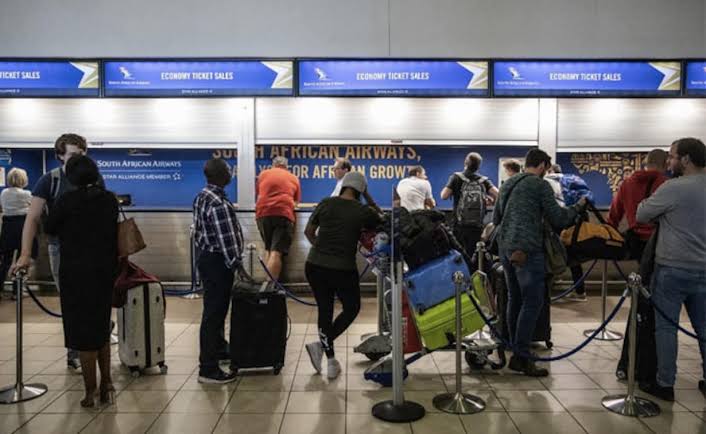

 

In the country today, many Nigerians are intending to run away, this is funny and this brings us to the Bible where God said to Isaac that he should stay in this land. Today the concept of japa is among the youths. They will want to travel out to the developed world and the question is what do they want to do there.

Many people will hide their travel before they move because they don’t have trust in people. They will not even tell their pastors. The role of pastor is to guide and pray for you but you see them traveling only to be stranded in overseas doing absolutely nothing.PastDeath to Self – Fred Obetoh – eTimes News Africa

Many Christians are struggling today in developed world cos they don’t and didn’t take heed to word of God. Yes, Nigeria is passing through challenges but at a time in the life of this nation many diasporas Nigerians will come back. A lot of Nigerians are stranded overseas today doing absolutely nothing. Some sold their properties and fathers properties to travel only to be depressed and frustrated. Stay in this land!

Obey God instructions, and as a Christian if you don’t align with God’s plan in your life there will not be any manifestation. God told Isaac to stay in this land and there will be blessing even though at that time there was famine. Isaac abides by the instruction and was prosperous.

Obey God’s instructions so that we reduce struggle and it is a way to break through in life. Many Christians fail this to heed to the instructions of God. They block their ears. In the book of Romans 8 vs 28, the Bible said that all things works together for good to them that love God… He predestinates you as the son and to be in the likeness of his son. So if we want to make it in life, let’s obey God just as Isaac did.

I tell people that they shouldn’t be in a haste to leave that there is something good coming. The bigger the cross the bigger the glory. Toy can’t carry a cross and not experience obstacle…. We Christians ask ourselves “why am I here, some of my mates have gone far” but we must know that God has a plan and tone for us. We should be careful what we wish…whatever God told us, it shall come to pass willy nilly!

Everyone leaving doesn’t make it right. We must be careful of these things. If you want to go abroad God can show you Cameroon, Benin Republic etc. You can go to USA and still don’t make it. Stay in the land that God has told you to stay. Our young men are sitting at home today thinking that it will be rosy and having a day dream of Europe been rosy! It doesn’t work like that. Stay in the land that God has mandated you! And God’s time is always the best.


Faith Cathedral International Ministries

Egbeda, Lagos


Obey God’s instructions so that we reduce struggle and it is a way to break through in life. Many Christians fail this to heed to the instructions of God. They block their ears. In the book of Romans 8 vs 28, the Bible said that all things works together for good to them that love God…


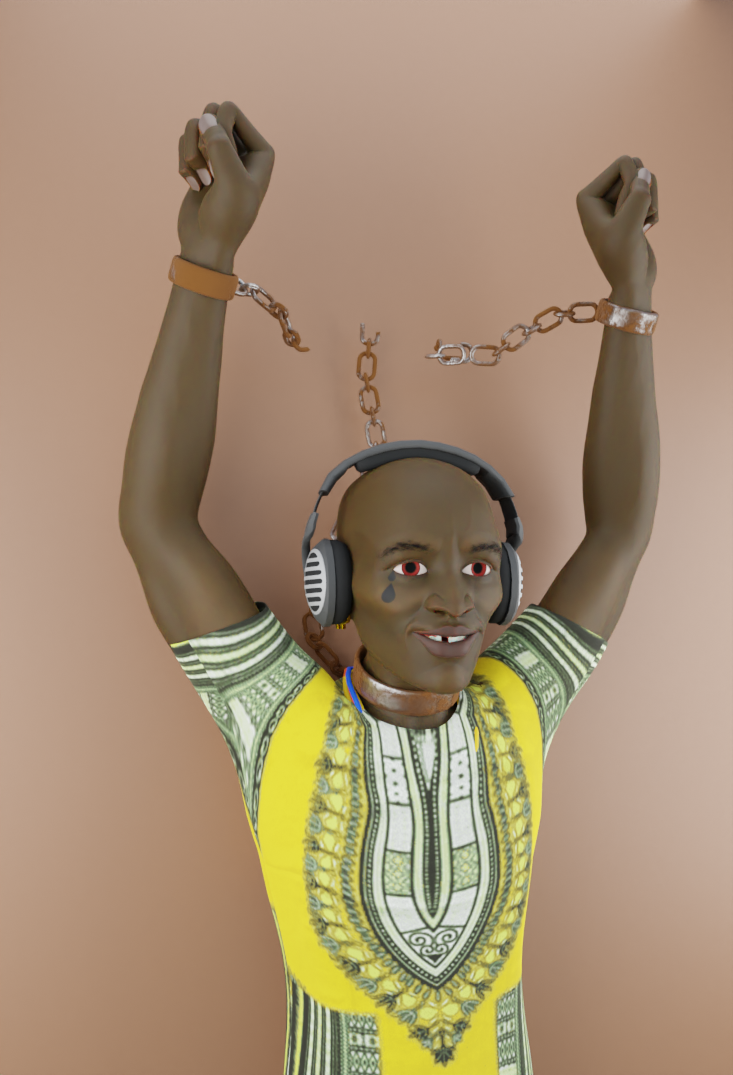
One of Africa’s most exciting web 3 companies has launched its first NFT project – Uhuru NFT- A collection of limited Afrocentric NFTs housed on the Ethereum blockchain. Unlike other NFT projects, Uhuru NFTs tell relatable stories of African culture and lifestyle through appealing 21st-century digital art, as it looks to build a metaverse (Uhuruverse) for African creativity where Africans can experience African stories.

The Uhuruverse is a 3D virtual world that marries African history, creativity, commerce and technology. In the Uhuruverse, people all over the world, especially Africans can connect the dots between the past, the present, and the future. Users will be able to experience and celebrate black history, the story of the African race will not just be told but experienced.

The Uhuru NFT- Freeman collection are digital collectibles that tell the story of the historic event of the transatlantic slave trade that happened on the shores of West Africa from the 16th to the 19th century. This limited edition NFT art pieces will be sold through the world’s largest NFT marketplace, Open sea. The brand sets itself apart from others by bringing a unique roadmap, education, transparency, and exciting utilities for the Uhuru NFT holders.

The Founder of Uhuru NFT, Aso Obinna Eke, stated that “We want to ensure that Africans have a voice in the next iteration of the internet. This is why we are building this digital community of African artists, storytellers, and techies to spark innovation, fuel creativity, and transform minds through the promotion of innovative methods of history curation.

Digital art enthusiasts and investors can join the Uhuru NFT [Discord group] – a place to share your excitement and thoughts on the project and interact with others. Members can discuss things like floor price, NFT rarity, memes, space exploration, and also stay up to date with project news, partnerships, and community perks.


The rapid increase in the digital transformation of economic and social activities has resulted in an unprecedented expansion of data collection and usage. Hence, the National Information Technology Development Agency (NITDA), in furtherance to implementing its mandate as provided in section 6 of NITDA Act 2007 to standardize, coordinate and develop regulatory frameworks for all Information Technology (IT) practices in Nigeria, has developed a draft National Data Strategy (NDS), in line with the National Digital Economy Policy and Strategy (NDEPS) for a digital Nigeria.

In accordance with the NDEPS, which provides a solid foundation for the Nigerian economy to be data-driven, the NDS aims to harness the potential of data for social and economic value creation towards achieving a robust digital economy and ensuring Nigeria becomes a top leader in the global data economy.

Furthermore, the NDS is developed to accelerate the adoption and use of digital technologies, especially emerging technologies, for data collection, validation, storage, analysis, transmission, and reporting, which will enhance research and innovations, digital services, digital economy, job creation, improved quality of life, social and economic growth and prosperity, global competitiveness and sustainable development.

Additionally, in line with global best practices, the NDS was developed on principles that will ensure fairness in the digital space, stimulate a competitive data market, open opportunities for data-driven innovation and make data more accessible for all.

In view of the foregoing and as part of NITDA’s stakeholder approach to the development of policy documents, the Agency wishes to invite all critical stakeholders and interested parties to a stakeholder engagement for the review of the draft NDS, which is scheduled to take place on Friday 11th November 2022 at 10 am WAT via http://bit.ly/3EfoMqn.

The Draft National Data Strategy is available on the NITDA’s website at https://nitda.gov.ng/wp-content/uploads/2022/11/Final-Draft-National-Data-Strategy.pdf

Kindly forward all comments and inputs to abakare@nitda.qov.nq or llamid@nitda.gov.ng on or before 16th November 2022.

For more information and inquiries, please contact Dr Ayodele Bakare via 08038577488 or Lukman Lamid via 08035716467.


The Executive Vice Chairman (EVC) of the Nigerian Communications Commission (NCC), Prof. Umar Danbatta, has said in Lagos that the quality of life is now being measured in terms of digital connectivity that promotes businesses, social and economic wellbeing of the citizens.

Danbatta who spoke today through NCC’s Director of Digital Economy, Dr. Augustine Nwulunne, in a keynote at the 2022 Africa Tech Alliance Forum in Lagos on Wednesday, said digital connectivity has a major role in advancing the gains of development and sustaining the future, as well as attaining the needed quota in attaining a sustainable future and actualizing the objectives of the Sustainable Development Goals (SDGs).

The EVC’s CEO who spoke on the theme, “Creating a Sustainable Future through Connectivity”, cited studies to buttress the centrality of digital connectivity to quality of life and stated that the NCC is dedicated to activating regulatory initiatives aimed at deepening connectivity for the overall economic development of Nigeria.

“Connectivity and development in Nigeria have not been fortuitous, rather they have been as a result of measured, painstaking and strategic policies implementation in the telecommunications sector by the NCC and relevant stakeholders, and we are committed to driving robust and vibrant telecoms sector to enhance further growth of Nigerian economy in all its spheres,” the EVC said.

According to him, telecommunications sector has become an enabler of economic growth, providing the necessary digital succours that bring greater efficiency in service deliveries in education, healthcare, transportation, commerce, financial services, and other sectors of the economy with greater impact on the nation’s Gross Domestic Product (GDP) as well as enhancing other sectoral growth correlating to each of the 17 goals on the SDGs.

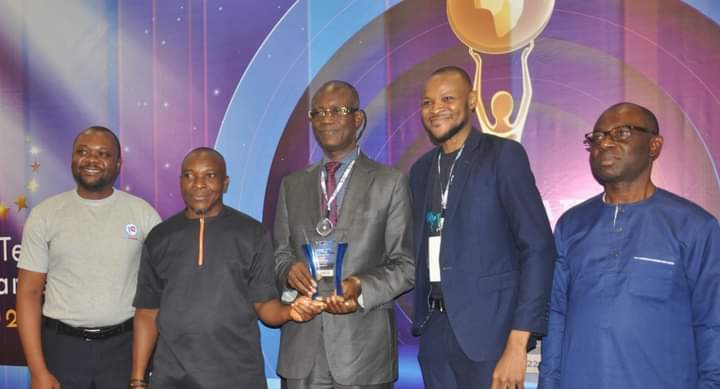
The highlight of the event was the decoration of Danbatta with an award of “5G Core Leadership Award” while the Commission was named as the corporate organization with “Best Digital Economy Project of the Year 2022” for the regulatory efforts of the Commission in driving commercial deployment of Fifth Generation (5G) network in Nigeria.

Danbatta said the NCC, through various policies and initiatives, has provided an enabling environment for a fair and liberalized telecommunications industry, by emplacing appropriate regulatory tools and providing relevant regulatory services for mobile network operators (MNOs), who are the primary providers of telecommunication services in the country.

“The Commission has provided the enabling environment to stimulate the deployment of necessary infrastructure pertinent to the provision of universal and affordable connectivity. The resultant effect of this is that today, we now have over 210 million active telephone lines, representing 110 per cent teledensity; and over 150 million Internet subscribers as well as 45 percent broadband penetration which has enabled over 80 million broadband subscriptions.

“Telecommunications has been credited with lifting millions of Nigerians out of poverty; diversifying the economy and providing over $70bn to Nigeria’s GDP; it has also provided thousands of Nigerians with various employment opportunities. A glance at Nigeria’s historical data on its GDP portrays the upward trajectory of the country’s GDP since the liberalisation of the telecommunications sector. In 2001, Nigeria’s GDP was $74.03 billion, in 2005, it grew to $176.13 billion, and it currently stands at $440.78 billion, and telecom has been a key driver of this growth,” he said.

The EVC told the audience that the Commission is also driving implementation of various policies and frameworks including the Nigerian National Broadband Plan (NNBP) 2020-2025, the National Digital Economy Policy and Strategy (NDEPS) 2020-2030; and the ongoing deployment of Fifth Generation (5G) network and other digital interventionist projects aimed at driving universal service availability, accessibility, and availability.


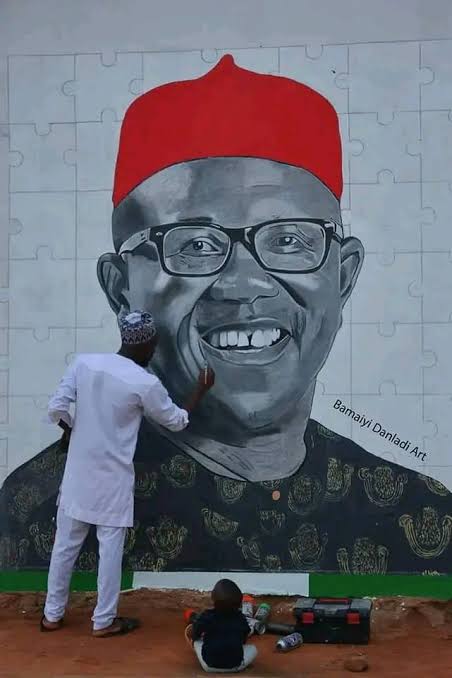
Governor Charles Soludo is not contesting for president.Soludo’s party has no chances of even winning a state in the presidential election.Soludo’s guber seat is not under threat of reelection or impeachment.

Soludo was never attacked by Peter Obi or his supporters.Peter Obi attended his swearing-in ceremony at which slaps were exchanged.

Soludo did not take over from Peter Obi.
Even an Ngige that was removed for Peter Obi to take over refused to be drawn into the politics of saying whether he would support Peter Obi or Tinubu when he was asked so during a TV interview recently.

Soludo refused to comment or make snide remarks when asked to comment on the redesigning of the naira note by one of his CBN successors.

But even though Soludo said he did not want to comment about Peter Obi, he repeatedly made denigrating remarks about him.

When the Anambra State election campaign was on, I made it clear that in spite of Soludo’s book intelligence that I would prefer Valentine Ozigbo to him. I took that decision years ago when I heard Soludo publicly ridicule Dr. Ngozi Okonjo-Iweala, Mr. Peter Obi and even his sister-in-law, Prof. Dora Akunyili, in the name of politics.

It was clear to me that although Soludo was high on book intelligence, he was low on emotional intelligence. Any time people think too much of themselves, they take every opportunity to denigrate anyone they perceive as taking the shine off them. It is a sign of superiority complex.

Emotionally intelligent people know that the sky is too wide for all the birds to fly without colliding with one another.

Any time an educated person acted below expectation, my parents would say: Passing Six is not Passing Sense!

A wise person should know when to talk and when to keep quiet.

Agunze Azuka Onwuka


“I saved N48,629,473,469 in local currency some of which we tied to specific projects like payment of 2-year salary of civil servants we employed for him not to be encumbered, Aguluand Onitsha Hotel, Awka and Nnewi Malls and some critical roads like the completion of the dualization of the Dual carriage road over which we had got permission to do so and be paid back by the Federal Government. We also left some for him to continue what we were doing aggressively”.

On the US$156 million (about N27 billion at that time and about N75 billion today when the yields are added), Peter Obi explained the purpose thus: “After our study of the Chinese phenomenal achievements as we were coming to the end of MDGs, we learned that the Chinese Regional governments were able to attract a number of investments because of the ability to contribute or partner with the investors in setting up productive facilities within their regions. For example, some of them effectively made equity contributions of 10-20%, which they were able to achieve due to their robust saving.

“So, our calculation was that if the state would be able to save a particular amount (US$18-20 million) as we did in eight years, up until 2030 at the average interest rate of a little over 6%, we would be able to achieve about a billion Dollars in savings and earnings. We would then use about 50% of this amount to attract investments, considering that the average Chinese Small and Medium Scale Enterprise(SME), for example, was set up with about two million dollars. Our goal was that if we would be able to invest 25% in each enterprise, which is $500,000, we would be able to achieve 1000 SMEs facilities scattered all over AnambraState, which would jump-start aggressive economic growth within the State, especially as income from oil is coming to an end”.


In this media chat, Ifeanyi Ezeofor, who is the Chief Executive Officer of Special Man Global Solution Ltd talks about software, what it takes to build one. From conceptualization to execution, Ifeanyi walks us through these phases. He also talks about how their company relates to clients. Anthony Nwosu captures this in an exclusive interview.


What is a software development company?

A software development company is an organization structured to design, develop and deploy software products. This definition is a basic explanation of what a software company is. Principally, the work a software development company does impacts their internal team or external partners or clients. The results are software products, consultancy or advisory services as well as software product maintenance.

Can any/every idea be turned into a software product?

The answer to this question is relative. A software product is born after or during the process of idea validation. Every idea needs to pass through validity checks to certify the problems it is solving and the solution the idea is proffering. Idea validation relays to the idea owner or ideator, and the type of users they will have as well as other metrics they can use to measure the feasibility of their idea. A validated idea can be made into a software product however this is not an exclusive rule, any idea can be made into a software product but it will be better to have a validated idea than an unvalidated one in order not to expend resources wrongly.

SGS builds different types of Software products, do you have a favorite one or a specialty in one?

This question is almost like asking if you have a favorite child. At Special Man Global Solution LTD, we don’t exactly have a favorite development specialty, we develop software products and recommend software products based on the need of the business or the solution to be delivered.  For us, any software development assignment that will effectively solve a problem for a client is what we are after. Our team understands this ideology and so each department has this as a fundamental structure to gain new knowledge so we are always positioned to provide solutions.

When businesses or people bring their ideas to you, how do you begin the process of getting a working product which people will interact with?

We have a process for every project we get to work on. First, when we begin a new project, we have a strict prototype-first approach to development. What that means is that for every project; just like an architect draws up a building design, we draw up the project’s User Interface that every stakeholder on a project sees, provides feedback and approves. By designing the User Interface Prototype first for a project, we are able to evaluate the usability of the project and draw up the much-needed road map for the development team’s assignment on a project. Asides from the user interface design, we undergo development in phases and perform tests on the build before deployment. After deployment, we stay with the client to educate their team on the use of the product and maintain the project for a few months.

From your just concluded Innovators’ conference, a team member gave a talk on communicating project ideas. Does a lack of proper communication affect the work output in software development?

The short answer to this is yes.  A lack of proper communication will hamper the way a project turns out at the end of the day. For example, if a project doesn’t have a clear prototype, it would be harder to have a grasp of the project development journey and also many mistakes will abound in the development cycle as both the client and the development team would have a conflicting sense of the project. The client will also be at more loss in the project development as that will lead to more cost on the project and a longer development time. Communication and collaboration are at the heart of software development and tech solutions, so when a project owner and the developer team cannot come to terms with a collaborative partnership it leaves room for error due to miscommunication.

If a customer has an idea but they don’t have enough funds to pay for it, what would you do?

What we typically do in this type of scenario, because we get it a lot is that we ask deeper questions to the client about their project to understand their motivation and also the viability of the project in question. If what we get is a solid push in the positive, we give it a shot by building the project and taking an equity stake in the company. We only do this for project ideas that solve real problems and whose owners motivate us.

SGS has clients in various countries, how are they able to collaborate on their projects and deliver them successfully?


We are a very communicative organization, so we take the time out to first establish a communication pattern and channel so that we can be present when we need to be. For our international clients, we have to master the time zones and response time from our clients, it helps us know when to expect feedback and when to send out messages for effective communication on their projects.

If you can change anything about the Nigerian business space, what would it be?

I will like to state that this is a personal opinion. So, if I could change anything really, it will be the policy on Forex so it is readily available, especially using our debit cards to pay internationally. Also, the govt activities in encouraging budding builders in the country need to be reviewed, people shouldn’t die trying to build something or be labelled as criminals because they have laptops. An enabling environment will do us much good in Nigeria right now.

Tell us more about Special Man Global Solution LTD?

Special Man Global Solution LTD is a software development company based out of Lagos, Nigeria and builds software products for organizations or individuals’ resident in and outside Nigeria. Their range of software development teams is vast as they develop Mobile Apps, Web Apps, Fintech Products, Blockchain DApps and other products like these.  They have built an exceptional operational model that ensures that they are churning out excellent work after excellent work over time- their customers leave pleasant reviews for them.


South Africa is the third most targeted country in the world for cyber criminals – not necessarily because of the rich pickings, but because of the ease with which wealth can be extracted, says Kevin Halkerd, Information Security Officer (ISO) at fintech company e4, which offers software as a service-driven digital solutions.


Yet even the most advanced and expensive security tools can’t completely protect against all threats. Here, Halkerd gives advice on how security teams can fill some of the most glaring gaps.


  1. Put people first

Cybersecurity might seem like a technological problem, but very often, it’s a people problem, says Halkerd. “People are really the weakest link in the cyber security risk chain. People-related risks are ubiquitous and include social engineering such as phishing, poor password protection and even employees selling their credentials to criminals for money. Creating awareness about these risks and educating the workforce is key, and competent training programmes should form part of your security budget.”


  1. Communication is crucial

Too often, security is viewed as a band-aid – something that needs to be done after a breach. Whereas, of course, security should be in place to prevent a breach. Part of the reason for this mindset is poor communication leading to a lack of cooperation, says Halkerd. “One common example of this is when new methodologies, technology or systems are adopted in a company without consulting IT on the security aspect of it first. Bringing security in as an afterthought leads to vulnerabilities.”


It’s also important that security teams engage with the rest of the workforce, rather than operate as a separate entity, he adds. “Trust is built through face-to-face interaction. If an employee encounters a cyber threat, they should know who they can call and that there is immediate help available to them.”


  1. Spend smarter

Every information security officer knows how challenging budgets can be. Staying on top of the latest trends and risks, and acquiring the right tools to deal with them, costs a lot of money.


It’s time for a mind shift, says Halkerd. “The way business works is to spend the minimum to maximise profits. This sometimes means simply installing an anti-virus programme and firewall – and that’s a dangerous position to take. Business leaders, and security officers in budget negotiations with execs, should reframe this to: What is the most risk the business can be exposed to and still make money? This usually hits home, because now it’s about risk management and risk tolerance. Can your business really afford to go offline for days because your straight-forward anti-virus didn’t do the job? If not, it’s time to rework that budget.”


  1. Delve into data

In South Africa, ease of access to data is an immense problem, says Halkerd. Though the Protection of Personal Information (POPI) Act is taking strides to safeguard personal data, it’s not enough. “Data and information theft is a lucrative business. Criminals often target law firms to get access to property information, for example, because real estate deals can be worth millions. Other data is used to enable insider trading. Our mining industry is under threat because criminals want to steal geographical survey and mineral study data to sell to the highest bidder.”


Companies, he says, need to go beyond POPIA to secure data. “And don’t forget the third-party risk, too. I strongly encourage companies to follow the US National Institute of Standards and Technology’s (NIST) cybersecurity framework, which gives good guidance, and to get all suppliers to adopt it too.”


  1. Do the boring work

While a solid understanding of what security the business needs, and then using the correct tools to keep it secure, is you first line of cyber defence, monitoring those tools is also crucial. “You need comprehensive practices to monitor the effectiveness of your toolsets. It’s not the most exciting work, but it’s essential,” says Halkerd.


Most high-profile breaches that occurred in South Africa over the last few months, he adds, could have been prevented by such monitoring. “Even simple monitoring practices never occurred – password re-use, for example, was prevalent. In other cases, monitoring was limited to one platform or only certain actions.


“Yes, security tools can do the work automatically, but you then must review the results on a weekly, monthly, and quarterly basis. And then adjust the playbook and practice to manage risks as necessary. Regular auditing and testing are vital and require constant vigilance.”

In Africa, the twin shocks of COVID-19 and Russian aggression have torn through a society vulnerable to even far milder upsets. Although the continent was showing modest recovery from the economic devastation that accompanied COVID-19 shutdowns, progress has been erased by rising food, fertilizer, and fuel costs. Despite International Monetary Fund (IMF) estimates that real GDP growth will be 4% in 2023 — with some countries, such as Senegal and Ghana, expected to reach 5% — concerns are that economic expansion won’t trickle down to the everyday African household. The International Energy Agency (IEA) says that yearly inflation has increased to “astronomical levels” in Ghana, Ethiopia, South Africa, Nigeria, and Kenya.

Citizens have taken to the streets in response to the rapid and unrelenting cost of living hike. As a result, political stability is wavering in some areas. The fiscal growth that promised to expand millions of Africans’ access to electricity has ground to a halt: Energy poverty continues to prevail.

It’s almost impossible to imagine things being disrupted even more. But when Europe bans Russian oil starting Dec. 5, 2022, then follows it with a second ban, this time on Russian refined products taking effect Feb. 5, 2023, it is expected to tighten energy markets even more and send prices of Brent crude — the European benchmark — higher than usual, at least in the short term.

In the wake of the conflict in Ukraine and Western sanctions, Russia’s crude production is likely to decrease by an average of 1.65 million barrels per day (bpd) over the period 2022 – 2030.

But as international oil companies exit Russia’s upstream sector, equipment and technology shortages could reduce output even more.

What does removing approximately 1.65 million barrels per day (bpd) of Russian oil from the market mean for African producers and African people? Is the future likely to be as turbulent as the present?

The fiscal growth that promised to expand millions of Africans’ access to electricity has ground to a halt: Energy poverty continues to prevail

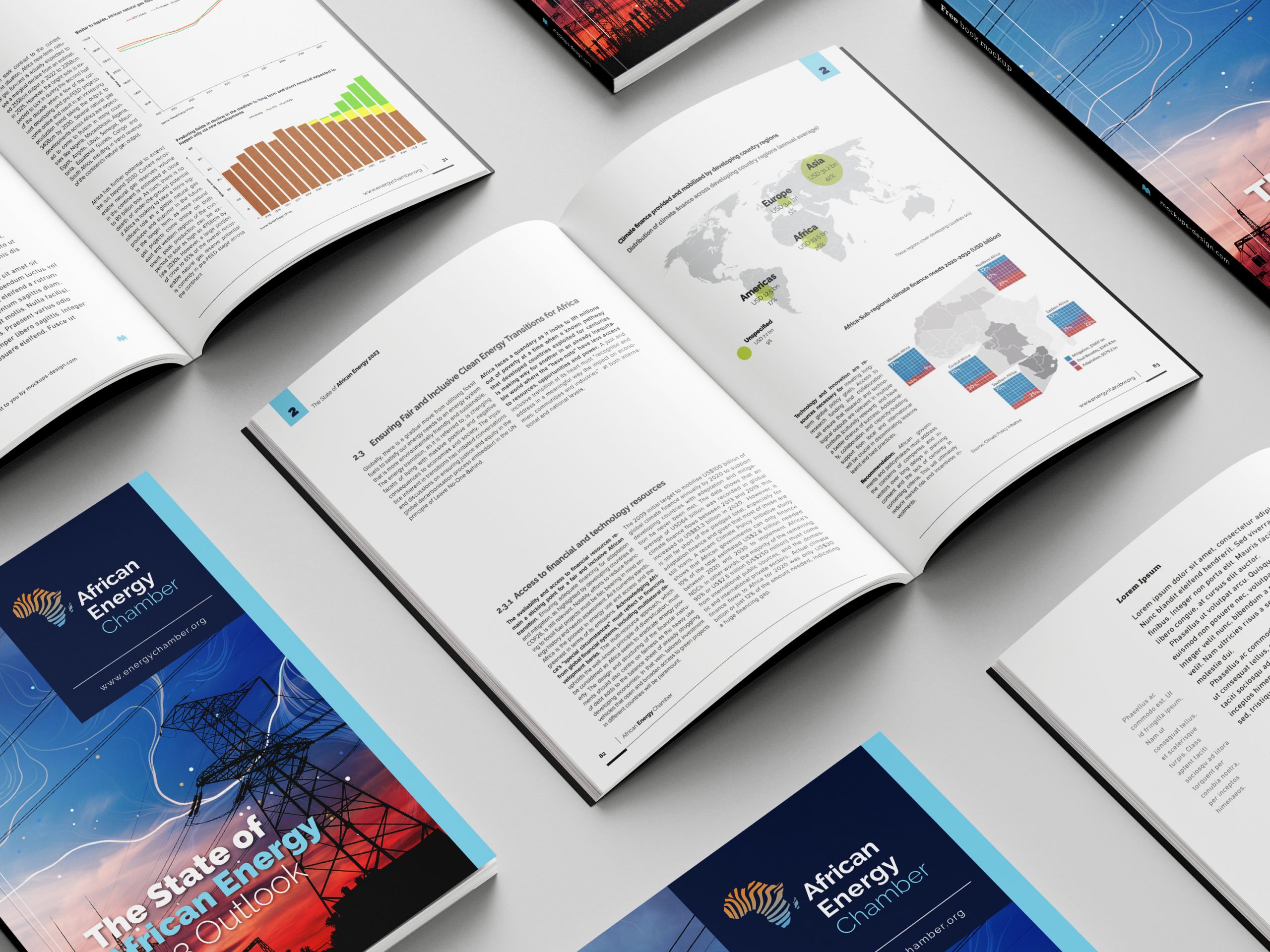
The African Energy Chamber’s well-researched and data-rich State of African Energy 2023 Outlook, published in October, describes the effect of geopolitics, demand shock, tight supplies, production outages, and downward price pressures on Africa and the world.

The Upside

With the pandemic retreating and travel restrictions lifted, energy demand shot into high gear in 2022 while supplies struggled to catch up. Though Brent prices were predicted to climb, they far exceeded expectations — and that was even before armed conflict in the heart of Europe drove them up, at least temporarily, to $139 per barrel.

While higher oil prices have contributed to inflation in much of the world, they’ve actually been a lever against it in some exporting countries, such as Angola. Angola’s gross oil revenues increased 75% during the second quarter of 2022 compared to the same period in 2021. The country’s annual budget was based on oil selling for $59 per barrel, less than half the recent high. Although the U.S. plans to release 180 million barrels of Strategic Petroleum Reserves (SPR) volumes over the next six months, and virus lockdowns in China are softening demand and putting downward pressure on prices, the African Energy 2023 Outlook predicts Brent will remain above the $100 per barrel mark throughout the rest of 2022, averaging around $105.

Growth Potential

For the most part, the African Energy 2023 Outlook says, global oil and condensates production will grow in the short term, with increases in output from OPEC’s Middle East members and North American shale flows offsetting the drop in Russian production. Overall, global average production is expected to grow from 80.6 million bpd in the first half of 2022 to 85.3 million bpd for 2023.

During that same period, though, African crude oil and condensates — which represent about 8% of total global volume — will likely remain flat overall. There will be some outliers, however. For example, the report says that in the absence of additional geopolitical difficulties, output from Nigeria, which is already the continent’s top producer, is expected to grow in 2023, although some of that reflects recovery from outages early in 2022. Production in Libya, which also experienced outages, is projected to increase at a faster clip; the African Energy 2023 Outlook sees Libya surpassing Algeria and Angola to become Africa’s second-largest producer.

There’s more to the story than an uptick in Libyan production, however. Lack of production growth in Algeria and declining output from Angola will contribute to the change in Libya’s status.

The African Energy Chamber’s State of African Energy Outlook 2023 also discusses:

  • How recession fears will affect oil demand and supply.
  • Who will fill the gap left by sanctions against Russian energy?
  • The long-term implications of war on Russia’s energy landscape.
  • Where Brent prices will go from here.
  • How energy policies are shifting toward energy security and affordability and less on climate concerns. 


Download The State of African Energy: 2023 Outlook at https://bit.ly/3NbQLtD.