
The Federal Government has announced the removal of excise duty for telecom sub-sector of Nigeria’s Digital Economy Industry in line with the recommendations of the Committee it constituted to review the applicability of the Duty to the telecom sector which is considered already overburdened with taxation and sundry levies.


Minister of Communications and Digital Economy, Prof. Isa Ali Ibrahim Pantami, disclosed this on Tuesday (today) at a press briefing organised to provide updates on the status of the 5 per cent excise duty, whose applicability to the telecom sector was objected by the Minister in August 2022, following which President Muhammadu Buhari suspended its application to the telecom sector and set up a Presidential Review Committee on Excise Duty in the Digital Economy Sector.


Pantami, who is the Chairman of the Committee, specifically set up for the purpose of reviewing the proposed excise duty in the telecom sector, said the Committee had carried out its national assignment and accordingly submitted its report to the President, justifying why the sector should be exempted.


The Minister said the Committee’s submissions can be summed up in three arguments put forward to justify why additional burden in form of taxes or any level should not be imposed on the telecom sector to prevent a reversal of the important contribution the sector is making to the growth of the Nigerian economy.


“Our justifications are based on three premises: First, is the fact that operators in the telecoms sub-sector of the digital economy industry currently pay no fewer than 41 different categories of taxes, levies and charges; secondly, that telecoms has continued to be a major contributor to Nigerian economy in terms of Gross Domestic Product Contribution (GDP).


“The third ground for contesting the Excise Duty in telecom sector is the fact that, despite increase in the cost of all factors of production across sector, and naturally leading to increase in costs of products and services, telecom sector is the only sector where cost of service has been stable and in many cases continued to go down over the past years and therefore, adding more burden will destroy the sector,” the Minister said.


The Minister also informed the gathering that the President, having looked into the arguments put forward by the Committee and relying on the provision of the Section 5 of the Nigerian 1999 Constitution, as amended, has therefore, exempted telecom sector from the list of sectors to pay the excise duty as stated in Finance Act of 2021 and other subsidiary legislations, all of which are not as superior as the Constitution which permits the President to grant such waiver.


Pantami said: “I am happy to report to you that President Muhammadu Buhari, GCFR, has approved the exemption of the digital economy sector from the five percent excise duty to be paid and this is because of the strength of the argument presented to him by the Committee that additional burden on telecom sector will increase the sufferings of Nigerians and that other sectors that are not making as much contribution to the economy should be challenged to do more and pay the 5 per cent excise duty.”


The Minister assured Nigerians, who are telecom consumers, that the presidential exemption given to the telecom sector shall be sustained by the incoming administration as “the decision by the President is not about any political party or any administration but about Nigeria and welfare of Nigerian citizens.”


The Minister further noted that the Digital Economy Sector has continued to contribute significantly to the growth of the Nigerian economy, having contributed 14.07 per cent to the GDP in the first quarter of 2020; 17.79 per cent in the second quarter of 2021; and 18.44 per cent in the second quarter of 2022.


He said the sector has also increased its quarterly revenue generation for government from N51 billion to over N480 billion, representing a growth of 594 per cent; while the cost of buying data has also reduced from N1,200 in 2019 to N350 presently, despite the increase in the cost of operations, including the energy challenge that has caused mobile network operators to power base stations with over 32,000 power generating to provide seamless services to their teeming consumers.

 

Inaugural Global Money Transfer Index surveys 30,600 consumers in 20 countries across the Middle East, Africa and Asia Pacific; Index voices consumers’ international money transfer preferences for today and tomorrow as they navigate global headwinds.


As global populations navigate macroeconomic headwinds, consumers expect remittances to play an even stronger role in their current and future financial planning. According to Western Union’s inaugural Global Money Transfer Index (https://apo-opa.info/402bPIO) launched today, 64% of global money transfer consumers send and/or receive money once a month or more. Over the next 12 months, 75% expect these remittances to increase.

The Global Money Transfer Index asks consumers how, when and why they use international money transfer capabilities today, as well as their expectations for tomorrow. Surveying 30,600 consumers in 20 countries across the Middle East, Africa, and Asia Pacific, it is the largest consumer research published by a money transfer operator. The results bolster Western Union’s ‘Evolve 25’ (https://apo-opa.info/3ZceYEx) strategy to combine high-value, accessible retail and digital financial services for all.

Focus on Africa

In Africa, five key markets were surveyed. These are South Africa, Kenya, Nigeria, Senegal and Morocco.

According to the findings, the majority of Africa’s consumers (62%) receive money transfers at least once a month or more. Fifty-nine percent send funds across borders at the same rate. Over the next 12 months, more than three-quarters of Africa’s receivers (78%) expect these remittances to increase.

The Global Money Transfer Index shows that economic challenges such as higher global cost of living mean 81% of receiving consumers (compared to 79% globally) across the African continent are asking senders for more money. For the same reason, 72% of African senders (71%, globally) agree they are sending more than previously. This may contribute to why consumers state frequency and volume of remittances are primarily influenced by family requirements, despite common perception that remittances are driven by when salaries are received.

“The Index tells us that the cost-of-living squeeze across Africa means consumers are relying on money transfers as their daily lives have become more challenging,” said Mohamed Touhami el Ouazzani, Head of Africa at Western Union. “As consumers tell us that the remittances they receive will need to increase, it is imperative for money transfer providers to stay agile, and support consumers on their journey.”

While family support is identified as the main purpose for remitting, consumers say transfers also play a strong role in future financial planning. Paying for education costs ranks second-highest as a reason consumers remit money. Supporting business interests at home and saving for the future are cited by consumers as critical reasons too.

Maximizing opportunity during times of instability

Consumers also demonstrate that they keep a sharp eye on how their local currency performs back home. In a bid to maximise on opportunity, 67% of consumers in Africa (68%, globally) send more money when the currency value falls in their receiving country. Sixty-five percent of receivers across the region agree that when currency values fall, they receive more money.

The Index tells us that the cost-of-living squeeze across Africa means consumers are relying on money transfers as their daily lives have become more challenging

Currency fluctuations are front-of-mind for consumers. When asked about the future, 84% (79%, globally) of senders want money transfer brands to offer an additional service notifying them when relevant currency values begin to shift so they can plan transfers accordingly. Achieving better service and greater value also reflects in how consumers determine which money transfer brands to use. Criteria such as achieving the best exchange rate, ensuring lowest or no charges paid by receivers and speed of transfers sit in the top three.

Digital today, choice tomorrow

Industry research shows that there are over five billion internet users in the world today, growing at an annual rate of 1.9%. This growth rate is even higher in developing economies. 1 In sync with this, the Index highlights that over half (58%) of Africa’s consumers want to use digital-only solutions for their money movement needs.

However, three billion people remain unconnected, so there is much more to do to achieve true digital equity. Of those who choose not to use digital transfer services at all, trust and customer experience are identified as top barriers—along with a preference to seek face-to-face interaction—among both senders and receivers.

When consumers look to the future, however, the picture changes. Almost half, 49% of consumers in Africa (52%, globally), want a choice in platforms when transferring or collecting. Bridging the digital with in-person experiences will significantly broaden the consumer financial ecosystem.

“Combining digital and physical experiences is the power behind Western Union’s strategy,” said Ouazzani. “If we want to maximise financial inclusion, we must offer consumers diverse options when moving money. This is vital if we want to create long-lasting relationships with consumers and make meaningful impact in communities.”

Innovation sits high on consumers’ agenda

Consumer preferences will continue to spur innovation within the financial services industry. When asked how they would like remittances to evolve, the focus is on advances that will enable even greater convenience, better planning and inclusivity.

Seventy-four percent of senders and receivers across Africa are frustrated with repetitive and time-consuming paperwork (72%, globally). In fact, 83% of senders in Africa (79%, globally) would prefer facial recognition/biometric technology for instant and reliable registration. Seventy-eight percent of receivers in Africa also want their funds to be disbursed on a prepaid card or e-wallet that does not require a bank account, as well as the option of receiving in different currencies (90%). Eighty-five percent of all consumers surveyed in the region are also eager for integrated ‘super’ apps, allowing them to manage remittances alongside other financial products with ease.

FIFA  (www.FIFA.com) and FIFPRO operated the Social Media Protection Service (SMPS) at the FIFA World Cup Qatar 2022™; SMPS hid more than 280,000 offensive comments and reported almost 20,000 to social networks; SMPS is also available to all teams and players at the FIFA Women’s World Cup Australia & New Zealand 2023™.


Today marks the International Day for the Elimination of Racial Discrimination, with this year’s focus being on the urgency of combatting racism, and racial discrimination, 75 years after the adoption of the Universal Declaration of Human Rights (UDHR).

The UDHR states that everyone is entitled to all rights and freedoms, without distinction of any kind, such as race and colour, among others. However, racism and racial discrimination continue to affect people all over the world.

On 18 June 2022, to coincide with the International Day for Countering Hate Speech, FIFA released the findings of an independent report (https://apo-opa.info/3yUV7PF) into the levels of online abuse aimed at players taking part in international tournaments. Of those participating in two major competitions in 2021 and 2022, more than half faced some form of online abuse – 38 per cent of which was categorised as racist.

Ahead of the FIFA World Cup Qatar 2022™, FIFA partnered with FIFPRO – the worldwide representative organisation for professional footballers – to tackle all forms of online abuse. As part of the #NoDiscrimination campaign, players and teams taking part in the tournament were defended by the SMPS, which helped to limit the effects of social media hate.

During last year’s FIFA World Cup™, the service scanned more than 20 million comments, replies and mentions across five major platforms (Facebook, Instagram, TikTok, Twitter and YouTube). After two stages of review – by both artificial intelligence (AI) and humans – 19,636 posts were verified as abusive and were reported direct to the operator of the platform in question together with a request for further action, with a large number removed as a direct result of being flagged by FIFA.

Additionally, all participating teams and players were offered access to a tool which allowed them to automatically and immediately moderate abusive and offensive replies, with 286,895 comments being hidden before the recipient and their followers could see their contents.

We want to respect the diverse cultures that go into making the whole culture

Former player Willian, who represented Brazil at a previous edition of the FIFA World Cup, also spoke about the importance of tackling online abuse. “When I was in Brazil a year ago, I was suffering a lot, and my family were suffering a lot because people started attacking us on social media,” said the winger, who was part of the Seleçao’s squad in 2014 and 2018. “That’s why I’m standing now with FIFA to see if you can stop these kind of things,”

In the coming weeks, FIFA and FIFPRO will release a full report detailing the levels of online abuse during FIFA World Cup Qatar 2022™. The SMPS will also be used at the upcoming FIFA Women’s World Cup Australia & New Zealand 2023™ while FIFA will also continue to engage with platforms to ensure they limit the visibility and impact of online abuse.

FIFA’s work in tackling discrimination also extends beyond the internet. Together with the Fare network, an organisation with extensive experience in the fight against discrimination in football, FIFA introduced its first ever anti-discrimination monitoring system in 2015.

It’s a system still implemented at FIFA events today, overseen by a former fan activist, who 30 years ago, found himself surrounded by club fans who were chanting racist abuse. He faced a decision: do I search for another hobby, or do I try to make a difference? He chose the latter.

In more recent months, FIFA has employed a new member of the human rights and anti-discrimination team to oversee the development of a strategy to work with FIFA Member Associations. The aim is to implement educational and preventative measures long before an individual tournament starts, with pilot projects currently underway with the Mexican Football Federation, and in Brazil too.

As Fare’s Executive Director Piara Powar explained “We want to help create a football culture that is very inclusive, one where everybody feels that they belong. We want to respect the diverse cultures that go into making the whole culture. It’s about underlining the power of football bringing people together.”

FIFA’s #NoDiscrimination campaign (https://apo-opa.info/3n95Pzv) was launched at the FIFA World Cup Qatar 2022™. In addition to the SMPS, FIFA World Cup captains called on fans and the football community to stop discrimination in football. Focusing on awareness, education and action, the campaign also ran at the FIFA Club World Cup 2022™ in Morocco earlier this year with support from the participating teams.

To date the campaign has reached TV audiences worldwide, fans in the stadiums and many millions more online. Campaign content has ranged from awareness films to useful resources on how to challenge your bias, how to talk to your children and how to be an ally.

Click Here To Read More About FIFA’s No Discrimination Campaign On www.FIFA.com >> (https://apo-opa.info/3n95Pzv)


.
« THE DIGITAL TRANSFORMATION »

The EMEC EXPO Exhibition is an event dedicated to Digital Transformation, focusing on e-marketing, e-commerce, hosting & cloud, mobile internet, social networks, internet of things and technology.

EMEC EXPO 2023 responds to the urgent need for businesses to embrace DIGITAL TRANSFORMATION by allowing them to discover the latest breakthrough technologies that are revolutionizing the world, as well as the tools and solutions that will better equip them to face this dynamic of permanent transformation.

Digital transformation represents a strong lever of competitiveness and a great opportunity for growth and productivity. Therefore, companies are obliged to provide themselves with the means to adhere to this mutation, which will allow them to accelerate the achievement of their development objectives by taking advantage of the opportunities offered by information technologies.

https://server1.webguru.ng:2096/cpsess7132333565/3rdparty/roundcube/?_task=mail&_mbox=INBOX.spam&_uid=40&_part=3&_action=get&_extwin=1&_framed=1&_mimewarning=1&_embed=1

EMEC EXPO 2023

International Exhibition of Digital Transformation Consecrated to e-marketing, e-commerce, hosting & cloud, mobile internet, social networks, internet of things and technology May 10th and 11th, 2023 – Hyatt Regency Casablanca Hotel In order to enable companies to meet the challenge of embracing this transformation dynamic, EMEC EXPO Exhibition (based on the concept of a trade show/conference) is designed to help them discover the solutions and tools that best meet their needs.

The event brings together, over 2 days, decision-makers and experts from the digital world (national and international, representing various sectors) who come to share technological innovations, the latest trends, their knowledge, and their experiences, during conferences and workshops, as part of a rich and diverse program. It will also host a dedicated space for startups and offer various
activities and competitions that are specifically tailored to them, in collaboration with eminent actors in the startup ecosystem and support for project leaders.


Financial gateway service provider, PAYM8, in partnership with WIZZIT, has introduced its Tap-on-Phone SoftPOS solution.  The solution offers an innovative alternative to traditional point-of-sale devices and will give PAYM8 customers a safe, easy way to pay that can be used anywhere. The solution meets PCI (Payment Card Industry) and EMV (Europay, MasterCard, and Visa) requirements.

Included in the offering is the ability to do TT3 Debi-Check mandates, adding to and enhancing TT1 and TT2 capabilities with real-time ‘‘Customer Present’’ mandate authentication.

Tap-on-phone technology is powerful, flexible, secure and now more cost-effective than ever. The solution is compatible with Android phones and is approved by Visa and Mastercard.

PAYM8 CEO Andrew Springate says, “Efficient payments are now more important for businesses than ever before. Tap-on-Phone is a fast, secure and highly mobile authentication channel for DebiCheck. It offers frictionless payment functionality at a fraction of the cost.”

PAYM8 worked closely with technology partner WIZZIT to deliver a solution that combines DebiCheck TT3 and Tap-on-Phone technology. John Staley, WIZZIT CEO, notes: “Tap-on-Phone transactions are secure and use the same encryption technology found in chip cards throughout the world. The technology offers merchants and consumers a convenient and easy payment method by leveraging merchants’ smartphones as payment devices.”

Springate adds that the DebiCheck functionality protects merchants and credit providers from debtors needlessly disputing debit orders as a means of managing their cash flow which is why it was included in PAYM8’s SoftPOS solution. “We are pleased to answer modern consumers’ demand for efficient payment services while meeting organisations’ requirements for seamless behind-the-scenes functionality.”

Regional and continental business support organizations can help Africa’s private sector benefit from the continent’s free trade area, after a webinar that highlighted progress the Agreement has made.


Business support organizations can play a crucial role in the success of the African Continental Free Trade Area (AfCFTA).

The International Trade Centre (ITC) and the AfCFTA Secretariat held a webinar to update these organizations on the free trade bloc’s negotiations and implementation. The session also presented findings of their joint exercise to map business support organizations across the region.

The regional and continental business groups used the session to voice their priorities and needs, as well as to explore methods to update their services on the AfCFTA.

The collaborative effort is part of a broader joint commitment to make free trade work for Africa’s private sector.

Kicking off the session, the AfCFTA Secretariat explained its Guided Trade Initiative. The new scheme aims to support businesses to conduct meaningfully commercial trade within the bloc. Eight countries – Cameroon, Egypt, Ghana, Kenya, Mauritius, Rwanda, Tunisia, and United Republic of Tanzania – have signed onto the Initiative. More are expected to join in 2023, a year that the African Union has targeted to accelerate the AfCFTA.

The AfCFTA Private Sector Engagement Plan was also presented, including plans to establish a dedicated business platform and host the first AfCFTA Business Forum in April 2023

The AfCFTA Private Sector Engagement Plan was also presented, including plans to establish a dedicated business platform and host the first AfCFTA Business Forum in April 2023.

ITC also gave a two-part presentation underscoring what makes a successful business support organization, building upon an African directory presented on the margins of the AU Industrialisation Summit in Niamey in November 2022.

Success was explained through the REACT model, which calls for being Ready, Expert, Agile, Connected and Trusted. The organizations were encouraged to act in three directions:

  • Upwards by aggregating the private sector position to inform policy.
  • Sideways to improve connectedness between regional bodies as well as private sector operators.
  • Downwards to disseminate services and information to businesses.


According to ITC analysis, only 25% of African small firms have heard about the free trade agreement, making engagement with businesses crucial.

Representatives were encouraged to complete the mapping survey, which is designed to contribute towards a more comprehensive and bottom-up assessment of business support organizations in Africa.

The AfCFTA launched in 2018. Once fully operational, the agreement will form the world’s largest trading bloc, connecting 1.3 billion people with a combined output of $3.4 trillion. ITC data show intra-African export potential to be $22 billion. Of the 54 countries that have signed the agreement, 46 have ratified it.


The public concourse at the Terminal C of the Nnamdi Azikwe International Airport, Abuja is the first beneficiary of a Telecom Consumer Assistance, Resolution and Enquires (TELCARE) Centre unveiled by the Nigerian Communications Commission (NCC) was as one of the series of events to mark the 2023 International Consumers Rights Day celebrated by the Commission in Abuja last week Wednesday.

The Chairman, Board of Commissioners of NCC, Prof. Adeolu Akande, who unveiled the initiative, said the launch of the TELCARE, is the beginning of the helpdesk project expected to adorn some airports and other similar public locations across the country. He said it is one of NCC’s strategies for expanding the channels of engagement with telecom consumers.

Akande said the project is a deliberate effort by the Commission to amplify its commitment to promoting the interest of consumers using various engagement strategies and initiatives to protect, inform, and educate telecom consumers.

While expressing gratitude to the Management of the Federal Airport Authority Nigeria (FAAN) for its support in ensuring the successful establishment of a TELCARE Desk at the airport, Akande reiterated that the platform would serve as an additional channel for consumers to make enquiries on consumer issues, allowing the Commission to provide advocacy on consumer concerns as well as create awareness regarding Commission’s activities.

The Commission, under the leadership of its Executive Vice Chairman, Prof. Umar Danbatta, has continued to re-engineer its strategies and structures to make them more effective to engage critical stakeholders to address unfair practices including but not limited to matters relating to tariffs.

In his goodwill message, the Regional General Manager, FAAN, Kabir Mohammed, said that the Management of FAAN was delighted to partner with the NCC on the initiative, as the passengers and airport users will have the opportunity to resolve issues bothering them while in transit.

Mohammed also noted that the first-hand interface with consumers would not only expedite the feedback mechanism in addressing telecom consumer issues but also curb unfair practices within the system and further bridge any communication gap between the consumers and its regulators.

NCC’s Head, Consumer Affairs Bureau, Ayanbanji Ojo, speaking through the Head, Consumer Protection and Advocacy at NCC, Clem Omife, expressed optimism about the expected success of the initiative.

Ojo noted that many consumers transiting at the airport are already taking advantage of the Desk even before the launch of the TELCARE Desk, to make enquiries or lodge complaints.

“This is a pilot project, and the Commission will ensure that the TELCARE Desk is established in more strategic locations around the nation. We believe that through adequate education, information sharing, and the provision of layers of channels for complaints and redress, we can safeguard the interest of telecom consumers and innovatively promote the prospect of more excellent consumer experience,” Ojo said.


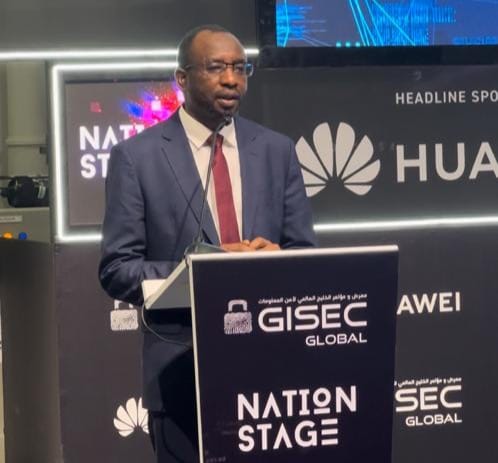
As African continent continues to experience rapid technological growth and increasing internet penetration, the Director General, National Information Technology Development Agency (NITDA), Kashifu Inuwa CCIE, has called on governments to be resilient in minimising the impact of cyberattacks on African Nations’ operations of critical infrastructure, national security, reputation, and economy.

Inuwa said this while speaking on ‘Strategies for Boosting Africa’s Cyber Resilience’ at the ongoing GISEC Global, a leading gathering ground for the cybersecurity community, in Dubai, United Arab Emirates.

The DG said that to protect citizens and assets and genuinely harness the benefits of increasingly complicated digital reality, Africa cannot afford to be apathetic towards cybersecurity. With the right strategies and approaches, Africa can enhance its cybersecurity posture and build resilience against cyberattacks.

“African nations must work collaboratively to build and implement robust, inclusive, and proactive cyber resilience methodologies and comprehensive approaches to the identification and mitigation of critical vulnerabilities. This includes encouraging the exchange of collective knowledge and intelligence on cyber threats and promoting international cooperation in responding to cybercrime,” he said.

The DG further cited Check Point Research Report of 2022 that says African countries experienced an average of 1,848 cyberattacks per week per organisation in 2022, compared to 1,164 globally. Nigeria, the most populous African country, accounted for the largest number of users, with over 100 million internet users, followed by Egypt with 76 million and South Africa with 41 million. However, these countries, along with Kenya, also account for 60% of the $4 billion annual cost of cybercrime in Africa.

According to Inuwa, “despite these challenges, Africa’s digital transformation projects are gaining momentum, with online shoppers reaching almost 390 million and social media users reaching over 380 million in 2022.

“This growing accessibility is due to increasing mobile device adoption and improved telecommunication systems. However, the increasing threat of cyberattacks puts our socio-economic security at risk locally and internationally.”

Inuwa added that it is imperative that all governments prioritise cybersecurity and take the necessary measures to strengthen their digital defenses to protect citizens from the threats posed by online attacks.

Citing Africa Center for Strategic Studies Report, Inuwa said “Only 15 African countries have completed national cybersecurity strategies, which lay out strategic objectives and assign government-wide responsibilities for cyber threat monitoring and response.”

To boost Africa’s cyber resilience, Inuwa said countries must adopt several key strategies including; understanding the current cybersecurity landscape in Africa; create and implement comprehensive and multi-stakeholder policies and legal frameworks to ensure accountability and incentivise investments in cybersecurity measures; and close the cybersecurity talent gap by investing in training and development programmes to equip our workforce with the necessary skills and knowledge to protect themselves and our organisations against cyber threats.

“We need to invest in the development of robust cybersecurity technologies such as firewalls, intrusion detection systems, and endpoint protection. These tools can help detect and prevent cyberattacks before they cause significant harm.

“Both the government and private sector must play a role in providing institutional support for cybersecurity, including the creation of dedicated cybersecurity agencies and units, as well as public-private partnerships that allow for the sharing of resources and expertise.

“We must prioritise regional partnerships and cross-border cooperation to combat cyber threats, as they do not respect geographical boundaries. This can include African countries working together to formulate and implement effective responses to cyberattacks and share best practices.

“Finally, national cyber-response plans and specialised Computer Emergency Response Teams (CERTs) for critical infrastructure sectors are essential in ensuring cyber resilience. These plans should outline the procedures and protocols,” he said.


The Director General, National Information Technology Development Agency (NITDA), Kashifu Inuwa, CCIE has said that the Agency has been implementing several initiatives and programmes aimed at bridging the gender divide that exists in the Information Technology sector.

The Director General made this disclosure through his Special Adviser on Innovation and Strategy, Mrs. Iklima Musa at a programme in Abuja organised by the African School of Economics, (ASE) in partnership with African Women Entrepreneurship Programme, (AWEP) to commemorate the World International Women’s Day with the theme “Embrace Equity: Cracking the Code”.

Inuwa informed that part of the programmes the Agency has embarked on to bridge the gender divide was a training organised on the 7th of this month where the agency trained 200 women in digital marketing, digital entrepreneurship and 3D painting and “we are planning to train another 200 women this month and the next,” he revealed.

He said that, “There is an ongoing assessment meant to give an insight and data of the percentage of women that are currently participating or playing a role in the ICT sector today. The assessment is going to be ready by the end of this month and it is going to help us drive our digital skills strategy.”

The DG NITDA asserted that NITDA’s goal is to create equity which is evident in our digital literacy initiatives adding that the Agency conducted capacity-building programmes on ICT and Entrepreneurship for 360 women in the various geo-political zones across the country. According to him, the initiative has increased women’s awareness, knowledge, and use of business tools that help to promote women’s entrepreneurial and career pursuits, increase access to distance learning and distance work programmes.

“As Africa’s most populous nation and the largest economy, Nigeria has the potential to become a global economic power house however, this can only be accomplished if we leverage our marginalized populations specifically Nigeria’s female population and bridge the digital divides that currently exist,” he advised.

The NITDA boss clarified that, “In 2021, the UN estimated that Nigeria’s female population was 104 million. As Africa’s largest economy, Nigeria has much to gain by facilitating the inclusion of women in technological industry and bridging the digital divide. However, we recognise that different challenges arise in the form of social, economic, and cultural barriers, which are a hindrance that forestall this inclusion.
Inuwa revealed that a Gender Digital Inclusion Strategy by the Agency is currently in pipeline. He added that the Strategy has identified the barriers that impede women from utilising and gaining the benefits of their inclusion in IT and will outline the steps that will be taken to bridge the gap that exists in our digital economy.

The ASE founder and president, prof. Leonard Wantchehon earlier in his remarks stated that the school doors are open to ideas and initiatives that would help the development and sensitisation of women most especially through education.

Adding that “ASE is committed to gender equality and research. This programme is an opportunity to reflect on the gender gap of women leadership in the whole world at large” he said.

Similarly, the president of AWEP, Mrs Oluyemisi Ogundipe stated that “without action these changes will not come easily”. She urged the gathering to come up with more action plan that would empower and support women leadership.

She affirmed that, to embrace equity it starts with the Mind. As such urging women to take part in the activities around them towards contributing their quota for the development of women, and also groomed their girls from inception providing them with the necessary knowledge they need to know.


The Minister of Information and Culture, Alhaji Lai Mohammed, has performed the groundbreaking ceremony for the installation of 1 x 60MVA Transmission substation in Oro, Irepodun Local Government Area of Kwara State, with a call on the people of the state to sustain their support for APC in the forthcoming governorship and House of Assembly elections.

Speaking at the occasion on Thursday, Alhaji Mohammed, who was accompanied by the Managing Director of the Transmission Company of Nigeria, Engr. Sule Abdulazeez, the Council of traditional chiefs and some APC stalwarts in the state, said the project would lead to improved power supply to Oro and its environs, boost economic activities, especially for artisans and small and medium scale businesses, and enhance the social development of the people.

He therefore implored the people of the community to ensure peace and security in order to enable the contractor to deliver the project within the stipulated time.

“Of course, our support must not be for this project alone. We must continue to own and protect similar recent projects in this area, including the tarred intra-city roads at Oro, the ICT Centres at Oro Grammar School and Offa Grammar School, as well as the modern hospitals at Oro and Igbaja. These projects, which are dividends of democracy, are aimed at enhancing the quality of life of our people.”I want to say that there are more where these projects came from.

Therefore, I implore you all to continue to support our party at all levels so that we can in turn continue to deliver to you the dividends

of democracy. This is the essence of governance,” the Minister said.He said the project is worth $8 million, with N3 billion local content.In his remarks, the Managing Director of TCN, Engr. Abdulazeez, said the project is one of those aimed at achieving reliable and quick bulk electricity for the Distribution Companies.

He said Oro currently depends on the Isanlu Feeder Supplies of 8MW of electricity to 11 surrounding communities, stressing that the

situation would change as soon as the transmission station comes on stream. Dignitaries at the occasion include the Chairman of the Board of the NBC, Alhaji Bashir Bolarinwa, Nigeria’s Ambassador to Pakistan, Mr. Mohammed Bello Abioye, and Chairman Governing Board, Federal Polytechnic, Ado Ekiti, Akogun Iyiola Oyeyipo among others.

Segun Adeyemi