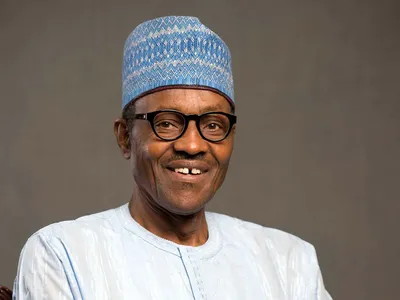
President Muhammadu Buhari has indicated his desire that the foundation laid by this administration in the war against graft would be sustained by successive governments in the country, as corruption remains an existential threat to nations.
The President spoke Thursday at State House, Abuja, while playing host to Management of the Code of Conduct Tribunal, led by the Chairman, Danladi Yakubu Umar.

He described the Code of Conduct Tribunal as “an important tool in our fight against corruption over the last seven years,” adding that such frontline agencies, “which are in the trenches are relied upon to demonstrate that the government means what it says and remains committed against corruption in all its forms.”

The President expressed his desire for a sustained anti-graft war thus: “It is our hope that the foundation which has been laid by this administration will be carried forward and continued, as the issue of corruption remains an existential threat to all nations.”
President Buhari recognized the sacrifices being made by the Code of Conduct Tribunal and similar agencies “in the midst of very challenging economic and revenue shortages,” and pledged innovative and new models of financing very important agencies and work programs that are critical.

In his remarks, the Tribunal Chairman, Danladi Umar, commended the Buhari administration for the salutary impact it has made in the area of infrastructural development, agriculture, and provision of social services, among others.
He said the Tribunal was hampered by funding challenges, poor staffing, and appealed for intervention of the President.
Femi Adesina

Hyperspace Technologies (https://hyperspace.ng), a Lagos-based Web3 startup specializing in next-level smart security infrastructure and key management systems, today announced the launch of its groundbreaking product, the Keymaster VAULT (https://keymaster.ng).

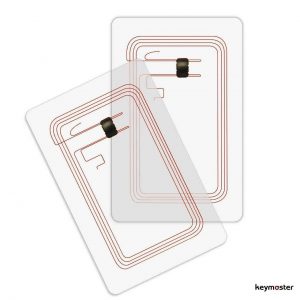
Designed to cater to the African market, Keymaster VAULT is a secure, NFC-based hardware wallet that stores private keys offline, offering an affordable and user-friendly alternative to expensive and complicated traditional hardware wallets.

Leveraging the simplicity of Near Field Communication (NFC) technology, the Keymaster VAULT allows users to securely access their digital assets by merely tapping their NFC-enabled devices.

This eliminates complex installation processes, making the wallet an ideal choice for both cryptocurrency novices and experienced users. With offline storage of private keys, the wallet significantly reduces the risk of hacks and malware attacks associated with online storage.

“We wanted to create a wallet that combines the highest level of security with ease of use, making cryptocurrency storage accessible to a broader audience in Africa,” said Chidera Anyanebechi, General Manager of Hyperspace Technologies.

“The Keymaster VAULT not only provides an affordable solution but also offers enterprise clients the ability to leverage blockchain-based identity and access management, which we believe will be a game-changer in the industry”, Anyanebechi explained.

The Keymaster VAULT’s advanced encryption technology ensures the utmost security for users’ digital assets. Its compact design and portability make it a convenient choice for individuals and businesses looking to store their digital assets securely without breaking the bank or dealing with complicated setups.

“The African market has long been underserved when it comes to secure and affordable hardware wallet solutions,” added Anyanebechi. “We are excited to bring the Keymaster VAULT to our customers and empower them with a hardware wallet that not only protects their digital assets but also opens doors for innovative applications in blockchain-based identity and access management.”

The Keymaster VAULT is now available for purchase at https://keymaster.ng, giving cryptocurrency enthusiasts and enterprise clients across Africa a secure, affordable, and user-friendly hardware wallet solution

The Russian-Ukraine war and the lingering impact of the COVID-19 pandemic have severely weakened West African economies and currencies – but businesses and investors are looking to dollar assets to mitigate the damage.


As most West African economies are commodity-driven, any development within the global economy that affects the supply and/or demand of commodities imports and exports portends significant currency weakening effects on the economies.


Recent and ongoing global events have created massive demand destruction in crude oil, agricultural products and precious metals such as gold. Supply chains are also still to recover.


As a result, most West African currencies such as the Nigerian Naira (NGN) and the Ghanaian Cedis (GHC) have significantly weakened.


It is a major source of concern – and an ongoing challenge- for most Nigerian businesses and those in other West African countries.


Fiscal and monetary imbalances compound the problem.


The import-dependent nature of most West African markets implies huge demand for foreign exchange to pay import bills. Due to declining external reserves, the Central Banks are not able to promptly and adequately meet these demands.

There is also massive fiscal debt overhang in most West African markets. One of the effects is the need to borrow from bilateral and multilateral global lenders who demand deliberate local currency weakening by the local authorities by adjusting their official exchange rates accordingly to fight the demand for foreign currencies. Weaker local currencies makes it more expensive, and less attractive to convert to hard currencies.


These factors together have conspired to weaken West African currencies, and the outlook remains negative in the short to medium term. The loss of confidence in the local currencies means that they are no longer considered a stable store of value.

The import-dependent nature of most West African markets implies huge demand for foreign exchange to pay import bills


But businesses and investors have responded to hedge themselves and protect the value of their earnings and holdings in fast depreciating local currencies.


Investments in dollar denominated securities such as Eurobonds, dollar and other hard currency equities, debt instruments in the form of government and corporate bonds, as well as interest bearing US treasury instruments have become the preferred holdings for investors. And demand is expected to grow.


But not holding local currencies has implications for the local economies.


It further increases the demand for foreign currencies and continues to create the arbitrage gap between official and unofficial forex markets which create further arbitrage pressure on the local currencies. This places further exchange rate pressure until the governments implement the right monetary and fiscal policies which enable the local currencies to better reflect economic fundamentals.


Most West African governments have started taking the right steps in this direction by adjusting their official exchange rates and in some cases borrowing in United States Dollars to shore up their external reserves though it may take some time to materialise.


The Nigerian naira in particular has remained under intense pressure since the closely watched election last month.


There is a risk the naira will continue to depreciate in the next few months because of the major difficulties in turning around through economic reforms in an economy of its size. The expectation of weaker crude oil and natural gas prices will likely continue to pressure the currency.


There is also the challenge of remittances flow to Nigeria: many companies are no longer supporting these transactions. Most importantly, tech investments which represented a significant increase in foreign direct investments (FDI) have all but reduced drastically.


As a result of turbulent economic conditions, businesses are increasingly turning to advisors with extensive global know-how for expert advice.

Since the launch of RMB’s direct custody services in Nigeria and Ghana in 2019 and 2021 respectively, we have been advising local and foreign fund managers, pension funds, broker-dealers and banks.


RMB is the leading provider for West African investors seeking to invest in foreign markets through our insightful global custody solutions. We also support inbound investors seeking selective portfolio investment opportunities in emerging and frontier markets across the continent of Africa.


Several years ago, a company was going to run a corporate event at one of the prime hotels in Lagos. You probably already have an idea of the location or possible locations. You may understand the fanfare that will accompany that kind of event. We all know that half of the activities will not be needed or noticed but they still go into the event anyway.

Sometimes, the organizers are scared of failure and you can tell from their facial expressions or tones when they talk to you over the phone. They want a perfect event and they sometimes want to see that perfection in you as a vendor. The implication is that you have to be the one allaying fears by demonstrating the perfection they want to see.

I saw the ad for this company’s event and decided to bid to compere the event. I had experience on my side and my diction is good. I’m good looking (even if I say so myself). However, something came up. On the day of the event, I had to use public transportation. I don’t recall what had happened to my car and it was the days before Uber. Taxis were pretty expensive because of the distance so I boarded a danfo bus to a near by bus stop from where I would then use a taxi.

Sadly, while in the danfo bus, my trouser was messed up and I didn’t see it. It was drizzling on that day and the danfo had a small hole just in between my legs. From that hole that gave access to both air and droplets of rain, the mixture gained access to my trouser and changed its colour.

As I alighted from the vehicle, someone pointed my attention to it. I thought I’d take care of it when I got to the client’s office. I wanted to rush into the convenience, clean up and wait at the lobby for the client.

Guess what? By the time I got to the client’s office, she was waiting in the compound. She was on her way out and was just waiting for me before heading out. Because of this, I didn’t get a chance to use the convenience and clean up as planned. She saw the stain on the edge of my trouser and everything changed from that moment.

Before this meeting, we had exchanged emails and talked over the phone. She liked the way I spoke and wrote my emails. She acknowledged that I was really good and had given me some details of the event. As soon as she saw the stain on my trouser, she immediately said the event was too close and the notice too short for me to be able to take on the event.

Ofcourse, that was just her excuse to discard me. I have handled a number of events at such short notice and everything went well. But a small stain that I couldn’t take care of before meeting the client changed everything.

It was painful but a valuable lesson was learnt on that day. This goes beyond your looks when bidding for events if you’re a compere or a vendor in some other ways. It cuts across various things in life. That is how life works. Your appearance will give you a leg in the room ahead of your skills and competences.

Take care of your appearance.

Fola Daniel Adelesi

Edible Pen Training & Development Ltd.


International powerhouse brands turn to inaugural GITEX Africa 2023 as launchpad to scale operations in the world’s next biggest digital economy

Global tech pioneers and innovators are preparing to supercharge double-digit business growth across Africa, as they eagerly anticipate the debut of the continent’s largest and most inclusive tech and start-up event in Marrakech, Morocco.

GITEX Africa will open doors for the first time from 31 May-2 June 2023, welcoming 500 exhibitors and 400 start-ups from 95 countries, with regional and international companies exuberant about the potential of the world’s rising tech continent, and the opportunities amplified by Africa’s ongoing Digital Transformation Strategy.

Among those spearheading the charge into African tech’s showpiece event is Japanese headquartered Epson; American giants Autodesk, Honeywell, Hewlett Packard, Dell, ESRi, Nutanix, Cisco and Shure; Lenovo, Huawei, and TP Link from China; along with DP World and the Technology Innovation Institute from the UAE.

With the African Union’s bold mission to unify the continent into a secure Digital Single Market by 2030, GITEX Africa exhibitors waxed lyrical about the proliferation of trends shaping the continent’s tech ecosystem, from increased internet connectivity and a rampant start-up scene, to the rise of AI and Machine Learning and a flourishing fintech sector.

These growth drivers span multiple verticals, from government services or sustainable energy and finance, to healthcare, agriculture, telecoms and education, fuelling an African tech market that, according to analysts, is on track to scale from US$115 billion in 2021 to US$712 billion by 2050.

Epson, the international technology company with 11 offices across the region, and nearly US$9 billion in global revenue in 2022, is among those looking to accelerate its intra-continental reach via GITEX Africa 2023. Neil Colquhoun, Vice President for Epson CISMETA, said a third of its MEA revenue is generated in Africa, with robust plans to fast-track regional growth.

“We have a long-term strategic vision to grow the MEA market,” said Colquhoun. “We’re committed to doubling our business from 2018 to 2025, and we’re well on track to achieving that. Ideally, we’ll try and double it again up to 2030, and a huge amount of that growth is going to be in Africa.”
Colquhoun said Epson’s core focus is on sustainability, with the company investing 100 billion yen (US$760 million) every year on developing sustainable technologies, whether for printers, projectors, scanners, smart glasses or wearable technology.

“We believe we can improve the lives of Africans and businesses,” he added. “Our printing technology is heat free for example, which equates to 83% reduction in power consumption which is critical in Africa where there are energy resource challenges. At GITEX Africa, we’ll show our entire range applicable to multiple verticals, from education, banking and healthcare, to textile manufacturing, retail, government and commercial.”

Amplifying Africa’s digital opportunity through advanced IT

Africa’s rapidly expanding digital economy is amplified by an increasingly educated and growing middle class, intensifying the demand for new technologies in a continent where 40 percent of the population is below the age of 15.

UAE-headquartered Mindware Group, and Datwyler IT Infra, based in Switzerland, will shine the spotlight on their IT/OT infrastructure solutions, software and services at GITEX Africa 2023, with both investing, and tapping into the vast prospects of the African market.

“Africa is a growing market for the IT industry, with increasing demand for technology solutions and services in different sectors such as agriculture, oil & gas, mining, banking & finance, healthcare, telecommunications and education,” commented Toni Azzi, Mindware Group’s General Manager.

“Africa is also a source of innovation and talent, with many companies investing in the region to meet the needs of the local market. While the IT industry in Africa is still in its early stages compared to more mature markets, it is poised for significant growth in the coming years and is becoming increasingly important for the global IT business.”

Asem Shadid, Managing Director for Datwyler IT Infra, MEA, added that AI, ML, FinTech, HealthTech, blockchain, and renewable energy are the hot topics shaping Africa’s tech scene, creating ample opportunities for companies such as Datwyler to venture and capitalise on the continent’s growth potential.

“As an innovative Swiss manufacturer with over 100 years’ experience and expertise, we continue to invest on our R&D to stay at the forefront of technological developments and innovations” said Shadid. “We are confident we can add value and bring significant impact on the development and growth of the Africa’s technology sector.

“Africa is a large, diverse continent, with a significant increase in technology adoption and entrepreneurship. African governments and organisations are uniting their digital transformation aspirations to modernise infrastructure and automate operations, and we foresee many opportunities for Datwyler since there’s a growing demand for technology and increasing global investment funds.”

Morocco – elevating Africa’s tech revolution
GITEX Africa 2023 is held under the High Patronage of His Majesty King Mohammed VI of the Kingdom of Morocco, and hosted by the Digital Development Agency (ADD), a strategic public entity leading the Moroccan government’s digital transformation agenda under the authority of the Moroccan Ministry of Digital Transition and Administration Reform.

The three-day event is organised by KAOUN International, the overseas events organising company of Dubai World Trade Centre (DWTC), which organises GITEX Global, the world’s largest tech show, in Dubai UAE.

Major players from Morocco’s tech landscape have signed on for GITEX Africa, in-line with the North African country’s unifying economic mission, where 60 percent of its foreign investment is directed towards Africa.

AMDIE (The Moroccan Agency for Investment and Export Development), MTDS, Morocco’s first internet service provider, and Ribatis, a leading provider of e-Gov platforms for African public administrations, are among the Moroccan exhibitors with a joint mission to elevate Africa’s ‘booming’ tech revolution.

“Africa’s tech ecosystem is booming, with the focus on digital transformation surging across the continent,” commented Mohamed Fayçal Benachou, CEO of Ribatis, which will highlight at GITEX Africa its ‘Karaz Single Window’ e-Gov platform, the first low code/no code digital platform dedicated to African governments.

“Ribatis belongs to Africa, and we believe in the continent’s rich potential, offering many opportunities to build large, profitable businesses. The African population is young, fast growing, and increasingly urbanised, while rapid technology adoption makes the continent a fertile arena for innovation. GITEX Africa 2023 presents an incredible opportunity to highlight Africa’s potential to the world.”

World’s largest start-up event in Africa

GITEX Africa 2023 will feature North Star Africa, converging more than 400 start-ups and 250-plus investors from across the globe to extend engagements, build connections, and scale imaginations with key stakeholders in the tech ecosystem.

A power-packed three-day conference programme will meanwhile be spearheaded by the ONE Africa Digital Summit and the GITEX Africa CEO Forum, with dedicated tracks covering fintech, digital cities, cybersecurity, coding, youth development, energy, healthcare, and agriculture.

More information is available at www.gitexafrica.com

.

The fashion industry is growing in leaps and bounds in Nigeria, worth billions of dollars annually, but many of the small players in the industry are not benefiting from this exposure and boom.

For many fashion enthusiasts, pursuing a career in the fashion industry seems like a dream come true. The idea of designing beautiful garments and creating unique styles that make people feel confident and beautiful is what draws many to the industry. However, it takes more than just creativity and passion to succeed as a fashion entrepreneur. It requires a solid understanding of business principles and strategies that can help drive sales and grow a successful fashion business.

Speaking to a group of journalists during a press conference, the founder and chief executive officer of Mykmary Fashion House, Micheal Onyemah, said “in today’s fashion industry, to sustain a fashion business over time, it is necessary to have a steady stream of customers. This necessitates a focus on brand development, cultivating loyal customers, and consistent marketing and selling of your services and products. Sewing is a valuable skill, but it is not enough to make a profitable business. The ability to market and sell products and services is what generates revenue and builds a sustainable business. There is a need for fashion business owners to be empowered with tools and the know-how to improve their businesses’ sales, increase revenue and help their businesses get off to a flying start. Our goal is to ensure that fashion business owners can automate their sales and multiply business profits, which in turn enables them to run a business that can fund their desired lifestyle.

“This is where Michael Onyemah, a fashion business advocate, comes in. For the past three years, Michael has been organizing fashion shows and award ceremonies, where he has interacted with numerous fashion entrepreneurs. He has discovered that while many of these entrepreneurs are skilled at designing and creating beautiful garments, they often lack the necessary business acumen to succeed in the industry.May be an image of 13 people, people standing and indoor

To bridge this gap, Michael has decided to start an online fashion business school called Mykmary Fashion Business School. Through the fashion business school, he aims to empower fashion entrepreneurs with the knowledge and skills they need to run successful fashion businesses. He believes that by equipping these entrepreneurs with business skills, they can turn their passion into a profitable venture.

The school offers a wide range of courses that meets the pain point of fashion business owners which includes generating high-quality leads, brand positioning, Content creation strategies, building business system and structure, business branding, and planning among others.

The courses are designed to provide fashion entrepreneurs with practical skills that they can apply to their businesses. The school also offers mentorship programs, where students can interact with experienced fashion entrepreneurs who can guide them on their entrepreneurial journey.

Michael’s dedication to the fashion industry has not gone unnoticed. His efforts have been recognized by the industry, and he has received numerous awards for his contributions. His work has been featured in several national and international publications, and he has been invited to speak at various fashion events.

As the fashion industry continues to evolve, Michael’s passion for powering fashion entrepreneurs remains unwavering. Through Mykmary Fashion Business School, he hopes to inspire a new generation of fashion entrepreneurs who not only have the passion and creativity but also the business skills to succeed.

Michael Onyemah is a true champion of the fashion industry. His dedication to empowering fashion entrepreneurs through Mykmary Fashion Business School is a testament to his commitment to the industry. With his passion, expertise, and dedication, he is transforming the fashion industry, one entrepreneur at a time.

Mykmary Fashion was created with the motive of promoting indigenous fashion brands and connecting them to the international market. And ever since then, they have been working to add value and interpret the African fashion business to the world at large.


In line with its consumer-centric approach to telecoms regulation, the Nigerian Communications Commission (NCC) has directed mobile network operators (MNOs) to commence implementation of approved harmonised short codes (HSC) for providing certain services to telecom consumers in Nigeria.

The Commission has already set a deadline of May 17, 2023, for all mobile networks to fully migrate from hitherto diverse short codes to the harmonised codes.

The use of harmonised short codes is aimed at achieving uniformity in common short codes across networks. This means that the code for checking airtime balance is the same across all mobile networks for the same function, irrespective of the network a consumer uses.

With the new codes, the telecom consumers using the over 226 million active mobile lines in the country, can now use the same codes to access services across the networks.

Consequently, under the new harmonised short codes regime, 13 common short codes have been approved by the Commission. They include the following codes: 300 to be used as the harmonised code for Call Centre/Help Desk on all mobile networks; 301 for voice Mail Deposit; 302 for Voice Mail Retrieval; 303 for Borrow Services; 305 for STOP Service; 310 for Check Balance, and 311 for Credit Recharge.

Also, the common code for Data Plan across networks is now 312. In line with the new direction, 321 is for Share Services, while 323 is for Data Plan Balance. The code, 996, is now for Verification of Subscriber Identity Module (SIM) Registration/NIN-SIM Linkage. The code, 2442, is retained for Do-Not-Disturb (DND) unsolicited messaging complaint management, while the common code, 3232, is also retained for Porting Services, otherwise called Mobile Number Portability.

The old and new harmonised short codes will run concurrently up until the May 17, 2023, when all networks are expected to have fully migrated to full implementation of the new codes.  The period between now and May 17, 2023 is provided by the NCC to enable telecom consumers to familiarise themselves with the new codes for various services.

The initiative, which is in line with NCC’s regulatory modernisation programme, is essentially to make life much easier for telecom consumers, as it is now easier for Nigerians to memorise single codes for various services across all mobile networks they may be using, thereby improving consumer quality of experience (QoE).

In addition, the new policy will provide opportunity for licensees in the Value-Added Services (VAS) segment of the telecoms sector to be able to use freed-up/old codes for other services, as well as enhance cohesive regulatory framework in keeping with world-class practices.


Since its launch in November last year, the artificial intelligence chatbot ChatGPT has had a massive impact in just a few short months. Already, some schools have banned it as students quickly employed the bot to take shortcuts in their schoolwork, while debates rage on whether the bot will or won’t replace copywriters. It can also write code – so well, in fact, that when Google fed it a series of coding interview questions, its answers would have qualified it for an entry-level engineering position with annual compensation of USD$183,000.


But Saša Slankamenac, Architect at Dariel Software, doesn’t agree with the fears that AI will replace software developers. “In my view, AI is not coming for anyone’s job. These concerns crop up with every major new technology that’s released, and while these technologies may change and shape the world we live in, it doesn’t completely replace it.”


Exactly what these changes will be and when they’ll take place is not quite clear at this point, he says. “ChatGPT is now roughly where Google was in 1999 – most people vaguely understood there was this thing called the internet and that it had value, but it wasn’t widely adopted and commercialised yet. Right now, people are still trying different experiments to test AI technology like ChatGPT’s commercial value. Something will undoubtedly emerge that drives widespread adoption, but it hasn’t quite reached that stage yet.”


Still, he says, it’s much more likely to enhance human jobs and industries than to destroy it. “AI is a generalist, not a specialist. It can only do what it’s been taught to do by a human. So, wherever AI is applied to meet the needs of a specific enterprise, a human will have to ‘train’ it to do the job. Problems are not generic, they’re bespoke.”


Take ChatGPT and copywriting as an example. It’s very efficient at writing ubiquitous copy such as automatic email replies, and doing so in a very average manner by using the common denominator of all the copy it’s been fed. As soon as you need creativity or a niche type of copy – say, a personal letter to your grandmother – it’s not very good. “You could, however, train it to write a specific type of niche copy and solve a bespoke problem. But you still need a human to train it,” explains Slankamenac.


“This means it will likely replace repetitive tasks, freeing up humans’ time to focus on other things. In the software development sphere, machine learning can increase development speed by automatically testing software at every stage, for example. Testing that normally takes hours of hand coding could be done in just a few minutes. That developer’s job will change, yes, but they’ll get to focus more on problem modelling and solving, or even building new AI models to solve those problems.”


And therein lies the caveat – those who don’t keep up with these changes could indeed lose their jobs, he says. “The software development industry always rewards those who are willing to learn new things. There’s always a new tool on the way to improve the status quo. So, if you, as a developer, decide to specialise in one task and stick to it for your entire career, you will be out of a job soon – whether it’s replaced by AI or something else. It’s the nature of the industry. Continual learning is imperative throughout a developer’s career.”


The same goes for companies, he adds. “Technical debt only increases over time. The longer upskilling goes unaddressed, the sooner you’ll get stuck paying high costs in migration, hiring, or massive training efforts that could take months. Companies need to make sure they keep up with incremental upskilling, which will pay dividends in the long run.”


With the right mindset, AI is a powerful tool for software developers to enhance their craft. And while it will reshape software development and force developers to acquire new skills, it’s unlikely to replace them anytime soon, concludes Slankamenac. “The future of software development will require developers to have a growth mindset, continually learning and upskilling to stay relevant in a rapidly changing industry.”

Following up on his profoundly successful 2020 bestseller “Billions at Play,” NJ Ayuk’s latest book, “A Just Transition: Making Energy Poverty History with an Energy Mix,” has already been surging through the energy industry with critical acclaim. Within just a mere day after publishing on Amazon, “A Just Transition” has already shattered sales records to become a number-one bestseller across multiple Amazon categories, to include Natural Gas Energy, Electric Engineering and Nuclear Engineering.


Cameroonian author and entrepreneur NJ Ayuk is renowned for his passion, insight, and advocacy surrounding African nations and their indispensable role in shaping the energy economy of tomorrow.

“A Just Transition” highlights, in no uncertain terms, just how fatally the International Energy Agency’s (IEA) ambitious green energy policies are stifling and crippling the energy economies of Africa. When the IEA levied a mandatory policy for countries around the world to embrace “green” energy sources, the burgeoning energy economies of Africa were unjustly handicapped as funding and business interest in their oil and gas energy projects virtually vaporized overnight.

“A Just Transition” is an incisive deep dive into the prospect of a prosperous future for African nations and the obstacles that lie in its way

With a tremendous natural abundance of oil and gas resources, Africa has extraordinary potential to be a leader in global energy. But such a transformation cannot be realized for African countries solely through green energy. “A Just Transition” is an incisive deep dive into the prospect of a prosperous future for African nations and the obstacles that lie in its way.

In “A Just Transition,” NJ Ayuk guides readers through the following issues with expertise and authority:

  • The sobering truth about energy poverty
  • Africa’s potential in the natural gas sector
  • How foreign aid utterly handicaps African countries
  • Strategic pathways for the adoption of new technologies
  • How the energy industry can provide more women with opportunities


“A Just Transition” is available in paperback, ebook, and audiobook forms everywhere books are sold, published by Seattle-based publishing house, Made for Success.

To learn more about NJ Ayuk’s bestselling book, “A Just Transition: Making Energy Poverty History with an Energy Mix,” visit the book’s listing on Amazon.

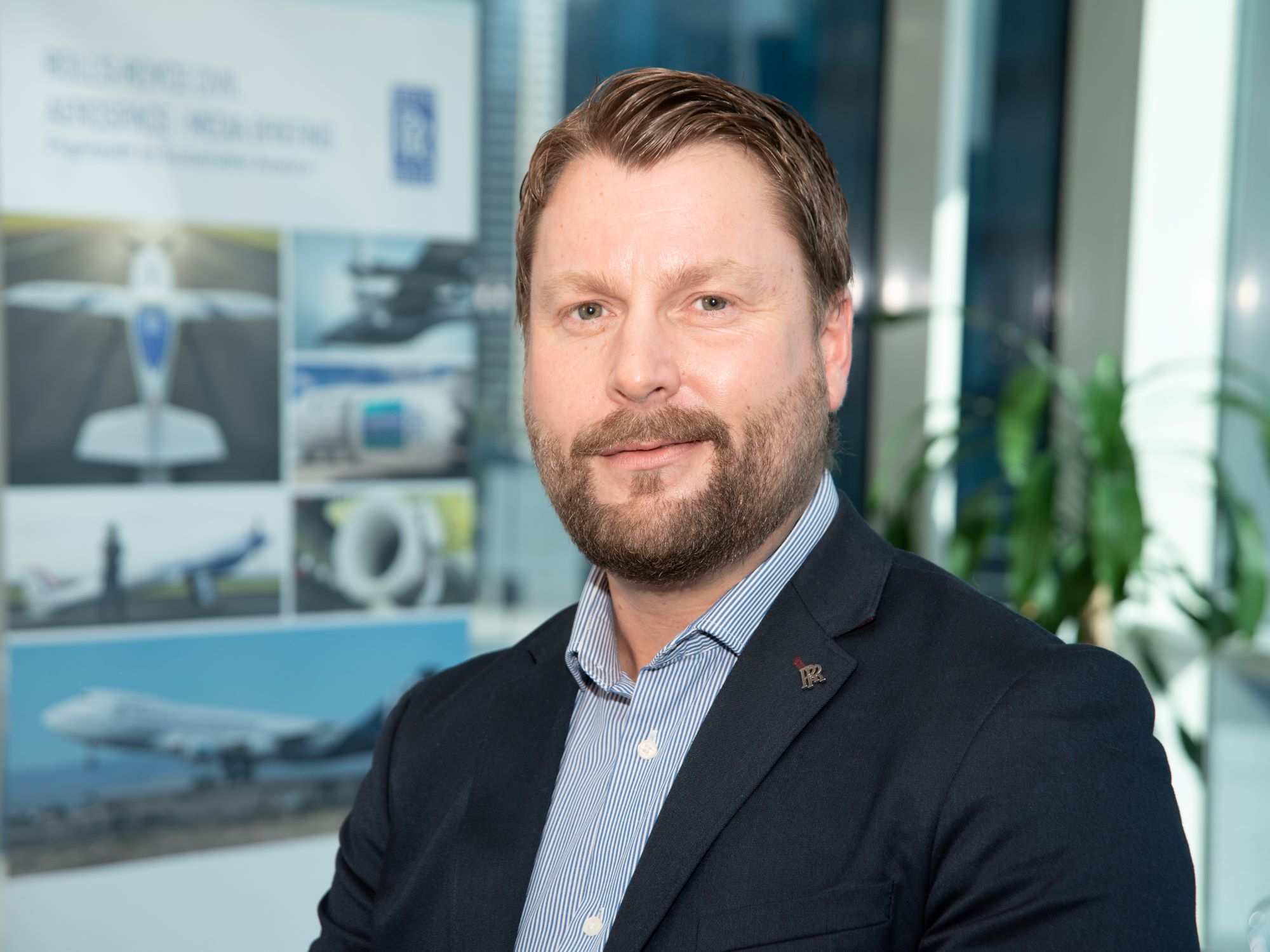
Rolls-Royce plc (www.Rolls-Royce.com) is delighted to announce the appointment of John Kelly to the position of President – Middle East, Türkiye and Africa (META), with immediate effect.


Before this role, John spent six years as Senior Vice President of Europe, the Middle East and Africa for the Group’s Civil Aerospace business.


John joined Rolls-Royce over twenty years ago, in 2001, as a graduate trainee in the Defence business. He rose to become a senior manager before joining Civil Aerospace.


In his new role, John will assume group-wide leadership and representation for the Group’s Civil Aerospace, Power Systems and Defence businesses across the META region, engaging with senior government and industry stakeholders.


Rolls-Royce develops and delivers complex power and propulsion solutions for safety-critical applications in the air, at sea and on land and employs over 150 people across Africa with an extensive reach across the region.

With bold ambitions for the future, John is committed to growing partnerships across Africa, reflecting Rolls-Royce’s core engineering and technological innovations


Rolls-Royce Civil Aerospace serves over 20 African airline customers across 15 countries. The company has over 50% market share in powering the African widebody aircraft market, with engines installed on over 80 widebody aircraft in service and another 30 on order. Since 2017, the company has supported the inception of three new airlines and delivered over 30 new aircraft. Rolls-Royce also powers a large proportion of the regional aircraft market, with over 95 aircraft in service.


Rolls-Royce Power Systems Africa provides world-class power solutions and complete life-cycle support and is headquartered in South Africa. The company supports Africa’s growing power generation, marine, rail and industrial sectors, providing vital power solutions to datacentres, mining, oil and gas, shipping, locomotive and agriculture companies across the continent.


Rolls-Royce Defence innovates power and propulsion solutions to meet operational requirements to protect, secure and explore. The company works closely with several African Governments, serving many defence forces.


John Kelly said: “Africa is the world’s second-most populous continent and on target to become the first to grow its economies solely through modern technologies and sustainable low-carbon energy sources. This rapidly developing and innovative region is vital to Rolls-Royce’s future. I will aim to ensure we build upon our foundations while supporting transformative economic growth, climate resilience and an energy transition that is right for Africa.


While we are renowned for excellence in civil aerospace, we will leverage opportunities for all the Rolls-Royce businesses, providing safety-critical power and propulsion solutions for Africa’s major infrastructure projects and industrial customers. Our technology can play a fundamental role in enabling the transition to a low carbon global economy.”


With bold ambitions for the future, John is committed to growing partnerships across Africa, reflecting Rolls-Royce’s core engineering and technological innovations.