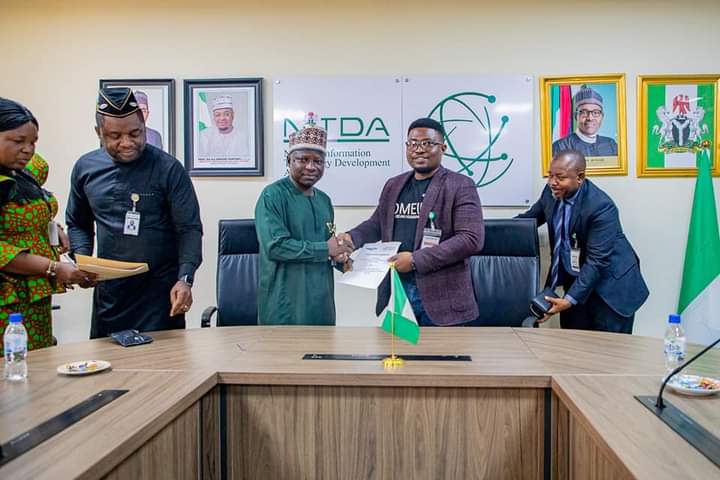
The Federal Government has taken a major step towards promoting indigenous content in the country, with the signing of Memorandum of Understanding (MoU) between the National Information Technology Development Agency (NITDA) and the Uniccon Group of Companies, aimed at fostering the development and growth of local contents in the Nigerian technology industry.

Under the terms of the MoU, NITDA and UNICCON, a company that unveiled Africa’s First Humanoid Robot, Omeife, will collaborate to develop and promote local content in Nigeria through various initiatives, including capacity building, skills development, and the creation of an enabling environment for local content producers and developers.

The partnership will also focus on supporting local startups and SMEs in the technology industry, providing them with access to funding, mentorship, and other forms of support that will enable them to grow and compete on the global scale.

Speaking during the formal signing, the Director General of NITDA, Kashifu Inuwa, CCIE, represented by Head of Legal Unit of the Agency, Barrister Emmanuel Edet, recounted that during the unveiling of “Omeife” last year December by the Vice President, Prof. Yemi Osinbajo, the Hon. Minister of Communications and Digital Economy, Prof. Isa Ali Ibrahim (Pantami), had urged NITDA to work with Uniccon Group on ways to commercialise Omeife.

He said, “We plan to have an application that everyone can use to take advantage of Omeife. At NITDA, we have the Learning Management System (LMS) for a long time, and can be integrated into API provided by the Unicorn group, thereby extending our elements to take advantage of it.”

Inuwa stated that leveraging on Omeife (robot) will deepen the penetration of digital literacy across the country, providing platform for shared knowledge in Pidgin, Igbo, Hausa and Yoruba. This will provide a framework and platform for exposure of Nigeria’s indigenous content internationally.

“Our greatest dream is to nurture startups and companies that will occupy the global space and also be as competitive as possible for the growth of the economy.

“Digital Economy is a great alternative to oil, which serves as a means of income and an opportunity for us to compete because the entry-level is intellect and we have a lot of that across the country,” the DG asserted.

The Chairman/CEO of Uniccon Group of Company, Mr. Chuks Ekweme during his remarks commended the Minister of Communications and Digital Economy, Professor Isa Ali Ibrahim (Pantami), and the DG of NITDA for the policies and initiatives implemented towards the digital transformation of the country.

He assured that Unicorn Group of Company will support the government towards the actualisation of policies and initiatives, and do their best to contribute their quota towards the implementation drive for the growth of the country.

Ekweme emphasised he importance of the AI project in Africa, stating that statistics show that no African country can boast of having 60% AI by 2030, with most countries falling below this percentage. Therefore, the signing of the MoU is a crucial step towards bridging this gap and positioning Nigeria as a leader in AI development.
 

Empower Nigeria, a Non Governmental Organisation (NGO) dedicated to the protection and enhancement of civil liberties deems it fit and proper to wade into allegations against Roger Brown, the Chief Executive Officer of Seplat bordering on claims of forced resignations and sacking of Nigerian staff based on discriminatory policies,alleged enforcement of manipulative ranking scheme in the company, allegation of different retirement age for Nigerians and expatriates and other sundry claims.

Pursuant to our core mandate and in the public interest, we launched an investigation with the determination to get to the bottom of the issues thrown by these allegations and in the process, unveil the truth. The averments that we make below is therefore a product of our thorough investigation.

1. The claim of forced resignations and sacking of Nigerian staff based on discriminatory policies. As against this claim, there was no mass sack or forced retirements of Nigerian at Seplat with Roger Brown as the Chief Executive Officer (CEO). The true state of affairs is that between 2020 and 2022, eight Nigerian staff of the company voluntarily resigned or opted to take early retirement in the exercise of their rights as spelt out and protected by the law. Their decision was conveyed to the management of the company in writing via official channels. Seplat paid the affected staff generous end of service benefits and thereafter made appropriate notifications to NUPRC in accordance with Notification schedule as per their exit.

2. Allegation of enforcement of manipulative ranking scheme. We found out that this allegation is not supported by facts but is a product of a hunting expedition. Arising from the observations and input made by the staff on the need to review the former 5-point ranking system which the staff considered to limit opportunities especially around the 75% cut off mark required for promotion, management reviewed and replaced it with a 3-point ranking scheme.

3. The aim of the 3-point scheme (Outstanding Strong and Average) is to ensure that staff rewards are tied to results which are transparent and verifiable. More importantly,it laid to rest staff complaints about the 5-point system which they believe limited opportunities for promotion.

The claim that the Average rating applied only to Nigerian staff is untrue as out of the 5% of staff (24 persons) ranked Average, the number included an expatriate. This is without prejudice to the fact that expatriates constitute a small part of the entire workforce of over 500 workers in the company.

4. The claim that Seplat operates different retirement age for Nigerian and expatriate staff. Again this allegation is false and a disingenuous ploy to sow seeds of discord among the staff of the company. The retirement policy of the company is not discriminatory but is based on the laws of Nigeria stipulating that all employees working in Nigeria both local and expatriate retire at 60 years. This has been the practice in Seplat since it commenced operations.

5. Given the delicate nature of these claims and its implications for industrial harmony, it is our considered position that news organisations who publicise these allegations should carry out thorough investigation to ascertain the veracity of the claims in matter. This is in the interest of equity, fairness and justice.

6. The non-compliance with this basic tenet before exposing Seplat to media trial while it achieves the aim of the sponsors of this orchestrated smear campaign does grave injustice to the noble profession of journalism.
7. Seplat has been an exemplary player within the country’s oil sector. The current attempt to impugn it hard earned reputation is indeed regrettable.


The Honourable Minister of Communications and Digital Economy, Professor Isa Ali Ibrahim (Pantami), FCIIS, FBCS, FNCS, wishes to bring to the attention of the public the Ministry’s activities towards ensuring a safe and secure cyberspace for Nigerians before, during, and after the 2023 Presidential Elections.

As part of its mandate, the Federal Ministry of Communications and Digital Economy is expected to ensure adequate protection of Nigeria’s cyberspace to a level that citizens will have confidence in digital services. This mandate aligns with the goals and objectives of the National Digital Economy Policy and Strategy for a Digital Nigeria (NDEPS).

In line with this mandate and in our efforts at supporting the initiatives of securing the Nigerian cyberspace, the parastatals under the supervision of the Ministry have established Cybersecurity Centres, namely, the National Information Technology (NITDA)’s Computer Emergency Readiness and Response Team (CERRT), the Nigerian Communications Commission (NCC)’s Computer Security Incident Response Team (CSIRT), and Galaxy Backbone (GBB)’s Security Operations Centre (SOC). These Centres were established between 2020 and 2022 in line with the Honourable Minister’s policy directives and have been monitoring Nigerian cyberspace for potential threats and taking appropriate actions to mitigate them, both individually and collectively as well as in collaboration with other stakeholders.

It is worth noting that in the run-up to the 2023 General Elections, threat intelligence revealed an astronomical increase in cyber threats to Nigerian cyberspace. Generally, threats to public websites and portals averaged around 1,550,000 daily. However, this skyrocketed to 6,997,277 on Presidential Election Day.

The Honourable Minister of Communications and Digital Economy, as a Professor of Cybersecurity and one that is very passionate about ensuring a safe and secure cyberspace, directed all the parastatals to enhance their 24/7 monitoring of the networks and traffic for potential attacks from 24th February 2023 to 27th February 2023. Furthermore, on 24th February 2023, the Honourable Minister inaugurated the Ministerial Standing Committee on Advisory Role for the Protection of Nigerian Cyberspace and ICT Infrastructure. The Committee, chaired by the Board Chairman of NCC and with the CEOs of NCC, NITDA and GBB as members, was charged with the following responsibilities, among others:

  1. Monitoring of Telecommunication Infrastructure for the successful conduct of credible, free, fair, and transparent elections;
  2. Developing and implementing plans to enhance the resilience of critical digital infrastructure against cyber threats;
  3. Designing procedures and using technologies to prevent, detect, and respond to cyber-attacks, as well as developing the ability to recover from any damage that is done quickly;
  4. Developing a comprehensive risk assessment, analysing the nation’s current cybersecurity capabilities, and identifying gaps that need to be addressed; and
  5. Providing professional advice to the Government on the effective utilization of digital technologies in the conduct of the 2023 General Elections.

The Committee’s activity started on 24th February 2023 and ended on 28th February 2023. During this period, a series of hacking attempts were recorded, including Distributed Denial of Service (DDoS), email and IPS attacks, SSH Login Attempts, Brute force Injection attempts, Path Traversal, Detection Evasion, and Forceful Browsing. A total of 12,988,978 attacks were recorded, originating from both within and outside Nigeria. It is worth noting that the Centres successfully blocked these attacks and/or escalated them to the relevant institutions for appropriate action.

The parastatals, under the supervision of the Ministry of Communications and Digital Economy, have played a crucial role in providing the enabling environment for the successful conduct of a credible, free, fair, and transparent election. The Honourable Minister commends all stakeholders in the digital economy ecosystem for their support that resulted into this this unprecedented success.

More importantly, the Honourable Minister notes that these attainments are as a result of the commitment of the administration of President Muhammadu Buhari, GCFR towards ensuring Nigeria’s successful transition into the digital economy. The digital economy sector has enjoyed continued support of the President and it is highly appreciated. He also hopes that lessons learned during the process will be put to effective use in subsequent elections.

MykMary Fashion House, the owners and conveners of the popular and annual MykMary Fashion Show, a show that has been able to showcase the creative aspect of Nigerian fashion to the world has made it known that they are basically focusing on advocacy in the sector. The fashion industry is growing in leaps and bounds in Nigeria ,Worthing over billions annually but many of the small players in the industry aren’t benefiting from this exposure and boom.

Speaking to a group of journalists during a press parley,the founder and chief executive officer of MykMary Fashion House , Micheal Onyemah said “in today’s fashion industry,one thing is to be creative and talented in churning out and creating hood products and another thing is knowing the business aspect of fashion.I am here as a fashion advocate to ensure that the people in the industry especially the small scale players and SMEs in the industry start understanding the business aspect of the whole fashion industry.”

” We are creating an advocacy that will focus on value and how to ensure that the tailor in the street corner starts understanding what it takes to run a profitable fashion business. We are training them and we will continue to do that. You can call this an intervention in the industry but what is our focus is to ensure we advocate for these sets of fashion players so that clients shouldn’t take advantage of the .Aube die to lack of exposure or education”, Onyemah added.

MykMary is taking this year’s show to a new hieghts, apart from the normal exhibition, parades and other B2Bs in the industry this year’s show will be focusing on fashion advocacy and the need to expose the small players to the rudiments of fashion business in order to be profitable. This will be from digital marketing, classes, lectures, deploying social media etc. Onyemah has over the years shown his interest in advocacy in the industry and has promised to take 2023 show to this new hieghts. 

MYKMARY FASHION was birthed with the motive to help bring the  imagination of young and rising fashion designers and entrepreneurs to life. And ever since then, we have been persistently working to add value and interpret the African fashion business to the world at large.

The inspiration behind Mykmary fashion brand was first formed from the undying love for fashion, after realizing the positive effect on the economic GDP, growth, and the amount of job creation it could provide, it became a serious venture

Clement Emmanuel 


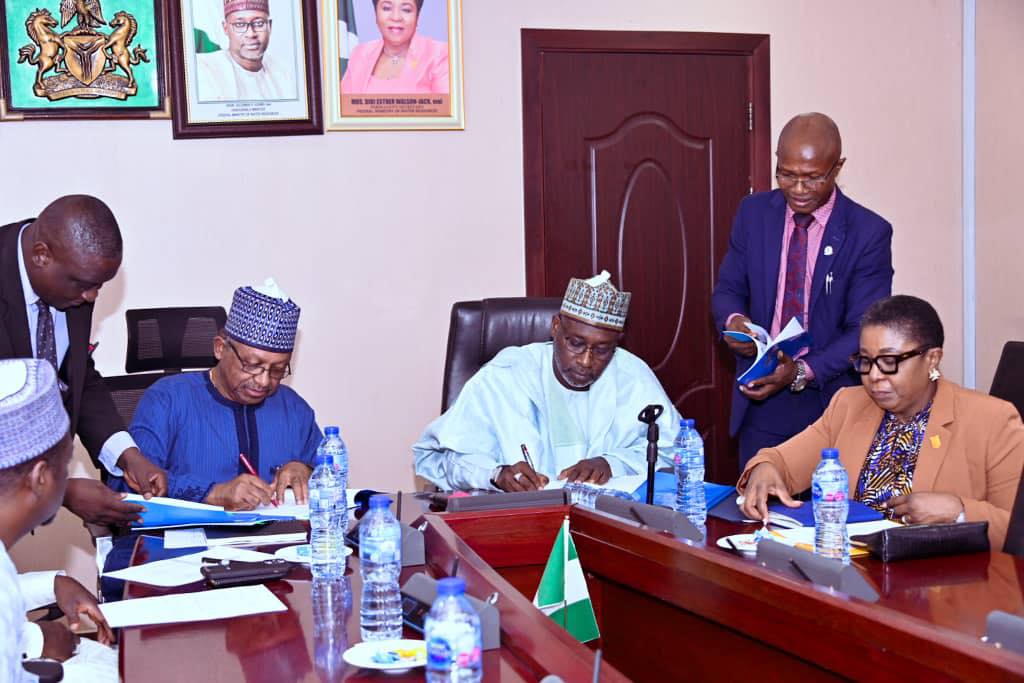
The Hon. Minister of Water Resources, Engr. Sulieman H. Adamu FNSE, FAEng has signed an MOU with the Dr Osagie Ehanire Honourable Minister of Health towards a collaborative programme for Water Sanitation and Hygiene (WASH) in Federal health Insituitions across the country. The signing took place at the Conference Room of the Federal Ministry of Water Resources GARKI Abuja on 13th March, 2023.

Speaking at the event the Water Minister noted that the WASH Poverty Diagnostic Report released in 2017 which showed the deplorable state of WASH services in the country and the urgent need to change the narrative. The report which was released at the early years of this administration triggered many subsequent sectorial interventions to address the shortcoming. Some of these initiatives include, development of the National Action Plan for the Revalitization of the Wash Sector, Presidential Declaration of State of Emergency on the sector, the Partnership for Expanded Programme on WASH ( PEWASH), Institutionalization of the Wash National Routine Outcome Mapping ( WASHNORM), the Clean Nigeria: Use the Toilet Campaign, Sustainable Urban and Rural Wash (SURWASH) programme and development of Road Map for Hand Hygeine for All among others.

Speaking further, Engr Adamu noted that these high level initiatives clearly demonstrate the strong will of Federal Government towards reversing the narrative on Nigeria’s poor WASH indices.

The annual WASHNORM survey enables the measurement of progress towards meeting the SDG targets. This survey has therefore determined that primary health care facilities and those located in rural areas are more disavantaged than secondary health care facilities and those located in urban centres.

The Health WASH Programme which is the basis of the MOU is designed to identify the WASH needs and bridge the WASH services gap across our health care facilities with focus on the primary health care facilities, Engr Adamu stated.

According to the Honourable Minister of Water Resources, HEALTH WASH programme is expected to serve as a catalyst to spur investment in health care facilities leading to universal wash coverage in Health care centers. The MOU details the obligation of the parties, the frameworks for the programme coordination, delivery as well as financing, monitoring and evaluation. He emphasised that the MOU is being bequeathed to the next Administration to sustain the progress done in the WASH sector and to meet International and local obligations.

Similarly the Hon. Minister of Health Dr. Ehanire stressed the overall importance of Health WASH in the health sector. According to him 60 per cent of infant mortality is attributed to diarrhoea and malaria. This according to Dr Ehanire has to do with poor sanitation, poor quality of water and stagnant dirty water. With the signing of the the Health WASH programme the hope is to have a beter ranking at the global scale as well as provide potable, usable water in the primary health care centres across the country.

Earlier at the event, the Permanent Secretary Ministry of Water Resources, Mrs Didi Walson-Jack, mni , in her opening remarks noted that the collaboration between the two Ministries will help in addressing the problems of poor water sanitation and hygeine services in healthcare facilities for the general wellbeing of the populace.

According to the Global Burden of Dieases Projects, diarrhoea and enteric burden of disease attributed to poor wash is more than 70 per cent and inequitably borne by poor women and children.

Mrs Walson-Jack also stressed the Ministry’s commitment in achieving an open defecation free Nigeria by 2025 as well as increasing sustainable access to basic WASH services for all Nigerians by 2030.

With dual challenges of meeting rising demand while transitioning to a cleaner energy future, Africa’s downstream sector has been in the spotlight, and during the 2023 edition of the African Refiners & Distributors Association (ARDA) Conference – where the African Energy Chamber (AEC) (www.EnergyChamber.org) is participating – this very challenge is being explored.


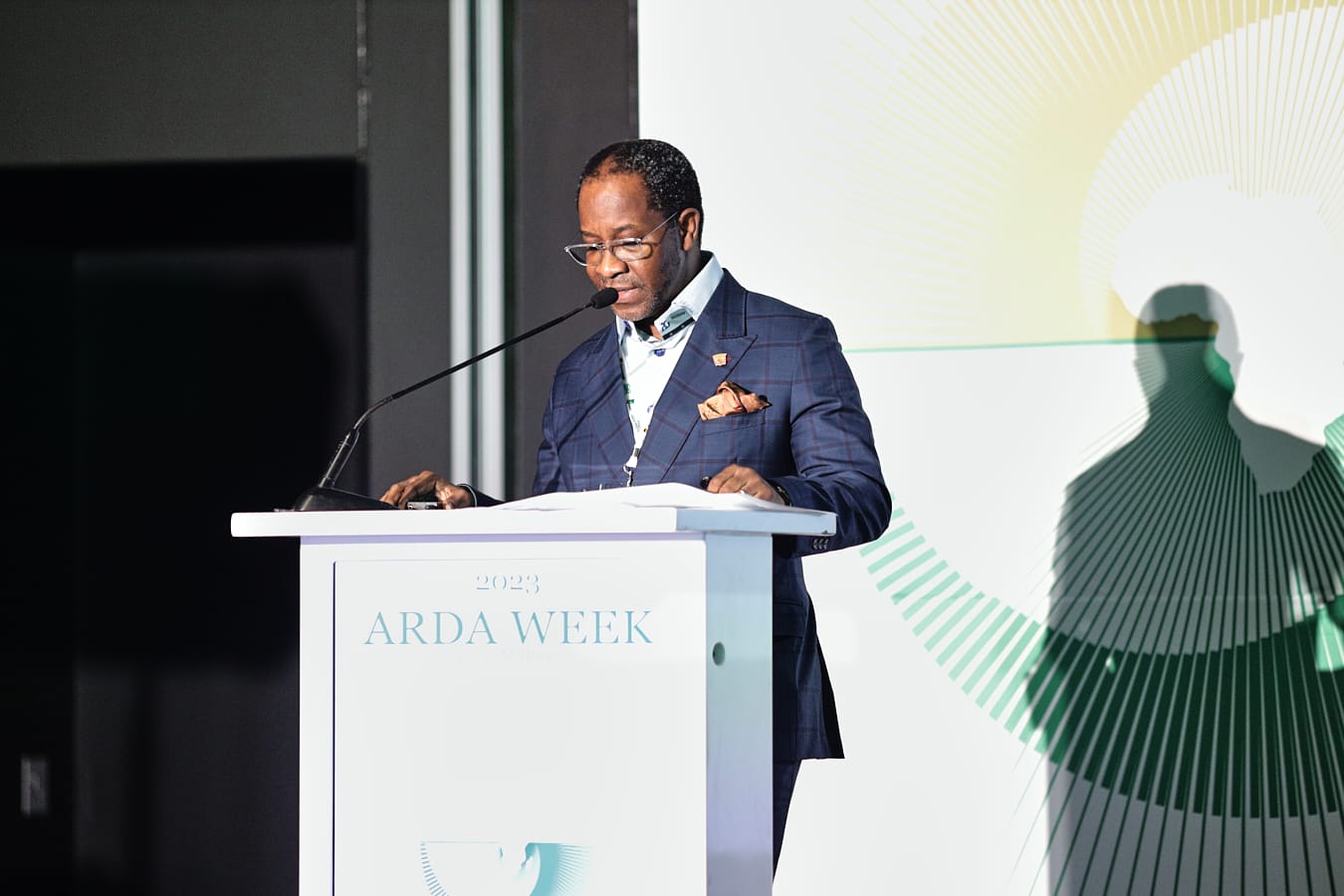
During ARDA Week 2023, Wale Ajibade, Executive Director of Savannah Group, delivered a presentation on ‘Meeting Africa’s Growing Energy Requirements in the Evolving Global Landscape,’ with insight given into the continent’s downstream opportunities, future energies and the role Savannah continues to play in expanding the market.

Kicking off his presentation, Ajibade emphasized that projected growth trends in Africa indicate an increase in energy demand over the next few decades, with demand expected to be driven by industrialization and urbanization and is expected to coincide with the global energy transition. Additionally, the rise in demand is projected to accelerate Africa’s deployment of downstream infrastructure to enable the continent’s energy independent and sustainability while serving to address energy poverty.

Ajibade stated that with roughly 13% of global natural gas reserves based in Africa, the continent is expected to embrace gas in the coming years

According to Ajibade, Africa faces five challenges across the downstream sector. Specifically, the over-reliance on product importation, supply chain issues, oil theft and vandalism, fuel subsidy, and the energy transition. However, there are clear solutions to these challenges, which include, “investing in the construction of new refineries and the modernization and expansion of existing infrastructure; the creation of enabling environments for investment in infrastructure; leveraging technology to address pipeline theft and vandalism – such as drones and the internet of things –; regulating fuel subsidies; and pushing for gas to be used more predominantly including liquefied natural gas (LNG), liquefied petroleum gas (LPG) and compressed natural gas for power, energy and transportation while adapting existing refineries to the changing landscape.”

In addition to oil, Ajibade provided insight into the viable solutions for the future of Africa’s energy sector. Drawing attention to natural gas while identifying the role solar, wind and hydro will also play, Ajibade stated that with roughly 13% of global natural gas reserves based in Africa, the continent is expected to embrace gas in the coming years.

According to Ajibade, while fossil fuels will continue to remain the major source of Africa’s energy demand, particularly through oil, it is expected that there will be a major shift towards a cleaner and more sustainable energy mix through the use of gas. In this scenario, natural gas will begin to play the role of bridging between more polluting fossil fuels and zero-carbon technologies, such as wind and solar. With factors such as a growing population, increased urbanization and economic expansion, as well as growth across the industry, commerce, manufacturing and agricultural sectors, Africa is projected to rely more and more on gas. However, challenges associated with a lack of investment, limited infrastructure, foreign exchange issues and limited knowledge on gas technologies continue to hinder resource maximization in some gas-rich countries such as Nigeria – which has put in place its Decade of Gas initiative to monetize resources.

As the transition to cleaner sources of energy become increasingly important, Ajibade shared insight into Sahara Group’s operations and agenda, stating that as part of the company’s broader Environmental, Sustainability and Governance initiatives, Savannah continues to make investments along the entire gas value chain. On the upstream, the company invests in a gas-heavy portfolio and has begun the process of eliminating gas flaring across all its upstream assets. On the midstream front, the company has stakes in several LNG and gas ventures including four LPG vessels with a focus on increasing LPG supply into West Africa. Meanwhile on the downstream and consumption side, gas demand to the company’s power plants is expected to increase significantly by 2026.

Additionally, Ajibade made note that over the past two decades, global investment in renewable energy has grown rapidly. However, Africa receives less than 3% of this investment. As such, Ajibade stated that in order to attract more investment and create enabling environments, a series of financial options can be implemented included blended finance, green bonds, risk mitigation instruments, innovation and carbon markets. According to Ajibade, the creation of carbon markets in Africa could help countries develop mitigation projects while receiving climate-related investment, and with 24 countries already conveying an interest in this area, opportunities for trading carbon credit across several exchanges is in sight.

Natural gas, downstream investment and carbon markets all represent key themes at the 2023 edition of the continent’s premier event for the oil and gas industry: African Energy Week (AEW). Taking place in Cape Town from October 16-20, this year’s edition of AEW is centered on deals, networking and collaboration, with a series of high-level panel discussions and presentations – similar to that of Ajibade’s – as well as investor summits and networking functions driving new engagement among financiers and project developers. Representing the AEC’s annual energy conference, AEW 2023 represents a not-to-be missed event.

Flat6Labs (www.Flat6Labs.com), MENA’s leading seed investor, has announced the launch of a new US$95 million Seed Fund to nurture the growth and development of early-stage tech startups on the African continent. Flat6Labs has a proven track record in carefully vetting out and investing in promising startups in North Africa since it was founded 12 years ago, with more than US$16M invested in startups, and over US$191M raised in follow-on funding while creating more than 2,500 direct jobs and 80,000 indirect jobs through its first two funds in Egypt and Tunisia.


Headquartered in Egypt, the Africa Seed Fund (ASF) will focus on three main investment territories in Africa: North Africa, West Africa, and East Africa. Flat6Labs will be extending its reach into several new territories including Nigeria, Ghana, Kenya, Morocco, and Senegal, amongst others. The ASF will be led by Ramez El-Serafy and Dina el-Shenoufy as General Partners for the fund. The fund will invest in more than 160 early-stage startups over the next five years that operate in the technology sector in Africa, with a focus on impactful sectors that accelerate digital inclusion through the use of information technologies and industries which contribute to addressing social and environmental challenges, such as HealthTech, FinTech, EdTech, GreenTech, AgriTech, ClimateTech, and other sectors.

The significant influx of capital from the ASF has the potential to create more than 14,000 jobs, provide support to more than 1,200 founders with 20% female participation, and generate revenue of more than US$700M.

Ramez El-Serafy, General Partner for ASF, says, “We are extremely excited about the launch of the Africa Seed Fund. Africa is one of the most exciting regions to invest in tech and innovation, with huge untapped potential and unique business opportunities. We will leverage our experience and knowledge to guide the startup founders to create truly scalable, investment-ready, Africa-based companies.”

Africa is one of the most exciting regions to invest in tech and innovation, with huge untapped potential and unique business opportunities

The African tech ecosystem has continued to grow in 2022. According to Partech 2022 Africa Venture Capital Report, funding for the African sector increased to US$6.5B in 2022, up from US$6.0B in 2021 (https://apo-opa.info/3Th8e6Y). Clearly, the deep forces driving growth of the African tech ecosystem have prevailed against the global headwinds.

With the Africa Seed Fund, Flat6Labs will be investing in 160 companies that are in Pre-Seed up to Pre-Series A stage, with tickets ranging from US$150K-US$500K through the Flat6Labs’ Africa Seed Program and will also be providing seed tickets to seasoned founders independently of the program. ASF will also be able to reinvest into portfolio companies in follow-on rounds.

Flat6Labs’ Africa Seed Program provides portfolio companies joining the program with seed funding, regional business support, access to a regional network of seasoned local mentors, as well as regulatory and logistical support to set up and grow their businesses. The program also adapts to be regional with a hybrid model allowing for physical on-the-ground interactions in local markets while combining virtual elements that allow for cohort interactions across the entire fund region. Two cohorts will be run annually, with an average of 10 to 15 startups per cohort. The first investments in the selected startups are planned to be made before the end of 2023.

Dina el-Shenoufy, General Partner for ASF, says, “The Africa Seed Fund is well-positioned to be a catalyst for driving long-term positive change that the youth of Africa really deserve, and to providing resources to the brightest of them, while accelerating the future of the African continent. The program is designed to provide entrepreneurs with the resources that they need to be able to grow and to scale-up their businesses to new heights.”

“We have observed that the entrepreneurial market has matured over the years with a new wave of founders that are more experienced. We will also cater for these founders and offer higher ticket sizes to support these companies and a different track to the program” el-Shenoufy added.

The Africa Seed Fund (ASF) is being established by Flat6Labs, project (SAIS), with the support of the GIZ on behalf of the German Government (https://apo-opa.info/3lbHYOS) and through the Egyptian Agricultural Innovation Project (AIP) and Scaling Digital Agricultural Innovations through Start-ups project (SAIS).


The Nigerian Communications Commission (NCC) has concluded arrangements to host an event to mark the 2023 World Consumer Rights Day (WCRD) in Abuja with spotlight on its regulatory initiatives on clean energy usage in the telecoms sector.


In what has become a tradition in the Commission since 2017, when it declared 2017 as Year of the Telecom Consumers when it honoured telecom consumers by connecting with the global theme for the commemoration to celebrate the Day with landmark activities, the Commission has continued to promote consumer protection and enlightenment.


The theme of the 2023 edition of the Day is “Empowering Consumers through Clean Energy Transitions.”


According to NCC’s Executive Commissioner, Stakeholder Management, Barrister Adeleke Adewolu, the theme provides opportunity for NCC to share with beloved telecom consumers and other stakeholders, as well as the public, the policies it has instituted, and other actions taken to encourage operators in the sector to transition to environmentally friendly and renewable energy sources in their operations.


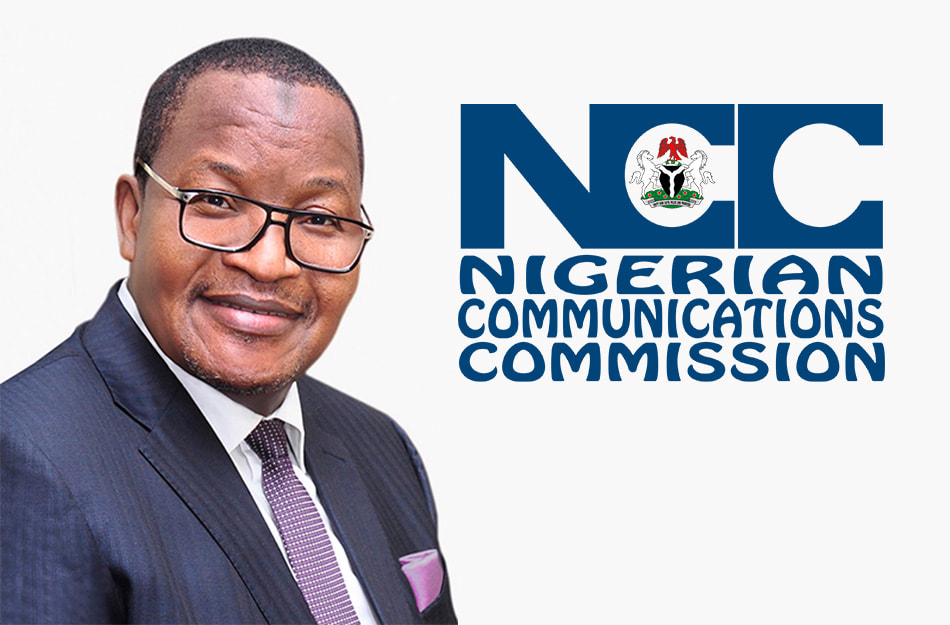
Adewolu, who represented the Executive Vice Chairman and Chief Executive Officer, Prof. Umar Garba Danbatta, at the inauguration of the committee to organisation the event, said the Commission is committed to reducing the impact that telecommunications operation has on climate change and the environment while noting that the peculiarities of Nigeria’s electricity supply have resulted in the telecommunications sector being a contributor to carbon emissions.


Danbatta, who is a Fellow of the Renewable Alternative Energy Society (FRAES), stated that studies have shown that renewables and energy efficiency, boosted by substantial electrification, can provide over 90 per cent of the necessary reductions in energy-related carbon emissions. He said increasing the use of electricity sourced from renewables presents the best opportunity to accelerate world’s energy transformation.


“The theme is very apt this year, as we know the implication of the climate change disaster facing the world. So, as a Commission, we are committed to reducing the impact of climate change. The telecoms sector contributes to global emissions, particularly when you realize that there are over 54,000 base transmitter stations powered, in some cases 24 hours seven days a week, by generators. You can just imagine the emissions from these,” Danbatta said.


He explained that the Commission was already looking at introducing a policy to encourage ethical energy source, as part of the Commission’s commitment to safeguarding the environment for consumers and other users of telecom services, a move that is also in tandem with the process of actualising some of the key items of the Sustainable Development Goals (SDGs).


The EVC further stated that, in recent years, the Commission has introduced a regulatory framework on infrastructure sharing and collocation among the licensees which, he said, has encouraged operators to fully maximise their already-deployed infrastructure.


“By sharing infrastructure, some operators do not need to entirely build a telecoms site in an area where another operator had deployed one. With the challenge of inadequate public electricity supply in Nigeria, telecom companies rely on diesel-powered generators to keep their telecom sites live round-the-clock. But a regulatory framework such as infrastructure sharing and collocation is helping in this regard,” the EVC said.


The Nigerian Communications Commission (NCC) has concluded arrangements to host an event to mark the 2023 World Consumer Rights Day (WCRD) in Abuja with spotlight on its regulatory initiatives on clean energy usage in the telecoms sector.

In what has become a tradition in the Commission since 2017, when it declared 2017 as Year of the Telecom Consumers, when it honoured telecom consumers by connecting with the global theme for the commemoration to celebrate the Day with landmark activities, the Commission has continued to promote consumer protection and enlightenment.

The theme of the 2023 edition of the Day is, “Empowering Consumers through Clean Energy Transitions.”

According to NCC’s Executive Commissioner, Stakeholder Management, Barrister Adeleke Adewolu, the theme provides opportunity for NCC to share with beloved telecom consumers and other stakeholders, as well as the public, the policies it has instituted, and other actions taken to encourage operators in the sector to transition to environmentally friendly and renewable energy sources in their operations.

Adewolu, who represented the Executive Vice Chairman and Chief Executive Officer, Prof. Umar Danbatta, at the inauguration of the committee to organise the event, said the Commission is committed to reducing the impact that telecommunications operation has on climate change and the environment. He stated that the peculiarities of Nigeria’s electricity supply have resulted in the telecommunications sector being a contributor to carbon emissions.

Danbatta, who is a Fellow of the Renewable Alternative Energy Society (FRAES), stated that studies have shown that renewables and energy efficiency, boosted by substantial electrification, can provide over 90 per cent of the necessary reductions in energy-related carbon emissions. He said increasing the use of electricity sourced from renewables presents the best opportunity to accelerate the world’s energy transformation.

“The theme is very apt this year, as we know the implication of the climate change disaster facing the world. So, as a Commission, we are committed to reducing the impact of climate change. The telecoms sector contributes to global emissions, particularly when you realize that there are over 54,000 base transmitter stations powered, in some cases 24 hours seven days a week, by generators. You can just imagine the emissions from these,” Danbatta said.

He explained that the Commission was already looking at introducing a policy to encourage ethical energy source, as part of the Commission’s commitment to safeguarding the environment for consumers and other users of telecom services, a move that is also in tandem with the process of actualising some of the key items of the Sustainable Development Goals (SDGs).

The EVC further stated that, in recent years, the Commission has introduced a regulatory framework on infrastructure sharing and collocation among the licensees, which, he said, has encouraged operators to fully maximise their already-deployed infrastructure.

“By sharing infrastructure, some operators do not need to entirely build a telecoms site in an area where another operator had deployed one. With the challenge of inadequate public electricity supply in Nigeria, telecom companies rely on diesel-powered generators to keep their telecom sites alive round-the-clock. But a regulatory framework such as infrastructure sharing and collocation is helping in this regard,” the EVC said.


The rise in finance and accounting cybercrime through phishing and Business Email Compromise (BEC) has made headlines with massive implications for South African companies with gaps in their payment systems. “However, robust financial controls together with strong server, IT, and email monitoring processes aren’t enough if staff aren’t savvy to the psychological tricks scammers use to manipulate people, making them more vulnerable to tricker and deception,” says Ryan Mer, CEO at eftsure Africa, a Know Your Payee™ (KYP) platform provider.


Mer says it’s a myth that only gullible, unskilled professionals are susceptible to scams. “The misconception that only foolish individuals fall victim to cybercrime and payment fraud is dangerous because it leads to complacency in the highly educated who occupy senior positions within organisations. Criminals engaging in payment are often well-skilled, well-resourced and armed with enough industry knowledge to appear legitimate.”


Manipulating trust and competence

Scammers rely on human impulses to be helpful, avoid conflict, and problem-solve quickly and effectively to extract information or manipulate targets into taking action.


A common modus operandi is an attempt to win the trust of a potential victim by impersonating a known or trusted figure. Examples include an employee receiving a mail from an organisation’s financial director instructing them to arrange urgent payment to a supplier or an HR manager receiving a polite email from a member of staff requesting their bank details be changed for payroll purposes.


“An employee’s desire to perform their duties swiftly and competently, especially for a trusted figure of authority, is manipulated by criminals who rely on an instruction being actioned without question for a scam to be successful. In such instances, only an automated system for detecting red flags in outbound payments can offer the level of protection organisations really need to counter human error,” says Mer.


Banking on urgency

While scammers become increasingly inventive, an age-old tactic cybercriminals routinely rely on is creating a sense of urgency in their victims. Mer says phishing messages and business email compromise scams are designed to make employees more likely comply with a potential threat that they know they should report. “Scammers lure victims into acting quickly before they have time to think rationally about the activities they’re undertaking. Implementing processes that require staff to slow down and double-check any actions that involve payments is vital.”


He adds that a sudden change in customer or supplier business practices, such as a new point of contact, change of email address or banking details should be viewed with caution and thoroughly verified before complying with an urgent request. “In many organisations, there is a concerning disconnect between the theoretical controls in place and what actually happens in everyday business contexts. Cybercriminals often rely on the herd principle in which people in organisations adopt the behaviour of those around them. The risk that one person in a team complies with a scammer may result in others being deceived in the same way. Sound business processes and educated staff, while essential, can only protect a business so far as sophisticated phishing and BEC scams can defeat the internal controls of even the most vigilant teams,” says Mer.


Extra, automated protection

Cybercrime is constantly evolving which makes it a moving target. Interpol’s last African Cyberthreat Assessment Report published in 2021, placed South Africa as having the third-highest number of cybercrime victims in the world, costing the country a staggering R2.2-billion annually. “Ongoing education on the latest scams and the tactics used to execute them is crucial for South African companies. In addition, independent third-party verification systems like eftsure can offer a much-need extra layer of protection by automating payment checking and supplier verification, saving time on manual processes and reducing human error,” notes Mer.