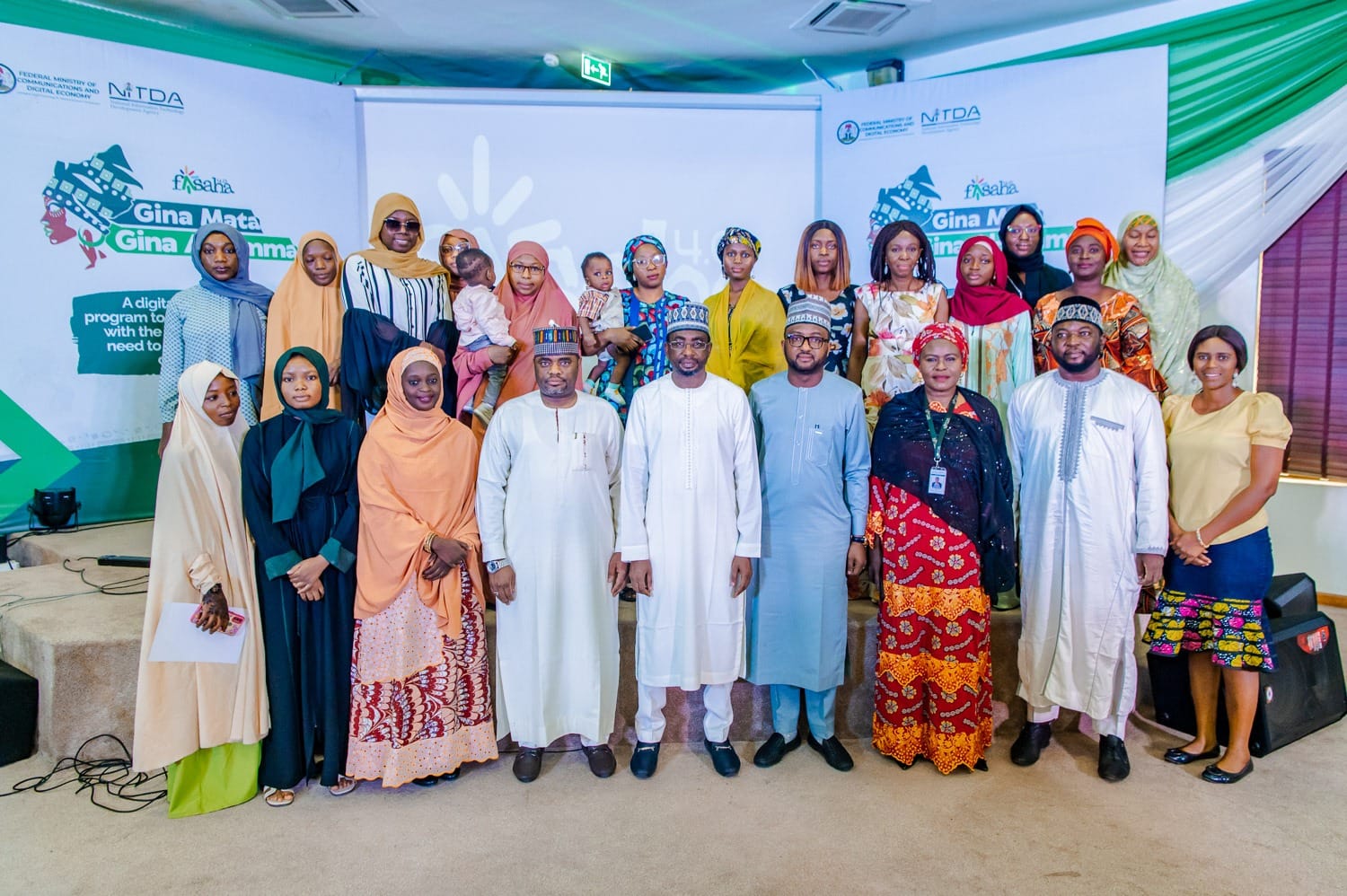
As part of activities to celebrate International Women’s Day and given the dire need to position young women for global participation in the gig economy, the National Information Technology Development Agency (NITDA) in collaboration with NATVIEW and World Bank has successfully rounded off a pilot digital skills
development programme called “Gina Mata, Gina Al-Umma”, designed to identity, prepare, and connect disadvantaged girls and young women with emerging skills in the knowledge-economy, geared towards integrating gender intentional learning outcomes focused on technical training, soft skills, and right based learnings for young women interested in the tech ecosystem.

At the closing ceremony of the four days event, the Director-General of NITDA, Kashifu Inuwa CCIE noted that the training programme which is hinged on creating potential economic opportunities, increasing livelihoods, and access to better lives through the Gig economy is in line with the Agency’s mission to place Nigeria on the path to attaining 95% digital literacy by 2030, in alignment with the National Digital Economic Policy and Strategy (NDEPS) 2020–2030.

The DG who recognised the fact that women are underrepresented in the technology sector, avowed that with programmes like the Gina Mata, Gina Al-Umma programme, NITDA aims to bridge the gap by providing young women with the skills and knowledge needed to succeed in the digital economy.

“At NITDA, we are very excited about this partnership with the World Bank, which is in line with our initiative of one million software developers and skills by the end of 2023; Our core mandate is to develop and regulate the information technology sector in Nigeria because believe that the future of our nation lies in the development of its human resources, and as such, we are committed to providing access to training and development opportunities for all Nigerians”, Inuwa stressed.

Inuwa who seized the opportunity to thank the World Bank for driving the initiative and the implementation partner, Natview Technology, acknowledged the importance of partnerships in achieving the organisation’s goals, noting that Natview Technology has a proven track record of delivering quality digital skills development programmes, adding that he is thankful for the execution of the pilot training programme.

He said “Ladies and gentlemen, as we round off this pilot today, let us remember that the digital economy holds vast opportunities for economic growth and development. However, to fully realize these opportunities, we must ensure that all Nigerians, regardless of gender, have access to the necessary skills and knowledge”.

The NITDA Boss urged all the young women who participated in the training to take full advantage of the opportunity to make significant contribution to the digital economy and Nigeria’s development.

Inuwa reiterated NITDA’s commitment to ensuring that the entire citizenry is empowered with information technologies through the development of a critical mass of proficient and globally competitive IT manpower. According to him, NITDA remains poised to actualise its mandate through strategic and inclusive stakeholder management, local and international partnership, and efficient utilisation of resources in the interest of Nigeria.

The Director-General who later presented certificates to the participants, congratulated them and expressed the hope of seeing the positive impact of the programme on the lives of young women in Nigeria.

Meanwhile, the Executive Director, NATVIEW Technology, Nuradeen Maidoki who earlier welcomed everyone to the closing ceremony described the Fasaha: Gina Mata, Gina Al-umma (“Building Women, Empowering Communities”) being implemented by Natview Technology as part of the firm’s contribution towards driving digital literacy and skills across Nigeria.

While appreciating NITDA and the World Bank for delivering digital competency beyond Nigeria, Maidoki said through the initiative, NATVIEW hopes to create a pipeline of highly skilled female technologists who can contribute to innovation and growth in Nigeria’s technology industry as the firm believes that by empowering young women with digital skills, it can create a more inclusive and diverse technology industry that reflects the richness and diversity of the society.

“During the 4-day launch, 200 young women were selected to participate in the digital content creation training. Beyond the digital content creation training, these young women also received skills training that will enable them to participate in the gig economy, which creates a platform for them to earn income from home”, Maidoki noted.

Maidoki said, “the goal of the programme is to train and equip at least 800 girls and young women with digital skills and competencies to be globally competitive in the remote workplace. The pilot launch focuses on training 200 women around digital content creation and marketing while in the future, an additional 600 young women will be integrated from four Northern Nigeria states (Borno, Gombe, Kano, Zamfara) with high FCV cases”.

In a related development, the Director General of NITDA, Kashifu Inuwa, CCIE, has said that the Agency is working on Gender Digital Strategy, which will be used to close the digital gap and bring more women to participate in Nigeria’s Digital Economy.

He said this at the United Nations Women’s Showcase Event which took place in Abuja on Thursday, with the themed “DigitALL: Innovation and Technology for Gender Equality.”

The Showcase Event is for young women and men who have created technology or innovations to promote gender equality and women’s empowerment in Nigeria, with the aim of giving young women and men the opportunity to showcase their initiatives and innovative tools.

Inuwa who expressed his excitement with the ideas presented by the participants, stated that women have a role to play in the development of digital economy through innovation, and commercialisation of their products.

The DG said one of the factors that often deters people from exploring new ideas is the fear of the unknown. Many individuals prefer to remain within their comfort zones and shy away from taking risks. However, in order to foster innovation, it is necessary to step out of one’s comfort zone and experiment with new concepts.
He added that “If a man is unable to do it, there is absolutely no reason why you, as a woman, cannot achieve the same. You must recognize your unique talents and capabilities, and then seek out role models or collaborate with others to achieve your goals. Remember, success rarely happens in isolation.”


 

Accountancy is a profession driven by detail and tight deadlines, requiring accurate data inputs in order for a practitioner to fulfil their duties. Accountants depend on information being supplied by their clients, external third parties and other sources, and they need to rely on the reliability of these sources for their numbers to add up – literally.

Professional duty of care

Sometimes, however, gaining access to this information is easier said than done. “Accountants are duty bound to submit accurate audited statements and financial reports to clients, financial institutions, and government departments like SARS. However, they cannot do this if they do not have the means to verify the information they are expected to present,” says Sameer Kumandan, Managing Director of SearchWorks, an innovative data platform that allows users to conduct live, accurate searches on individuals and companies and in-depth KYC checks online.

SearchWorks is an online data aggregation platform that scours 20 data sources through 160 search types, including those most commonly used by accountants. “Just some of the challenges accountants face include accessing accurate and up-to-date information that is either not in the client’s possession or is withheld,” says Kumandan.

He says that for any finance professional, accessing reliable data such as credit checks, deeds checks, exclusive use area verifications, valuations of properties and vehicles, CIPC records, qualification searches, Anti-Money Laundering (AML), PEP and Sanctions as well as payment profiles is crucial.

“In addition, professionals need information obtained within the remit of the law, aligns with the National Credit Regulator and is compliant with POPI regulations. A single search can reveal valuable information, relieving accountants from the long hours of checking and cross-checking many data sources,” he says.

Know your Customer and Know Your Business

Without full disclosure of a client’s financial circumstances, past and present, an accountant cannot fulfil their fiduciary duties. The challenge inherent in manual searches is the time and labour intensity of chasing multiple agencies and online and physical databases for information that clients may not necessarily wish their accounting officer to uncover.

“If an accountant does not know their client or client’s business, they run the risk of inadvertently being complicit in committing fraud, money laundering or tax evasion, which is why ensuring that there is integrity in the data which the accountant uses and that it is always maintained is so important in protecting professional reputations,” says Kumandan.

In a B2B relationship, knowing everything about the business entity you are dealing with can be complex. “Verifying directorship links and spousal verifications, which is therefore invaluable in preparing company accounts, as entities may hide assets in other companies,” says Kumandan.

In B2C cases, knowing your customer is just as essential. Having up-to-date details like verified identities, account details, contact information, as well as information about a deceased estate can mitigate credit risk and improve good governance controls.

Making the search work for accountants

“SearchWorks is a one-stop platform for accountants that is straightforward and easy to navigate,” says Kumandan. The system is also cost-effective and entirely web-based with complete billing control, an additional unique selling point for accountants.  Combining SearchWorks with diligent accounting practices can ensure there is nowhere to hide for dubious businesses and individuals in a country beset by fraud and corruption.


Faith Cathedral International Ministry, a Christian organization and church with a clear vision of preaching the word of God to the world and creating a positive impact in the lives of people will be celebrating their thirty one years in existence as a church. The church announced this at their main auditorium at their headquarters at Akerele Street , Egbeda.

Speaking about the occasion, Pastor Fred Obetoh, the General Overseer of Faith Cathedral International Ministry said ” we are pleased with the way we have come and how far we have come. It is not by our strength or might, it is the grace of God that has kept us this way. We are thanking God to whom this church has been dedicated and to whom we get our strength from. “No photo description available.

“We have had challenges and troubles these years, yet the Lord has been sustaining us. He has made ways for us where there is no way and that is why we keep thanking him every time for this and this anniversary will be a special one.”

Obetoh also added ” We also thank those that have been with us throughout these years and we are grateful for the members that believed that we can pastor them. We appreciate those that have contributed to the propagating and dissemination of word of God, ,may God bless you all.”

The anniversary will be a week-long event that will have praises and worship which will end on the first Sunday of April as the grand finale and thanksgiving Sunday. With many ministers of God being invited to Thanksgiving.

With a motto known as ” Raising Men And Women Of Godly Character With A Mandate To Occupy Till Jesus Comes.”Faith Cathedral started 31 yrs ago in a humble place in Ikeja and Ajai Farm to the present day permanent site. The Church has expanded to many states like Uromi, Edo states and many countries like Germany, USA and others.

Anthony Nwosu .E.


May be an image of 2 people and text that says "OCCUPT LICONE FAITH CATHEDRAL INTERNATIONAL 9 ADERELE STREET EGBEDA LAGOS PASTO PIT FRED PASTOR WINIFRED oBeToH CHIEF 31ST ANNIVERSARY The KING COMING 3T-7 5:00 Faith Cathedral International APRIL 2023 Ministries ,Aderele Street, SUNDAY 9TH- 9AM Egbeda Logos Come and Be Blessed... Jesus is Lord."


The Permanent Secretary Federal Ministry of Finance, Budget and National Planning, Nigeria, Mallam Aliyu Ahmed, today welcomed the Technical Team from Tanzania who were on a learning visit to Nigeria on cost cutting practices for the Purchase and Maintenance of Government vehicles at the Headquarters of the Ministry in Abuja.

Mallam Ahmed during his opening remarks reiterated the Ministry’s commitment and readiness in assisting the team in cutting its government’s running cost in the purchase and maintenance of government vehicles, stating that, it is a significant means of improving government savings.

He noted that, in a situation like this exchange of ideas is a work in progress, adding that, it is a good thing that the team decided to learn from Nigeria which has similar experience, similar culture, similar ideology, and similar policies, instead of going to countries with different ideologies.

He assured the team of the Ministry’s support, adding that, the Ministry’s team will take them through the processes, guidelines, challenges and the way out, hoping that, it will be an interactive session where great ideas will be impacted, and further expressed the Ministry’s best wishes to their authority.

Earlier, the leader of the delegation, Mr. Mwendesha Makelemo, an Economist in the President’s Office, Public Service Management and Good Governance, Dodoma, Tanzania, during his briefing said that Tanzania envisions cutting government’s running cost in various operational areas particularly in the purchase and maintenance of government motor vehicles where the cost-cutting strategy can be administered.

Mr. Makelemo disclosed that, the government of the Federal Republic of Tanzania was in the process of preparing guidelines for reducing cost of governance, which is expected to be a significant means of improving government saving which can be allocated in other priority areas to ensure value for money.

He noted that, the government of Tanzania considered it important to learn from the experience and best practices from other countries with similar policies; hence Nigeria was selected amongst the countries identified to have similar policy for the study tour.

He lighted areas of focus which include: Use of vehicles by senior Government officials, Management of Pool Vehicles, Vehicle Maintenance and Fuel Management, Vehicle loan scheme for Senior Government officials, Legal Framework and Monitoring system, Benefits and Challenges of implementation.

The Head of Efficiency Unit, Federal Ministry of Finance, Budget and National Planning, Nigeria, Mrs. Adebusola Ajiboye in her remarks said that it is a learning visit, adding that, in the course of the learning, no experience is wasted rather it builds.

She added that, learning is a continuous process, which helps and saves for the government of any nation. In attendance at the meeting were some directors of the Federal Ministry of Finance, Budget and National Planning, Nigeria.


Unlock your freedom and travel without borders!


Mobility Options, a global immigration consultancy firm, highlights the benefits of the Canadian Start-Up Visa program for Nigerian entrepreneurs looking for a stable and welcoming environment to build their businesses. With the current political climate in Nigeria causing increased uncertainty for businesses, the program presents a lifeline for entrepreneurs seeking to establish their innovative startups on a stable foundation.

Canada’s economy has experienced one of the fastest recoveries among advanced economies after the onset of the COVID-19 pandemic. It’s net debt-to-GDP ratio, at 30.5%, is the lowest in the G7 countries. Furthermore, the country has announced plans to significantly increase the number of immigrants entering the country, with a goal of 500,000 arriving each year by 2025 to address a critical labour shortage. To address a major labour shortage, Canada has announced intentions to drastically expand the number of immigrants entering the nation, with a goal of 500,000 arriving each year by 2025.

The Canadian government’s Start-Up Visa Program offers a unique opportunity for talented entrepreneurs from around the world to establish their innovative businesses in Canada. With the current political climate in Nigeria causing increased uncertainty for businesses, the program presents a lifeline for Nigerian entrepreneurs seeking to build their companies on a stable and welcoming foundation.

Only 46 countries currently grant Nigerian citizens visa-free or visa-on-arrival access, as opposed to 188 countries, including the Schengen and EU nations, the United States, Singapore, New Zealand, Australia, and Hong Kong, for holders of Canadian passports. The Canadian Start-Up Visa Program allows foreign entrepreneurs to create innovative businesses in Canada and apply for permanent residency. With its leading trade market, the program aims to provide permanent residence to entrepreneurs, active company investors, and expanding businesses that seek to establish a presence in Canada.

The concept was further explained by Tukeni Obasi, Vice President Diaspora, of Mobility Options, who added, “The Canada Start-Up Visa Program allows overseas entrepreneurs to build an innovative firm in Canada and apply for permanent residence”. With its leading trade market, the program aims to provide permanent residence to entrepreneurs, active company investors, and expanding businesses that seek to establish a presence in Canada. Foreign entrepreneurs must submit an innovative, scaling start-up business that has been accepted by one of the following specified organizations: business incubators, angel investors, or venture capitalists, to be granted permanent residence in Canada.
Once approved, the client receives a letter of support, allowing them and their family to apply for permanent residency, She added.

Canadian citizens enjoy a high standard of living in multicultural, easy-going, and vibrant cities. It is an excellent place to do business, with access to the entire North American market. Citizens and permanent residents receive a high-quality education, modern medical care, high social standards, and citizen protection.” notes Mubo Olabode, Vice President, Nigeria.

According to Mobility Options President Ebi Obaro, “Mobility is the largest driving factor for high-net-worth individuals who desire speedy travel processes so they can easily move around for business, holidays, and trade events without filling out laborious visa applications and scheduling appointments at visa offices.
Direct family members are also granted the opportunity to reside here and acquire Canadian citizenship through investment. A second passport is particularly appealing to anyone who wants to travel with few visa requirements and who wants to secure the safety and security of their family because of these two benefits taken together-according to Panebi Oboh, Vice President, Canada, of Mobility Options

For Nigerian entrepreneurs, the Canadian Start-Up Visa Program offers a unique opportunity to build their businesses in a stable and supportive environment. The application process for the Start-Up Visa program is open and straightforward, with a range of support available to help applicants navigate the process. The program is highly competitive, but the rewards for successful applicants are significant, with the opportunity to establish their businesses in Canada and build a bright future for themselves and their families.
To learn more about Mobility Options and its citizenship by investment programs, please visit https://www.moptions.org/

Called “Peace begins with me” the poem pays tribute to the strength and resilience of communities affected by conflict as well as those who help them rebuild their lives and livelihoods. It is a reminder of our responsibility to promote peace in our communities, countries and across the world – a conviction that has driven more than two million men and women to serve in over 70 peacekeeping operations since 1948.


“Peace means everything to me” says Pacifique Akilimali, who penned the poem with Nigerian peace activist and poet Maryam Abu Hassan. “The only thing I know since I was born is war… peace has been a dream for a long time now.”

Pacifique, who works in the aviation team at the UN Organization Stabilization Mission in the DRC (MONUSCO), grew up in North Kivu in eastern Democratic Republic of the Congo (DRC), a region affected by decades of violence between armed groups.

“All the wars and conflicts have gotten us nowhere,” adds Maryam, a native of Nigeria’s northern state of Borno where relentless insurgency and violent extremism has plagued people for more than a decade.

It was in this state nine years ago that close to 300 schoolgirls, also known as the Chibok girls, were kidnapped by the armed separatists, Boko Haram. Today, many of them are still missing.

For Maryam, “peace is not just the absence of conflict but also the presence of justice, equality, and respect for human dignity. Everyone deserves to have and find peace.”

Growing up in Goma, North Kivu

“Growing up in North Kivu in the DRC was not easy at all,” says Pacifique.

In 1994, the year he was born, the genocide in Rwanda plunged DRC into one of the deadliest conflicts in the history of Africa. According to the International Rescue Committee, from 1998 to 2007, an estimated 5.4 million people died due to the conflict in the DRC.

“In 1997, I was a refugee with my whole family. My dad and I were captured by a group of rebels, and my dad was about to be shot because some military thought he was in a different ethnic group,” says Pacifique, adding that his father narrowly escaped death when one of the rebel chiefs recognized him and let them go.

“I remember when the UN Mission came to my country and my dad told me that these people are coming to bring us peace.”

In 1999, the UN Security Council established the UN Mission in the DRC (MONUC) to monitor the Lusaka Ceasefire Agreement between the DRC and neighbouring Angola, Namibia, Rwanda, Uganda and Zimbabwe.

More than a decade later, the Council created MONUSCO as an extension of MONUC, widening the new mission’s scope of work to protect civilians, facilitate humanitarian access, and help former combatants disarm and reintegrate into society, as armed conflict persisted particularly in the east.

Over the last 75 years, UN Peacekeeping, a critical global instrument for maintaining peace, security, and stability, has evolved to adapt to the changing political landscape

Speaking of the fortitude of communities in North Kivu who have seen so much violence and suffering, Pacifique says “Goma town is still living. If you come to this town, you will wonder how these people can be happy, sing, dance, love, and hope in such conditions of living. All of us here hope for peace, and we pray for it.”

Finding ways to thrive in Borno state

Maryam feels equally inspired by the strength of the people in Borno state which has been an epicentre of violent extremism and terrorism in Nigeria and across the Sahel region over more than a decade.

Armed conflict, incited by groups like the Boko Haram and the Islamic State West Africa Province, has led to the displacement of an estimated 2 million people today, many of them women and children, who are still unable to return home because of unpredictable attacks against civilians.

“Borno is widely reported to be an area affected by conflict, violence and insurgency,” says Maryam. “What is also true is that there is so much more to us than this singular narrative.”

“Borno is a culturally rich and diverse state, with a vibrant history and traditions that have been passed down through generations. Despite all we have been through, we have found ways to thrive.”

75 years of peacekeeping

Over the last 75 years, UN Peacekeeping, a critical global instrument for maintaining peace, security, and stability, has evolved to adapt to the changing political landscape and nature of conflicts.

What started out as a mission to observe a truce in Palestine in 1948 is now a complex operation of military, police and civilians working together to support communities and countries transitioning from war to peace.

Borno state and eastern DRC are two of the many places that have seen chronic violence that has morphed into complicated conflicts led by multiple armed groups, with mostly civilians bearing the brunt of the devastation and destruction.

Today, nearly 90 per cent of war-time casualties across the world are civilians, says the UN Office for the Coordination of Humanitarian Affairs (OCHA).

Working alongside local communities, peacekeepers today strive to protect civilians, disarm combatants, support political and electoral processes, strengthen human rights and the rule of law, and promote sustainable peace and development.

They are called ‘Blue Helmets’ but they wear many different hats, including as engineers, administrators, legal experts, economists and electoral observers, to help people recover and rebuild their lives, institutions and societies.

Observed under the theme “Peace begins with me” the 75th anniversary celebrates the world’s peacemakers – from peacekeepers, local community leaders to activists – who are the everyday champions of peace.

Maryam and Pacifique’s full poem will be released closer to the International Day of UN Peacekeepers marked on 29 May 2023.

Nestlé has made the promotion of equity one of the pillars of its business operations, by giving women access to opportunities in technical and industrial fields -areas previously considered exclusive to men. This approach is also applied by Nestlé within its subsidiaries in Central and West Africa region, enabling the emergence of new talent. Three women exemplify this ambition.

Do women have the same abilities as men? Can they excel in so-called men’s jobs? More than 40 years after the establishment of Women’s Rights Day, these questions continue to be asked as the hoped-for changes in gender equality are still struggling to materialize in many parts of the world. Nestlé has been present in Africa for decades and is committed to being an actor of this change through various initiatives, particularly within its subsidiaries.

“Our goal is to promote women, enhance their potential in a work environment full of respect and fairness. More diverse teams with more women in leadership make Nestlé an even better company,” explained Mauricio Alarcòn, CEO of Nestlé in Central and West Africa, at this year’s International Women’s Day celebration, which has the theme: “Embracing Equity’’.

“We are actively working on this,” he continued, “because embracing gender equity leads to better decisions, stronger innovation and greater employee satisfaction.”

Recognized for five consecutive years for promoting gender equality, the Nestlé Group, which intends to maintain its leadership and highlight women, has gone well beyond good intentions by choosing to put women in charge of some of its industrial units in Africa: in Angola, Côte d’Ivoire, and Nigeria, offering them positions in technical fields which are not common on the continent, and which have the merit of setting examples.

“We must believe in our dreams”

A graduate of SupAgro in Montpellier, France and IMD in Lausanne, Switzerland, Joëlle Abega-Oyouomi has been the Director of the MAGGI factory in Yopougon, in the west of Abidjan, since 2020. She joined Nestlé Côte d’Ivoire as an intern at the Research and Development Center (R&D), and then honed her skills at the R&D centers in Shanghai, China, and Lausanne, Switzerland, before returning to Abidjan to take up the position of Product Development Manager (of the R&D Center Abidjan) in 2009. Her record of service earned her a promotion in 2015 to Regional Manager of Manufacturing Services in Accra, Ghana, and just one year later, to Director of the Abidjan R&D Center.

More diverse teams with more women in leadership make Nestlé an even better company

“When you are a woman, you face prejudices that imply that your gender would come with constraints that would hinder your ability to deliver expected results or even remain a reliable talent in the long run,” shares the Cameroonian, who knows the group she has been with for over two decades now.

“What is surprising is that in the personal context, women, whether they are mothers, sisters, wives or friends, are known to be strong, hard-working, as well as great advisors. Why should it be any different in a professional setting? We must believe in our dreams. Nothing is impossible for those of us who are willing to learn, grow, perform, and take care of our physical and mental well-being,” she says, knowing that she is a role model for young people looking for female figures in the sciences.

“Women should always aim to excel…”

Julia Atta is another female leader who showcases Nestlé’s commitment to gender equity. A graduate of the University of Science and Technology in Ghana, she joined Nestlé in 2006 as an intern at the Tema factory, before taking over as head of the Mossel Bay Factory beverage production units at Nestlé South Africa in 2021. For her, “women can face challenges in balancing family life and work; for this reason, it is important that their work environment supports their uniqueness”.

Beyond this journey, women’s engagement can help to change things. “It’s important for women to look for opportunities and leverage them. Some career opportunities may not seem to come at the right time in personal life. But, with some adjustments, it is often possible to balance opportunities with other things that matter to one’s personal life. Women should always aim to excel in everything they do,” she says.

“Diversity improves decision making…”

Even when women are able to move up in leadership, beyond competence, they can have an even greater impact in the management of companies. “When there is a good mix of men and women, teamwork tends to be more balanced, helping to develop greater empathy between individuals. Diversity stimulates greater effort from everyone, which improves decision-making,” says Bunmi Etti-Mfon, who has been managing Nestlé’s production units in Agbara, Nigeria, for four years.

For over eight years, Bunmi Etty-Mfon, was responsible for managing the performance of Nestlé factories in West and Central Africa, before taking on the role of head of the MILO production unit in Agbara, one of Nestlé’s biggest businesses in Nigeria, in 2019. She spent just five months there, before taking over the reins of the  plant that produces MAGGI bouillons for millions of consumers in Nigeria.

“Developing a career at Nestlé as a woman and mother has been a rewarding and intellectually stimulating experience for me. I have contributed significantly to the launch of many new products in all categories. I have been involved in projects that have improved the efficiency of various production processes. Today, I continue in this trend, and I am currently leading some incredible initiatives that will increase productivity, reduce costs, and maximize customer satisfaction,” she says.

These three women represent  the changes that can be made to strengthen the leadership teams within companies through diversity and inclusion. “We’ve made good progress in our region toward greater gender equity in our company. We encourage our leaders to support an inclusive workplace, the use of Nestlé’s unique paid parental leave program and innovative flexible work policies. Similarly, we have strengthened mentoring and coaching programs to help women reach their highest potential,” says Fridah Muchina, Head of Human Resources for Nestlé Central and West Africa.


Directly or indirectly, officially or unofficially, it is clear that the cap on the pump price of Petrol (PMS) has been removed. All over Nigeria, for a few months now, the price of Petrol has varied from one filling station to the other. As at 6th of January, Prices ranged from a minimum of 240 Naira per liter in Benin, 340 Naira in Kaduna, 360 Naira in Umuahia, 400 per liter in Owerri to 500 Naira per liter in Port harcourt , no filling Station is selling at the so called controlled price, except in some filling stations in Abuja and Lagos. And nobody is enforcing any price as it used to happen in the past. So it is clear we have deregulated. Thats fine!

I think the Government should own up and announce this policy officially. It is deceitful and dis-ingenious for this Government to announce that payment of subsidy will end in June, when they would have ended their regime. Why wait? Why make such deceitful proposition? Who will enforce the plan, Buhari/Oil Minister or the new President? I urge the government to come clean and level up with the citizens instead of this deceit and hanky-panky game with our commonwealth and citizen wellbeing.

By announcing the deregulation now, which is already a fiat accompli Nigerians will attain the following benefits:

First, an official deregulation will mean, that many more companies and oil marketers can import fuel under the supervision of the regulatory agency, thus immediately easing the scarcity and ending the double jeopardy of many motorists and road users. For months now many motorists spend hours and in some cases, days and nights trying to buy the product at inflated prices. They lose many productive hours searching for petrol and when they find it, they pay exorbitant prices. Those who buy from hawkers run the risk of buying adulterated fuel which destroy car engines, in addition to the indignity of buying petrol from hawkers. This is not to talk of the misery of those who travelled in commercial vehicles this season. Many were stranded at motor parks as they found that their budget could not meet the daily changing fares!

Secondly and most important, an official deregulation now will obviate the need for more subsidy payment and at least we can save the 3.5 trillion Naira budgeted for the first six months of this year by this outgoing government. 3.5 trillion Naira can do so much for our infrastructure, especially when it is noted that only 5.9 Trillion is the entire Capital budget in a 22 Trillion Budget for 2023. It can build several roads and bridges across the Country or transform our entire Educational and Healthcare system.

Thirdly it will disabuse the minds of some Nigerians who speculate that this 3.5 trillion naira has been put in the budget for other purposes including Election funding and send forth and parting gifts for the Government officials and politicians of the Party in power. This set of Nigerians can see that government has ‘surreptitiously’ deregulated while still retaining subsidy payment. And they ask for what purpose? Hence the speculation.

To deny this speculation and save a whooping 3.5 trillion naira, I urge this Government to formally announce the deregulation now or if they are ‘afraid’ to do for whatever reason, then they should open up the market ‘surreptitiously’ as well so that supply can expand and allow market forces to fix price. To allow only NNPC to be importing while removing the price cap after paying subsidy is profoundly confounding. The current situation is deeply damaging Nigerian Economy, increasing poverty and misery for many Nigerians while creating a lot of opportunities for arbitrage and corruption for NNPC and Government officials. President Buhari should bite this Bullet and save Nigerians from multiple jeopardy which they are facing right now. It is true that we have lost the battle against corruption, but we must not watch helplessly as Poor Nigerians are openly ‘raped’ and ravaged by the ‘oil curse’

*Mazi Sam Ohuabunwa* _OFR,MON, NPOM_
_Convener, the NEW NIGERIA GROUP (NNG)

In an unprecedented political push for cross-border water cooperation, Ministers from Africa, Latin America and the Middle East have declared at the UN Water Conference their country’s resolve to join a key United Nations accord known as the Water Convention.


In what could constitute a major long-term outcome of the summit, governments are seizing the UN Water Convention to support practical cooperation measures – urgently needed as 153 states worldwide share water resources – as a precondition to tackle the global water crisis.

Governments to join UN Water Convention


  • Nigeria on 22 March officially became the 48th Party to the Water Convention and 7th African nation to join since 2018 (following Chad, Senegal, Guinea-Bissau, Ghana, Togo and Cameroon), marked by a ceremony. With over 213 million inhabitants, Nigeria is the most populous state in Africa, and shares with its neighbours most of its water resources, which include Lake Chad and the River Niger. Joining neighbouring Parties will bolster conflict prevention, climate change adaptation and development.
  • Iraq declared its forthcoming accession, which would make it the first country in the Middle East to join the Convention, opening the door to expanded membership in a region facing acute water challenges.
  • Panama stated it will soon become a Party, which would make it the first in Latin America, paving the way for reinforced cooperation in a region with a very limited number of agreements on the management of shared waters (and a value of the associated Sustainable Development Goals indicator at less than 10%).
  • Namibia reaffirmed its commitment to join the Water Convention, following approval of its national assembly last week. Namibia shares all its perennial rivers with neighbouring countries, and is both a mid- and downstream country. Its accession would make it the first country in the Southern African Development Community to join the Convention, opening the door to further expansion and reinforcement of cooperation in a region where the majority of freshwater crosses state borders.
  • For the Gambia, whose parliament approved its accession to the Water Convention last week, membership will make a significant contribution to the more dependable management of its water resources, jointly with its neighbouring states. The Gambia is a downstream country along the Senegal River, which shares all its land borders with Convention Party Senegal. It also shares the Senegalo-Mauritanian Aquifer, for which the Convention is already supporting cooperation.
  • Niger confirmed its intention to join, bringing all major Lake Chad bordering nations under the Convention’s legal framework. This is a decisive step in the increasingly drought-prone Sahel region, since it gives Lake Chad – whose volume has shrunk by more than 90% since 1963 – full legal protection under the Convention.
  • Uganda affirmed its intention to accelerate accession to the Water Convention. Expansion of the Convention’s membership to East Africa would open significant new possibilities for stronger cooperation in the region.
  • Benin, Sierra Leone, and South Sudan also declared their commitment to accede to the Convention.


Through this momentum, the international community has further consolidated the UN Water Convention as the intergovernmental legal framework and platform for transboundary water cooperation, building on its 30-year track record of results to advance peace and sustainable development in shared basins.

Further scaling up membership of the Water Convention – which already covers the pan-European region and a growing number of African states – would bring long-term benefits for over 3 billion people worldwide living in shared basins. Further commitments to join from governments are expected to follow over the duration of the UN Water Conference.

This month, El Salvador confirmed its intention to join the Convention, as did the Dominican Republic in 2022. In East Africa, Tanzania has also confirmed its desire to join.

77 Parties within 7 years: UN pledges to support half of all 153 water sharing countries by 2030

In an official commitment submitted as part of the Conference’s Water Action Agenda, the United Nations Water Convention, whose Secretariat is provided by UNECE, has set a series of ambitious targets for 2030, including to:


The Water Convention is a powerful global instrument to advance transboundary water cooperation

  • Cover 77 Parties (i.e. half of 153 countries sharing transboundary waters worldwide), up from 48 today.
  • Support the processes of accession to the Water Convention in 30 countries.
  • Aid development of at least 7 new or updated agreements on transboundary water cooperation.
  • Support at least 5 regional processes on transboundary water cooperation, e.g. those aimed at enhancing dialogue on transboundary waters in a specific region or developing a regional instrument on cooperation.


“The Water Convention is a powerful global instrument to advance transboundary water cooperation. Since its adoption in 1992, more than 100 agreements on shared waters have been signed. These agreements have brought many benefits to populations, strengthening regional cooperation and conflict prevention, climate action, health and sanitation efforts, food and energy production, and biodiversity conservation. I invite all countries to accede to and implement the Water Convention”, stated UN Undersecretary-General, Olga Algayerova, UNECE Executive Secretary.

UN Secretary-General António Guterres urged all Member States to join the Convention and ensure its full implementation, and has stressed that “the 1992 Water Convention is a powerful tool to advance cooperation, prevent conflicts and build resilience”.

The 1992 Convention on the Protection and Use of Transboundary Watercourses and International Lakes (Water Convention), known as the UN Water Convention, whose secretariat is serviced by UNECE, is a unique global legal and intergovernmental framework. It requires Parties to prevent, control and reduce negative impacts on water quality and quantity across borders, to use shared waters in a reasonable and equitable way, and to ensure their sustainable management through cooperation. Parties bordering the same transboundary waters are obliged to cooperate by concluding specific agreements and establishing joint bodies.

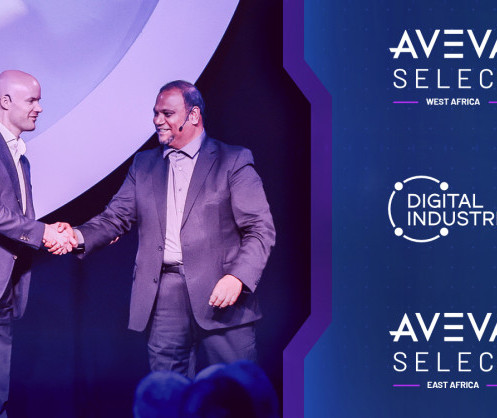
Digital Industries (DI) (www.DigitalIndustries.co.za) through its business unit Industry Software Solutions and Support (IS³), announced that it has become an AVEVA Select  (https://apo-opa.info/40uonZj) partner for the East and West Africa regions. AVEVA Select partnership allows Digital Industries to deliver AVEVA’s full portfolio of leading-edge industrial software solutions to customers that will help them become more sustainable and profitable.


The AVEVA Select agreement has set specific strategic intent to support customers’ requirements for improving operational efficiency, driving better returns and increasing the sustainability of their businesses. A people-based ecosystem driving digital transformation is the key enabler to achieving these strategic objectives on the African continent. DI will expand its ecosystem of customers and partners who want to adopt technologies to enable their digital transformation. Leveraging existing indigenous knowledge and skills and creating new skills pools is the key differentiator.

In East Africa, the regional footprint will be led by Kenyan operations AVEVA Select East Africa and the Nigerian representative offices AVEVA Select West Africa will take on a similar role in West Africa. Both these operations are also investing heavily in establishing training and demonstration centres to build these skills pools and to equip system integrators, partner companies and end-users with skills to enable them to maximize the use of the technology and to customize the service offerings available.

The coveted ‘AVEVA Select Partner’ designation allows distributors to enable customers simplify design, optimize production, and maximize performance. By leveraging the breadth of the AVEVA software portfolio, AVEVA Select partners can take advantage of programs designed to suit every product and solution specialization in the engineering and industrial segments. The AVEVA Select Program offers an effective way for partners to penetrate new markets and build upon existing solutions and local relationships.

We are pleased to extend Digital Industries coverage as an AVEVA Select partner and look forward to developing and capitalizing on mutually beneficial growth strategies

The AVEVA Select partnership has accelerated the value that DI can provide, empowering their customers and partners to optimize engineering, operations, and asset performance. A common digital thread across all enterprise pillars is enabling a new level of Performance Intelligence using bedrock technologies from Artificial Intelligence (AI), Industrial Internet of Things (IIoT), big data to the cloud and hybrid solutions.

With AVEVA’s Engineering (https://apo-opa.info/3Kb0SPT) solutions, they can assist customers in efficiently delivering capital projects on time and within budget. The AVEVA Operations (https://apo-opa.info/3K0eWLH) suite eliminates supply chain value leaks while improving operational efficiency and enhancing collaboration. DI can also empower customers and partners to balance operating expenses and risk to optimize performance with AVEVA Asset Performance Management.

“Digital Industries’ customers and partners will continue to get the same dedicated local support, now with the added value of wider access to AVEVA’s complete portfolio of solutions, which enables a new level of Performance Intelligence using technologies such as AI, IIoT, big data and cloud. The AVEVA Select program helps our distributors to deliver even more value and support their customers digital transformation initiatives,” said Kerry Grimes, AVEVAs Global Head of Partners. “We are pleased to extend Digital Industries coverage as an AVEVA Select partner and look forward to developing and capitalizing on mutually beneficial growth strategies.”

“The Industrial sector in Africa is the final frontier for at scale digital transformation. Leaders in industry are adopting strategies for digital transformation across the continent. The market for industrial software and services is increasing exponentially and growth will be driven by customer value creation. As an AVEVA Select partner, we are on a journey to create sustainable digital champions. We look forward to industrial organizations joining us,” concluded Dion Govender, CEO of Digital Industries and Managing Director of IS³.