



The National Commissioner and Chief Executive Officer of the Nigeria Data Protection Commission (NDPC), Dr. Vincent O. Olatunji, has called for greater investment in the human and interpersonal capabilities of regulatory personnel, stressing that technical expertise alone cannot guarantee effective public service delivery.
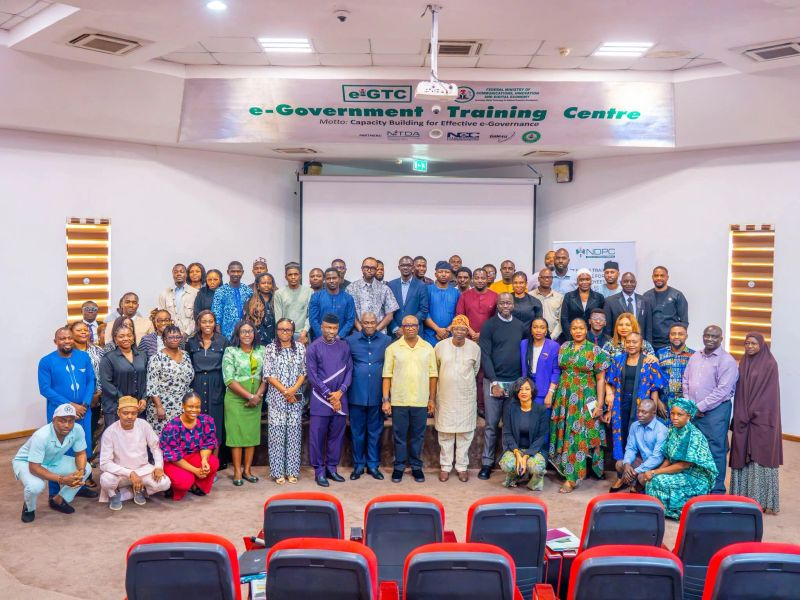
Olatunji made the call while delivering the Welcome Address at the Soft Skills Training Programme for NDPC Employees, organised by the Commission to enhance productivity, professionalism and regulatory impact.
The training forms part of the Commission’s broader human capital development efforts as it continues to implement its mandate under the Nigeria Data Protection Act, 2023.
According to Olatunji, the development of the Commission’s workforce is critical to its ability to effectively discharge its regulatory responsibilities.
He explained that while professional qualifications and technical knowledge remain important, employees must also possess the interpersonal and behavioural skills required to communicate effectively, collaborate with colleagues and stakeholders, lead teams, solve problems and adapt to changing circumstances.
“Human capital development remains critical to the success of any organisation. At the NDPC, we recognise it as one of our strategic pillars in fulfilling our mandate under the Nigeria Data Protection Act, 2023,” he said.
The National Commissioner noted that soft skills significantly influence how individuals communicate and relate with others, adding that they can also shape professional reputation, workplace relationships and career progression.
He said the training was designed to strengthen employees’ capacity in critical areas including communication, emotional intelligence, problem-solving, adaptability, resilience, teamwork, time management and leadership.
Olatunji also shared personal experiences with participants and encouraged them to take full advantage of the training to deepen their knowledge and understanding of the demands of public service.
He urged the staff to see continuous learning and self-development as essential components of their professional responsibilities, particularly in an institution operating within the rapidly evolving digital and regulatory environment.
Building a Stronger Regulatory Workforce
The NDPC boss emphasised that the effectiveness of a regulatory institution ultimately depends on the quality and professionalism of its personnel.
“As a regulatory institution, our effectiveness is ultimately strengthened by the quality, competence and professionalism of our people,” he said.
He therefore challenged employees to remain committed to professional development and to embrace opportunities that would enable them to become more effective public servants.
The emphasis on soft skills is particularly significant for a regulatory institution such as the NDPC, whose responsibilities involve engagement with government institutions, private-sector organisations, data controllers, data processors, technology companies and members of the public.
Effective communication, emotional intelligence and problem-solving can play an important role in helping regulatory personnel explain data protection requirements, engage stakeholders, resolve challenges and promote greater understanding of privacy rights and responsibilities.
Similarly, adaptability and resilience are increasingly important as technological developments continue to transform the way personal information is collected, processed, stored and transferred.
Experienced Facilitators Lead Training
The Commission brought together experienced professionals from different sectors to share their knowledge and practical experiences with NDPC employees.
Among the facilitators were Mr. Tokunbo Smith, President of the Data Knowledge Information Privacy Protection Initiative (DKIPPI); Dr. Bernard Omogo, Director of Aviation Security Regulation at the Nigeria Civil Aviation Authority (NCAA); and Dr. Oluwole Edun, a retired Director of Planning, Research and Statistics at the former Federal Ministry of Communications and Technology.
Olatunji expressed appreciation to the facilitators for contributing their expertise to the capacity-building programme and sharing practical knowledge with members of the Commission.
The National Commissioner’s intervention also reinforces the NDPC’s focus on developing an institutional culture where employees are encouraged to continually improve their capabilities and understand the wider responsibilities attached to public service.
Beyond Technical Expertise
The training highlights a growing recognition within the regulatory environment that effective enforcement and public engagement require more than knowledge of laws, policies and technical procedures.
For the NDPC, the development of communication, leadership, teamwork, emotional intelligence and problem-solving capabilities is expected to complement the technical expertise of its workforce and strengthen the Commission’s ability to deliver on its regulatory responsibilities.
Olatunji, who also serves as Chair of the Anglophone Countries’ Committee of the Network of African Data Protection Authorities (NADPA-RAPDP), urged NDPC employees to maximise the opportunity provided by the programme.
He stressed that continuous learning should remain an integral part of their professional journey, encouraging staff to become better equipped to serve the public and contribute meaningfully to the Commission’s mandate.
The initiative ultimately underscores the NDPC’s belief that a strong data protection regime requires not only robust legislation and technical competence, but also a highly professional, responsive and people-oriented regulatory workforce.