







ABUJA — Industry professionals and senior leaders in logistics and transport have renewed conversations around mentorship, leadership visibility, and talent development as the sector prepares for evolving global supply chain demands.
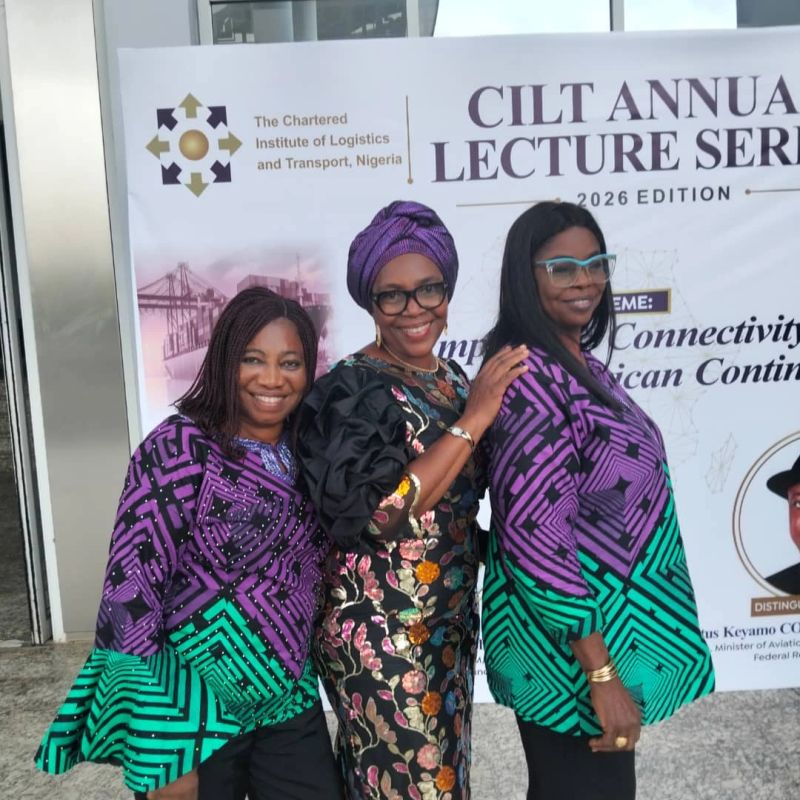
Funmilayo Omowumi Loremikan, who is attending the 2026 Chartered Institute of Logistics and Transport (CILT) Annual Lecture Series and Board of Fellows Forum in Abuja, described the gathering as a space where leadership, ideas, and the future of logistics and supply chain management converge.
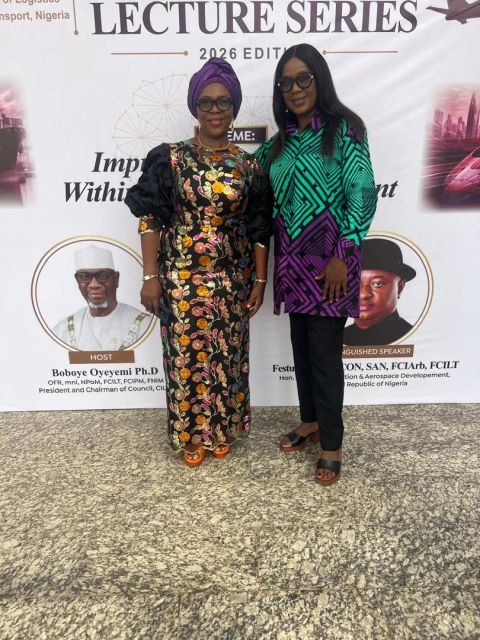
She noted that consistent engagement in professional spaces is not merely about presence but about long-term influence and contribution to sector development.
According to her, the logistics and transport industry is increasingly being shaped not only by technical expertise but also by mentorship structures, professional visibility, and the intentional development of emerging talent—particularly women and young professionals seeking entry and advancement in the sector.
Speaking on her professional journey within the institute, Loremikan emphasized that her role as a Chartered Fellow of Chartered Institute of Logistics and Transport goes beyond title recognition, focusing instead on sustained impact through mentorship, networking, and capacity building.
She explained that her work over the years has increasingly centred on supporting career transition and professional reinvention, particularly for senior professionals approaching retirement and younger professionals seeking direction in competitive industries.
“In my experience, influence is not something you declare; it is something you build over time through consistency, service, and the willingness to show up where it matters,” she said.
Loremikan also highlighted the importance of mentorship and sponsorship within the logistics ecosystem, noting that many young professionals require structured guidance to navigate career progression, visibility challenges, and leadership opportunities.
She added that her efforts have included mentoring emerging talent, connecting professionals to opportunities, and supporting industry conversations that strengthen the broader ecosystem.
A key theme of her message was the importance of intentional participation in professional communities, which she described as essential for building trust, expanding access, and strengthening industry networks across local and international levels.
She also noted that her continued engagement in industry development initiatives is largely self-driven, reflecting a personal commitment to service and long-term impact rather than convenience or obligation.
Observers at the forum say the discussions reflect a broader shift within the logistics and transport sector, where leadership development is increasingly being linked to mentorship, inclusivity, and knowledge transfer between experienced professionals and emerging talent.
As the CILT 2026 Forum continues, participants are expected to further explore how professional bodies can strengthen capacity building, improve career pathways, and enhance collaboration across the logistics and supply chain ecosystem.
For Loremikan and other fellows in attendance, the focus remains on one central goal: ensuring that the next generation of professionals is not only trained, but actively supported, connected, and empowered to lead.