


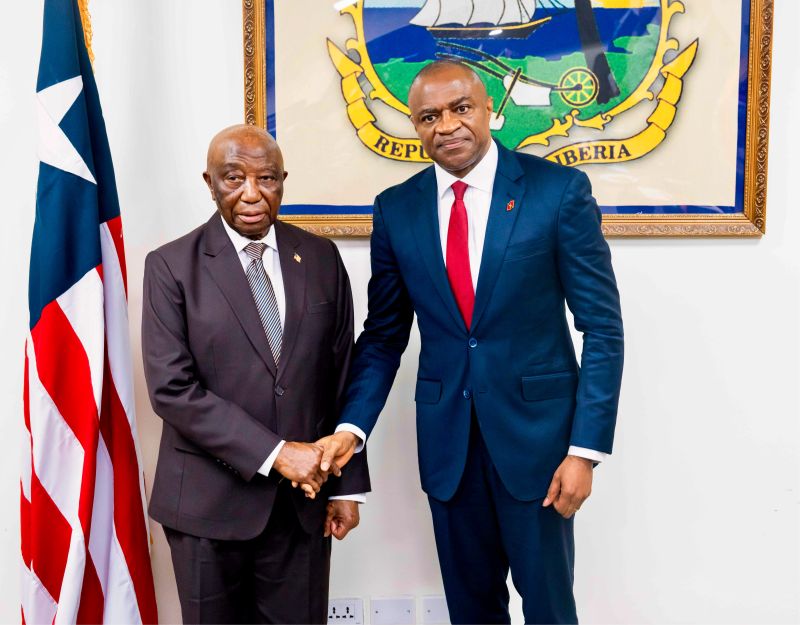





Oliver Alawuba has restated the commitment of UBA Group to supporting sustainable economic growth and social development in Liberia, following a series of high-level engagements with government and private sector leaders in Monrovia.
During the visit, Alawuba met with Joseph Nyuma Boakai, the Minister of Finance Augustine Kpehe Ngafuan, and the Governor of the Central Bank of Liberia Henry F. Saamoi, alongside business leaders across key sectors of the economy. Discussions centered on strengthening financial systems, expanding access to credit, and accelerating investment flows that can support both economic expansion and social outcomes.
Alawuba noted that Liberia’s policy direction reflects a “clear vision for the future,” particularly in its focus on stabilizing the financial sector and creating conditions for private-sector-led growth. He emphasized that financial institutions have a critical role not only in enabling trade and investment, but also in improving everyday livelihoods through broader financial inclusion.
UBA’s engagement in Liberia is positioned within its wider Pan-African strategy, where the bank continues to support cross-border trade, digital banking expansion, and access to financial services for underserved populations. In practical terms, this includes efforts that can help small and medium-sized enterprises (SMEs) gain better access to financing, support job creation, and improve the flow of capital into productive sectors such as agriculture, infrastructure, and commerce.
Beyond corporate finance, the bank’s approach also aligns with broader social development goals—particularly expanding access to formal banking services for individuals and small businesses that have historically been excluded from the financial system. This type of inclusion is widely seen as a key driver of poverty reduction and economic resilience across West Africa.
The discussions in Monrovia also highlighted opportunities for deeper collaboration between public institutions and the private sector, particularly in areas such as digital payments infrastructure, trade facilitation, and regional financial integration. These areas are increasingly viewed as essential for unlocking long-term growth and improving economic participation at the community level.
Alawuba reiterated that United Bank for Africa remains committed to partnerships that deliver measurable value not only to governments and corporations, but also to ordinary citizens through improved access to financial tools, services, and opportunities that support sustainable development.