


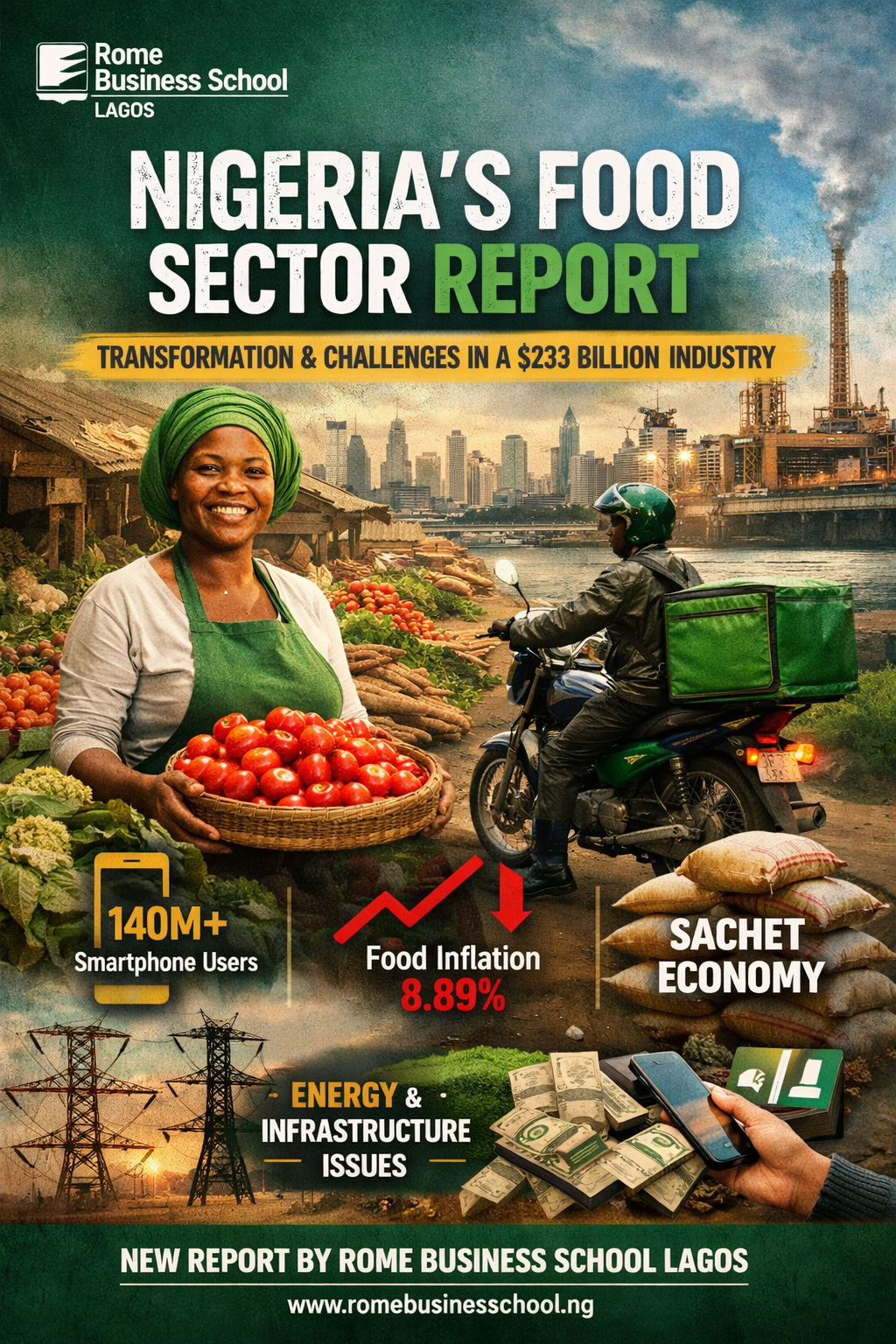



A groundbreaking report released by Rome Business School Lagos this week is reshaping how Nigerians think about food, business, and opportunity. Published on the school’s official website, the study“Nigeria’s Food Sector: Transformation and Challenges in a $233 Billion Industry”offers a sweeping look at how technology, urbanization, and entrepreneurship are redefining what it means to feed a nation of 230 million people.
The report reveals that Nigeria’s food system has reached a turning point. Over 90% of food consumed in urban areas now comes from markets rather than household productiona shift that reflects both progress and vulnerability. Food inflation has fallen to 8.89%, its lowest in ten years, but experts warn that the recovery is fragile, hinging on energy stability and logistics efficiency.
Dr. Humphrey Akanazu, Country Director of Rome Business School Nigeria, described the transformation as “a story of resilience and reinvention.” He explained that the food sector is no longer just about farmingit’s about finance, logistics, and innovation. “We are witnessing a new era where technology connects farmers to consumers, and where creativity is as vital as cultivation,” he said.
The report highlights how digital adoption is driving this change. With 140 million smartphone users, online food delivery has exploded, accounting for nearly 10% of the $12.37 billion foodservice industry. Platforms like Chowdeck now process over a million monthly orders, while mobile money has empowered small traders60% of informal businesses now use digital wallets.
Yet, the study doesn’t shy away from Nigeria’s toughest challenges. The rise of “sachetization”selling products in small, affordable portionshas made essentials accessible but also deepened inequality. Many low-income earners pay more per unit than wealthier consumers who buy in bulk, a phenomenon the report calls the “poverty premium.”
Rome Business School Lagos calls for a more inclusive approach to growth. Nigeria loses up to half of its fresh produce before it reaches consumers due to poor cold storage, and manufacturers spent 676.6 billion Naira on alternative power in just six months of 2025. These inefficiencies, the report argues, are not just economicthey are social injustices that demand urgent action.
Professor Antonio Ragusa, Founder and Dean of Rome Business School, emphasized the global significance of Nigeria’s transformation. “Nigeria is one of the world’s most important frontiers for food system innovation. The creativity of Nigerian entrepreneurs offers lessons for every emerging economy,” he said.
The report concludes with a call to action: for government, business, and communities to collaborate in building a food system that is sustainable, equitable, and future-ready. It envisions a Nigeria where technology bridges rural and urban divides, where farmers thrive alongside fintech innovators, and where every meal tells a story of empowerment rather than struggle.
The full report is available now on the Rome Business School Lagos website, inviting policymakers, investors, and citizens alike to join the conversation about how Nigeria can feed its peopleand its futurewith dignity and innovation.