


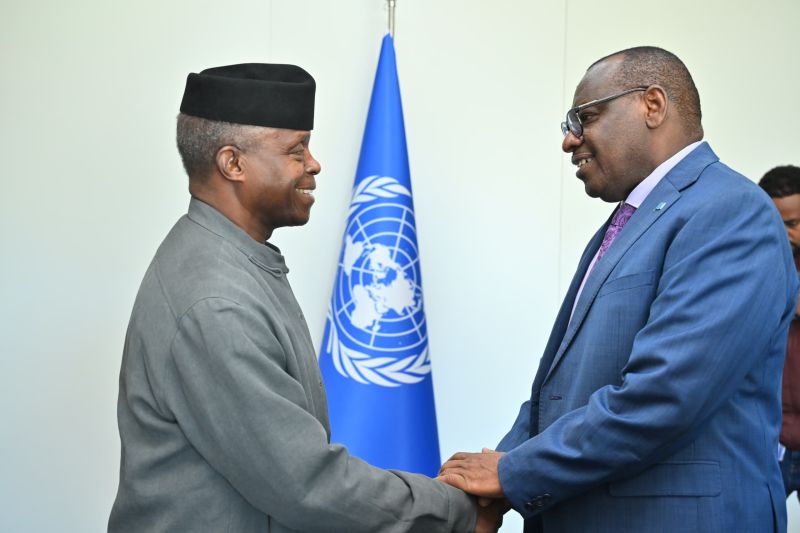





Former Nigerian Vice President Yemi Osinbajo has called for a fundamental shift in how African governments view healthcare funding, following high-level discussions in Tangier, Morocco, with the Executive Secretary of the United Nations Economic Commission for Africa (UNECA), Claver Gatete.
The meeting centered on UNECA’s emerging initiative, Transforming Health Financing in Africa, which advocates repositioning healthcare expenditure from being treated primarily as a consumption cost to being recognized as a strategic investment capable of driving long-term economic growth, productivity, and national resilience.
Health as an economic asset
According to the discussions, the initiative is built on the idea that stronger health systems directly contribute to stronger economies. Improved healthcare outcomes reduce workforce vulnerability, increase productivity, and lower long-term public spending pressures. The approach also aligns with broader efforts to strengthen fiscal stability across African economies facing competing development priorities.
Osinbajo and UNECA officials reportedly examined how governments could redesign fiscal frameworks to better integrate health investments into national development planning, rather than treating them as isolated social-sector allocations.
Fiscal policy and resilience focus
A key part of the dialogue explored how African states can improve economic resilience through smarter budget allocation, especially in the face of global shocks such as pandemics, inflationary pressures, and debt constraints. The proposal encourages countries to view health financing as part of a broader macroeconomic strategy that supports stability and inclusive growth.
UNECA officials present at the meeting included Said Adejumobi, Stephen Karingi, and Stephen Chundama. They contributed technical and policy perspectives on implementation pathways, including governance structures, financing models, and regional coordination.
Broader development implications
The discussions also touched on long-term development planning across the continent, with emphasis on aligning health investment strategies with Africa’s broader economic transformation agenda. The initiative reflects growing interest among policymakers in linking social sector investment more directly to GDP growth, labor market strength, and sustainable development outcomes.
While no formal policy commitments were announced, the meeting signals continued collaboration between African leadership figures and UNECA in shaping innovative financing models aimed at strengthening both health systems and economic performance across the region.