


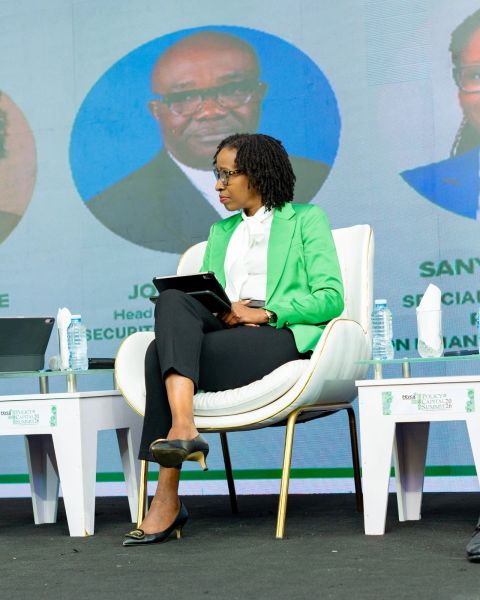
Sanyade Okoli has called for deeper collaboration, trust-building, and policy coherence between government and the private sector as critical enablers for unlocking long-term capital and strengthening Nigeria’s investment landscape.
Okoli made the remarks while delivering a keynote address and participating in a panel discussion at the PEVCA Policy & Capital Summit, a forum that convened policymakers, investors, and industry leaders to examine pathways for expanding private capital flows and improving the investment climate in Nigeria.
In her keynote, she stressed that one of the central challenges facing the ecosystem is the need to rebuild confidence between public institutions and private sector stakeholders. She noted that investors require clarity, consistency, and predictability in policy direction, as these factors significantly influence capital allocation decisions, risk perception, and long-term commitment to emerging markets like Nigeria.
She further explained that policy frameworks must not only be well-designed but also practical and implementable. According to her, gaps between policy formulation and execution often create uncertainty, which can hinder investment inflows and slow down economic progress. Strengthening the alignment between policy intent and implementation, she argued, is essential for creating an enabling environment where private capital can thrive.
Okoli also emphasized the importance of continuous and structured engagement between government and stakeholders. Rather than periodic or ceremonial consultations, she advocated for sustained dialogue mechanisms that allow for ongoing feedback, collaboration, and co-creation of solutions. Such engagement, she noted, helps policymakers better understand market realities while enabling investors and operators to contribute constructively to policy development.
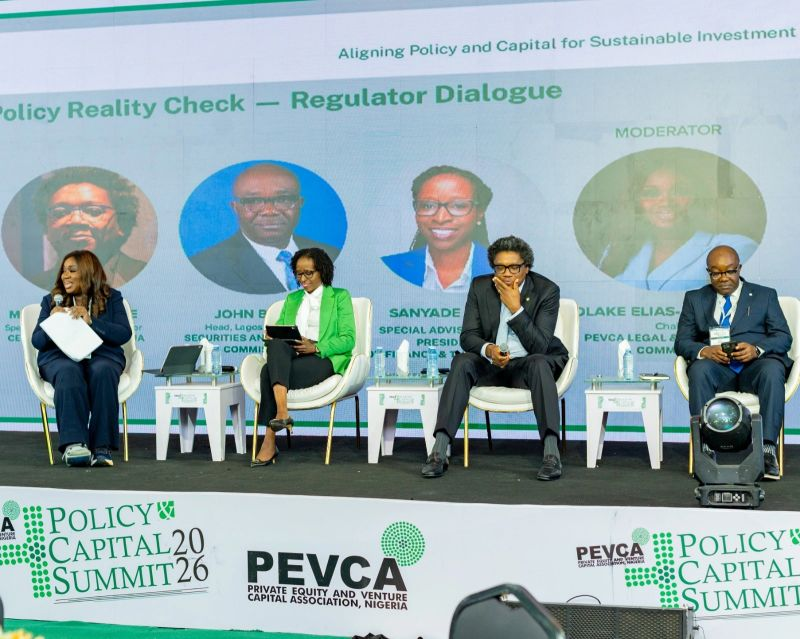
She highlighted that structured engagement can also play a key role in unlocking long-term capital by reducing information asymmetry, improving transparency, and fostering mutual trust between both sides. When stakeholders are actively involved in shaping policy directions, the likelihood of effective implementation and positive outcomes increases significantly.
Discussions at the summit reinforced these themes, with participants noting that Nigeria’s private capital ecosystem stands to benefit from stronger institutional coordination, improved regulatory clarity, and a more predictable policy environment. Investors and practitioners pointed out that consistency in policy execution, alongside open communication channels, remains critical for attracting both domestic and international capital.
The summit also underscored the broader role of collaboration in driving sustainable economic growth, with stakeholders agreeing that public–private partnerships, when effectively structured, can serve as powerful tools for infrastructure development, innovation, and job creation.
Overall, the conversations highlighted a shared understanding that rebuilding trust, enhancing policy reliability, and institutionalizing stakeholder engagement are not only necessary for improving investor confidence but are also fundamental to unlocking Nigeria’s full potential in the global private capital market.