






Nigeria is taking a bold step toward strengthening both its energy resilience and national security, as a new collaboration between key government institutions signals a shift toward sustainable, reliable power solutions for critical operations.
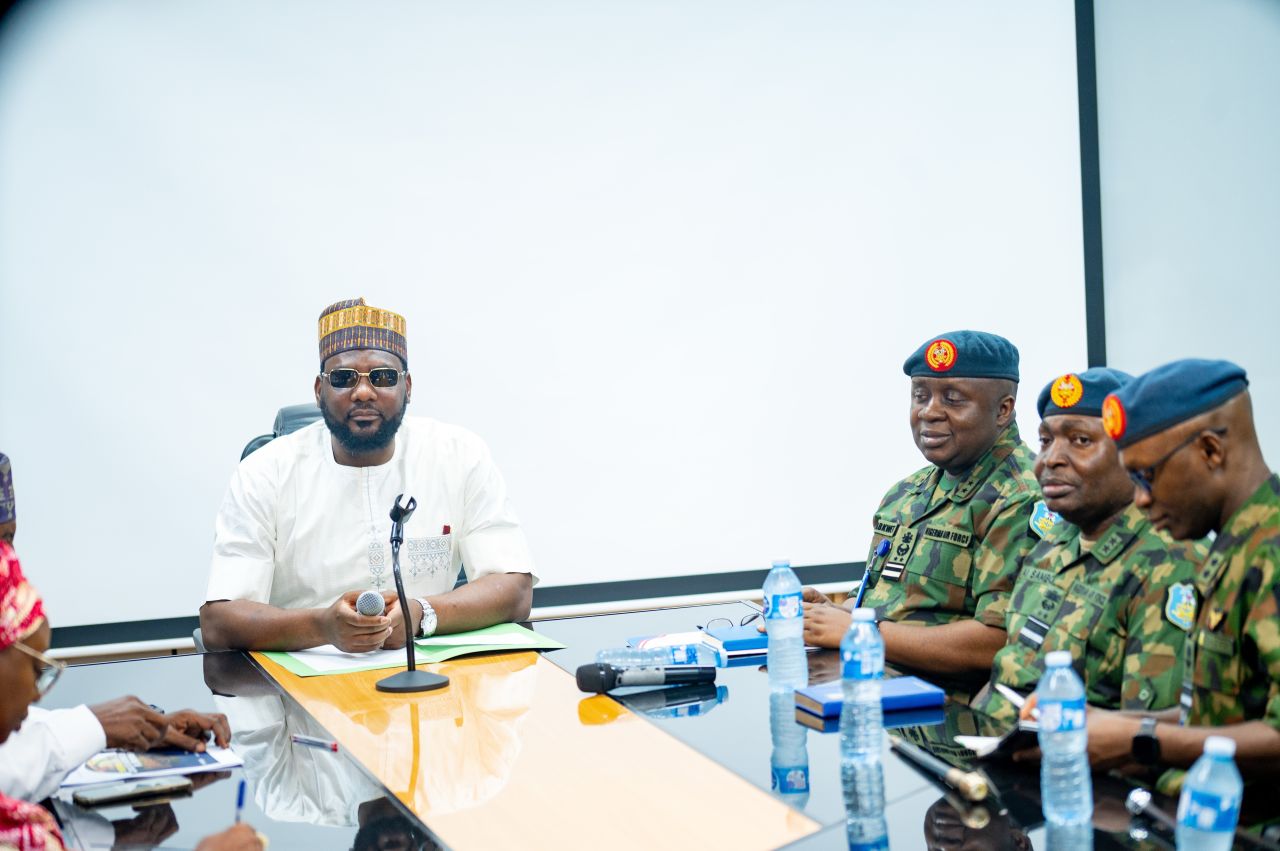
At the headquarters of the Energy Commission of Nigeria in Abuja, Director General Mustapha Abdullahi hosted senior representatives of the Nigerian Air Force, including Air Vice Marshal E.K. Gabkwet and Air Vice Marshal A.I. Sambo.
The meeting marked the beginning of a strategic partnership aimed at improving energy access and security across Air Force operations nationwide—using renewable energy as a cornerstone.
Central to the discussions were ongoing solarisation projects already being implemented by the Energy Commission in healthcare facilities and tertiary institutions. These initiatives have helped provide more stable electricity in critical sectors, reducing reliance on inconsistent grid power and expensive fuel generators.
Now, similar interventions are set to be extended to military infrastructure. Plans include the immediate deployment of solar-powered lighting and, potentially, broader renewable energy systems to support Air Force bases and operations.
The social impact of this move extends far beyond military logistics. Reliable electricity is a critical enabler of security operations—from surveillance and communications to emergency response. By reducing power disruptions, the partnership could enhance operational efficiency, safety, and rapid response capabilities across the country.
At the same time, the shift toward solar energy reflects a growing recognition that sustainable solutions are not just environmentally important, but economically and strategically necessary. Lower energy costs, reduced fuel dependence, and improved resilience in remote or high-risk areas all contribute to a stronger national infrastructure.
During the engagement, Abdullahi also presented key policy frameworks, including the National Energy Policy and the National Energy Master Plan, outlining how Nigeria is positioning itself to achieve long-term energy security through innovation and collaboration.
This partnership underscores a broader trend—breaking down traditional silos between civilian institutions and the military to address shared national challenges. By aligning expertise, resources, and strategy, both institutions are working toward a common goal: a more secure, energy-stable Nigeria.
As energy access continues to shape development outcomes across sectors, initiatives like this highlight how targeted investments in renewable power can deliver wide-reaching benefits—not only lighting homes and hospitals, but also safeguarding the systems that protect the nation.