









As Africa accelerates its adoption of artificial intelligence, the continent has been warned that innovation without trust could deepen inequality, weaken institutions, and expose millions to digital harm.
This caution formed the centrepiece of a keynote delivered by the National Commissioner and Chief Executive Officer of the Nigeria Data Protection Commission (NDPC), Dr Vincent Olatunji, at the Smartcomply Kenya Launch and Executive Breakfast Meeting in Nairobi.
Speaking on the theme, “The Horizon: Shaping Africa’s AI and Cyber Frontier,” Dr Olatunji described artificial intelligence as a transformative economic force reshaping industries worldwide. With the global AI market valued at $391 billion in 2025 and projected to reach $1.81 trillion by 2030, he noted that Africa cannot afford to remain on the margins of this technological revolution.
However, he stressed that enthusiasm alone will not bridge the gap.
According to him, Africa faces significant structural challenges that threaten its AI ambitions. These include infrastructure deficits, limited broadband access, persistent energy shortages, skills gaps, poor-quality and insufficient data, funding constraints, and fragmented policy frameworks across countries. Without deliberate investment and regulatory coherence, he warned, Africa risks becoming merely a consumer of imported AI systems rather than a global contributor.
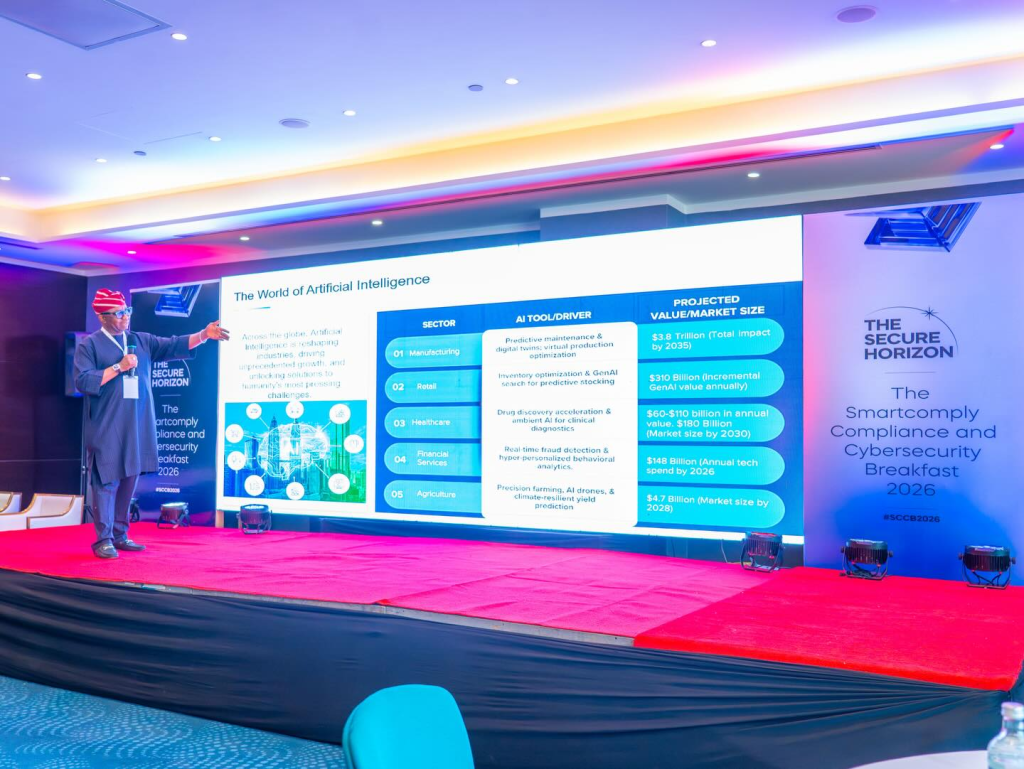
Beyond infrastructure and skills, Dr Olatunji identified a more critical issue—trust.
He argued that data protection and privacy are not optional considerations in the AI era but foundational requirements. As governments digitize services and businesses deploy AI-driven solutions across finance, healthcare, agriculture, and education, weak safeguards could erode public confidence and expose citizens to misuse of personal information.
“Data is central to AI systems,” he noted, emphasizing that the absence of strong privacy protections can undermine economic growth, discourage foreign investment, and damage business reputations. Compliance with data protection laws, he said, should not be viewed merely as a regulatory burden or a means to avoid fines, but as a strategic imperative for sustainable development.
During a fireside chat titled, “Building Digital Trust at Scale: Lessons from Kenya and Nigeria’s Data Protection Journeys,” Dr Olatunji outlined Nigeria’s progress in strengthening its data governance ecosystem under the NDPC. He highlighted ongoing efforts to enhance enforcement capacity, promote awareness, and align with global data protection standards to ensure responsible AI deployment.
He further stressed that Africa’s competitiveness in the global digital economy will depend on collaboration among nations, particularly in harmonizing policies and enabling secure cross-border data transfers.
The broader social impact of his message was clear: Africa’s AI future will be shaped not only by technological capability but by governance, institutional strength, and the protection of citizens’ rights.
Dr Olatunji concluded with a call for collective action, urging African countries to build mutual trust, close regulatory gaps, and champion privacy rights as a pathway to inclusive digital growth.