

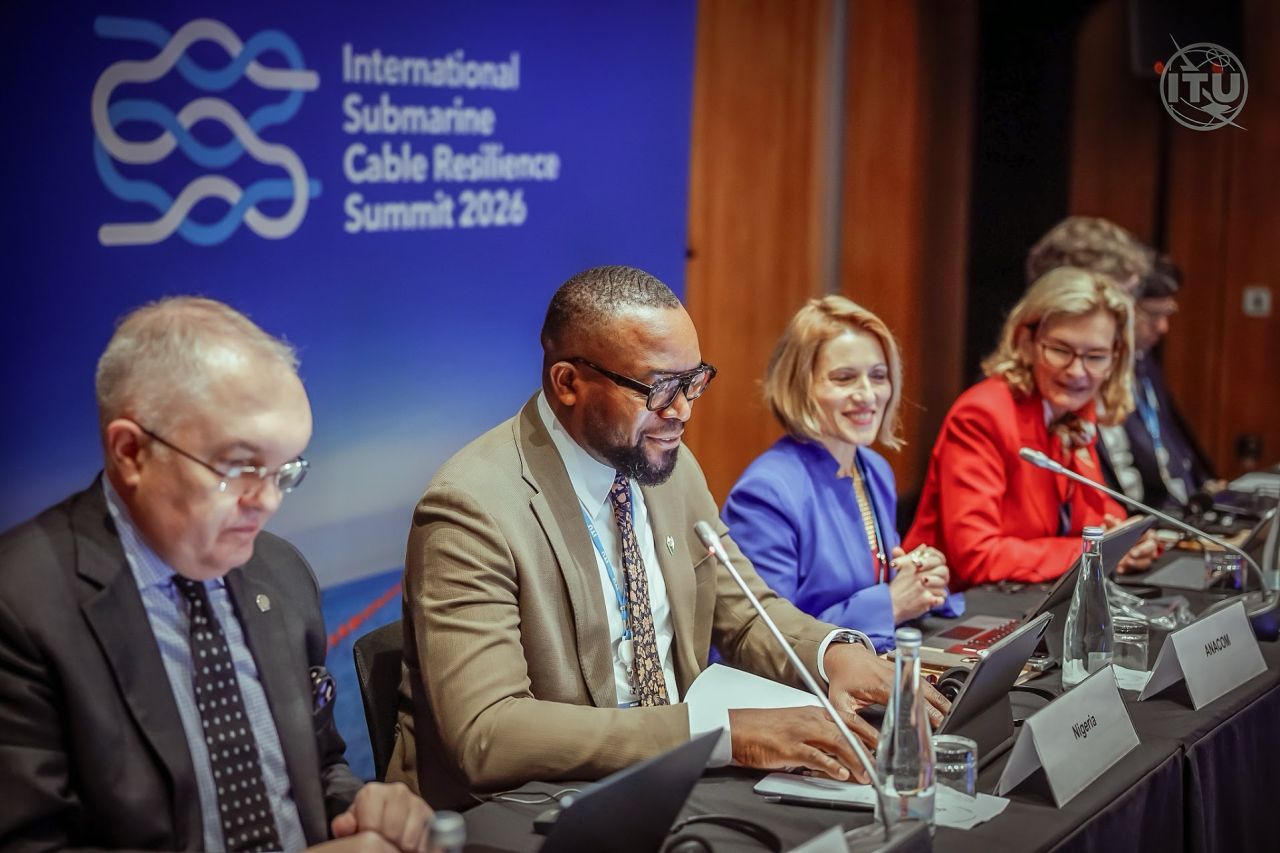
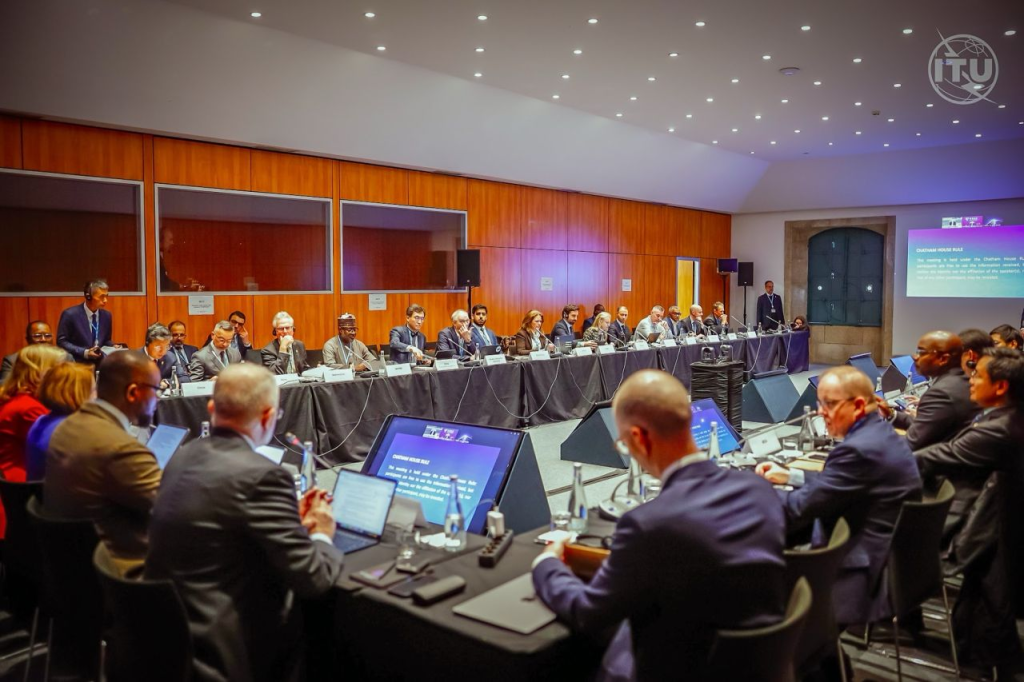
Porto, Portugal — Nigeria has consolidated its growing influence in global telecommunications governance following the active co-chairing role played by the Honourable Minister of Communications, Innovation and Digital Economy, Dr. ‘Bosun Tijani, at the second physical meeting of the International Telecommunication Union (ITU) International Advisory Body (IAB) on Submarine Cable Resilience.
The meeting addressed one of the most pressing yet under-regulated challenges of the modern digital economy: the security, resilience, and governance of submarine cable systems, which transport more than 99 per cent of the world’s internet and data traffic. As economies digitise and governments increasingly rely on online systems for finance, security, healthcare, and public services, the fragility of this infrastructure has become a global strategic concern.
A Global Issue With National Consequences
Submarine cable disruptions — whether caused by accidental damage, natural disasters, or geopolitical tensions — now carry systemic economic and security risks. Recent global outages have demonstrated how a single cable failure can disrupt financial markets, disable government services, and stall cross-border trade.
Dr. Tijani stressed that the challenge is no longer technical alone, but fundamentally regulatory. He argued that fragmented national rules, weak protection regimes, and limited cross-border coordination leave critical digital arteries exposed, particularly in regions experiencing rapid growth in data demand.
Drawing from Nigeria’s own experience as a major landing point for multiple submarine cables and Africa’s largest digital market, the Minister positioned Nigeria as uniquely placed to contribute practical, emerging-market perspectives to global policy discussions.
From Participation to Policy Leadership
Under Nigeria’s co-chairmanship, the IAB adopted clear, actionable recommendations developed by its working groups. These recommendations outline a roadmap for:
- Strengthening international norms for submarine cable protection,
- Improving coordination between governments, regulators, and private cable operators,
- Embedding resilience planning and redundancy into national telecom regulatory frameworks, and
- Safeguarding continuity of global connectivity during disruptions.
These outcomes are expected to shape future ITU guidelines, influence national telecom regulations, and inform infrastructure investment decisions globally.
For Nigeria, this marks a strategic evolution — from being primarily a recipient of global telecom policies to becoming an active contributor to rule-making at the highest international level.
Nigeria’s Regulatory Credibility on the Global Stage
Analysts note that Nigeria’s expanding voice within the ITU is underpinned by credible domestic reforms in the communications and digital economy sector. From licensing frameworks and infrastructure-sharing policies to broadband expansion and data governance, Nigeria’s regulatory institutions have accumulated practical experience managing scale, complexity, and rapid growth.
By bringing this experience to the IAB, Nigeria helped bridge the gap between advanced-economy regulatory models and the realities of fast-growing digital markets, ensuring that global rules are inclusive, pragmatic, and implementable.
Strategic Implications for Nigeria
Nigeria’s leadership on submarine cable resilience carries direct national benefits. Stronger global protection regimes enhance the security of Nigeria’s own international connectivity, reduce the risk of large-scale outages, and support investor confidence in the country’s data centres, cloud services, fintech ecosystem, and digital trade ambitions.
Moreover, Nigeria’s visible role in shaping global telecom standards reinforces its standing as Africa’s digital policy anchor, strengthening its influence in continental and multilateral negotiations on connectivity, data flows, and digital infrastructure financing.
A New Phase of Global Digital Governance
Dr. Tijani acknowledged the collaboration of his IAB Co-Chair, Prof. Sandra Maximiano, the host regulator ANACOM Portugal, and ITU leadership, including Secretary-General Doreen Bogdan-Martin, for advancing what many now regard as a cornerstone issue of global digital resilience.
Observers say Nigeria’s role at the Porto meeting reflects a broader strategic intent: to ensure that as the world becomes more digitally interconnected, the rules governing that connectivity are shaped with African leadership and emerging-market realities at the table.
As digital infrastructure becomes inseparable from national sovereignty, economic competitiveness, and global security, Nigeria’s expanding footprint in international telecoms regulation sends a clear signal — the country is no longer merely adapting to global standards; it is helping define them.