


Why This Story Matters to Me
By Anthony Nwosu
This is more than just another health article for me.
Over the years, I have watched people close to me battle kidney disease. The pain, emotional trauma and enormous financial burden on families are heartbreaking. Sadly, I also lost one of my cousins to kidney disease—a loss that brought home just how devastating kidney failure can be.
That personal experience is one of the reasons I decided to write this article. While not every case of kidney disease is caused by bleaching creams, there is growing medical evidence that some unregulated and harmful skin-lightening products contain toxic substances capable of causing serious kidney damage. If this information helps even one person avoid a preventable illness, then sharing it is worthwhile.
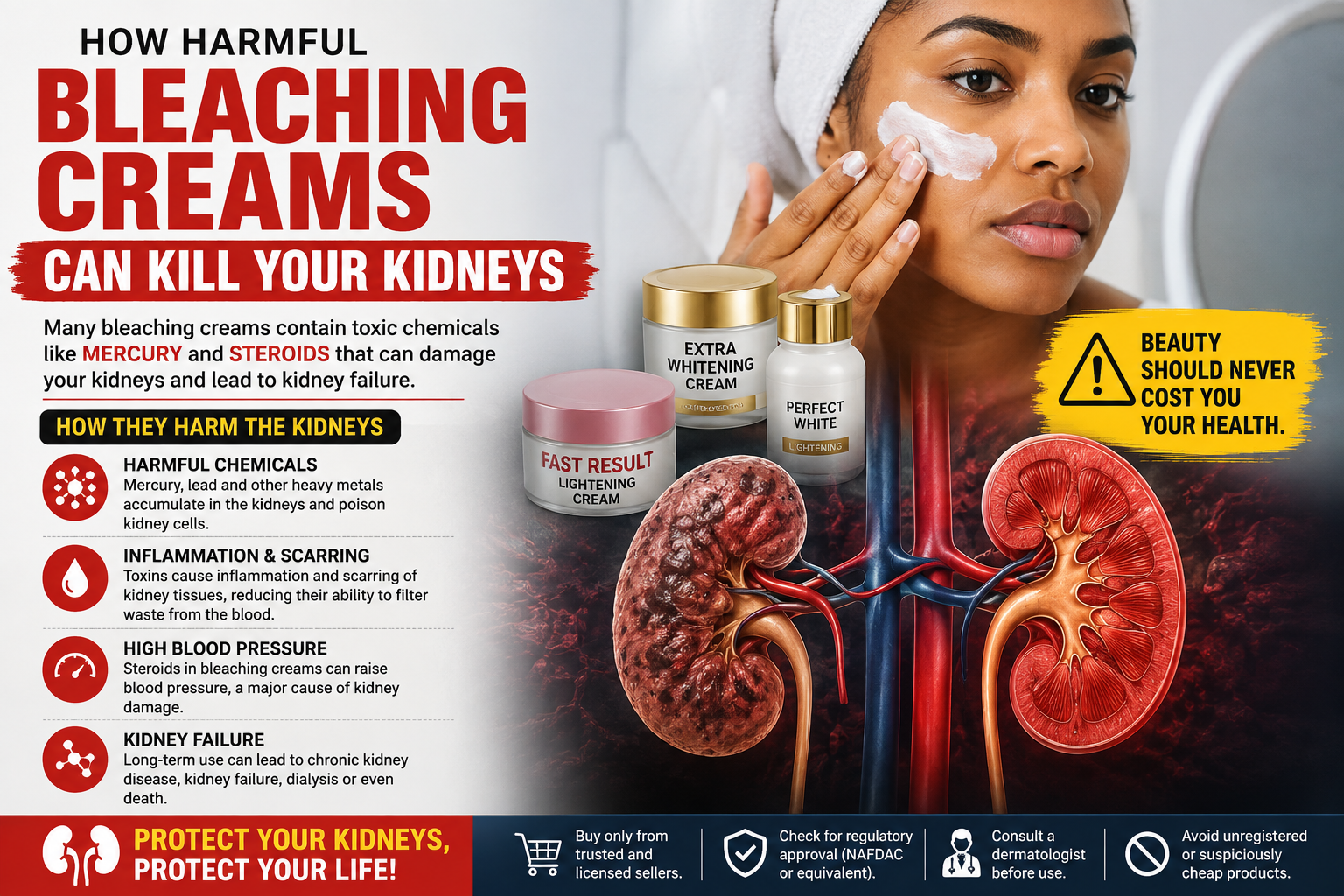
The widespread use of skin-lightening or bleaching creams has become a major public health concern in many countries, including Nigeria. While many users seek a lighter complexion for cosmetic reasons, health experts warn that some illegal, counterfeit or unregulated bleaching products contain dangerous chemicals that can cause irreversible damage to vital organs, particularly the kidneys.
Why the Kidneys Are at Risk
The kidneys are among the hardest-working organs in the body. Every day, they filter about 180 litres of blood, removing waste products, toxins and excess fluids while maintaining the body’s chemical balance.
When harmful chemicals are absorbed through the skin and enter the bloodstream, the kidneys must work to remove them. Continuous exposure to these toxins can injure the kidneys’ delicate filtering system, leading to progressive damage that may eventually result in chronic kidney disease or kidney failure.
Mercury: A Silent Killer
One of the most dangerous substances found in some illegal bleaching creams is mercury.
Although mercury has been banned or strictly restricted in cosmetics in many countries, investigations have continued to uncover unregistered skin-lightening creams containing dangerous levels of the metal. Mercury suppresses the production of melanin, making the skin appear lighter, but it comes at a potentially devastating cost.
Once absorbed through the skin, mercury enters the bloodstream and accumulates in the kidneys, where it damages the tiny filtering units responsible for removing waste from the body.
Long-term exposure may lead to:
- Protein leaking into the urine (proteinuria)
- Swelling of the feet, legs and face
- High blood pressure
- Reduced kidney function
- Chronic kidney disease
- Kidney failure requiring dialysis or kidney transplantation
Steroids Can Also Damage the Kidneys
Many bleaching creams also contain potent corticosteroids that should only be used under strict medical supervision.
Prolonged use can increase blood pressure and blood sugar levels—two of the leading causes of chronic kidney disease worldwide. Long-term steroid exposure may also weaken the immune system, increase the risk of infections and cause fluid retention, placing additional strain on the kidneys.
Heavy Metals and Other Toxic Chemicals
Apart from mercury, some counterfeit or substandard bleaching creams have been found to contain harmful levels of lead, arsenic and excessive concentrations of hydroquinone.
Heavy metals do not leave the body easily. Instead, they accumulate over time, with the kidneys bearing much of the burden because they continuously filter the blood. Repeated exposure can cause inflammation, scarring and permanent loss of kidney function.
Kidney Disease Often Goes Unnoticed
One of the greatest dangers of kidney disease is that it develops silently.
Many people experience no obvious symptoms until significant damage has already occurred. By the time warning signs appear, kidney function may already be severely impaired.
Symptoms can include:
- Swelling of the feet, ankles or face
- Persistent tiredness
- Loss of appetite
- Nausea and vomiting
- Reduced urine output
- Foamy urine caused by protein leakage
- Difficulty concentrating
- High blood pressure
Without early diagnosis and treatment, kidney disease can progress to kidney failure, leaving dialysis or kidney transplantation as the only options for survival.
Protecting Your Kidneys
Medical experts recommend several simple but important precautions:
- Avoid unregistered or counterfeit bleaching creams.
- Buy skincare products only from licensed pharmacies and reputable retailers.
- Check that products have been approved by the appropriate national regulatory authority.
- Be cautious of creams promising rapid or permanent skin whitening.
- Consult a qualified dermatologist before using skin-lightening products.
- Seek medical attention immediately if you develop swelling, reduced urination or persistent fatigue.
Beauty Should Never Cost a Life
There is nothing wrong with caring for your skin, but beauty should never come at the expense of your health.
As someone who has witnessed the devastating impact of kidney disease—including losing my own cousin—I believe we must do more to educate the public about preventable risk factors. While kidney disease has many causes, avoiding toxic and unregulated bleaching creams is one step that could help protect countless lives.
Government regulators, healthcare professionals, manufacturers, community leaders and the media all have a role to play in raising awareness, removing dangerous products from the market and encouraging safer consumer choices.
Ultimately, no cosmetic benefit is worth risking permanent kidney damage. The healthiest skin is healthy skin, and protecting your kidneys today could save your life tomorrow.