






Global investment narratives around Africa are undergoing a significant shift, according to senior development finance and investment leaders who gathered in Berlin for high-level discussions on private capital flows into the continent.
At the centre of the debate was Managing Director Anna Sophie Herken, who challenged long-standing perceptions about African markets, arguing that the more relevant question today is no longer whether Africa is investable—but how investors can effectively access its opportunities.
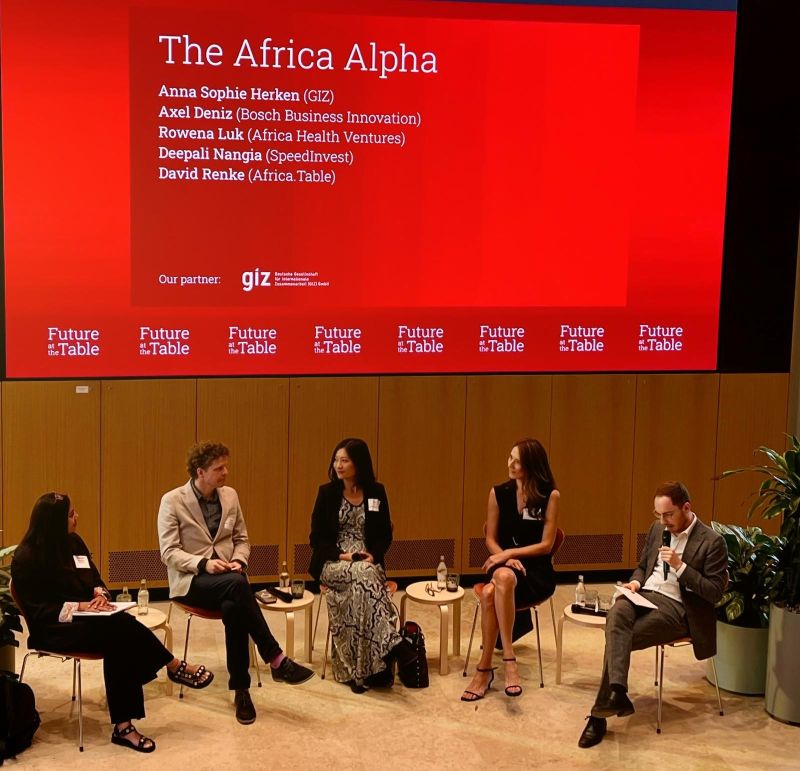
Herken made the remarks during two major sessions held as part of the “Future at the Table” programme in Berlin, including the panel “The Africa Alpha: Private Capital’s Highest-Growth Frontier” and an investor roundtable hosted under the ICAMA (Innovative Capital Mobilisation in Africa) initiative. The events were co-hosted by Table.Briefings and Africa.Table alongside SuperReturn International and SuperVenture.
The discussions brought together venture capital and private equity leaders, policymakers, and institutional investors focused on unlocking capital flows into African high-growth sectors. Participants highlighted Africa’s strong macroeconomic and demographic fundamentals, noting that the continent hosts 12 of the world’s 20 fastest-growing economies and is projected to account for 40% of the global youth population by 2030.
Speakers emphasized that Africa is increasingly producing globally competitive innovation ecosystems, with startups and growth-stage companies delivering solutions across fintech, logistics, healthcare, and climate resilience. Companies such as InstaDeep and Moove were cited as examples of African-founded ventures attracting international capital and scaling globally.
According to insights shared at the event, private market returns from African investments are increasingly competitive with, and in some cases exceeding, those in developed markets such as the United States and Europe. Countries including Nigeria, Egypt, South Africa, Kenya, Ghana, and Morocco were highlighted as leading hubs for venture capital and private equity activity.
However, investors also noted persistent structural challenges, particularly around access to reliable local partners, market intelligence, and curated deal pipelines. Rather than lack of interest, participants said the primary constraint remains the difficulty of efficiently navigating fragmented markets.
Herken pointed to initiatives such as ICAMA, implemented through the Deutsche Gesellschaft für Internationale Zusammenarbeit (GIZ), as critical mechanisms for bridging this gap. The programme aims to strengthen private capital ecosystems and connect European investors with experienced African fund managers who have deep local networks and proven investment track records.
The discussions also reflected a growing shift among European institutional investors and corporates, many of whom are now developing dedicated Africa strategies as part of broader global diversification efforts.
Concluding the sessions, participants reinforced a central message: Africa is no longer viewed as a distant “future opportunity,” but as an active and increasingly mature investment destination already generating measurable returns.
Herken invited further engagement from investors interested in exploring startup and growth company opportunities across the continent, signaling continued momentum in efforts to deepen Africa-Europe investment linkages.