


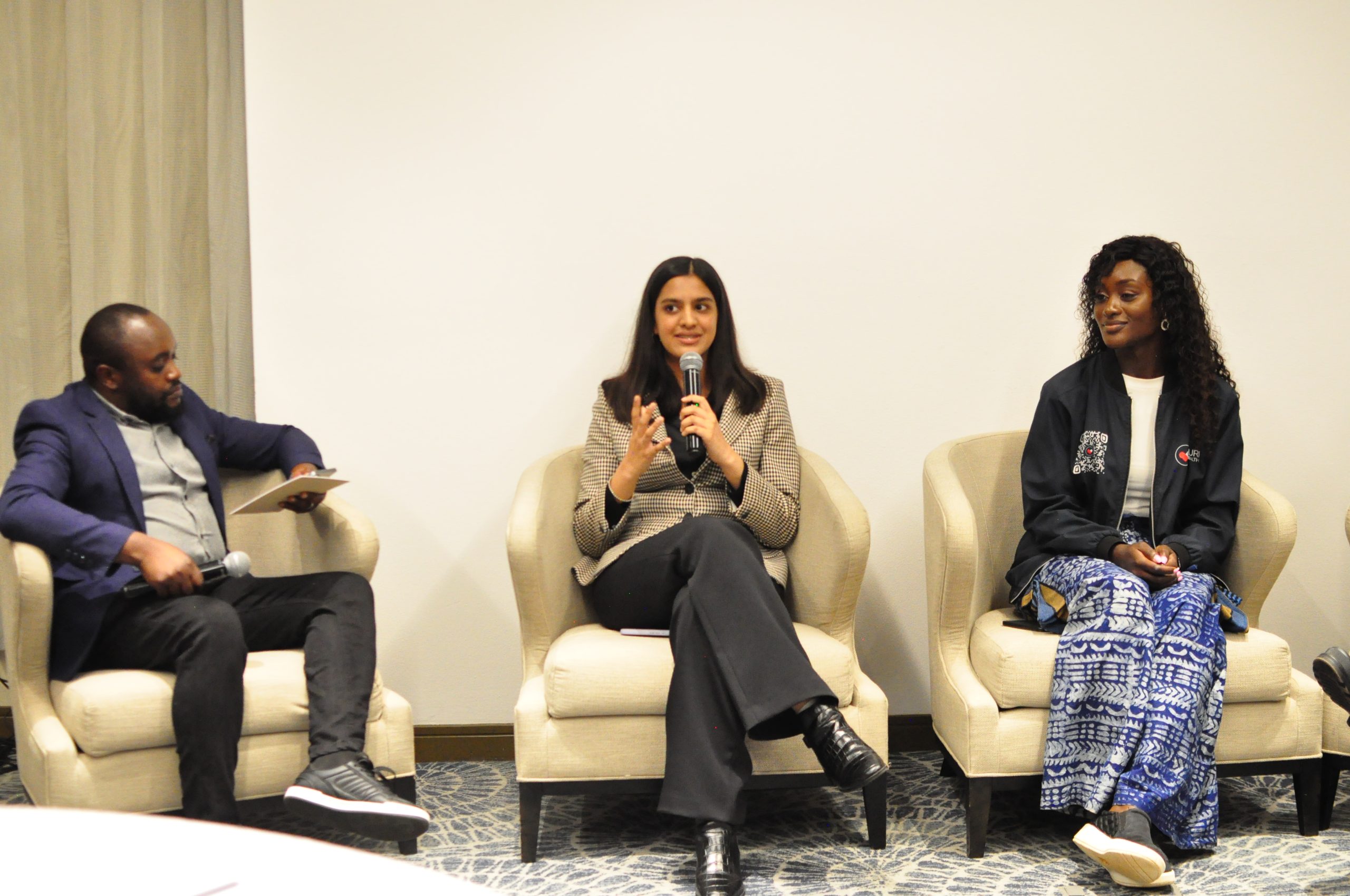






Tech leaders, investors, and academics call for stronger ethics, infrastructure, and local ownership in AI development across Africa
NAIROBI, KENYA – May 21, 2026: A high-level tech forum hosted in Nairobi by Aashna Jain, founder of AITHOS, brought together industry experts, investors, and academics to explore how ethics can be embedded at the core of artificial intelligence (AI) development and deployment across Africa and the Middle East.
Under the theme “Ethics in AI”, the interactive session examined and unpacked how emerging economies can balance rapid AI adoption with responsible innovation, local relevance, and long-term governance frameworks.
From adoption to ownership
Delivering the keynote, Samuel Mbai, chief ICT officer, University of Nairobi, underscored the scale and urgency of AI transformation, noting that Africa must reposition itself from passive adoption to active ownership of AI systems.
“AI is shifting from adoption to ownership. With potential contribution of over US$15.7 trillion to the global economy, Africa must invest in infrastructure, talent, and policy to compete.”
He described AI as an emerging economic and political force, warning that data is now a critical global resource and calling for urgent investment in infrastructure and policy alignment.
Localization and startup momentum
The interactive panel discussions highlighted how Africa’s innovation ecosystem is already responding further emphasizing the need to localize AI systems to unlock real value for African markets.
Art Chupeau, managing partner, Baobab Network, an early-stage VC backing African startups, and Founder of Lissom Advisory, a firm helping global investors and operators navigate African markets, noted that investor appetite for AI-native startups continues to grow across the continent.
“Africa’s biggest AI opportunity is not building hype-driven technology but using AI to solve real operational problems in underserved markets. The real advantage will come from combining AI with strong local distribution, proprietary data, and a deep understanding of fragmented African markets.”
Ethics at the centre of AI growth
A central theme of the forum was the importance of embedding ethics into AI systems from the outset, rather than as an afterthought with Aashna Jain, highlighting the role of young innovators in building responsible AI ecosystems.
“Africa’s AI future will be shaped by youth, but ethics must be embedded from the start. We must teach responsible use to build fair, inclusive and accountable systems.”
Aashna, a 17-year-old university student from Johannesburg, also leads a growing podcast community focused on ethical AI and its real-world applications.
In healthcare, Daisy Isiaho, co-founder and chief product and CX officer, Zuri Health, pointed to structural challenges limiting scale across the continent.
“Scaling AI-driven healthcare in Africa is constrained less by technology and more by fragmented policy frameworks, limited infrastructure, and persistent trust gaps among patients and providers.”
Maréva Koulamallah, founder and CEO, Marevak Consulting, stressed that Africa’s youth will be central to shaping the continent’s AI trajectory, while cautioning governance.
“Young people are ready to shape Africa’s AI future, but we must build multi-layered collaboration across sectors and also gatekeep ownership of the technologies we create.”
The forum, co-hosted by Marevak Consulting, concluded with a shared consensus: Africa’s AI future will not be defined by speed alone, but by how effectively ethics, ownership, and localization are integrated into innovation strategies shaping the next digital decade.
ENDS